Chimamanda Adichie - Americanah
Здесь есть возможность читать онлайн «Chimamanda Adichie - Americanah» весь текст электронной книги совершенно бесплатно (целиком полную версию без сокращений). В некоторых случаях можно слушать аудио, скачать через торрент в формате fb2 и присутствует краткое содержание. Год выпуска: 2013, Издательство: Knopf, Жанр: Современная проза, на английском языке. Описание произведения, (предисловие) а так же отзывы посетителей доступны на портале библиотеки ЛибКат.
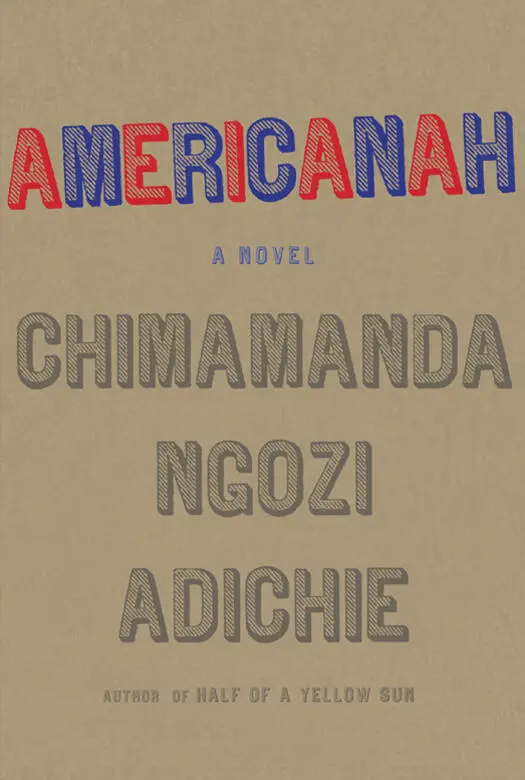
- Название:Americanah
- Автор:
- Издательство:Knopf
- Жанр:
- Год:2013
- ISBN:нет данных
- Рейтинг книги:4 / 5. Голосов: 1
-
Избранное:Добавить в избранное
- Отзывы:
-
Ваша оценка:
Americanah: краткое содержание, описание и аннотация
Предлагаем к чтению аннотацию, описание, краткое содержание или предисловие (зависит от того, что написал сам автор книги «Americanah»). Если вы не нашли необходимую информацию о книге — напишите в комментариях, мы постараемся отыскать её.
, a dazzling new novel: a story of love and race centered around a young man and woman from Nigeria who face difficult choices and challenges in the countries they come to call home.
As teenagers in a Lagos secondary school, Ifemelu and Obinze fall in love. Their Nigeria is under military dictatorship, and people are leaving the country if they can. Ifemelu — beautiful, self-assured — departs for America to study. She suffers defeats and triumphs, finds and loses relationships and friendships, all the while feeling the weight of something she never thought of back home: race. Obinze — the quiet, thoughtful son of a professor — had hoped to join her, but post-9/11 America will not let him in, and he plunges into a dangerous, undocumented life in London.
Years later, Obinze is a wealthy man in a newly democratic Nigeria, while Ifemelu has achieved success as a writer of an eye-opening blog about race in America. But when Ifemelu returns to Nigeria, and she and Obinze reignite their shared passion — for their homeland and for each other — they will face the toughest decisions of their lives.
Fearless, gripping, at once darkly funny and tender, spanning three continents and numerous lives,
is a richly told story set in today’s globalized world: Chimamanda Ngozi Adichie’s most powerful and astonishing novel yet.
Americanah — читать онлайн бесплатно полную книгу (весь текст) целиком
Ниже представлен текст книги, разбитый по страницам. Система сохранения места последней прочитанной страницы, позволяет с удобством читать онлайн бесплатно книгу «Americanah», без необходимости каждый раз заново искать на чём Вы остановились. Поставьте закладку, и сможете в любой момент перейти на страницу, на которой закончили чтение.
Интервал:
Закладка:

FINALLY, Aunty Uju’s result came. Ifemelu brought in the envelope from the mailbox, so slight, so ordinary, United States Medical Licensing Examination printed on it in even script, and held it in her hand for a long time, willing it to be good news. She raised it up as soon as Aunty Uju walked indoors. Aunty Uju gasped. “Is it thick? Is it thick?” she asked.
“What? Gini ?” Ifemelu asked.
“Is it thick?” Aunty Uju asked again, letting her handbag slip to the floor and moving forward, her hand outstretched, her face savage with hope. She took the envelope and shouted, “I made it!” and then opened it to make sure, peering at the thin sheet of paper. “If you fail, they send you a thick envelope so that you can reregister.”
“Aunty! I knew it! Congratulations!” Ifemelu said.
Aunty Uju hugged her, both of them leaning into each other, hearing each other’s breathing, and it brought to Ifemelu a warm memory of Lagos.
“Where’s Dike?” Aunty Uju asked, as though he was not already in bed when she came home from her second job. She went into the kitchen, stood under the bright ceiling light and looked, again, at the result, her eyes wet. “So I will be a family physician in this America,” she said, almost in a whisper. She opened a can of Coke and left it undrunk.
Later, she said, “I have to take my braids out for my interviews and relax my hair. Kemi told me that I shouldn’t wear braids to the interview. If you have braids, they will think you are unprofessional.”
“So there are no doctors with braided hair in America?” Ifemelu asked.
“I have told you what they told me. You are in a country that is not your own. You do what you have to do if you want to succeed.”
There it was again, the strange naïveté with which Aunty Uju had covered herself like a blanket. Sometimes, while having a conversation, it would occur to Ifemelu that Aunty Uju had deliberately left behind something of herself, something essential, in a distant and forgotten place. Obinze said it was the exaggerated gratitude that came with immigrant insecurity. Obinze, so like him to have an explanation. Obinze, who anchored her through that summer of waiting — his steady voice over the phone, his long letters in blue airmail envelopes — and who understood, as summer was ending, the new gnawing in her stomach. She wanted to start school, to find the real America, and yet there was that gnawing in her stomach, an anxiety, and a new, aching nostalgia for the Brooklyn summer that had become familiar: children on bicycles, sinewy black men in tight white tank tops, ice cream vans tinkling, loud music from roofless cars, sun shining into night, and things rotting and smelling in the humid heat. She did not want to leave Dike — the mere thought brought a sense of treasure already lost — and yet she wanted to leave Aunty Uju’s apartment, and begin a life in which she alone determined the margins.
Dike had once told her, wistfully, about his friend who had gone to Coney Island and come back with a picture taken on a steep, sliding ride, and so she surprised him on the weekend before she left, saying “We’re going to Coney Island!” Jane had told her what train to take, what to do, how much it would cost. Aunty Uju said it was a good idea, but gave her no money to add to what she had. As she watched Dike on the rides, screaming, terrified and thrilled, a little boy entirely open to the world, she did not mind what she had spent. They ate hot dogs and milkshakes and cotton candy. “I can’t wait until I don’t have to come with you to the girls’ bathroom,” he told her, and she laughed and laughed. On the train back, he was tired and sleepy. “Coz, this was the bestest day ever with you,” he said, resting against her.
The bittersweet glow of an ending limbo overcame her days later when she kissed Dike goodbye — once then twice and three times, while he cried, a child so unused to crying, and she bit back her own tears and Aunty Uju said over and over that Philadelphia was not very far away. Ifemelu rolled her suitcase to the subway, took it to the Forty-second Street terminal, and got on a bus to Philadelphia. She sat by the window — somebody had stuck a blob of chewed gum on the pane — and spent long minutes looking again at the Social Security card and driver’s license that belonged to Ngozi Okonkwo. Ngozi Okonkwo was at least ten years older than she was, with a narrow face, eyebrows that started as little balls before loping into arcs, and a jaw shaped like the letter V .
“I don’t even look like her at all,” Ifemelu had said when Aunty Uju gave her the card.
“All of us look alike to white people,” Aunty Uju said.
“Ahn-ahn, Aunty!”
“I’m not joking. Amara’s cousin came last year and she doesn’t have her papers yet so she has been working with Amara’s ID. You remember Amara? Her cousin is very fair and slim. They do not look alike at all. Nobody noticed. She works as a home health aide in Virginia. Just make sure you always remember your new name. I have a friend who forgot and one of her co-workers called her and called her and she was blank. Then they became suspicious and reported her to immigration.”
CHAPTER 12
There was Ginika, standing in the small, crowded bus terminal, wearing a miniskirt and a tube top that covered her chest but not her midriff, and waiting to scoop Ifemelu up and into the real America. Ginika was much thinner, half her old size, and her head looked bigger, balanced on a long neck that brought to mind a vague, exotic animal. She extended her arms, as though urging a child into an embrace, laughing, calling out, “Ifemsco! Ifemsco!” and Ifemelu was taken back, for a moment, to secondary school: an image of gossiping girls in their blue-and-white uniforms, felt berets perched on their heads, crowded in the school corridor. She hugged Ginika. The theatrics of their holding each other close, disengaging and then holding each other close again, made her eyes fill, to her mild surprise, with tears.
“Look at you!” Ginika said, gesturing, jangling the many silver bangles around her wrist. “Is it really you?”
“When did you stop eating and start looking like a dried stockfish?” Ifemelu asked.
Ginika laughed, took the suitcase and turned to the door. “Come on, let’s go. I’m parked illegally.”
The green Volvo was at the corner of a narrow street. An unsmiling woman in uniform, ticket booklet in hand, was stumping towards them when Ginika jumped in and started the car. “Close!” she said, laughing. A homeless man in a grubby T-shirt, pushing a trolley filled with bundles, had stopped just by the car, as though to rest briefly, staring ahead at nothing, and Ginika glanced at him as she eased the car into the street. They drove with the windows down. Philadelphia was the smell of the summer sun, of burnt asphalt, of sizzling meat from food carts tucked into street corners, foreign brown men and women hunched inside. Ifemelu would come to like the gyros from those carts, flatbread and lamb and dripping sauces, as she would come to love Philadelphia itself. It did not raise the specter of intimidation as Manhattan did; it was intimate but not provincial, a city that might yet be kind to you. Ifemelu saw women on the sidewalks going to lunch from work, wearing sneakers, proof of their American preference for comfort over elegance, and she saw young couples clutching each other, kissing from time to time as if they feared that, if they unclasped their hands, their love would dissolve, melt into nothingness.
“I borrowed my landlord’s car. I didn’t want to come get you in my shit-ass car. I can’t believe it, Ifemsco. You’re in America!” Ginika said. There was a metallic, unfamiliar glamour in her gauntness, her olive skin, her short skirt that had risen up, barely covering her crotch, her straight-straight hair that she kept tucking behind her ears, blond streaks shiny in the sunlight.
Читать дальшеИнтервал:
Закладка:
Похожие книги на «Americanah»
Представляем Вашему вниманию похожие книги на «Americanah» списком для выбора. Мы отобрали схожую по названию и смыслу литературу в надежде предоставить читателям больше вариантов отыскать новые, интересные, ещё непрочитанные произведения.








Обсуждение, отзывы о книге «Americanah» и просто собственные мнения читателей. Оставьте ваши комментарии, напишите, что Вы думаете о произведении, его смысле или главных героях. Укажите что конкретно понравилось, а что нет, и почему Вы так считаете.