Nicola Gardini - Lost Words
Здесь есть возможность читать онлайн «Nicola Gardini - Lost Words» весь текст электронной книги совершенно бесплатно (целиком полную версию без сокращений). В некоторых случаях можно слушать аудио, скачать через торрент в формате fb2 и присутствует краткое содержание. Год выпуска: 2016, Издательство: New Directions, Жанр: Современная проза, на английском языке. Описание произведения, (предисловие) а так же отзывы посетителей доступны на портале библиотеки ЛибКат.
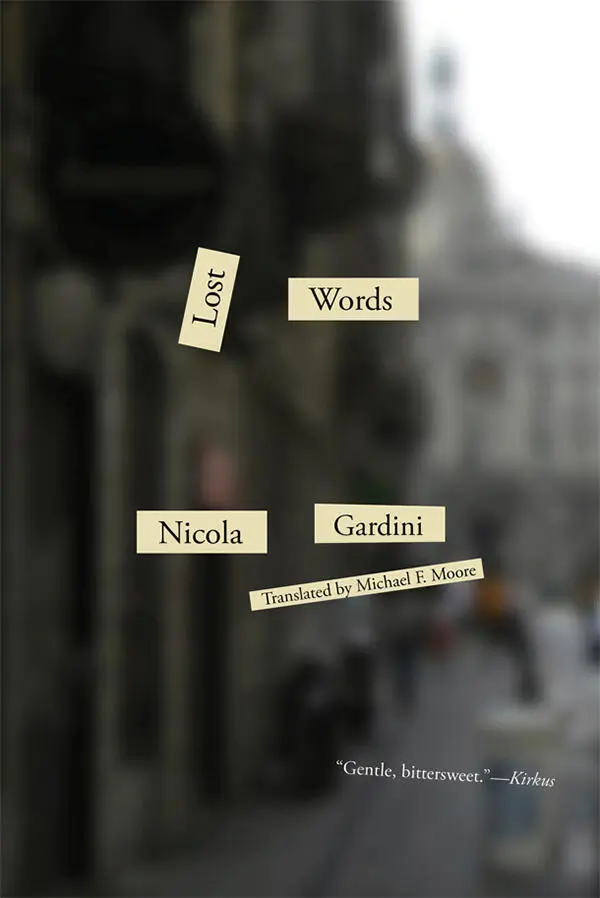
- Название:Lost Words
- Автор:
- Издательство:New Directions
- Жанр:
- Год:2016
- ISBN:нет данных
- Рейтинг книги:5 / 5. Голосов: 1
-
Избранное:Добавить в избранное
- Отзывы:
-
Ваша оценка:
Lost Words: краткое содержание, описание и аннотация
Предлагаем к чтению аннотацию, описание, краткое содержание или предисловие (зависит от того, что написал сам автор книги «Lost Words»). Если вы не нашли необходимую информацию о книге — напишите в комментариях, мы постараемся отыскать её.
Lost Words — читать онлайн бесплатно полную книгу (весь текст) целиком
Ниже представлен текст книги, разбитый по страницам. Система сохранения места последней прочитанной страницы, позволяет с удобством читать онлайн бесплатно книгу «Lost Words», без необходимости каждый раз заново искать на чём Вы остановились. Поставьте закладку, и сможете в любой момент перейти на страницу, на которой закончили чтение.
Интервал:
Закладка:
“Then it must be wrong,” Ippolito contradicted her. “Fever is a symptom of disease.”
“No,” she retorted, “I mean that it warms you, it changes you. Fever colors your cheeks and makes you beautiful. The few times it has come to me I’ve felt as if I was wearing makeup.”
“But a fever doesn’t last.”
“You’re right. Love can end, too, just like a fever, or like makeup when you wash it away. What I meant to say is that when you’re in love you see everything differently. You see the other person and feel happy.”
“For me love is not for a single person but for the people, for all the people I have around me.”
“Nonsense!”
“All I do is receive and give love because I feel surrounded by others. Am I making sense?”
But she didn’t want to be one of the others ! “What about sex?”
Ippolito was caught off guard.
“Sex?” he repeated, “what does sex have to do with it?”
“It has everything to do with it! Love is sex, kisses, embraces, tenderness , which is so important for a woman.”
“And in your opinion there is no tenderness in simple co-existence? In being together, close, the way we are in this building, where we all take some part in the lives of others. For me this is love, or tenderness, as you call it.” And he added, in a whisper, between his teeth, “Sex is something else. You can find it wherever you want.”
“You’re not making any sense! You call this hell tenderness? Open your eyes, Ippolito! The others couldn’t care less about you or me. That’s the plain truth. No one loves us! ”
*.
He abandoned us. The situation we had enjoyed that summer obviously couldn’t continue, but I was expecting he would at least stay friends with me, asking me to help him copy down the last definitions or simply to accompany him on his afternoon walks. But he didn’t. His excuse was that now I needed to think of school. The first year of high school was very difficult. Better that I put my energy into studying.
Now I spent my afternoons trying to memorize long lists of Greek words, transcribing their meanings in a special notebook, as I had done with English. Rita called to me from the garden, but I had no wish to spend time with her. “I have a lot of studying to do for tomorrow,” I told her. The compiling and memorizing of such beautiful Greek words afforded me a new pleasure, which made up in part for the loss of Ippolito and, in some ways, reconnected me to the Maestra. On my first test in Greek, a translation of a passage on the roundness of the Earth, I got a perfect grade.
For my mother, however, there were no compensations or pleasures. Not even my perfect grade cheered her up. All she said, with an uncharacteristic blandness, was: “I thought they only gave such high grades in elementary school.” She had never been so depressed, not even when my father had prohibited her from buying the apartment.
Once again suffering had stripped away her beauty. She looked at least forty years old. The pearl necklace that Ippolito had given her ended up in a drawer. The diamond was returned to the back of the closet and then to the man who had sold it to her.
While grief drove her to love Ippolito more intensely, it also made her detest him. She felt rejected, and criticized herself for showing hospitality to an ingrate. At school we were assigned to read and summarize the fourth book of the Aeneid , and in Dido’s suffering I recognized my mother’s own torment, and also in her regret and passion, which had become indistinguishable from bitterness. In reality, her Aeneas was still there, on the fifth floor, intent on recreating a miniature Troy built from words. She still harbored some hopes: sooner or later he would return, sooner or later her love would be requited. It was this hope that kept her from insulting him and, who knows, from maybe committing an ill-advised act.
In her affliction, she neglected her daily chores. At the same time, she became a particularly good guard, never leaving the window. Sooner or later he would have to appear. And when he did, she behaved strangely. Walking toward him with an excess of good cheer, she asked, “How are you doing, Professor? Are you going out grocery-shopping? You should go out more often. Why do you stay at home all day? What’s to stop you from going out?… If only I had wings!”
He gave her a concerned look. “Elvira, you look tired. Be careful not to get sick. You need some rest.”
And she, jokingly, “Oh, I got all the rest I needed this summer. It was nice here, wasn’t it? Better than the Riviera — isn’t it true we had a really nice time?”
That simple reference to the happiness she’d felt those last days of August with him alleviated her anguish, however briefly. She wanted to say so much more, but the words caught in her throat and by the time she got them out it was too late. He was already gone. Pazienza , she told herself. Wait till tomorrow… Tomorrow she would speak to him a little more, tomorrow she would get him to linger a little longer.
*.
In the lobby Terzoli and Dell’Uomo were raking him over the coals. Evidently, the fact that he’d stopped coming by to see us wasn’t enough for them.
“He’s so grumpy. Who does he think he is?” the spinster brayed. Dell’Uomo, not be outdone, added, “I know! He puts on so many airs!”
“When I saw him there in the loge for the first time, like I told you, he didn’t even get up, the slob! And why should he? He’s a ‘professor’!”
“That’s the way handsome men always act. And it’s worse when they’re also professors!”
“Have you noticed? He says hello and immediately dashes away. He never stops to say a word or two. Is he afraid we might bite?”
“He must have something to hide. Have you seen the smirk he always has on his face? It’s as if he’s making fun of us. No one can convince me that he’s not feeling guilty about his mother’s death.”
And Terzoli, raising her voice, “I wonder why he never got married.”
“The seamstress says he’s…” she replied in a voice mimicking Dell’Uomo, and rather than finish her sentence, she made a limp gesture with her right hand.
Terzoli’s mouth dropped open. “Good heavens! So why was he going downstairs to the loge every day?”
“For convenience. Why else? Who wouldn’t want to find their lunch all ready for them on the table. Even men like that get hungry.” And Dell’Uomo gave another flick of her wrist.
The Professor had turned into the building’s latest scandal. Every detail of his life was cause for alarm. Why did he wear white trousers? Why didn’t he iron his shirts? Couldn’t his dear friend the doorwoman iron them for him? Why did he buy chicken from the supermarket and not beef? Why did he drink Barbera wine? Where did he go in the late afternoon? And those scratches, how did he really get them? And how did he get by without a job?
One night, after hearing another malicious exchange between Dell’Uomo and a couple of other women a few yards away from the window, my mother couldn’t take it anymore.
“The Professor,” she exploded, making her way into the lobby, “is the most noble person who has ever set foot in this building, together with his mother, poor Maestra Lynd. Remember that! There are people in here who aren’t worthy to kiss the ground he walks on!”
Dell’Uomo placed a hand over her breast, as if she were having a heart attack. “My how you exaggerate, Elvira, don’t you think you’re a little biased? There’s nothing the least bit noble about him!”
“The Professor is a saint! He’ll go to Heaven, while the people I’m talking about will go straight to Hell, every last one of them. And they know who they are.”
Читать дальшеИнтервал:
Закладка:
Похожие книги на «Lost Words»
Представляем Вашему вниманию похожие книги на «Lost Words» списком для выбора. Мы отобрали схожую по названию и смыслу литературу в надежде предоставить читателям больше вариантов отыскать новые, интересные, ещё непрочитанные произведения.








Обсуждение, отзывы о книге «Lost Words» и просто собственные мнения читателей. Оставьте ваши комментарии, напишите, что Вы думаете о произведении, его смысле или главных героях. Укажите что конкретно понравилось, а что нет, и почему Вы так считаете.