Patrick Flanery - Absolution
Здесь есть возможность читать онлайн «Patrick Flanery - Absolution» весь текст электронной книги совершенно бесплатно (целиком полную версию без сокращений). В некоторых случаях можно слушать аудио, скачать через торрент в формате fb2 и присутствует краткое содержание. Год выпуска: 2012, Издательство: Knopf Canada, Жанр: Современная проза, на английском языке. Описание произведения, (предисловие) а так же отзывы посетителей доступны на портале библиотеки ЛибКат.
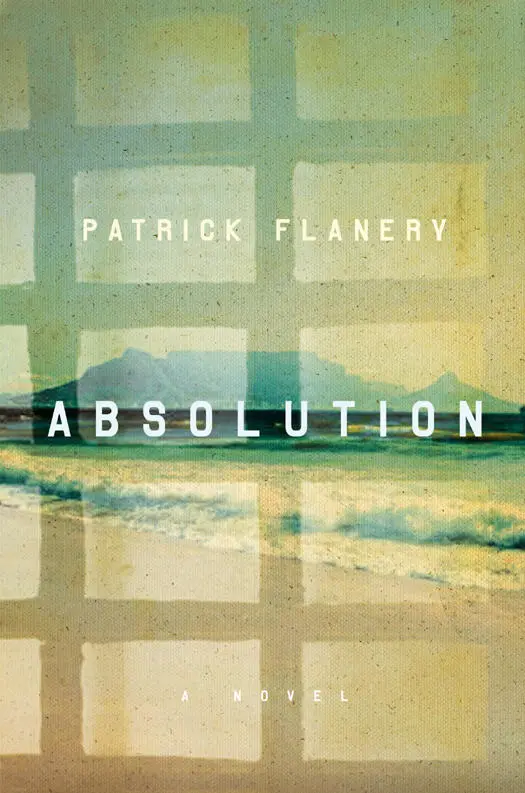
- Название:Absolution
- Автор:
- Издательство:Knopf Canada
- Жанр:
- Год:2012
- ISBN:нет данных
- Рейтинг книги:5 / 5. Голосов: 1
-
Избранное:Добавить в избранное
- Отзывы:
-
Ваша оценка:
Absolution: краткое содержание, описание и аннотация
Предлагаем к чтению аннотацию, описание, краткое содержание или предисловие (зависит от того, что написал сам автор книги «Absolution»). Если вы не нашли необходимую информацию о книге — напишите в комментариях, мы постараемся отыскать её.
Told in shifting perspectives,
is centred on the mysterious character of Clare Wald, a controversial writer of great fame, haunted by the memories of a sister she fears she betrayed to her death and a daughter she fears she abandoned. Clare comes to learn that in this conflict the dead do not stay buried, and the missing return in other forms-such as the small child present in her daughter's last days who has reappeared, posing as Clare's official biographer. Sam Leroux, a South African expatriate returning to Cape Town after many years in New York, gradually earns Clare's trust, his own ghosts emerging from the histories that he and Clare begin to unravel, leading them both along a path in search of reconciliation and forgiveness.
Absolution — читать онлайн бесплатно полную книгу (весь текст) целиком
Ниже представлен текст книги, разбитый по страницам. Система сохранения места последней прочитанной страницы, позволяет с удобством читать онлайн бесплатно книгу «Absolution», без необходимости каждый раз заново искать на чём Вы остановились. Поставьте закладку, и сможете в любой момент перейти на страницу, на которой закончили чтение.
Интервал:
Закладка:
He turned off the headlights and locked the doors and watched the clouds begin to cover the moon. He’d still had nothing to drink since the night before and his tongue and teeth were moving against him. Every few minutes he switched on the truck lights to be sure that Bernard was dead.
Sam
Another weekend. Greg is free from work, so we decide to drive out of town for a picnic. He knows a place, one of the old wineries between Stellenbosch and Franschhoek, where there are tables with views of the mountains.
‘And they have chickens,’ he says. ‘Dylan loves to see the chickens, don’t you my boy?’
The drive from the city to the winelands, forty-five minutes, takes us past the townships and the airport. Going back and forth between Greg’s house and Clare’s, it’s easy to forget where I am. It might be San Francisco, with a few more beggars on the streets, a few more people trying to sell fruit or trinkets or newspapers or offering to wash your car windows. At one intersection near Bishopscourt, at the turn-off to Kirstenbosch, half a dozen men sell identical mixed-media depictions of township life: canvas paintings with miniature tin shacks affixed to the surface to create a rough bas-relief. I’ve never seen anyone buy one.
FROM SHACKLAND TO DIGNITY say the billboards along the length of the N2, the road out of town to the airport and the national route, east along the coast. I half-remember driving this road with Bernard; I’d just as soon forget it completely.
A few years ago the shacks — made of cardboard, tin, plastic tarps, bottles, containers, tyres, mud, whatever could be found — had spilled out and were encroaching on the highway itself, Greg tells me. There was a clearance in the last year or two, so that foreign tourists wouldn’t be so disturbed.
At the winery we park alongside one of the original seventeenth-century buildings, newly whitewashed, and find a table in the shade near a pond to spread out our picnic. Dylan makes chicken noises and Greg says in a gentle voice, ‘Those are ducks, baby. What noise do ducks make?’ Quacks instead of cheeps. We open a bottle of wine, give Dylan a cup of juice, and eat salads and sandwiches while he plays. He isn’t hungry. He’s been eating since breakfast.
I look up at the outcropping of rock on the mountain. The sun is so close it feels like a weight bearing down against me. The air smells like my childhood, like my parents, the home I grew up in — aloes and wood smoke, fynbos and pungent pollens that are as much like animal as plant, pollens and dust that leave marks on the pages of books and settle into the surfaces of objects with such permanence that the smell never goes away. I remember my parents obsessively dusting their books, wrapping the covers in plastic to protect them, watching the gradual decay they could only forestall temporarily. Books meant everything to them, books in false wrappers, ranks of dangerous books hidden behind safer ones, volumes secreted under a loose board in the floor of my own bedroom. What happened to all those books? What happened to everything we possessed? I don’t have any of those things, nothing from my childhood. I have one picture of myself from infancy to early adolescence. The first continuous surviving record of my appearance begins with my arrival at my Aunt Ellen’s house, after my parents were gone, after Bernard was gone, too.
After lunch we find the chickens in the herb garden that supplies the winery’s expensive restaurant and Dylan cheeps with delight. He’s a sweet child; taking both our hands, jumping up and down excitedly, cheep cheep cheep , he looks at us both for approval.
‘He likes you,’ Greg says.
‘He’s lucky.’ I wonder if Greg knows just how lucky his son is.
On the drive back, we stop for ice cream in Stellenbosch and sit on the grass in a public park to eat. A group of students is playing football, and further away vendors are selling trinkets to tourists.
Two boys, younger than ten, eye us from a distance, and begin calling out to us. Greg calls back to them.
‘What do they want?’ I ask.
‘They’re saying, Mister, mister, please we want some of what you have .’
‘What are you saying?’
‘I’m telling them I’m sorry but they can’t have any. Maybe next time. That’s probably a mistake — the next time. They’ll want to know when next time is.’
‘I could give them mine.’
He shakes his head. ‘Then they’d want mine as well, and then Dylan’s, and then they’d want some money, and with the money they’d go buy sweets, or if we were really unlucky they’d go buy glue or something worse and hold other unsuspecting people at knifepoint while they’re high, or overdose and end up dead in the street or trafficked. It doesn’t stop. I can’t believe I said that.’
‘Are they with the vendors?’
‘No, they’re local. The vendors aren’t even from here. They’re probably all West African, or from Zim. The stuff they’re selling isn’t local either. Most of it comes out of containers from China.’
The boys keep calling, and Greg replies in a polite but firm voice. He might be talking to Dylan, whose face is now covered in melting chocolate ice cream, except I hear an edge of command in his voice that I don’t hear when he talks to Dylan or Nonyameko, or his gardener or domestic. Or if it’s not command, then it’s panic. When the boys begin to approach, more brazen, we decide it’s time to leave.
‘Can you blame them?’ he says in the car. ‘If I were them and they were us, I’d do the same. Sometimes I don’t know what to do, what’s right or wrong. It would be so much easier somewhere else.’
‘There are difficulties of one kind or another no matter where you are,’ I say. He looks at me for a moment as though he doesn’t think this is necessarily true.
Dylan sits in his high chair, drawing ducks and chickens, while we make dinner in Greg’s kitchen. I prepare a salad, he puts a roast chicken in the oven to reheat, we open a bottle of wine and are about to sit down to dinner when the dogs go crazy outside, growling and barking.
‘It’s the same guy who was here the other day,’ he says, getting up.
‘What guy?’
‘He comes around offering to fix things or sharpen knives.’ Greg pads to the door and calls off the dogs, who keep barking, five voices, a man and four dogs. There are two gates between us and the man outside — the gate between the garden and the driveway, and the gate at the end of the drive — and then there’s the house itself, with its alarm, panic buttons, back-up generator, deadbolts, burglar bars, reinforced bulletproof glass. We could seal ourselves in and let the dogs go after him. Only when the man finally leaves does Greg come back and sit down. ‘There’s no such thing as tinkers any more. That’s an extinct species. He’s checking to see if anyone’s here,’ he says, picking up a drumstick. ‘At least that’s what I think. He might be harmless, but there’ve been break-ins. Do you think I’m paranoid? My assistant woke up with four men pointing rifles at her one night. But she doesn’t have any dogs. One of the men was unbuckling and getting her undressed when the police came through the door. She has a panic button wired onto the bed frame. That’s the only thing that saved her.’
Absolution
The move was an excuse, not for Clare but for Jacobus, the man who had helped her with the garden in the Canigou Avenue house since she and her husband bought it just after their marriage. Like Clare, Jacobus believed a garden ought to be functional, that it should produce crops its owners could enjoy, that it should not only be beautiful to look at but also a means of sustenance in an uncertain world. Together, Clare and Jacobus had plotted the beds on the patchy rug of lawn behind the house, a lawn that the previous owners had tended with maniac care for weeds but with no interest in anything else. With Jacobus and one of his cousins, a man whose name she could no longer remember, Clare had marked off the beds with string and croquet wickets, cut away the turf, and begun the laborious process of digging up and enriching the hard soil. Together they had chosen the seeds, planned crop rotations, conceded to Clare’s husband William more than each other that there should be a perennial border across the back wall and that the beds themselves should be hedged, if hedged was the word for the profusion of growth they created, with bromeliads and clivia interspersed with agapanthus. An old poinsettia tree near the house came out and they planted a stinkwood in one corner of the garden and a yellowwood in the other. Clare missed that simple working garden now, organized on ancient principles, its lines clean and linear and its borders distinct.
Читать дальшеИнтервал:
Закладка:
Похожие книги на «Absolution»
Представляем Вашему вниманию похожие книги на «Absolution» списком для выбора. Мы отобрали схожую по названию и смыслу литературу в надежде предоставить читателям больше вариантов отыскать новые, интересные, ещё непрочитанные произведения.




Обсуждение, отзывы о книге «Absolution» и просто собственные мнения читателей. Оставьте ваши комментарии, напишите, что Вы думаете о произведении, его смысле или главных героях. Укажите что конкретно понравилось, а что нет, и почему Вы так считаете.