Abby Geni - The Lightkeepers
Здесь есть возможность читать онлайн «Abby Geni - The Lightkeepers» весь текст электронной книги совершенно бесплатно (целиком полную версию без сокращений). В некоторых случаях можно слушать аудио, скачать через торрент в формате fb2 и присутствует краткое содержание. Год выпуска: 2015, ISBN: 2015, Издательство: Counterpoint, Жанр: Современная проза, на английском языке. Описание произведения, (предисловие) а так же отзывы посетителей доступны на портале библиотеки ЛибКат.
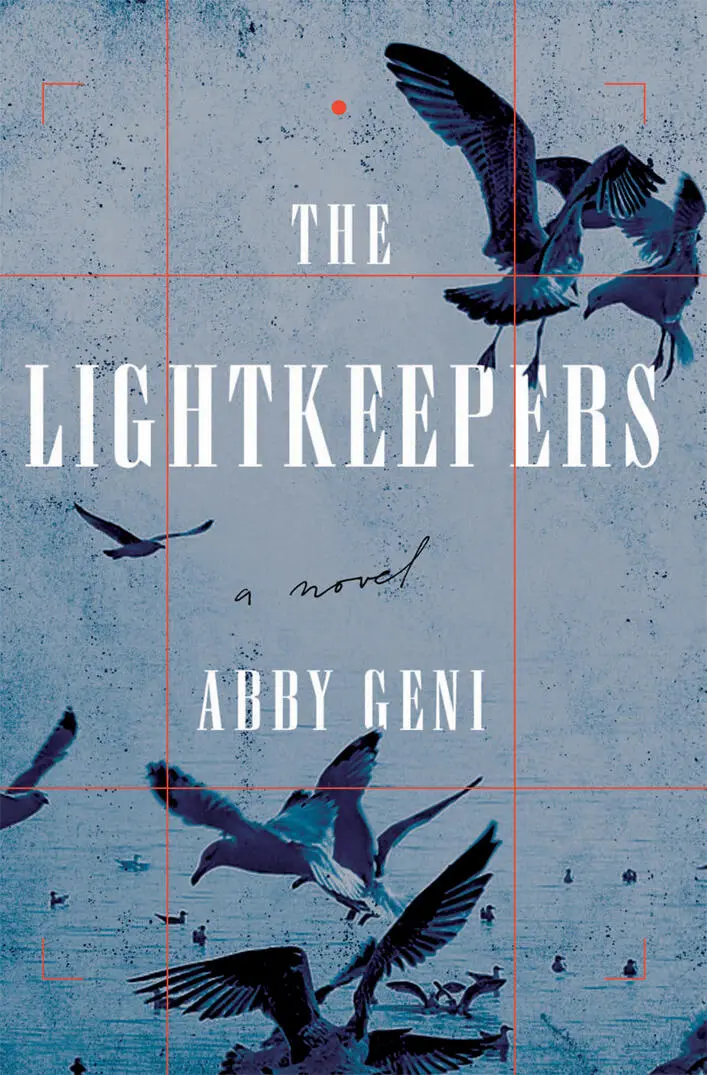
- Название:The Lightkeepers
- Автор:
- Издательство:Counterpoint
- Жанр:
- Год:2015
- ISBN:9781619027497
- Рейтинг книги:4 / 5. Голосов: 1
-
Избранное:Добавить в избранное
- Отзывы:
-
Ваша оценка:
The Lightkeepers: краткое содержание, описание и аннотация
Предлагаем к чтению аннотацию, описание, краткое содержание или предисловие (зависит от того, что написал сам автор книги «The Lightkeepers»). Если вы не нашли необходимую информацию о книге — напишите в комментариях, мы постараемся отыскать её.
, we follow Miranda, a nature photographer who travels to the Farallon Islands, an exotic and dangerous archipelago off the coast of California, for a one-year residency capturing the landscape. Her only companions are the scientists studying there, odd and quirky refugees from the mainland living in rustic conditions; they document the fish populations around the island, the bold trio of sharks called the Sisters that hunt the surrounding waters, and the overwhelming bird population who, at times, create the need to wear hard hats as protection from their attacks.
Shortly after her arrival, Miranda is assaulted by one of the inhabitants of the islands. A few days later, her assailant is found dead, perhaps the result of an accident. As the novel unfolds, Miranda gives witness to the natural wonders of this special place as she grapples with what has happened to her and deepens her connection (and her suspicions) to her companions, while falling under the thrall of the legends of the place nicknamed “the Islands of the Dead.” And when more violence occurs, each member of this strange community falls under suspicion.
The Lightkeepers
The Lightkeepers — читать онлайн бесплатно полную книгу (весь текст) целиком
Ниже представлен текст книги, разбитый по страницам. Система сохранения места последней прочитанной страницы, позволяет с удобством читать онлайн бесплатно книгу «The Lightkeepers», без необходимости каждый раз заново искать на чём Вы остановились. Поставьте закладку, и сможете в любой момент перейти на страницу, на которой закончили чтение.
Интервал:
Закладка:
“I know that too,” I said. I had, after all, done my research.
Mick went on: “Back then, everyone wanted to see what value they could find here. Fur traders hunted the animals. Sailors set up base camp. Gold miners dug up the ground.” His expression darkened. “It went on for decades. Pirates. Eggers. Russians. Nobody cared about the sharks or the seals. They just wanted to make some dough.”
I tried to visualize the scene. Staring down at the grassy plateau, I imagined it filled with figures. It was hard to grasp the idea of the islands overrun by strangers. Even I, a nature photographer, armed with nothing more harmful than a camera, had almost been denied access. These days, the place was well protected. It sat under the umbrella of government authority. The land, the sea, and especially the animals were treated as precious, finite resources. Hunting was unheard-of. Littering was not to be considered. Intruders could be thrown in jail. Even the whale-watching tours that motored in from California were required to maintain a considerable distance. It was an ecosystem left on its own — sheltered, unrefined, and unchanged.
The wind picked up, scouring my skin. I shivered, but Mick seemed unperturbed.
“Nobody stayed for long,” he said. “The islands were just too dangerous. People broke bones, got hypothermia, drowned. People were eaten by sharks. No one could stick it out.” He shook his head. “One group would hightail it out of here, running for their lives. And then some other group would move in. Set up camp. Hunt some animals. Act like idiots. Always the same. The storms would blow in soon enough. People would start dying. A few months later, they’d bolt, too.”
In short, I thought with a surge of vicarious pride, the islands had defeated them, one and all. The marauding hordes had been driven back to their native lands, tails between their legs. I lifted my gaze to the horizon. It was a clean line between blue and deeper blue, like a fold in a sheet of paper.
Mick sighed. “Pretty soon, the murre population was hanging by a thread. The fur seals had almost been hunted into extinction.”
I shifted restlessly, and he nudged me.
“Don’t fidget,” he said. “I’m getting there. All this is background.” He paused. “You see, these people left something behind.”
I glanced up at him.
“A body,” Mick said, his voice dropping an octave. “A woman’s skeleton. They found her in a cave.”
“A cave,” I repeated.
“She might have been a pirate’s wife or daughter. Or maybe an Aleut slave. Nobody has ever been able to discover her name. Even her nationality is up for debate. She might have been lying in that cave for a year, or a decade, or a century.” Mick elbowed me in the ribs, nearly knocking me over. “The corpse was taken away. They gave her a decent burial someplace. But”—he held up a finger—“her spirit is still here on Southeast Farallon.”
“This is starting to sound like a campfire story,” I said dubiously.
Mick ignored me. “The ghost has been seen lots of times. She wanders around the cabin at night, wearing a white dress. People have heard her footsteps. She makes the place feel cold on warm evenings.” His gestures grew more animated, and I took a hasty step back. “The ghost moves stuff around in empty rooms. She’ll knock a plate off a table or tilt a picture on the wall. She whispers in people’s ears when they’re sleeping.” He took a deep breath and concluded triumphantly, “I’ve seen her myself.”
“No way,” I said.
Mick paused, and I watched him, my eyebrows knotted.
“One night,” he said, “I was walking toward the cabin. This was last spring, maybe.” He paused again. “It had been a long day. One of the seal pups had died, and the mother was mourning. I couldn’t seem to let go of it. My brain was overloaded. I didn’t feel like myself. Then I looked up, and I saw somebody in your room.”
“ My room?”
“The ghost likes your room,” he said, flashing a mischievous grin. “Didn’t I mention that? A thin person, very pale. Just standing at the window and staring out. I didn’t think much of it at the time. But when I got to the cabin, nobody was home. Nobody had been there all afternoon.”
In spite of myself, I felt a chill track down my spine.
I am aware that throughout history, photography has had a strong connection to the dead. Or perhaps the undead. Ghosts are often said to turn up on film — invisible in the moment to the human eye, appearing only afterward in the darkroom. I have seen some of these images myself. Floaty, pale shapes. Figures that cannot be explained by aperture or exposure. Blurred silhouettes at the back of an empty room.
“I believe you,” I said. “I believe in ghosts.”
Mick threw me a glance I couldn’t interpret. I lifted my camera and pointed it down the hill at the cabin. I took a picture.
5
TO MY SURPRISE, it has already happened. In fact, it happened this morning: I woke at dawn, and the islands felt familiar to me.
I have had this experience on my travels before, but it never palls. In the desert it took me a while to adjust to the bone-dry air. In the tropics it took me some time to grow accustomed to the overpowering odor of the trees, the blinding showers of hot rain. I once lived in a cave, snapping photos of bats for a week. Even then I did finally adapt to the odor of guano, the plink of water, the way the darkness seemed to crawl toward me along the walls. The process of habituation is always the same. What was alien becomes familiar — what was strange becomes ordinary — the glimmering viscera of the world are pulled inside out.
Yet it has rarely happened as rapidly as it has here. I opened my eyes this morning and was glad to be where I am.
Then, however, I heard grunting and moaning from downstairs. At once, I threw on my jeans and dashed into the hallway. Lucy and Andrew live directly beneath me. They are the cabin’s resident couple.
I know this will intrigue you. You always used to begin your perusal of the New York Times with the marriage announcements. I remember it well. You believed that you could predict with great accuracy whether each pair of newlyweds would go the distance. You included an immense variety of factors in your analysis. Whether either of them had been married before. Whether either was significantly older, better-looking, or richer than the other. Whether their body language signaled ease or awkwardness in the snapshot. I was a logic-minded child, and I did point out that you had no way to verify your guesses. You could speculate all you wanted, but we would never know for sure. Still, your faith in your prognostications remained unshaken.
I will therefore share what I have gleaned about the lovebirds of the Farallon Islands, and you can decide for yourself whether they will succeed as a twosome. Lucy and Andrew are the same age — midtwenties, almost a decade younger than me. They are oddly matched. She is the sort of woman who would seem perfectly at home in pioneer garb, churning butter. She has a round, expansive, comfortable frame, her face as pink and wholesome as an apple. She is almost beautiful. In certain lights, from the right angle, she attains a fleeting loveliness. Most of the time, however, she is sturdy, warm, and homey.
Andrew, on the other hand, is a human glacier. He is pale all over, practically an albino, from his flaxen hair to his white-blue eyes. His disposition, too, is icy. During the past month, I have yet to see him express any emotion except a kind of ironic, adolescent disdain. He always wears a crimson stocking cap with a gold phoenix emblem. He keeps the cap tugged low over his ears at all times, which adds to the impression of jaded youth. His notes in the daily log are humorous but cutting. Important research now shows that the ocean is evil , he wrote one morning. And another day: Rescue ship still hasn’t gotten my signal. Mustn’t give up hope. Which cabin mate will I eat first? And then, just yesterday: I know which one I will eat first.
Читать дальшеИнтервал:
Закладка:
Похожие книги на «The Lightkeepers»
Представляем Вашему вниманию похожие книги на «The Lightkeepers» списком для выбора. Мы отобрали схожую по названию и смыслу литературу в надежде предоставить читателям больше вариантов отыскать новые, интересные, ещё непрочитанные произведения.












Обсуждение, отзывы о книге «The Lightkeepers» и просто собственные мнения читателей. Оставьте ваши комментарии, напишите, что Вы думаете о произведении, его смысле или главных героях. Укажите что конкретно понравилось, а что нет, и почему Вы так считаете.