Abby Geni - The Lightkeepers
Здесь есть возможность читать онлайн «Abby Geni - The Lightkeepers» весь текст электронной книги совершенно бесплатно (целиком полную версию без сокращений). В некоторых случаях можно слушать аудио, скачать через торрент в формате fb2 и присутствует краткое содержание. Год выпуска: 2015, ISBN: 2015, Издательство: Counterpoint, Жанр: Современная проза, на английском языке. Описание произведения, (предисловие) а так же отзывы посетителей доступны на портале библиотеки ЛибКат.
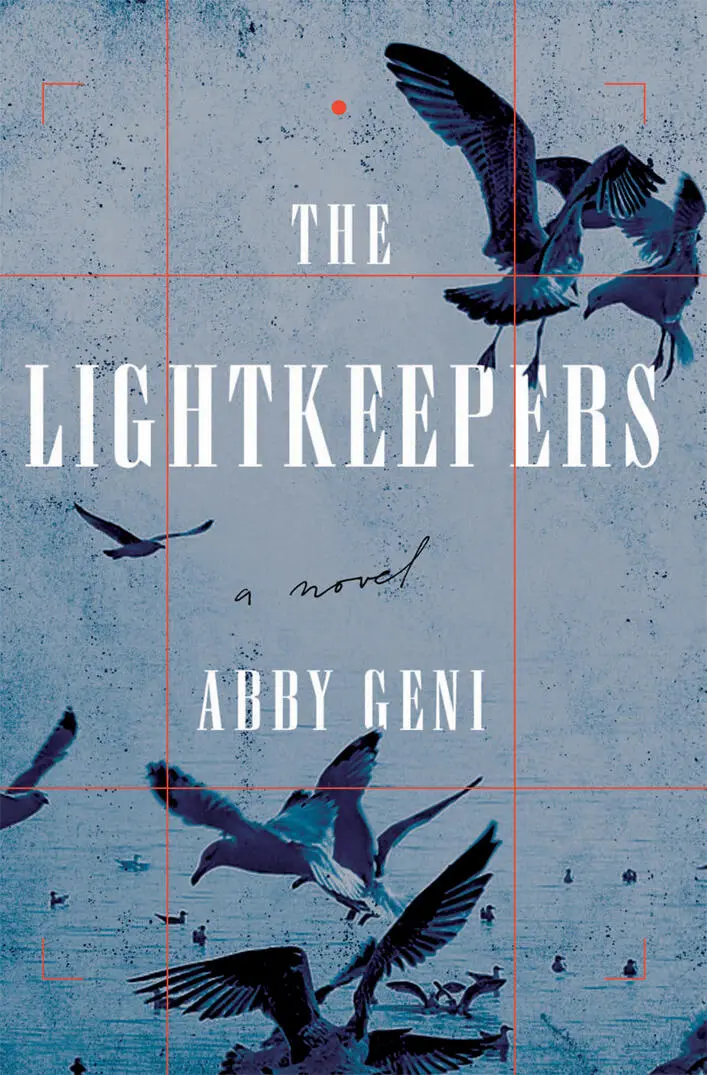
- Название:The Lightkeepers
- Автор:
- Издательство:Counterpoint
- Жанр:
- Год:2015
- ISBN:9781619027497
- Рейтинг книги:4 / 5. Голосов: 1
-
Избранное:Добавить в избранное
- Отзывы:
-
Ваша оценка:
The Lightkeepers: краткое содержание, описание и аннотация
Предлагаем к чтению аннотацию, описание, краткое содержание или предисловие (зависит от того, что написал сам автор книги «The Lightkeepers»). Если вы не нашли необходимую информацию о книге — напишите в комментариях, мы постараемся отыскать её.
, we follow Miranda, a nature photographer who travels to the Farallon Islands, an exotic and dangerous archipelago off the coast of California, for a one-year residency capturing the landscape. Her only companions are the scientists studying there, odd and quirky refugees from the mainland living in rustic conditions; they document the fish populations around the island, the bold trio of sharks called the Sisters that hunt the surrounding waters, and the overwhelming bird population who, at times, create the need to wear hard hats as protection from their attacks.
Shortly after her arrival, Miranda is assaulted by one of the inhabitants of the islands. A few days later, her assailant is found dead, perhaps the result of an accident. As the novel unfolds, Miranda gives witness to the natural wonders of this special place as she grapples with what has happened to her and deepens her connection (and her suspicions) to her companions, while falling under the thrall of the legends of the place nicknamed “the Islands of the Dead.” And when more violence occurs, each member of this strange community falls under suspicion.
The Lightkeepers
The Lightkeepers — читать онлайн бесплатно полную книгу (весь текст) целиком
Ниже представлен текст книги, разбитый по страницам. Система сохранения места последней прочитанной страницы, позволяет с удобством читать онлайн бесплатно книгу «The Lightkeepers», без необходимости каждый раз заново искать на чём Вы остановились. Поставьте закладку, и сможете в любой момент перейти на страницу, на которой закончили чтение.
Интервал:
Закладка:
At this time of year, there can be two or three kills a day. The sharks eat the seals and sea lions. There is enough prey here to sustain a massive host of predators. The birds will mark the spot like an X on a map. Watching from the lighthouse, Forest or Galen will spy a collection of gulls diving over a patch of sea. The cry will go up. Boots are thrown on — coats flung over shirts — a thunder of feet on the stairs. Forest uses a child’s scooter with streamers on the handlebars to make his downhill run from the lighthouse that much faster. One of these days he will break his neck.
There is no pier on the Farallon Islands. The tides have seen to that. Any attempts at building a dock have invariably been washed away. There is a powerful undertow. There are riptides that come and go without warning or rhythm. There are reefs and shoals. The islands are home to two small boats, both of which must be lowered into the sea by crane. They are too large to ride in the Billy Pugh, of course. Instead, they must be hooked directly to the steel cable itself.
The first is a rowboat (called the Lunchbox , I am sad to say, since its crew tends to feel like a tasty snack when moored next to a white shark). Then there is the Janus , a seventeen-foot Boston Whaler. This is a sturdier thing, with benches and a deckhouse, as well as a railing that, to my untrained eye, appears to be for decorative purposes only. The Janus is equipped with a motor, which makes this boat the preferred method of transport. Both boats spend their free time resting on a mattress of rubber tires at East Landing, a thirty-foot cliff. I have seen them being lowered into the water, swinging merrily on the end of the chain, plummeting into black waves larger than themselves.
I have not yet been brave enough to venture out on Shark Watch. I have stayed safely on land. It is unnerving to think that those monsters are always out there, patrolling the dark surf. Waiting. For the most part, the white sharks remain hidden, tucked inside a wave, buried in the deep currents. Once or twice, however, I have glimpsed a dorsal fin cresting the water, as menacing as the periscope of an enemy submarine.
MY LOVE AFFAIR with the islands has continued. At times I feel drugged, wandering the shoreline with a stupid grin on my face, camera aloft. Each snapshot seems like a benediction. We may never know what another person is thinking — never truly get into anyone else’s head — but photography brings us as close as anything can. When the members of an audience at an art gallery look at a picture, they can step for a moment inside the mind of the artist. Like telepathy. Like time travel. At some future date, when people gaze at my photographs of the islands, they will see what I saw. They will stand where I stood, on this granite, surrounded by this ocean. Perhaps they will even feel some of the elation I have experienced here.
Earlier today, I found myself at North Landing, where a dozen California sea lions were lolling in the light. They maneuvered around like canine mermaids. Their bodies seemed split in two; the upper half was alert and upright — pert little ears, sharp eyes, and a snout bristling with whiskers — whereas the back half was weighted down with fat and fins, slithering across the flagstones. They toasted themselves like marshmallows, plunging into the frothy shallows to cool off.
Soon I realized that one of the creatures was injured. It did not romp and play with the others, diving and hunting fish. Instead it lay on the shore, one flipper cradled against its chest. Through my telephoto lens, I could see a deep, fresh wound. The flipper had nearly been severed from the torso. The gash was new enough that it had not yet begun to scab. Instinctively I put a hand to my rib cage, where my own flesh had been cut open a few weeks before. Probably the animal had survived a run-in with a white shark. This was surprisingly common. What the sea lions lacked in mass, they made up for in gymnastic agility. I could imagine the shark lunging forward as the sea lion pirouetted and somersaulted away. But it was clearly in bad shape now. It was weak and dazed-looking.
I knew, however, that there was nothing I could do. There would be no point in going to fetch Mick or Galen. The biologists were on the islands to observe and document. Nothing more. Noninterference was the core of their belief system. They would never intervene in the life — or death — of one of their charges. I had received a stern lecture on this very subject from Galen a few days back. An injured animal was a specimen to be studied. Its demise was an event to be recorded for posterity. The food chain was paramount. Sympathy and affection were beside the point.
I turned away. Bending down, I took a few close-ups of shark teeth. The grounds are speckled with them; they dot the landscape like flowers in a prairie. Delicate reminders of danger. People used to believe shark teeth fell from the sky during lunar eclipses. Honestly, I am not sure myself how they travel so far inland.
After a while, I moved off to get a few candid snapshots of my human companions. They had proven to be as camera-shy as the animals. I had learned to be crafty. Crouching behind a boulder, telephoto lens in place, I saw Lucy sitting cross-legged on the shore, engaging in a debate with a puffin. She could imitate most birds’ cries well enough to cause confusion in their little minds. This one clearly thought she was another puffin encroaching on its turf. Presently another shape intruded into the frame. I adjusted the focus and saw red hair, a too-big windbreaker — Charlene.
I have not mentioned Charlene yet, since I haven’t been sure what to say. To begin with, she is young, even younger than Andrew and Lucy. Charlene is still in college. A mop of unruly red hair. Pale skin strewn with constellations of freckles. She is an intern, not a biologist. (For the record, Charlene is the only intern who has ever lasted more than a fortnight on the islands. She has been here three months already.) Her identity is effaced by her subordinate position, by the eagerness she displays whenever she is asked to help with the simplest task, from hosing down the Janus to itemizing the contents of the cupboards to making coffee. I have yet to get any sense of her personality.
Now, through my lens, I watched both women get to work. They were too far away for me to catch any of their conversation. It appeared that Lucy was teaching Charlene how to tag the birds. Lucy is a master at this tricky process: capturing a feathery body, holding it firmly but gently in both hands so it cannot peck her or injure itself, and attaching the orange band. Charlene was obviously nervous, her brow furrowed with concentration. Lucy spoke soothingly, patiently, as Charlene fumbled and frowned, letting bird after bird slip through her grasp. Suddenly, both women burst into laughter. I got it on film: Charlene’s head thrown back, her hair a crimson halo, and Lucy doubled over, clutching her stomach. Their mirth scared the remaining birds into flight. The flock swirled upward, a waterfall of wings.
I found myself distracted. The problem of Lucy has occupied my mind lately. I cannot figure it out. She is the belle of the Farallon Islands, the darling of the group. I have seen her giving Charlene a neck rub or offering to do the dishes when it’s Forest’s turn because he looks tired. I have observed her sitting on the couch with Galen and delighting over a ludicrous error they have stumbled upon in a reference book — the kind of thing that would only be discernible to a pair of biologists. Lucy laughs easily and loudly. She is open, cheerful, kind.
But not with me. It has taken me a while to catch on to the reality of the situation. To be frank, I was fooled at the start by her appearance. Plump and pink, she looks like the sort of woman who ought to be wearing an apron or kneeling in a garden, her hands deep in the earth. In her interactions with me, however, she has been odd from the beginning. Every so often, she will throw out a backhanded comment. (“Wow! That shirt is interesting .” “You must have great teeth, mouse girl. I can hear you chewing all over the cabin.”) Lucy will snicker when I trip on a loose floorboard or drop my spoon at the table. Withering looks. Covert eye rolls. I cannot read the riddle.
Читать дальшеИнтервал:
Закладка:
Похожие книги на «The Lightkeepers»
Представляем Вашему вниманию похожие книги на «The Lightkeepers» списком для выбора. Мы отобрали схожую по названию и смыслу литературу в надежде предоставить читателям больше вариантов отыскать новые, интересные, ещё непрочитанные произведения.












Обсуждение, отзывы о книге «The Lightkeepers» и просто собственные мнения читателей. Оставьте ваши комментарии, напишите, что Вы думаете о произведении, его смысле или главных героях. Укажите что конкретно понравилось, а что нет, и почему Вы так считаете.