Abby Geni - The Lightkeepers
Здесь есть возможность читать онлайн «Abby Geni - The Lightkeepers» весь текст электронной книги совершенно бесплатно (целиком полную версию без сокращений). В некоторых случаях можно слушать аудио, скачать через торрент в формате fb2 и присутствует краткое содержание. Год выпуска: 2015, ISBN: 2015, Издательство: Counterpoint, Жанр: Современная проза, на английском языке. Описание произведения, (предисловие) а так же отзывы посетителей доступны на портале библиотеки ЛибКат.
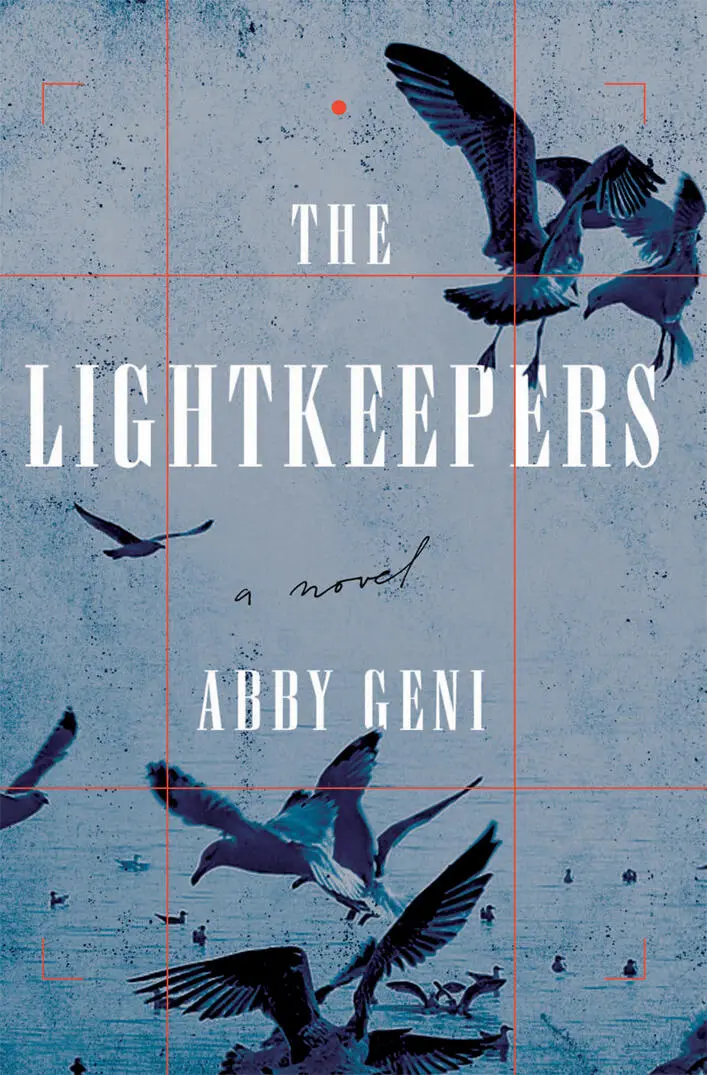
- Название:The Lightkeepers
- Автор:
- Издательство:Counterpoint
- Жанр:
- Год:2015
- ISBN:9781619027497
- Рейтинг книги:4 / 5. Голосов: 1
-
Избранное:Добавить в избранное
- Отзывы:
-
Ваша оценка:
The Lightkeepers: краткое содержание, описание и аннотация
Предлагаем к чтению аннотацию, описание, краткое содержание или предисловие (зависит от того, что написал сам автор книги «The Lightkeepers»). Если вы не нашли необходимую информацию о книге — напишите в комментариях, мы постараемся отыскать её.
, we follow Miranda, a nature photographer who travels to the Farallon Islands, an exotic and dangerous archipelago off the coast of California, for a one-year residency capturing the landscape. Her only companions are the scientists studying there, odd and quirky refugees from the mainland living in rustic conditions; they document the fish populations around the island, the bold trio of sharks called the Sisters that hunt the surrounding waters, and the overwhelming bird population who, at times, create the need to wear hard hats as protection from their attacks.
Shortly after her arrival, Miranda is assaulted by one of the inhabitants of the islands. A few days later, her assailant is found dead, perhaps the result of an accident. As the novel unfolds, Miranda gives witness to the natural wonders of this special place as she grapples with what has happened to her and deepens her connection (and her suspicions) to her companions, while falling under the thrall of the legends of the place nicknamed “the Islands of the Dead.” And when more violence occurs, each member of this strange community falls under suspicion.
The Lightkeepers
The Lightkeepers — читать онлайн бесплатно полную книгу (весь текст) целиком
Ниже представлен текст книги, разбитый по страницам. Система сохранения места последней прочитанной страницы, позволяет с удобством читать онлайн бесплатно книгу «The Lightkeepers», без необходимости каждый раз заново искать на чём Вы остановились. Поставьте закладку, и сможете в любой момент перейти на страницу, на которой закончили чтение.
Интервал:
Закладка:
IT IS AUGUST, a season of wind, clouds, and great white sharks. The stretch of ocean around the Farallon Islands is called the Red Triangle. Every year, there are more shark attacks here than everywhere else on earth combined. Yesterday I went out with my camera for the first time. I brought Evildoer, my lightest and most portable instrument. I was hoping to catch one of the sharks on film.
As I walked, the shoreline shifted and broke away beneath my boots. I had been told to be careful on the grounds. I had been told this over and over. The granite was eighty-nine million years old and rotten — if stone can be said to rot. The islands are deceptively fragile, made of rock that is not solid. There are hollow areas, crumbling patches. I crossed the stream, a filthy yellow trickle. It looked poisonous. It was poisonous. There was a system of concrete pads, funnels, and filtration hubs to collect and purify the rainwater that falls on the archipelago. Only a crazy person would drink from that brook.
In addition, there were mice everywhere. Southeast Farallon is the most rodent-dense place in the world. They are an invasive species, carried here decades ago on ships. The creatures have been flourishing ever since. They lack natural predators. The seabirds ignore them. The seals have no interest. The sharks can’t get near them. I knew the numbers before coming to the islands, but I had not really understood their full import until I stood on the gray slope and saw motion everywhere. Tiny shapes dodged and darted in my peripheral vision. The mice were rock-colored, too small and quick to track. The overall impression was of living, moving stone.
I stopped to take a picture. I was using Dutch angles in my photographs — canting the horizon, adding inclines where there were none in real life. The islands had menace in spades, but there was no harm in adding a little more. I wanted my pictures to capture the full effect: craggy stone, black water, the smell of salt, the possibility of sharks. I remembered a professor of mine, back in college, explaining the Dutch angle to me for the first time. Used for dramatic effect. A tilt that leaves the viewer off-balance. It can convey disorientation, unease, intoxication, even madness.
I knelt, trying to frame a shot of Saddle Rock. This was a thin slice of island far offshore, jutting against the sky like a weapon. I felt a lurch underfoot. I lost my balance, reached out wildly, and turned over a rock. It was a good-sized thing, a boulder. I began to fall. The boulder began to fall with me.
People say that time slows down in moments of extreme stress. I have done a little research on the subject, and what actually happens is that memory becomes incredibly retentive. Usually the mind only holds on to images and events that are important. We remember the big things and forget the little ones. In moments of stress, however, the mind grabs on to everything. Time itself moves the way it always does, but afterward, looking back, the impression is one of photographic recall. In retrospect, we feel as though the second hand must have slowed down, as though we were able to see the surrounding world in fantastic, specific detail.
The rock flipped over. Behind it was a waterfall of brown. Mud, I thought. But no — it was mice. Dozens of them, tumbling over one another, squeaking. Their little feet groping. Whiskers quivering. A plague of rodents.
Something made contact with my elbow. I had begun the process of landing on the ground. The blow knocked the wind out of me. There was a tearing sensation. The flesh of my torso was ripping. A sharp stone. Splattered with blood. My side had been gashed open. I could not tell how deep the cut might be. It hurt to breathe. The boulder was still rolling toward me. It struck my thigh.
Then the mice came, falling like rain. Their cold feet on my belly. A paw in my mouth. A nose in my eye. Tails slithering all over my skin.
They kept coming. Dozens, maybe hundreds. I could only imagine that I had opened the front door to some network of their tunnels and unleashed an avalanche. I could do nothing but succumb to the onslaught — scratching my skin, covering me with their filth, leaving droppings in my hair.
At last they were gone. I held still a while longer, curled tight, my hands over my head. Then I opened my eyes.
In front of me was a horrid sight. My camera lay on the ground. Dented and smashed. Shattered glass everywhere. I cried out. This hurt more than the wound in my side. Evildoer was broken beyond repair.
MICK STITCHED ME up in the kitchen. It was evening, the sky darkening, the wind roaring. The others were all around me. Making dinner. Chatting about their day. Six people, slightly out of focus. They seemed unmoved by my predicament. I had lost one of my dear cameras. My thigh was purple where the boulder had struck me. I had scrapes and bruises all over. Mick was working a needle through the flesh of my torso. But the biologists seemed to take the whole thing in stride. They did not offer me sympathy. They merely handed Mick the first aid kit and went about their business, as though blood and mouse attacks were a part of normal life.
He had given me a shot of some numbing agent. Still, I did not look down as he shoved the needle into my skin. Mick had clearly done this before. The first aid kit on the islands was as well-stocked as an emergency room. Cuts, sprains, and dislocations could be dealt with right here. No fuss, no muss. If anyone suffered a serious wound — a broken bone, a head trauma — it would, of course, require a response from outside the islands. Captain Joe. A helicopter. Nobody wanted that. It was expensive. It was time-consuming. My injury was not worthy of such extreme measures.
Mick took up a pair of tiny scissors. With a flourish, he cut the thread.
“That should heal fine,” he said.
“What if I get an infection and die?”
He smiled. He had a pair of reading glasses perched on his nose, at odds with his rugged bone structure and shock of unruly hair.
“You’ll have a scar,” he said. “But we’ve all got them here.”
“Really?” I said.
“I slashed my thigh open a few years ago. All the way open. Knee to hip. And Lucy nearly took her ear off when she fell down Lighthouse Hill. Galen and Forest have got too many to count. You should see them naked.” He whistled between his teeth. “Marks everywhere. Like a road map.”
I glanced down and realized my hands were shaking.
“Why do you all live here?” I said. “Why the hell did you come to this place?”
There was a silence. A feeling of tension. Lucy paused on her way to the kitchen. Galen, seated at the table, froze. But I persisted.
“I’m really asking,” I said. “Why did you all come here? I want to know.”
The silence intensified. Galen stood up, unnaturally tall, his head nearly brushing the ceiling. No one was looking at him. Or at me.
He turned and left the room. Mick reached into the first aid kit and removed a pad of gauze. He began taping it over my side. Then he gave me a wink.
THE NEXT DAY, I went out and dug a grave for my camera. I found a shovel in an old shed. I cut right into the granite, the stone giving way before my blade. I laid Evildoer in the hole. It was terrible to see — the LCD cracked, the lens gone, the mode dial chipped, the casing fractured. I covered the poor thing with earth. I knew better than to make a headstone. It would not last, not here.
A mouse flitted past me down the hill. At once, I lifted the shovel and swung it. I wanted to smash the creature to a pulp. I aimed for the furry spine, but it was too quick for me. I made contact with the granite instead, sending a ringing jolt up both arms.
4
THE FARALLON ISLANDS have their own ghost story. I heard it for the first time today when Mick steered me outside for a walk. I did not want to go; my leg was cramping, a residual soreness from my fall, a deep ache. My side had not yet fully healed and was giving off twinges of pain. I had been overdoing it on the slick, rocky terrain, unaccustomed to this new topography. Still, I couldn’t say no. In the weeks that I’d been here, Mick had become my favorite.
Читать дальшеИнтервал:
Закладка:
Похожие книги на «The Lightkeepers»
Представляем Вашему вниманию похожие книги на «The Lightkeepers» списком для выбора. Мы отобрали схожую по названию и смыслу литературу в надежде предоставить читателям больше вариантов отыскать новые, интересные, ещё непрочитанные произведения.












Обсуждение, отзывы о книге «The Lightkeepers» и просто собственные мнения читателей. Оставьте ваши комментарии, напишите, что Вы думаете о произведении, его смысле или главных героях. Укажите что конкретно понравилось, а что нет, и почему Вы так считаете.