Arturo Fontaine - La Vida Doble
Здесь есть возможность читать онлайн «Arturo Fontaine - La Vida Doble» весь текст электронной книги совершенно бесплатно (целиком полную версию без сокращений). В некоторых случаях можно слушать аудио, скачать через торрент в формате fb2 и присутствует краткое содержание. Год выпуска: 2013, Издательство: Yale University Press, Жанр: Современная проза, на английском языке. Описание произведения, (предисловие) а так же отзывы посетителей доступны на портале библиотеки ЛибКат.
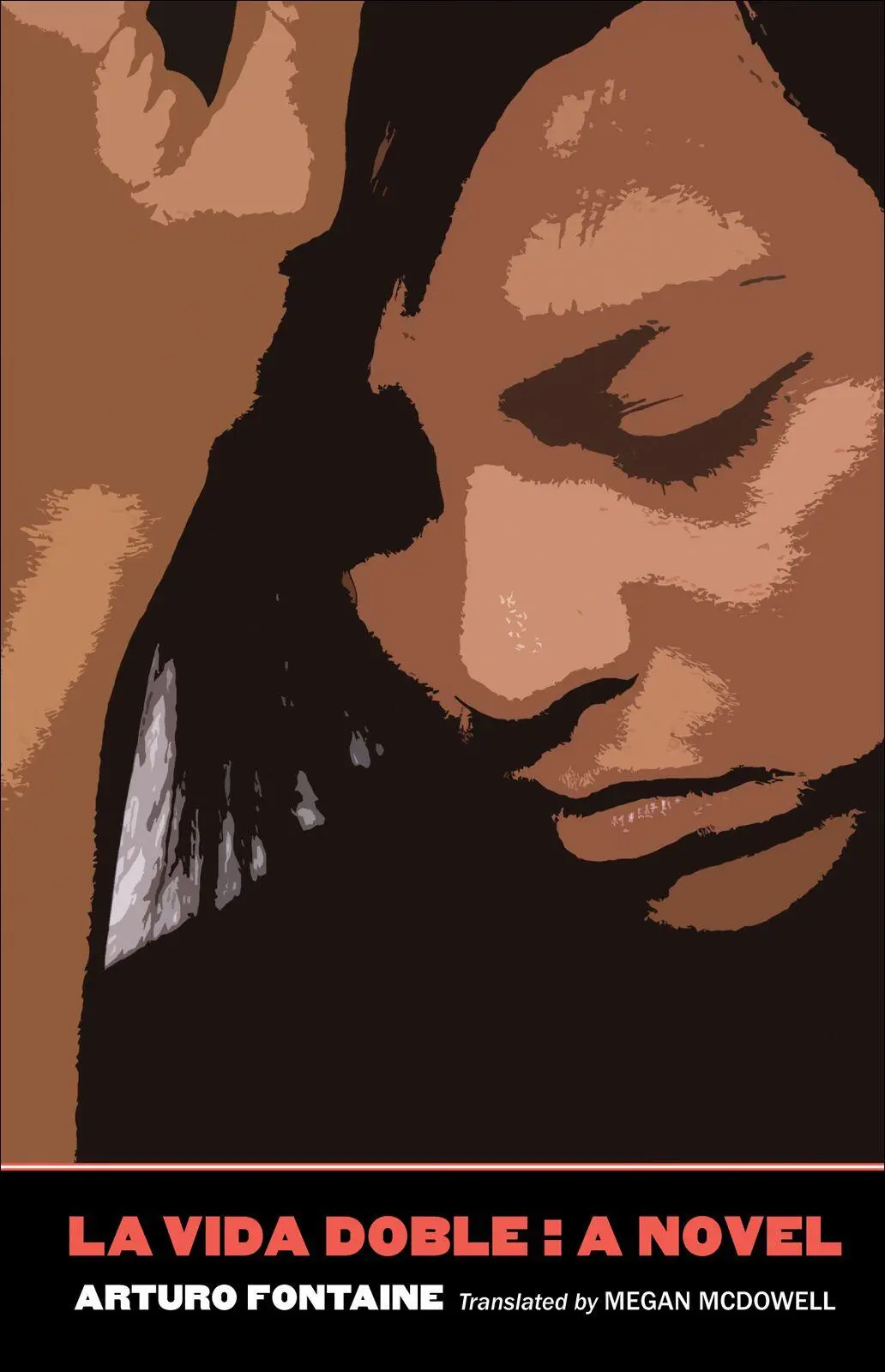
- Название:La Vida Doble
- Автор:
- Издательство:Yale University Press
- Жанр:
- Год:2013
- ISBN:нет данных
- Рейтинг книги:3 / 5. Голосов: 1
-
Избранное:Добавить в избранное
- Отзывы:
-
Ваша оценка:
La Vida Doble: краткое содержание, описание и аннотация
Предлагаем к чтению аннотацию, описание, краткое содержание или предисловие (зависит от того, что написал сам автор книги «La Vida Doble»). Если вы не нашли необходимую информацию о книге — напишите в комментариях, мы постараемся отыскать её.
is the story of Lorena, a leftist militant who arrives at a merciless turning point when every choice she confronts is impossible. Captured by agents of the Chilean repression, withstanding brutal torture to save her comrades, she must now either forsake the allegiances of motherhood or betray the political ideals to which she is deeply committed.
Arturo Fontaine’s Lorena is a study in contradictions — mother and combatant, intellectual and lover, idealist and traitor — and he places her within a historical context that confounds her dilemmas. Though she has few viable options, she is no mere victim, and Fontaine disallows any comfortable high moral ground. His novel is among the most subtle explorations of human violence ever written.
Ranking with Roberto Bolaño and Mario Vargas Llosa on Latin America’s roster of most accomplished authors, Fontaine is a fearless explorer of the most sordid and controversial aspects of Chile’s history and culture. He addresses a set of moral questions specific to Pinochet’s murderous reign but invites us, four decades later, to consider global conflicts today and question how far we’ve come.
La Vida Doble — читать онлайн бесплатно полную книгу (весь текст) целиком
Ниже представлен текст книги, разбитый по страницам. Система сохранения места последней прочитанной страницы, позволяет с удобством читать онлайн бесплатно книгу «La Vida Doble», без необходимости каждый раз заново искать на чём Вы остановились. Поставьте закладку, и сможете в любой момент перейти на страницу, на которой закончили чтение.
Интервал:
Закладка:
And I didn’t give myself halfway, let me tell you. Once I’d taken the step, I did it all the way. I took courses in intelligence. I was a diligent student. I learned quickly. I came prepared. And at the swearing-in ceremony I intoned the hymn of Central Intelligence: “We are children of silence. .” No sooner had I received my new general ID card, my Central ID card, and my CZ, I swore I would use it. I hated my brothers.
I thought about the thousands and thousands and thousands of innocent lives martyred as they searched for us, the clandestine fighters. We behaved, I told myself, as if we had already done what we hoped to eventually do; we believed that the magnitude of our hope was enough to make us right. Now it irritated me that I had listened, enthralled, to Pelao Cuyano, who had done a course in military instruction at Punto Cero and I hadn’t, and who told us in an accent that reminded us of Che: “Mirá, look, Giap had never fought before when he took over as the leader of the Armed Propaganda Brigade, and with only thirty-three men, think about it, Che, with only thirty-three men, Giap started the revolutionary war in Vietnam. Ten years later, in Dien Bien Phu, four divisions entered into combat, some eighty thousand men. What do you have to say about a thing like that, girl?” And he looked at us with fevered eyes.
Our political analyses were hermeneutic exercises. They were about recognizing in our profane present the repetition of archetypal events from our sacred history. That’s how the crusader lives. The truth is, our story was much more modest than Giap’s: a minis-cule number of trained combatants had unleashed the military’s paranoia and its politics of extermination. Everything was out of proportion: our rhetoric of armed struggle and the implacable cruelty of the military response. I came to think all this much later, certainly, when betrayal and treachery had become a habitual form of revenge against my brothers and against myself. Against my brothers because they refused to acknowledge that we were going to be grabbed by the eyelashes, for making me believe in a utopia whose only possible future was failure, and against myself for being duped by a religion that, like all religions, was no more than a cult of death.
A collaborator, to be used by that Moloch to facilitate his plans. And also to quell the remorse and self-hate that come when you feel yourself to be a traitor. A person needs to believe herself to be good, and to justify her actions. They are the guilty ones, not I, and I must denounce them. What sense does it make, what they’re doing? It’s a thanatotic sickness, I tell myself. The truth is they don’t even believe anymore that their sacrificial death will bring about a new world. They go through life clinging to a dream that’s long gone. The “revolution,” as they remember it, is over. They’re tied to something dead. They identify with something that has vanished. They can’t bury their dead and resign themselves to the idea that their dreams are buried, because it’s as if they were burying themselves.
So they take some ammunition by force from the Aquageles plant, they lay their cables, set their watches, and oil their Brownings, their Kalashnikovs. They’re being summoned by the defunct. They are few. They are ancestral voices demanding blood, revenge, and sacrifice. Though there is no hope, and perhaps because there is no hope. That’s the great thing, I tell myself, the noble thing, I tell myself and contradict myself. The idea is to sacrifice yourself. A symbol, a moral testament.
And so their fight against inequality, their scientifically blind trust in victory and life, gets confused with the death that patiently waits for them and ties them up and leaves them with no tomorrow. Otherwise, there would be only the futility of a life given over drop by drop to a cause that wasn’t worth the trouble. Then, to live is to die along with your dead. My death is fidelity; it is a solution. To give everything in order to detonate some bomb, to do damage of any kind and not acknowledge that in the meantime they’ve switched the movie. To change is to betray myself, sell out, and dilute myself. That’s how I came to think when I was one with my brothers: I am what I was, and what I was, I will be always. What we were, or nothing! What we were, or death! Yes. And hope, where was that?
And now that same woman had the job of asking questions in a Cuban voice. The weapon of my spite. I wasn’t bad at it. Gato was beside me. The stench of garlic and accumulated sweat. I’m sure he wore his shirts more than once. He had a slightly crooked nose. Every so often he would pull his lapel tighter with a small, clenched hand, showing his pointed knuckles and the protruding veins that ran from them to his too-thin wrist. That was when he wasn’t interrogating, because he used gloves for that. A flap of fat and skin hung down over the neck of his shirt.
In the meantime, I diligently went on giving my private French classes, I continued going with Clementina to art openings, and I brought Anita to school every morning. I went to pick her up at my mother’s house at a quarter to eight. I left my apartment wearing a sweat suit at 7:20. She would be waiting for me in her little blue skirt with her backpack ready. She was never late, always there waiting for me. When I returned home, I showered, got dressed, and ate breakfast. I remember that my showers were endless. A sudden memory, like rays of sunlight filtering in between Persian blinds: I would see myself in Pauline’s apartment in the rue de Bourgogne, listening to songs by Brassens, eating Camembert cheese melted over thin slices of apple. I tried to imagine Giuseppe’s long, thin, lively nose, his embrace, his laugh: Anche tra i leoni ci stanno i culatoni, Even among lions there are fags. . I tried uselessly to reconstruct the expression on his face when he opened the door for me: Voilà la plus belle! It was no use. Faces, even the ones we love, fade away.
I would emerge from the shower with my fingertips wrinkled. I remember that often, the room full of steam, I would shake my head and say to myself in a loud voice, as if to someone else: “I’m really tired, too tired. I can’t do it anymore.” Sometimes, as I was drying myself with my thick towel, white and heavy, I would stop for no reason. I would stand there looking at the ceiling or the bathroom tiles and think about nothing until the cold made me snap out of it. “I’m exhausted,” I would repeat. “I’m really exhausted.” It was hard for me not to get back in bed. Some mornings, I did.
TWENTY-SEVEN
Though it was hard for me to admit, I had started to fall in love with Flaco. He infected me. I thought about his gestures, and I felt myself copying them. Without consciously trying, I imitated his way of walking and moving. He hypnotized me. I wanted to help him. Why? He was the strong one, after all. I was a submissive lover, as if my submission would allow me to participate in his power. I felt that his hands, when they touched me, shaped me anew as if my flesh were soft clay, that old image that my feminist “self” hated and thought she’d overcome. My humiliation had undone me, and only another human being could re-create me. Does what I’m saying make sense to you, or do you think I just wanted to survive, or that I’d whored myself out, period? Because I knew he could kill me with those same hands, with one single, silent blow. That frightened me. He would know how to make all the evidence disappear. A faint and dangerous excitement ran through my body.
I see myself in the half-light, my heart pounding as my tongue explores his strong muscles. He wasn’t what he seemed to be, either. No one is. That’s why that house existed, hidden away on a plot of land in Malloco. And I can skip over details and imagine the situation all over again for you. I don’t even know anymore. They left me irremediably broken and disguised. You know? I can’t stop thinking, as I talk to you, about what you’ll do with what I tell you. Maybe your book will be a barely disguised report. I see a problem with that: the weight of the real could suffocate your novel. And this story, as you’ve seen, is plenty unpleasant. It couldn’t be any other way. A novel should be constructed as the dream of a poet, don’t you think? Maybe no one will know. But in any case, what happened, happened. You can be sure of that. I’m not talking just to talk. My story continues to be a testimony — of course, it’s a testimony without innocence. I shape myself in words for you, I lift myself up on my own air, and that’s what I am, then, a flow of sound that emanates from the chords in my throat and that I put within your reach, nothing more. For you, there’s nothing external with which you can contrast me. I’m Narcissus, constructing my mirror of water and looking at myself, and you watch me do it.
Читать дальшеИнтервал:
Закладка:
Похожие книги на «La Vida Doble»
Представляем Вашему вниманию похожие книги на «La Vida Doble» списком для выбора. Мы отобрали схожую по названию и смыслу литературу в надежде предоставить читателям больше вариантов отыскать новые, интересные, ещё непрочитанные произведения.



Обсуждение, отзывы о книге «La Vida Doble» и просто собственные мнения читателей. Оставьте ваши комментарии, напишите, что Вы думаете о произведении, его смысле или главных героях. Укажите что конкретно понравилось, а что нет, и почему Вы так считаете.