Olja Savicevic - Adios, Cowboy
Здесь есть возможность читать онлайн «Olja Savicevic - Adios, Cowboy» весь текст электронной книги совершенно бесплатно (целиком полную версию без сокращений). В некоторых случаях можно слушать аудио, скачать через торрент в формате fb2 и присутствует краткое содержание. Год выпуска: 2016, Издательство: McSweeney's, Жанр: Современная проза, на английском языке. Описание произведения, (предисловие) а так же отзывы посетителей доступны на портале библиотеки ЛибКат.
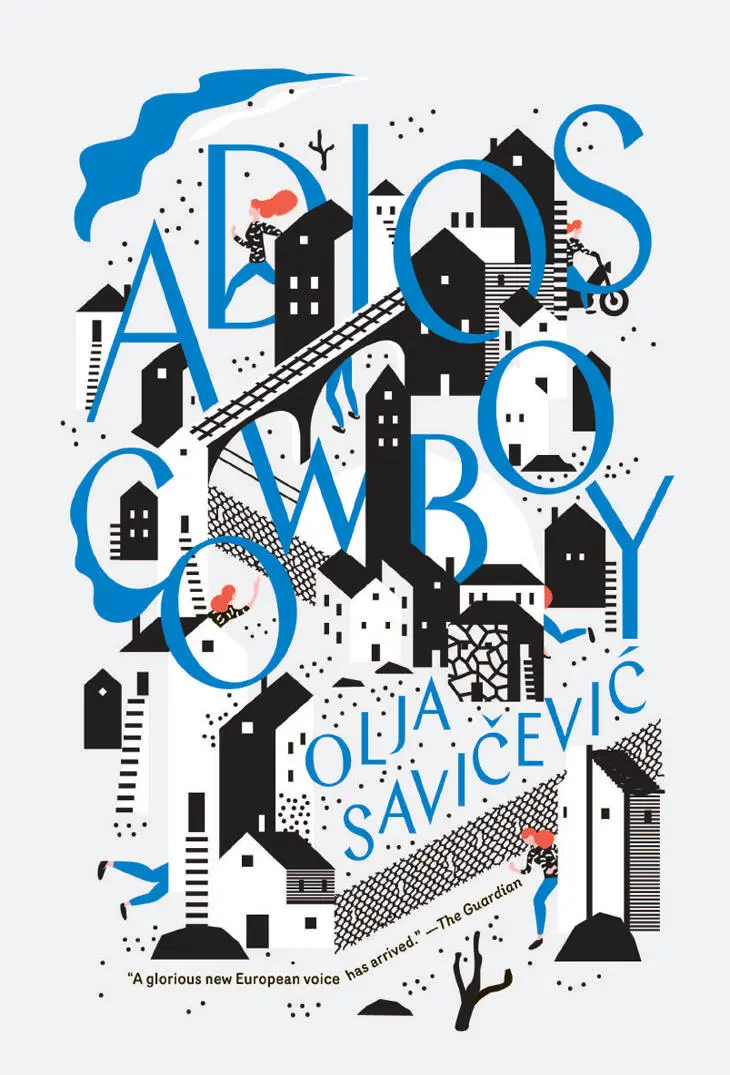
- Название:Adios, Cowboy
- Автор:
- Издательство:McSweeney's
- Жанр:
- Год:2016
- ISBN:нет данных
- Рейтинг книги:4 / 5. Голосов: 1
-
Избранное:Добавить в избранное
- Отзывы:
-
Ваша оценка:
Adios, Cowboy: краткое содержание, описание и аннотация
Предлагаем к чтению аннотацию, описание, краткое содержание или предисловие (зависит от того, что написал сам автор книги «Adios, Cowboy»). Если вы не нашли необходимую информацию о книге — напишите в комментариях, мы постараемся отыскать её.
Hoping to free her family from the grip of the past, Dada vows to unravel the mystery of Daniel’s final days. This American debut by a poet from Croatia’s “lost generation” explores a beautiful Mediterranean town’s darkest alleys: the bars where secrets can be bought, the rooms where bodies can be sold, the plains and streets and houses where blood is shed. By the end of the long summer, the lies, lust, feuds, and frustration will come to a violent and hallucinatory head.
Adios, Cowboy — читать онлайн бесплатно полную книгу (весь текст) целиком
Ниже представлен текст книги, разбитый по страницам. Система сохранения места последней прочитанной страницы, позволяет с удобством читать онлайн бесплатно книгу «Adios, Cowboy», без необходимости каждый раз заново искать на чём Вы остановились. Поставьте закладку, и сможете в любой момент перейти на страницу, на которой закончили чтение.
Интервал:
Закладка:
“And I’m at the end of the food chain, supplier of fast food, courier of the fifth division. D’you want scandal or crime? Crime or scandal?
“You see, all these massacres, they’re all based on the entertainment industry, the whole thing is one great cheerful scandal, a bit of sex, a little good old ’orror, slitting, screwing and slaughtering. And then ’ere’s our controversial ‘enry, service on demand. You asked — look! No, legend, no one’s even trying to wrap it up nice now. And I’m your waiter, postman, commercial traveler, businesslike as a cash-machine, and entertaining as a clown…”
Then he disappeared somewhere behind the pine trees, on the short, swift legs of a dachshund, and with the head of a mole, Morloch — the underground proletarian.
Ma had put on lipstick, found quite a nice old hat of my sister’s, and, in a green dress full of daylight, she walked to the bus station, toting her straw basket as usual. She wasn’t going to the cemetery, she was going “to see her relative, Mariana Mateljan, to play rummy,” she said. She had turned down the offer of her relative coming for her, although “she offered several times,” she said. She wanted to walk in the nice weather. I hoped that she wasn’t going to one of her doctors — because, I realized, Ma had a whole network of physicians — to replenish her supplies of Normabel and Xanax.
“Mother’s an addict  ,” a film trailer would sometimes flash through my head like an ax. Mother’s an addict.
“Aha, she’s showing signs of life,” commented my sister’s voice at the other end of the receiver, munching an apple when I explained where Ma was.
“Well great, that’s good news, very.” The apple crunched.
I had the feeling my sister wasn’t really listening to me, I heard the sounds of a clicking mouse from the other end.
When she came back from her rummy game at her relative Mariana Mateljan’s, Ma looked pleased. Her cards had “always come out,” she said. She washed her hands with a scrubbing brush, soap and water that steamed; took off her shoes and nylons and shooed ginger Jill out of her armchair with a rolled-up newspaper.
“Psssht, ” she said.
The cat opened her glassy emerald eye, got up, and curled up a little farther away, on the rug under the television.
“You know,” said Ma, hanging her stockings over the back of the armchair, then sitting down, “at first, after he died, I spent years waitin’ for your dad to appear. For the last four years, I’ve been waitin’ for your brother too. I’ve waited for him every day from dawn to dusk but now I see he won’t be comin’.”
Her voice was calm and sure as though she was reading from a book. Her upper lip was sprinkled with moisture, I observed. Perhaps she was ill.
She sat in one of those armchairs of hers, worn by her back and behind, her makeup wiped off and barefoot like an old child, and I was overcome, quite out of the blue, by an unbearable desire to throw a vase or a slipper at her. My eyes, throat, and nose suddenly filled with tears. I sat down beside her, on the arm, and thrust the crisps I was eating under her chin. Pizza-flavored, it said. They tasted of Styrofoam and my saliva.
“What will they think of next,” said Ma, peering into the packet. “I’ll make a real pizza. Tomorrow. With real tomato sauce.”
She had brought two large plastic bags full of firm plum tomatoes from Mariana Mateljan’s garden.
I rubbed her elbow, cheeks, the woolly white growth on her nape. I hadn’t touched her for years, I reflected; pressing a kiss onto her cold, dry cheek. She still had the same smell of talc. It feels strange to touch Ma, I reflected. It was as though two skinless people were touching.
We sat on the terrace, skinning scalded tomatoes until night fell and our fingers became wrinkled and old.
Two or three drops escaped from my nostrils down my lips, onto the floor, and into the dish. Just as well my sister can’t see me, I reflected. Crying out of my nose.
Daniel, my brother, died in his eighteenth year, by jumping from a concrete bridge over the railway under a speeding Osijek — Zagreb — Split Intercity train.
He hadn’t appeared at school that morning; he had turned off toward the highway, beside the dry stream, then under it through the secret tunnel beneath the road and along the well-known gravel path to the railway, I can imagine it clearly.
At that time, Ma was a cook in the Illyria hotel canteen. Untillate in the day she made the roux and sauces, instant beef stew and dolce Garbo, which gave our sweetish-sour childhood its aroma. By the time she realized Daniel hadn’t come home, her son had been dead for hours.
Two policemen appeared at the door and when Ma opened it, they said: “Your son so-and-so is dead, he threw himself under a train,” and she slammed the door and called my sister.
“There are a couple of policemen outside, they say that our Daniel has killed himself. Please come and tell them to go away.”
I sometimes pass under that bridge, up and down, I clamber up and look at all that he saw: the housing estate devouring the golden prairie, the olive groves climbing onto the bare hill and the seagulls flying up from the rubbish dumps and from the direction of the slaughterhouse; vineyards spattered with Bordeaux mixture, of a poisonous, childish color, where dark grapes grow, along with hawthorn bushes full of berries and thorns.
“In Dante’s forest of suicides, in the Inferno, their severed limbs, or rather thorny branches, drip blood and words,” said Herr Professor, placing a cup over the scarab beetle, which the large raindrops had frightened and driven under a little china plate. And I tried to imagine my brother as a hawthorn bush I had seen under the bridge. An ordinary thorny bush in the sun: with no blood, without a single word, of course.
There’s nothing, that’s the worst of it.
Everything’s the opposite of what it seems: hell is a comfort to the living, while heaven is ordinary blackmail.
As children we had run across this same railway track innumerable times. We picked the flowers piercing through the stones scattered between the sleepers and brambles in the dry stone wall. The track was our frontier at the time of the wars with the Iroquois, this very place in front of the bridge where the St. Andrew’s cross is, and the trains whistle as they pass. They were brief battles, attacks from ambush, from behind broom shrubs, mostly without injuries. In times of peace and privilege brought by good weather, we went with our enemies to steal bitter cherries in the fields and searched around the pylon for telephone wires from which we fashioned bullets for catapults or else we made our way down to the cave — the old quarry — to the garbage dump and found interesting objects and foreign newspapers with wonderful photographs.
“Amazing ads,” Tomi Iroquois used to say thoughtfully.
So the afternoon would pass.
We would lay our ears on the tracks and listen to hear whether a train was coming. Around us sharp grasses of healing aroma gave off their scent and sunny bumblebees buzzed. Or the prairie lay silent scattered with morning frost.
So the autumn, and winter, would pass.
For the second evening running I go down to that house and sit in the dark in front of it, under the wild fig tree. All the fruit has fallen off and squashed on the stones. The Old Settlement is crammed with that grimy fruit — mulberries, hackberries, and figs — which means that the streets are sticky, full of flies and greasy stains.
Over the wall the Šains’ old house stares at me. There is nothing left of all of the grandezza that Mariana Mateljan raves about, apart from glittering fragments of glass on the facade and a few dubious paintings and details like the themes of those little poems with lots of vocatives.
Читать дальшеИнтервал:
Закладка:
Похожие книги на «Adios, Cowboy»
Представляем Вашему вниманию похожие книги на «Adios, Cowboy» списком для выбора. Мы отобрали схожую по названию и смыслу литературу в надежде предоставить читателям больше вариантов отыскать новые, интересные, ещё непрочитанные произведения.












Обсуждение, отзывы о книге «Adios, Cowboy» и просто собственные мнения читателей. Оставьте ваши комментарии, напишите, что Вы думаете о произведении, его смысле или главных героях. Укажите что конкретно понравилось, а что нет, и почему Вы так считаете.