A. Barrett - Blackass
Здесь есть возможность читать онлайн «A. Barrett - Blackass» весь текст электронной книги совершенно бесплатно (целиком полную версию без сокращений). В некоторых случаях можно слушать аудио, скачать через торрент в формате fb2 и присутствует краткое содержание. Год выпуска: 2016, ISBN: 2016, Издательство: Graywolf Press, Жанр: Современная проза, на английском языке. Описание произведения, (предисловие) а так же отзывы посетителей доступны на портале библиотеки ЛибКат.
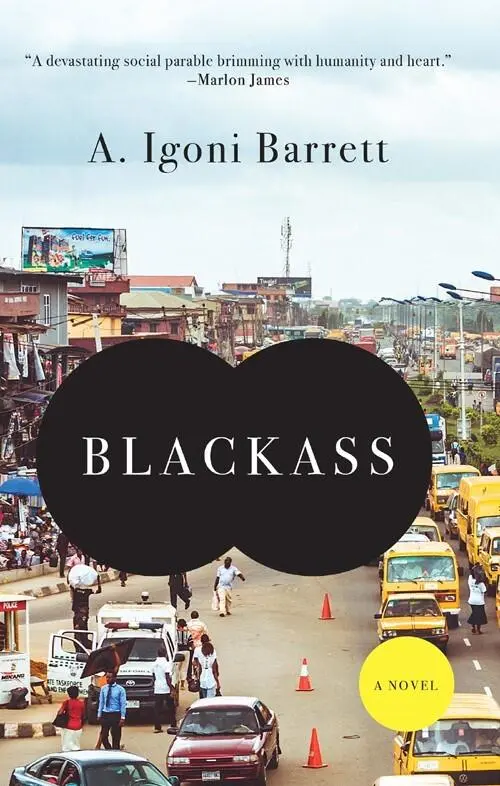
- Название:Blackass
- Автор:
- Издательство:Graywolf Press
- Жанр:
- Год:2016
- ISBN:9781555979263
- Рейтинг книги:4 / 5. Голосов: 1
-
Избранное:Добавить в избранное
- Отзывы:
-
Ваша оценка:
Blackass: краткое содержание, описание и аннотация
Предлагаем к чтению аннотацию, описание, краткое содержание или предисловие (зависит от того, что написал сам автор книги «Blackass»). Если вы не нашли необходимую информацию о книге — напишите в комментариях, мы постараемся отыскать её.
A. Igoni Barrett's
is a fierce comic satire that touches on everything from race to social media while at the same time questioning the values society places on us simply by virtue of the way we look. As he did in
, Barrett brilliantly depicts life in contemporary Nigeria and details the double-dealing and code-switching that are implicit in everyday business. But it's Furo's search for an identity-one deeper than skin-that leads to the final unraveling of his own carefully constructed story.
Blackass — читать онлайн бесплатно полную книгу (весь текст) целиком
Ниже представлен текст книги, разбитый по страницам. Система сохранения места последней прочитанной страницы, позволяет с удобством читать онлайн бесплатно книгу «Blackass», без необходимости каждый раз заново искать на чём Вы остановились. Поставьте закладку, и сможете в любой момент перейти на страницу, на которой закончили чтение.
Интервал:
Закладка:
He had swung his legs off the bed before he remembered. He remained seated at the bed’s edge, and said to Syreeta, ‘I just remembered I have to pick up my passport today. Let me get my clothes ready. You go ahead and bathe first.’
‘If that’s what you want,’ Syreeta said and blew him a kiss. He faked a dive to catch it, groaned under its weight, and flopped back on the bed. She strode off laughing.
His buttocks felt like a weight dragging him back to a place he wanted badly to forget. Syreeta had avoided the topic ever since she apologised for laughing at him, but he knew it had left an impression, he suspected she would bring it up in coming days, and he hoped to impede that conversation for as long as he could. He had answered her questions that day by telling her that he was born with it, the blackness an outsized birthmark, and yet what he told her was one thing and what he knew was another. He knew he had to efface the blackness from his buttocks, from all memory. Feeling dejected by the enormity of this conundrum, he stared across at Syreeta’s vanity table with its science lab-like collection of cosmetic bottles. In that moment, the sound of running water from the bathroom splashed into his mind and washed up the hull of an idea.
As Furo saw it, his black behind was a problem to be solved. The step he was about to take was better than doing nothing. Better than sitting around hoping. His failure or success would come through his own hands, and if he failed, at least he would know he tried. He had no choice in the decision that had got him where he was, but now that he was here, he would steer his own course. On this thought, he stood up from the bed, strode to the vanity table, sat on the stool before it, and picking up cosmetic bottles one at a time, he read their labels. He wasn’t sure what he was searching for, but he knew when he found it.
The cheapest-looking of the skin-whitening creams was a pink-and-green tube called Lovate Cream. Hydroquinone and octyl methoxycinnamate, and other exotic chemicals only meant that it burned when Furo squeezed out a smidgen and rubbed it on to his wrist. The other whitening creams he found, which were branded more overtly (in one plastic tube, Pale & Lovely Winter Fairness, and in the other ampoule-type bottle, Daudalie Radiance Serum Skin Correction), both left his skin with no sensation more unpleasant than a cool slickness. The descriptions on all three labels promised what he wanted, and he decided against using the facial scrubs and alcohol cleansers he had piled to one side during his search. These strong-smelling potions made no claims to bleaching skin, and the risk of discovery he ran using them seemed much greater than any rewards. He couldn’t imagine what explanation he would give Syreeta as to why his buttocks smelled like her face.
Pale & Lovely was the largest of the creams, the one that Syreeta was least likely to notice being depleted, and Furo decided he would apply that every morning after his bath, followed by Lovate in the afternoons, and then the smallest bottle, Daudalie, at night. He would be careful with everything, from the amounts of cream he applied to the replacement of the bottles on the vanity table, because he couldn’t let Syreeta find out he was using her whitening creams, as that would only end in the conversation he was avoiding. At the thought of her catching him with his finger in her jars, Furo quickly arranged the table as he had found it, then he took up the Pale & Lovely and squeezed the pinkish cream on to his palm. After he returned the tube, he stood up from the stool and hurried out of the bedroom. In the bathroom he could hear Syreeta singing.
At Ikoyi passport office, Syreeta waited in the Honda as Furo went in. When he returned with his new passport grasped in his hand, she reached out for it, and after reading the identification page, she handed it back and asked how come his surname was Nigerian. Furo’s answer:
‘I’ve already told you I’m Nigerian.’
‘But you’re white!’ exclaimed Syreeta.
‘So you mean I can’t be white and Nigerian?’
‘That’s not what I’m saying. I’m asking how it happened.’
This question had been expected by Furo for some time, and over the long weekend he had thought through his answer. He’d considered saying he was mixed race with a Nigerian father and a white American mother, but while that explained his name and his black buttocks, it raised other questions, the most irksome being a white extended family and his lack of ties to the US embassy in Nigeria. The second story he’d considered was that his white family had settled a long time ago in Nigeria and along the line had changed their name, but on further thought that idea seemed absurd and so he discarded it. Nigerians readily adopted European and Arab and Hebrew names. It never happened the other way around.
The story he settled on appeared to him the most plausible, the least open to rebuttal — it answered every question except that of his buttocks. But then, he told himself, nothing in life is perfect. To Syreeta he said:
‘I don’t like talking about it so I’ll just say this quickly. My parents are Nigerians. They lived in America for many years, my father was born there, and while they were over there they adopted me. My mother couldn’t have children. They returned to Lagos while I was still a baby, and they quarrelled when my father married a second wife. My mother took me away, we moved to Port Harcourt, and I haven’t heard from my father in nearly twenty years. My mother passed away last year. I came to Lagos and got stranded. Then I met you. That’s why I have this name. That’s why I have nobody. Now I’m hungry. Can we stop somewhere to eat?’
‘Of course,’ Syreeta said, and after she faced forwards and guided the Honda on to the road, she added in a voice hoarsened with awe:
‘I didn’t know it was possible for black people to adopt white people.’
And so it happened that Syreeta stopped over at The Palms to buy lunch at the cafe where she and Furo had met six days ago, and by three o’clock they were back on the Lekki — Ajah highway, in after-work traffic, headed towards her friend’s house in Victoria Garden City.
Seated beside Syreeta as she steered the Honda through traffic, Furo realised why radio DJs were superstars in Lagos. The car radio was tuned to Cool FM, and many times on the drive from Lekki to Ikoyi to pick up Furo’s passport and back to Lekki for lunch and on to Ajah to visit her friend, Syreeta had danced in her seat and squealed with laughter at the music selections and the banter of a host of DJs who seemed never to run out of something to say. With the Honda now stuck in a monster traffic jam on the outskirts of Ajah, Furo began to think that for the millions of commuters who spent hour after hour and day after day in Lagos traffic with only their car radios for company, these feigned accents and invented personalities became as dear as confidantes. The more he thought about it, the more he was struck by blinding flashes of the obvious, a whole rash of ideas marching into his head to the beats from the car radio. Persistent power cuts in Lagos, in the whole of Nigeria, meant that battery-operated radios were the entertainment appliance of necessity for both rich and poor, young and old, the city-based and the village-trapped, everyone. Radios were cheap to buy and free to use, no data bundles or subscription packages or credit plans, and they were also long-lasting, easy to carry around, available in private cars and commercial buses, and most important, they were independent of the undependable power grid. Mobile phones even came with radios, as did MP3 players; and computers had applications that live-streamed radio; and thinking of it, the rechargeable lamps that everyone owned also had radios built into them. Then again there were those new Chinese toys for the tech-starved: radio headphones, radio sunglasses, radio caps, radio wristwatches. It was endless. Radio was deathless. Radio DJs were superstars.
Читать дальшеИнтервал:
Закладка:
Похожие книги на «Blackass»
Представляем Вашему вниманию похожие книги на «Blackass» списком для выбора. Мы отобрали схожую по названию и смыслу литературу в надежде предоставить читателям больше вариантов отыскать новые, интересные, ещё непрочитанные произведения.








Обсуждение, отзывы о книге «Blackass» и просто собственные мнения читателей. Оставьте ваши комментарии, напишите, что Вы думаете о произведении, его смысле или главных героях. Укажите что конкретно понравилось, а что нет, и почему Вы так считаете.