Amy Greene - Long Man
Здесь есть возможность читать онлайн «Amy Greene - Long Man» весь текст электронной книги совершенно бесплатно (целиком полную версию без сокращений). В некоторых случаях можно слушать аудио, скачать через торрент в формате fb2 и присутствует краткое содержание. Год выпуска: 2014, Издательство: Knopf, Жанр: Современная проза, на английском языке. Описание произведения, (предисловие) а так же отзывы посетителей доступны на портале библиотеки ЛибКат.
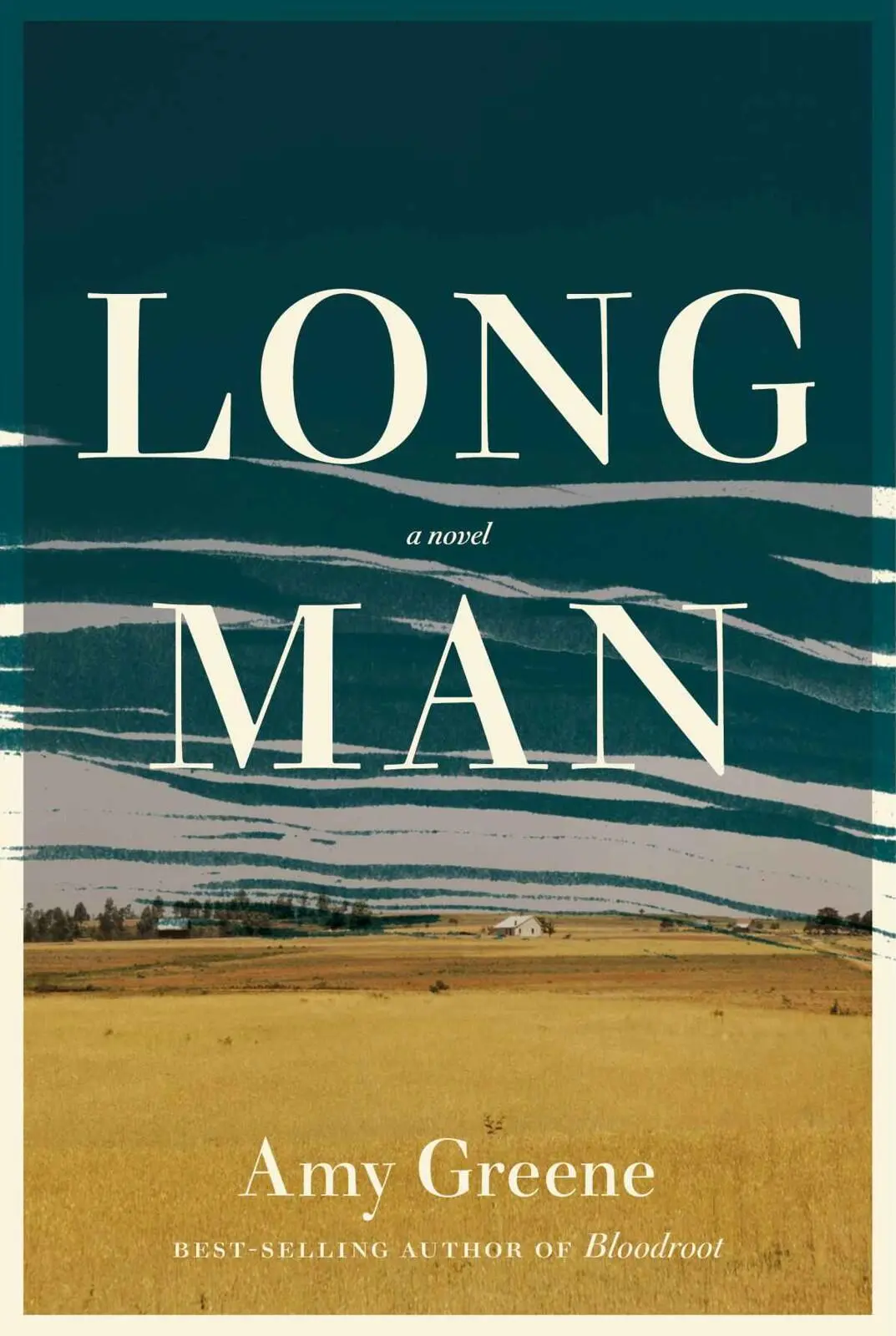
- Название:Long Man
- Автор:
- Издательство:Knopf
- Жанр:
- Год:2014
- ISBN:нет данных
- Рейтинг книги:5 / 5. Голосов: 1
-
Избранное:Добавить в избранное
- Отзывы:
-
Ваша оценка:
Long Man: краткое содержание, описание и аннотация
Предлагаем к чтению аннотацию, описание, краткое содержание или предисловие (зависит от того, что написал сам автор книги «Long Man»). Если вы не нашли необходимую информацию о книге — напишите в комментариях, мы постараемся отыскать её.
Long Man — читать онлайн бесплатно полную книгу (весь текст) целиком
Ниже представлен текст книги, разбитый по страницам. Система сохранения места последней прочитанной страницы, позволяет с удобством читать онлайн бесплатно книгу «Long Man», без необходимости каждый раз заново искать на чём Вы остановились. Поставьте закладку, и сможете в любой момент перейти на страницу, на которой закончили чтение.
Интервал:
Закладка:
“James’s little girl is missing.”
Amos looked at James. “I heard something about that. I’m sorry for you and your wife.”
“You scared Annie Clyde yesterday,” James said.
Amos put down the ladle. “That wasn’t my intention.”
“Annie Clyde thinks you know where Gracie’s at,” Ellard interrupted, as Amos went on gazing at James without response. “You ain’t seen any missing children, have you?”
Amos seemed to mull it over. Then his one eye settled back on James. “Yes,” he said.
“You’ve seen one?”
“Yes.”
“A lost child?”
“A dead child.”
James gaped at him, stricken. For a second Ellard didn’t move or speak either. Rain tapped at the tarp roof of the shelter. “You saying you found a body?” Ellard asked at last.
“Yes.”
Ellard moved toward Amos. “Why didn’t you tell me that before?”
“I generally try to avoid the law,” Amos said.
Sweat sprang out in beads on James’s brow. “Where is it?”
“I’d have to take you to it.”
“Then take me to it,” James said, his voice unfamiliar to his own ears.
“Wait a minute, James,” Ellard said. “I don’t trust him as far as I can throw him.”
James’s hands tensed into fists. “I’m done waiting.”
Ellard cursed under his breath, touching his holster. “Watch your step,” he warned Amos.
The drifter took his hat from beside the milk crate and put it on his head. He stood up and regarded James as if to make sure of something. Then he nodded and glided past James on almost silent feet. James followed him numb and mindless across the clearing toward the bluff. Ellard came behind them, revolver drawn, but James ignored both of the other men. As he walked, he conjured Gracie’s face to hold before him in place of whatever he was about to see. He pictured her sleeping in her crib with her fingers curled under her chin, lips suckling as if she nursed in a dream. He didn’t know if a human being was made to withstand a thing like this. It seemed possible he wouldn’t survive. They walked a few yards to the rocky ledges, lush with a fall of white-flowered woodbine. At the bottom of the bluff it appeared as though Amos had hacked through the greenery with the rusted machete. He pulled the vines aside and looked up at James with his impassive face, waiting. Ellard stepped between them. “Let me do this,” he said.
James shook his head. “No. She’s mine.” But he stopped and bent over, gulping.
“Don’t you want to see?” Amos asked.
“Shut your mouth,” Ellard shouted at Amos.
It took every ounce of James’s will to look down. There was a fissure at the foot of the bluff, something he took at first for an animal burrow. On closer inspection, he saw that it was a shallow limestone cave, the kind that honeycombed the valley floor. He let out a chuff of breath and lowered himself to his hands and knees. From that position he realized he would have to stretch flat on his belly to see what was inside. That close to the spongy topsoil the smell of it choked him. Bugs crawled into his collar, tickling his neck. He braced himself and turned his head to peer in the hole. For an instant in the grainy light he saw not the corpse he dreaded but Gracie as he remembered her, asleep on the floor of the cave as she would have been in her crib. But when his vision cleared what he saw was the skeleton of a child. Blackened leaves had sifted down through the shroud of woodbine to drift all around it, rotting in a scum of stagnant water. Some of the ribs were missing, carried off by animals. Milk teeth were gone from the jawbone. The small, tea-stained skull was broken, bashed in on one side. James scrambled backward in the litter of chopped-away vines and pushed himself up onto his knees. He retched but nothing came out. “That’s not Gracie,” he heard himself saying, but in his heart he felt that it was.
Not long after two o’clock, Beulah Kesterson went to the washstand and splashed her face. She ran a comb through her long ivory hair and braided it. She put on her best smock, the one she wore to funerals, then strained to bend and tie her shoes. After covering her braid with a head scarf, she crossed to the door with Annie Clyde Dodson still on her mind. The girl seemed to have aged a decade since yesterday. Her eyes had been like holes, her hair snarled, her dress soiled. In the past when Beulah couldn’t help those who came to have the bones read she sent them away without false hope. But she’d never been asked to look for a missing child. Others had disappeared after the floods but they were found, besides the Deering boy. Beulah imagined it would be even worse left wondering like this than knowing Gracie was dead. She felt she had to do something for Annie Clyde but she hadn’t meant to lie to her again. The words came out of her mouth before she could stop them. She claimed to have seen the little girl alive, when in truth the bones had showed her nothing. Beulah told Annie Clyde what she wanted to hear because she had witnessed too much suffering. She couldn’t take any more of it. But maybe one last lie made no difference. Maybe there was nothing else Annie Clyde Dodson would have believed.
Then Ellard Moody had pecked on the door while Annie Clyde was still sleeping in Beulah’s bed. She couldn’t remember the last time she’d had more than one visitor in the same day. Under other circumstances her spirits would have lifted to see Ellard. His parents had been good neighbors and he was always a respectful boy. He’d spent many afternoons playing under the shade trees around her cabin. Sometimes in the winters after Amos left, Beulah would pay Ellard a dime to bust kindling for her. She had watched him grow into a fine man over the years. When she opened the door she was troubled to see him looking nearly as bad off as Annie Clyde, standing on her steps slump-shouldered in the pouring rain. Each line of his face was a crack under iron-colored stubble, his drooping eyes red-rimmed. She knew what he came for and what she had to do, as much as it pained her. She told Ellard about Amos’s hiding place in the clearing only to protect him. She had seen a desperation close to madness in Annie Clyde Dodson. She wouldn’t have betrayed her son for any other reason than to save him. Not just from Annie Clyde, but from himself. After talking with Amos in the shed yesterday morning she’d come away certain of what he was planning. Something he might not live through. What troubled Beulah most was that Amos didn’t seem to care whether he got out of Yuneetah in one piece or not. She needed to make sure he understood her reasoning. She was headed out to tell him herself.
Beulah stepped into the storm, the sun still trying to break through the clouds. The rain was slackening but not over. She’d seen it pour weeks at a time on the valley. If it didn’t let up the search would be impossible to continue. Soon the lake would reach the main road. There would be no getting in or out. It wasn’t just the child slipping farther away every minute. It was all of Yuneetah. She hurried down the hollow, past the graveyard and the Walker farm. At the end of the track she turned north, catching winks of water between the roadside trees. She used to go to the shoals on the first of March each season to see the river unthawing, a ritual that meant winter was over. In the cold months she dreamed of its damp slate smell, its eroding banks studded with oval rocks washed smooth as glass. Like the Cherokees, Beulah thought the river might be speaking to her. She wondered if the bones passed down to her had come from some strange fish caught in its waters. If it wasn’t Long Man whispering to her about the people that lived along its shores, communicating in some way much older than hers, from before language. As close as the people of Yuneetah had lived to it, having fished from and drunk of and swam through its waters, maybe they too could have heard the truths it told if they’d listened closer.
Читать дальшеИнтервал:
Закладка:
Похожие книги на «Long Man»
Представляем Вашему вниманию похожие книги на «Long Man» списком для выбора. Мы отобрали схожую по названию и смыслу литературу в надежде предоставить читателям больше вариантов отыскать новые, интересные, ещё непрочитанные произведения.












Обсуждение, отзывы о книге «Long Man» и просто собственные мнения читателей. Оставьте ваши комментарии, напишите, что Вы думаете о произведении, его смысле или главных героях. Укажите что конкретно понравилось, а что нет, и почему Вы так считаете.