Harry Parker - Anatomy of a Soldier
Здесь есть возможность читать онлайн «Harry Parker - Anatomy of a Soldier» весь текст электронной книги совершенно бесплатно (целиком полную версию без сокращений). В некоторых случаях можно слушать аудио, скачать через торрент в формате fb2 и присутствует краткое содержание. Год выпуска: 2016, ISBN: 2016, Издательство: Faber & Faber, Жанр: Современная проза, на английском языке. Описание произведения, (предисловие) а так же отзывы посетителей доступны на портале библиотеки ЛибКат.
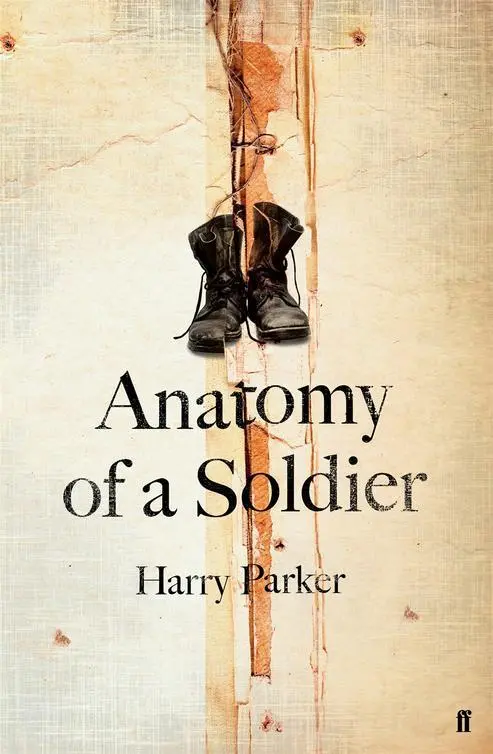
- Название:Anatomy of a Soldier
- Автор:
- Издательство:Faber & Faber
- Жанр:
- Год:2016
- ISBN:9780571325849
- Рейтинг книги:5 / 5. Голосов: 1
-
Избранное:Добавить в избранное
- Отзывы:
-
Ваша оценка:
Anatomy of a Soldier: краткое содержание, описание и аннотация
Предлагаем к чтению аннотацию, описание, краткое содержание или предисловие (зависит от того, что написал сам автор книги «Anatomy of a Soldier»). Если вы не нашли необходимую информацию о книге — напишите в комментариях, мы постараемся отыскать её.
We see them not as they see themselves, but as all the objects surrounding them do: shoes and boots, a helmet, a trove of dollars, a drone, that bike, weaponry, a bag of fertilizer, a medal, a beer glass, a snowflake, dog tags, an exploding IED and the medical implements that are subsequently employed.
Anatomy of a Soldier is a moving, enlightening and fiercely dramatic novel about one man's journey of survival and the experiences of those around him. Forty-five objects, one unforgettable story.
'This is a brilliant book, direct from the battle zone, where all the paraphernalia of slaughter is deployed to tell its particular and savage story.' Edna O'Brien
'A tour de force. In this brilliant and beguiling novel Harry Parker sees the hidden forces that act on the bodies and souls of combatants and non-combatants. . It feels like war through the looking glass but it is utterly real.' Nadeem Aslam
Anatomy of a Soldier — читать онлайн бесплатно полную книгу (весь текст) целиком
Ниже представлен текст книги, разбитый по страницам. Система сохранения места последней прочитанной страницы, позволяет с удобством читать онлайн бесплатно книгу «Anatomy of a Soldier», без необходимости каждый раз заново искать на чём Вы остановились. Поставьте закладку, и сможете в любой момент перейти на страницу, на которой закончили чтение.
Интервал:
Закладка:
I glinted at him. I am an operational service medal, a thirty-six-millimetre-wide silver disk with a crowned effigy on my front. I have a clasp with the name of a country embossed on it and a three-coloured ribbon folded into a square that rested in his palm. He turned me over and studied the four-pointed star on my reverse and then my edge, which had his rank, name and service number engraved on it: Captain T Barnes 565799 .
‘I suppose this is it, then,’ a man next to us said. He was in a wheelchair and flipped his one of me over in his hand. ‘This is the silverware.’
‘Looks like it, Carl,’ BA5799 said, ‘although we’ll always have the metalwork strapped to our legs if we need reminding.’
The man glanced up from his chair. He had no legs and his combat trousers were tucked under his thighs. ‘Wish I could’ve worn mine today,’ he said.
‘You’ll get there, mate. Still early days for you.’
They were a group of five: two in wheelchairs, two on crutches, and BA5799 leaning back awkwardly on a bollard. They looked up at the man who’d handed me out.
‘Right, has everyone got a medal?’ he said.
They nodded. They all wore dark-green berets, with cap badges in the shape of a bugle above the left eye.
‘Good. The lads will march on from over there and form up in front of the tents. Usual sketch. B Company, then C, then Support. The band will play them on. Once they’re all settled I’ll give you a nod.’ He turned to BA5799. ‘Sir, are you happy to lead out?’
‘No problem.’
‘Thanks. Line up at the end of B Company. It’ll be a bit of a wait and then the general will come out. There’ll be a salute, the usual rigmarole. And then he’ll present the medals — you fellas are up first. All you do is hand him your medal and then he says how wonderful you’ve done and gives it back.’
‘God, doesn’t he even pin it on our chests?’ one of them said and smiled.
‘Too difficult for the tailors, I’m afraid, Rifleman Dean,’ he said. ‘Don’t wait for everyone else to get their medals, just go to the side of the tents. There’s some chairs laid out for you. You can watch the rest of the parade from there.’
‘I’ve already got a chair,’ said the man in a wheelchair.
‘Well there’s a space there for you too, Rifleman Spiers. Any questions?’
‘What do we say to the general?’
‘Say whatever you like, but try not to give him your life story. These things can drag on and it’s too bloody cold today.’
He walked away and we waited. I was still in BA5799’s hand and its warmth heated me. The others talked about when they were due back at the centre and complained about the wait and how freezing it was.
Finally the band marched on. The cheery tune filled the square and the crowd clapped. Then the rows of soldiers appeared and snaked forward, three close columns that rose and fell with every step, their arms rippling together and the sound of their boots dull on the tarmac as they swayed up onto the parade ground and pivoted before extending out in front of the tents.
BA5799 watched them come. He knew them all. He’d been part of them, one of their best; he didn’t mind the arrogance of thinking that — it didn’t matter now. He’d made a mistake that confined him to the small group that looked on. Even if he’d wanted to march with them he couldn’t.
His hand tightened around me and I pushed a red mark into the folded creases of his palm. He was embarrassed that he was the one who’d made a mistake. He was supposed to be good at his job — some of them had even looked up to him, depended on him to make decisions — and it was never going to happen to him, he was meant to be lucky. But he wasn’t, and it had, and he’d failed.
Suddenly he hated the thought of them seeing him like this, broken and maimed. He didn’t want to walk out there in front of the watching crowd. He wanted to go back to the centre and its different rules and measures of achievement that none of them would understand. Where he could be the best.
Men shouted and the ranks shuffled straight. And then the nod came. BA5799 switched me into his other hand and took his stick. ‘Make it look good, lads,’ he said and walked out across the open ground to the lines of men. The wheelchairs followed and those on crutches swung behind. And the crowd started clapping. BA5799 wondered what they were clapping for. You shouldn’t clap failure, he thought and he was ashamed and wished they’d stop.
He held me in his hand and I brushed beside his combat trousers. His legs looked odd and their sharp edges pointed through the camouflaged material with each step. He tried to march like the men had, but the jerking gait and stick made it ridiculous and the effort hurt. So he walked as normally as possible and the applause sounded full of pity and he hated it.
He lined up with the front row of men and waited, positioning the walking stick in front of him to support his weight. His stumps hurt and shook and he wanted it to be over. He looked at the crowd, wrapped against the cold, sitting in rows and he spotted his family but he kept his expression firm. He rocked back and forward as the pain built and he concentrated on staying upright.
His legs started to quiver beside me with the effort and he wished the parade would start. Then they walked over. One wore gold braid on his uniform and a peaked cap and another introduced him to each of the waiting men. He worked down the line of injured, bending over the wheelchairs to shake their hands and saying a few words before moving on.
He stood smiling in front of us and BA5799 handed me to him. He was older with grey hair and he held me there between them. He asked how BA5799 was, about rehabilitation and his family and told him how well everyone thought he was doing and what a great example he was.
In reply BA5799 only said, ‘Thank you, sir.’ He said it three times and then they shook hands and I was handed back to him. He had seen the man’s lips moving but couldn’t register what he’d said: the pain in his legs and the concentration required to stand was too much. Then the man continued down the line.
BA5799 had stood for so long his stumps were numb, and he wanted to move to the seats. He started to walk but his legs felt so stiff and heavy that he nearly fell. He thought of all the people watching and the man beside him stepped out to help but BA5799 managed to stop the stumble and steadied himself. He was embarrassed again with the crowd watching as he slowly limped to the chairs.
He sat down and rested me in his lap. His stumps were throbbing and he wanted to take his legs off but they were stuck in the trousers. The band played a tune from history and it was glory and country. He looked over at the lines of men and the general moving down the front rank and shaking hands and presenting more of me.
One of his friends stood alone in front of a platoon. That’s where he should have been, if he’d survived. He caught his eye and the man winked and half smiled while standing to attention. He looked down at me and swept his thumb across my surface and felt the ridges and mounds of the head moulded on me. He was a maimed relic that everyone wanted to forget. None of the men in those ranks wanted to be reminded of the truth — of what might happen. I am that truth, he thought.
After each soldier had been given one of me and the band started playing again, the men on parade turned to their left in one movement and marched quickly away, the columns rocking from side to side as they stepped in unison. He watched them go and knew he would never feel part of them again. They were heading away to their R and R, convinced they were invincible and knowing it would never happen to them, while he was going back to the centre to adapt to what had happened to him. My fight goes on, he thought and slipped me into his pocket.
Читать дальшеИнтервал:
Закладка:
Похожие книги на «Anatomy of a Soldier»
Представляем Вашему вниманию похожие книги на «Anatomy of a Soldier» списком для выбора. Мы отобрали схожую по названию и смыслу литературу в надежде предоставить читателям больше вариантов отыскать новые, интересные, ещё непрочитанные произведения.










Обсуждение, отзывы о книге «Anatomy of a Soldier» и просто собственные мнения читателей. Оставьте ваши комментарии, напишите, что Вы думаете о произведении, его смысле или главных героях. Укажите что конкретно понравилось, а что нет, и почему Вы так считаете.