John Jodzio - Knockout
Здесь есть возможность читать онлайн «John Jodzio - Knockout» весь текст электронной книги совершенно бесплатно (целиком полную версию без сокращений). В некоторых случаях можно слушать аудио, скачать через торрент в формате fb2 и присутствует краткое содержание. Год выпуска: 2016, Издательство: Soft Skull Press, Жанр: Современная проза, на английском языке. Описание произведения, (предисловие) а так же отзывы посетителей доступны на портале библиотеки ЛибКат.
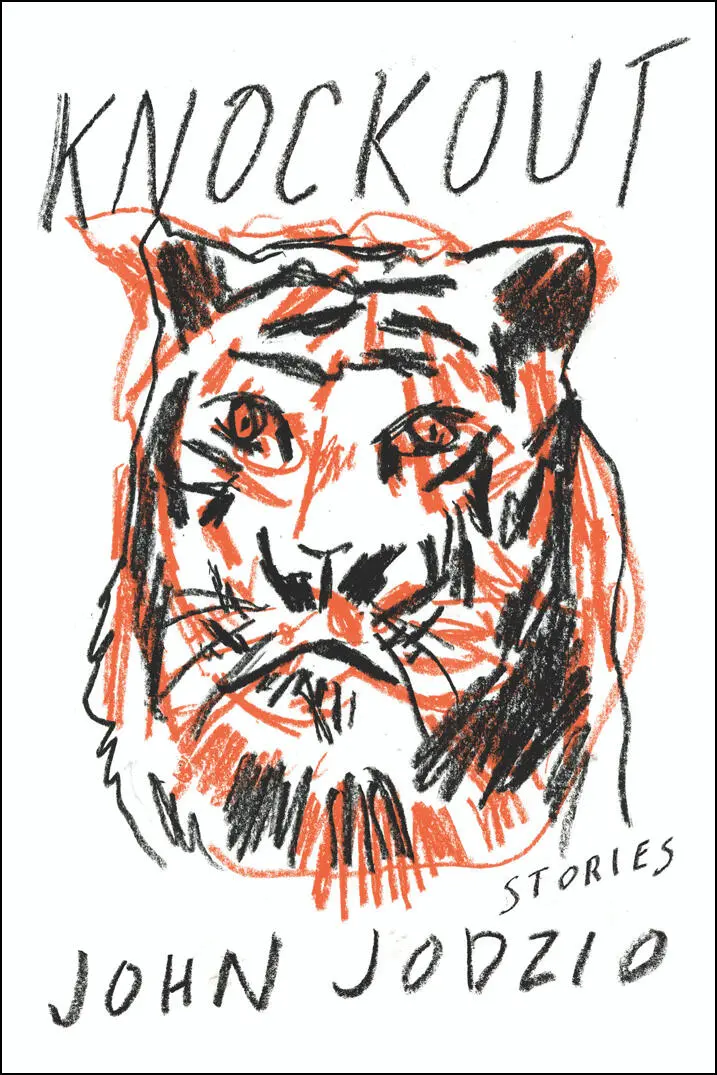
- Название:Knockout
- Автор:
- Издательство:Soft Skull Press
- Жанр:
- Год:2016
- ISBN:нет данных
- Рейтинг книги:4 / 5. Голосов: 1
-
Избранное:Добавить в избранное
- Отзывы:
-
Ваша оценка:
Knockout: краткое содержание, описание и аннотация
Предлагаем к чтению аннотацию, описание, краткое содержание или предисловие (зависит от того, что написал сам автор книги «Knockout»). Если вы не нашли необходимую информацию о книге — напишите в комментариях, мы постараемся отыскать её.
. But with his new collection, Jodzio creates a class of his own.
Knockout With its quirky humor, compelling characters, and unexpected sincerity,
by John Jodzio is poised to become his breakout book, drawing a wide readership to this provocative and talented young writer.
Knockout — читать онлайн бесплатно полную книгу (весь текст) целиком
Ниже представлен текст книги, разбитый по страницам. Система сохранения места последней прочитанной страницы, позволяет с удобством читать онлайн бесплатно книгу «Knockout», без необходимости каждый раз заново искать на чём Вы остановились. Поставьте закладку, и сможете в любой момент перейти на страницу, на которой закончили чтение.
Интервал:
Закладка:
We trudged on. All the lakes and rivers and marshes had dried up years ago and the ground was newly gouged from tanks and bitten by army boots. There was no such thing as dignity anymore so sometimes we stripped naked and found shade in one of the thicker dead oaks. If the biting flies weren’t horrible we rested, Reichmann pulling out his journal and using a charcoal pencil to render one of many massacres he’d witnessed over the last two years. Reichmann had been an abstract painter before the war, but now he only drew realistic black and whites. He never saved any of his drawings. Whenever he finished one he’d just tear it up or light it on fire.
“Why don’t you keep them?” I wrote to him once. “Someone needs to document the atrocities we’ve seen, don’t they?”
Reichmann paused for a second, but then he wrote back, “At least none of us has kids,” which was not exactly what I asked him but which was an appropriate response and something extremely fortunate.
When our sponges dry up, Reichmann and I pull down our pants and soak them again. Who knows where Schliess heard about it, but when he saw those sea sponges in that abandoned food coop his eyes lit up.
“Way better than regular tampons!” he wrote. “No possibility of toxic shock!”
While I’m bent over resoaking my sponge, a priest walks into the rectory. He’s holding a baseball bat but he drops it onto the marble floor when he sees I’ve got a machine gun pointed at his chest.
“What in the fuck, guys?” the priest says. “This is still God’s house.”
The priest is harmless and I lower the gun. Schleiss points the priest toward the bottle of vodka on the counter and he takes a long swallow. As the liquor passes over his tongue, I see him wince. Then he grabs his jowls and moans.
“Bad tooth?” I point.
“Killing me,” he says. “Can’t chew, can’t drink.”
“Hold on,” I motion and I go into my backpack and give him one of my extra drinking sponges.
“Soak it in vodka and shove it up your ass,” Reichmann explains.
The priest is reluctant, but we all spread our cheeks and show him we’re not fucking with him and finally he shrugs his shoulders and pulls down his black pants and shoves his sponge in there too.
We keep chugging. And like usual I get sad. I find a piece of paper and a pencil and I scribble a question to the priest.
“What if I’ve done unspeakable things?” I write. “Can I ever be forgiven?”
There’ve been dozens of Black Krezcent strikes since that first one. I can’t help but think if I hadn’t mixed those chemicals together I might be free of this crushing guilt. Schliess has written me long notes in the dirt trying to absolve me from blame, telling me that if I hadn’t invented it, someone else would have probably invented something worse. While I appreciate his attempts to cheer me up, no amount of Schliess’s dirt scribbling can get those images out of my head.
The priest isn’t answering my question, he’s staring out at a gutted-out train station across the street so I tap him on the shoulder. I hold the piece of paper with my question on it right in front of his face. You need to have a huge amount of faith to still wear the collar, especially in this heat, and when you start drinking it probably slips away just like for everyone else. Schliess and Reichmann shake their heads at me, so tired of how maudlin and sentimental I get when I’m blotto.
“For fuck’s sake,” Reichmann writes. “Leave the man alone so he can absorb the liquor through the blood vessels in his sphincter just like the rest of us.”
We wait until nightfall to go find Reichmann’s wife. The priest guides us through the sewer tunnels so we can avoid the American patrols. The heat underground is incredible and the rats down there look like loaves of waterlogged bread. We stumble over each other in the dim light until the priest tells us we’re here and then we all climb up a ladder and slide a manhole cover out of the way. Now that he’s standing in front of his house, I can see the fear in Reichmann’s eyes. He’s not sure he wants to go through with this.
“Maybe it’s best if she thinks I’m dead?” he motions to us. “Or maybe she’s already moved on? Or maybe she won’t believe it’s really me?”
While we’re waiting for Reichmann’s courage to kick in, Schleiss walks over and pounds on the door. Soon a woman yells out to us.
“We’ve got no more bread,” she says. “And no more vodka. And we all have raging cases of gonorrhea. Best to be on your way.”
Reichmann walks over and pushes the note he’s written through the mail slot. In a minute the door swings open and Reichmann’s wife is standing in front of us. She keeps looking up at Reichmann’s bandaged face and then back down at the note. She’s shaking her head like it can’t be true, but then Reichmann holds out his hand and she studies it, takes her fingers and runs it over the lines crisscrossing his palm. And then she throws her arms around Reichmann’s neck and sobs. The priest is bawling now too, as most normal people would be, but Schliess starts to giggle and I join him, snorting like I do, because while this reunion is certainly poignant, Reichmann really pulled one over on us — his wife is flat-chested as fuck.
We’re all hustled inside. Sitting at the dining room table are two other women. Schleiss and I find out that Reichmann’s wife actually does have sisters, nice friendly ones. The dark-haired one is named Elyse and the blonde one is Cara.
Slowly the night turns into a party, not like the drunken keggers we used to have when we were young, but a decent party just the same. At some point Cara pulls a guitar out from the crawl space and all of us climb up to the rooftop terrace. While we stand there there’s a quick northerly breeze full of fresh flowery goodness that fills our nostrils for just a second and Cara starts to strum her guitar and we do whatever it is we do in lieu of singing, we hum or we lightly moan or we slap our knees or we just close our eyes, shut the hell up, and listen.
OUR MOM-AND-POP OPIUM DEN
Our mom-and-pop opium den is being forced out of business by a big-box opium den. Our regulars are pissed. My father and I are despondent. I stare across the street at the “Grand Opening” banner spread across Opium Depot’s facade, at the huge inflatable gorilla tethered to their roof, at their strolling mariachis, at their free hot dogs and free pony rides. I wonder if we’ll be out of business in weeks or just days.
“Fuck Opium Depot,” Jake Stensman tells me. “Screw those corporate fucks.”
Jake’s twenty-three years old, a Marine just back from Afghanistan. He’s wearing a gray T-shirt with the words “Semper Fi Mofo” silkscreened on the front of it. The tattooed names of his dead friends scroll down his tanned arms like a royal proclamation. Last week he told me he hears his dead friends screaming whenever he closes his eyes. His dead friends scream and scream and they don’t ever stop.
“Live local! Buy local!” he yells across the street.
Jake’s red-faced now, but soon he’ll be so high that all the ruddiness and anger in his body will float away. In a few minutes, he’ll be lying in one of our smoking beds and the only thing he’ll care about is taking an occasional breath.
“How about a protest?” Allen Cho suggests. “How about we walk around in a circle in front of their entrance wearing sandwich boards and chanting?”
Allen Cho’s daughter drowned in a lake two years ago. Allen sees his daughter in his dreams, her long, reedy arms reaching out to pull him down into the murky deep. There’s always lots of mud on her face and algae and sticks intertwined into her billowing hair. Other than some bloating, Allen says, her face looks exactly the same as the day she died.
Читать дальшеИнтервал:
Закладка:
Похожие книги на «Knockout»
Представляем Вашему вниманию похожие книги на «Knockout» списком для выбора. Мы отобрали схожую по названию и смыслу литературу в надежде предоставить читателям больше вариантов отыскать новые, интересные, ещё непрочитанные произведения.



Обсуждение, отзывы о книге «Knockout» и просто собственные мнения читателей. Оставьте ваши комментарии, напишите, что Вы думаете о произведении, его смысле или главных героях. Укажите что конкретно понравилось, а что нет, и почему Вы так считаете.