Aleksandar Tisma - The Book of Blam
Здесь есть возможность читать онлайн «Aleksandar Tisma - The Book of Blam» весь текст электронной книги совершенно бесплатно (целиком полную версию без сокращений). В некоторых случаях можно слушать аудио, скачать через торрент в формате fb2 и присутствует краткое содержание. Год выпуска: 2016, Издательство: NYRB Classics, Жанр: Современная проза, на английском языке. Описание произведения, (предисловие) а так же отзывы посетителей доступны на портале библиотеки ЛибКат.
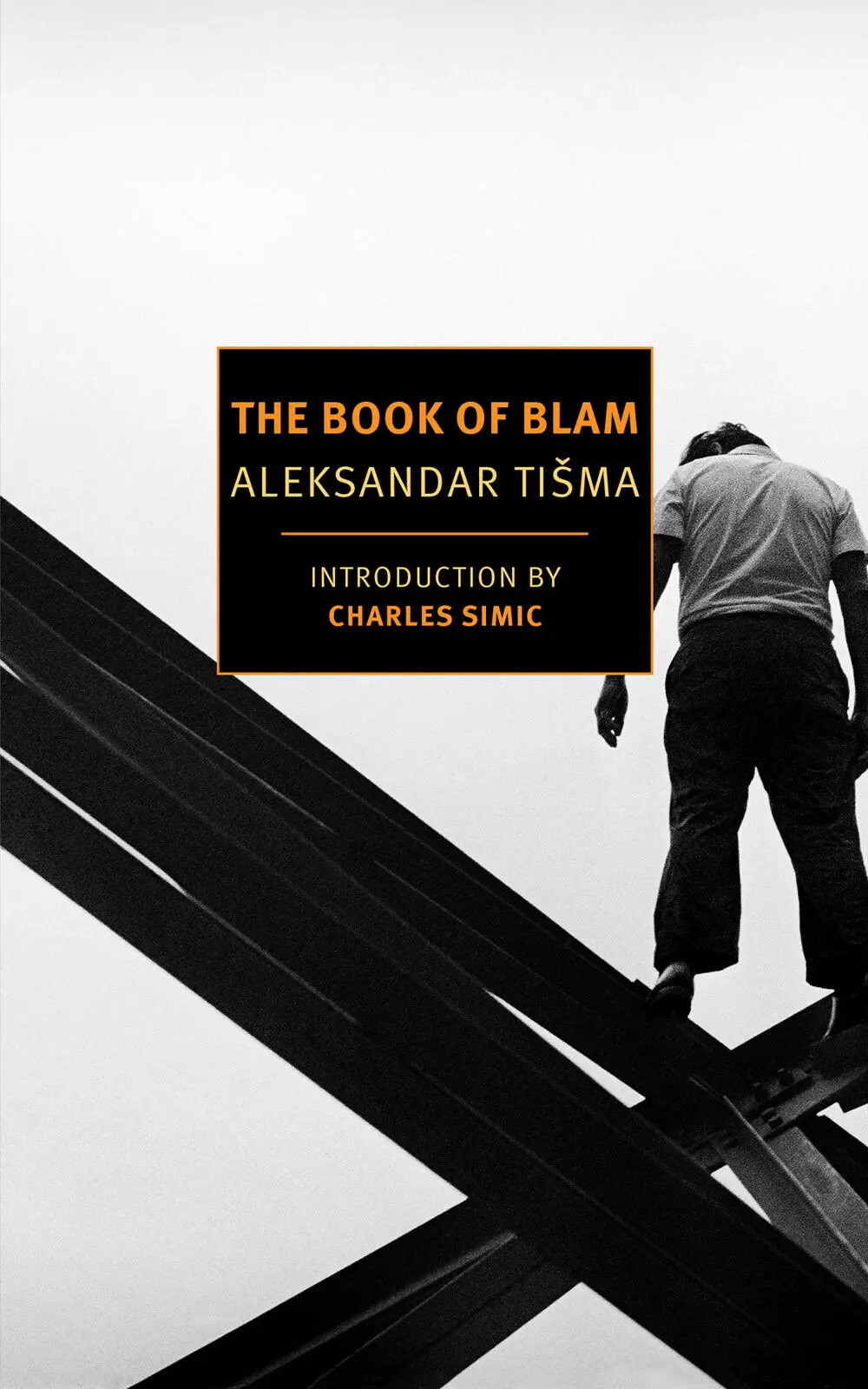
- Название:The Book of Blam
- Автор:
- Издательство:NYRB Classics
- Жанр:
- Год:2016
- ISBN:нет данных
- Рейтинг книги:5 / 5. Голосов: 1
-
Избранное:Добавить в избранное
- Отзывы:
-
Ваша оценка:
The Book of Blam: краткое содержание, описание и аннотация
Предлагаем к чтению аннотацию, описание, краткое содержание или предисловие (зависит от того, что написал сам автор книги «The Book of Blam»). Если вы не нашли необходимую информацию о книге — напишите в комментариях, мы постараемся отыскать её.
The Book of Blam — читать онлайн бесплатно полную книгу (весь текст) целиком
Ниже представлен текст книги, разбитый по страницам. Система сохранения места последней прочитанной страницы, позволяет с удобством читать онлайн бесплатно книгу «The Book of Blam», без необходимости каждый раз заново искать на чём Вы остановились. Поставьте закладку, и сможете в любой момент перейти на страницу, на которой закончили чтение.
Интервал:
Закладка:
“You could have it played here too. With all the festivals.”
“Maybe you’re right. I’ve actually been thinking of submitting a piece to Opatija. Want to hear it?”
“Sure.”
But just then the door opens, and in comes Mrs. Krkljuš with a tray. Aca shoves the suitcase under the bed and gets up, shaking his knees free of cramps. “Later,” he mumbles.
“So you opened the window,” Mrs. Krkljuš says in a shrill, suspicious voice, still standing in the middle of the room with her tray.
“Blam was having trouble breathing.”
The woman narrows her eyes, then lifts her head and sniffs the air.
She puts the tray on the table with a caustic “Hm” and turns to Blam. “I’d let Aca go his own way if my Slobodan was still alive and there was someone else to look after the business.” She sighs and makes a face. “See if it’s sweet enough.”
Blam picks up a cup of the steaming coffee and takes a sip. “Thank you. It’s perfect.” But because Mrs. Krkljuš does not move, he realizes he must drink it all in her presence. Hot as it is, he ingests the coffee in small swallows and puts the cup down.
“Now we can go and see my husband.”
Blam looks over at Aca, unsure of how to respond. Aca is peering down at his as yet untouched cup, as if waiting to be left alone. Blam stands and follows Mrs. Krkljuš out of the room.
They go into the entrance hall, Blam keeping close behind the small woman because the light is so poor, but then she reaches out and opens a door, and suddenly everything is light again.
They go into the room. It is larger than Aca’s or looks larger because it is less disorderly. It has two old beds, an armchair, and a wardrobe that doubles as a kind of room divider. A door frame shows just above it.
Old Mr. Krkljuš is sitting in the armchair. He is wearing a pair of pajamas with a sweater pulled over them. He seems to have put on weight since the last time Blam saw him (and until two years ago he saw him often in the doorway of the shop: tall and with a protruding stomach, but with narrow hips and shoulders), and his face is bloated and moist with sweat. From the waist down he is covered with a blanket that slopes off to the right.
“Hello there, son,” he says in a tremulous, gentle voice by way of greeting. “You can sit here.” He motions to the bed next to him.
Blam takes a seat.
“You can smoke.”
“No, thank you. I’ve just had a cigarette.” He reaches into his pocket. “Would you like one?”
“I’ve given up smoking since all this began,” he says sadly with a wave of the hand, then lays the hand carefully on the part of the blanket that is slipping. “Had to give up everything. But worst of all”—he leans over to Blam and waves the limp hand in the direction of the wall behind the bed—“is that Aca doesn’t obey me anymore. Just drinks.” He shakes his head. “And my Slobodan, my wonderful son Slobodan, is gone.” His face is suddenly inches away from Blam’s. “You know what happened to my Slobodan, don’t you?”
“Of course,” Blam says, more hastily than he would have liked, almost boastfully. To mitigate his haste, he adds, “My parents were killed in the raid too.”
“They were?” says Mr. Krkljuš, coming to life. “Then we were together. I didn’t know, I didn’t know. Where did they die?”
“In the street, apparently, near their house.” Blam justifies the vagueness of his answer by adding, “I wasn’t living with them at the time.”
But Mr. Krkljuš does not notice. “My Slobodan, he died in the Danube,” he says, shaking his head sadly. Suddenly he looks up at Blam with renewed interest. “Are you Jewish?”
“Yes.”
“Then I have something to ask you. It’s been on my mind for ages. Do you know any Jewish lawyers in Novi Sad?”
“No, I don’t.”
“Really? Not one?”
“Not one.”
“Hm.” The old man huddles deeper into the armchair. “Nobody does.” His face gradually resumes its defiant look. “Würzmann is no longer with us, is he?”
“No, I don’t think he came back from the camp.”
“That’s what I heard too.” His eyes seem to be pleading with Blam. “What about Vértes?”
Blam shakes his head.
“I see. Aren’t there any young ones?”
“Not that I know of.”
“Hm. And I gather you have nothing to do with the law.”
“No. I work in a travel agency.”
“I see, I see.” His voice is indifferent by now. Suddenly he turns to his wife. “Isn’t the water hot yet? My back is freezing!”
Mrs. Krkljuš, who has sat there listlessly until now, stands up, takes the pot off the hot plate on the bedside table with the edges of her apron, and removes the lid to let some steam escape. “Where’s the hot-water bottle?”
“Here behind my back,” says Mr. Krkljuš, bending forward impatiently.
Blam stands. “Let me help.”
“No, no,” says Mrs. Krkljuš, shaking her head. “I’m the only one who can do it.” She puts the pot back on the hotplate and turns to her husband.
“Well, I’ll be going, then,” says Blam. “I hope you feel better soon.”
“Yes, yes,” the old man responds distractedly, searching behind his back with one hand as his wife bends over him, concerned. “Goodbye. Goodbye.”
Blam goes out into the entrance hall, gropes his way to the door to Aca’s room, knocks, and goes in. The window is still open, and Aca is back on the unmade bed, surrounded by his notebooks, his hands between his knees, his face gloomy.
“Pestered the hell out of you, I bet,” he says with a sarcastic, almost hostile grin.
“Don’t be silly. We hardly talked. Well, what do you say? Are you going to play me that song?”
“Forget it,” Krkljuš says with a weary wave of the hand. “Some other time. Sit down and have a drink with me.”
Blam does as he is told, but as he sits, he is overwhelmed by the alcohol on his friend’s breath. It is as if the bed were soaked in it. The smell makes Blam nauseated and at the same time dizzy with hunger. “You know what?” he says, aware he is about to commit a betrayal. “Let’s have that drink some other time. I need to put some food in my stomach.”
“All right,” says Krkljuš, taking Blam’s departure surprisingly well. “Time to get back to the damn shop anyway.”
Blam goes into the entrance hall accompanied by his friend, who is whistling a tuneful melody.
“Say goodbye to your parents for me, will you? I don’t want to barge in on them. Tell them I had to leave.”
“Fine. I will,” says Krkljuš and sees him down to the main entrance, where, leaning against the wall, he follows him with unsmiling eyes.
ON THE DAY she died, Estera Blam went to school as usual and spent the early morning hours in class. During the third period — mathematics with nearsighted Mrs. Bajčetić—a folded piece of paper fell onto her exercise book from behind. She opened it and read the following block-letter text: “They are coming to arrest you. Go to Mara’s immediately for further instructions.” It must have been smuggled in. She turned instinctively to see where it had come from, but Mrs. Bajčetić noticed a disturbance at the door and the fuss in Estera’s vicinity, banged her ruler on her desk, and called the class to order. Estera hunched forward and read the message a few more times, then folded it, ripped it into tiny pieces, and dropped them into the ink bottle on her desk. Slowly, noiselessly she slipped her books into her bag, then raised her hand and asked Mrs. Bajčetić for permission to leave the room. The teacher granted it reluctantly, and Estera reached for her bag, but suddenly realized that she had no reason to take it with her, so she shoved it back into the desk and went out into the corridor. There she looked both ways, hoping to find the messenger, but seeing no one, she simply took her coat out of the cloakroom and left.
Читать дальшеИнтервал:
Закладка:
Похожие книги на «The Book of Blam»
Представляем Вашему вниманию похожие книги на «The Book of Blam» списком для выбора. Мы отобрали схожую по названию и смыслу литературу в надежде предоставить читателям больше вариантов отыскать новые, интересные, ещё непрочитанные произведения.








Обсуждение, отзывы о книге «The Book of Blam» и просто собственные мнения читателей. Оставьте ваши комментарии, напишите, что Вы думаете о произведении, его смысле или главных героях. Укажите что конкретно понравилось, а что нет, и почему Вы так считаете.