Bruce Wagner - Dead Stars
Здесь есть возможность читать онлайн «Bruce Wagner - Dead Stars» весь текст электронной книги совершенно бесплатно (целиком полную версию без сокращений). В некоторых случаях можно слушать аудио, скачать через торрент в формате fb2 и присутствует краткое содержание. Год выпуска: 2012, Издательство: Blue Rider Press, Жанр: Современная проза, на английском языке. Описание произведения, (предисловие) а так же отзывы посетителей доступны на портале библиотеки ЛибКат.
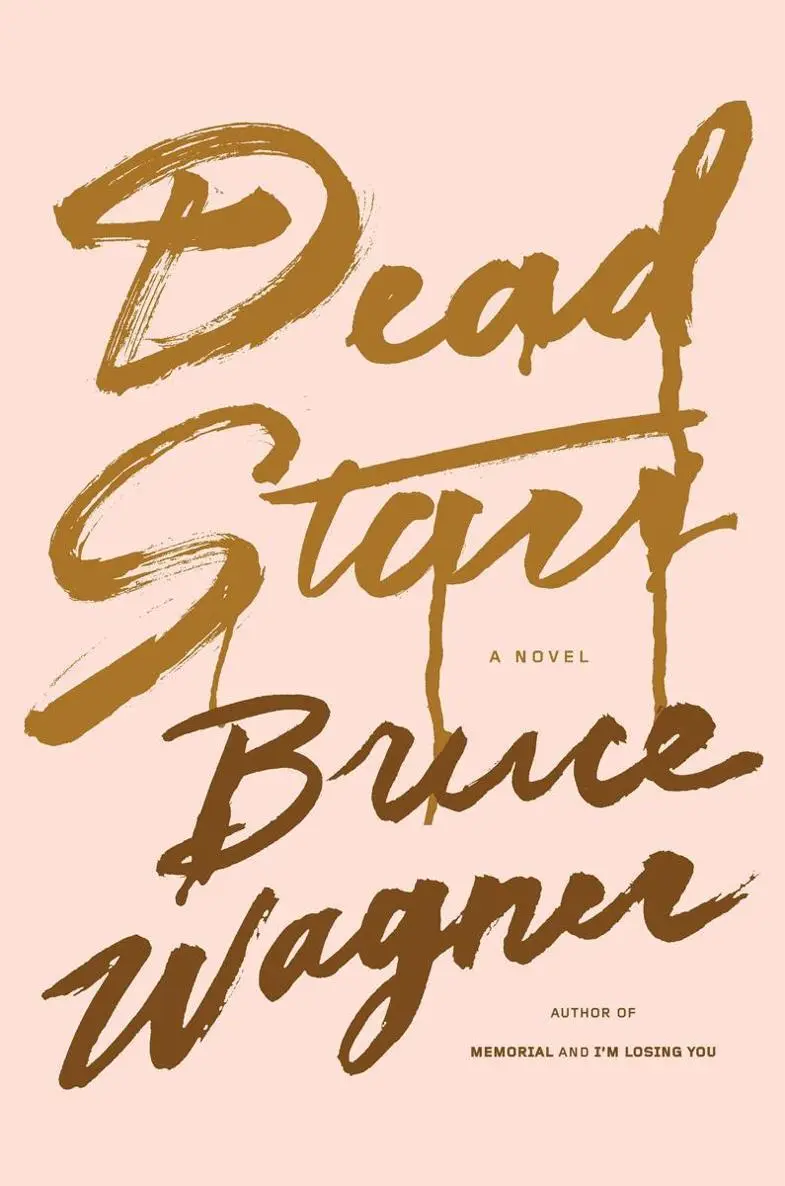
- Название:Dead Stars
- Автор:
- Издательство:Blue Rider Press
- Жанр:
- Год:2012
- ISBN:нет данных
- Рейтинг книги:5 / 5. Голосов: 1
-
Избранное:Добавить в избранное
- Отзывы:
-
Ваша оценка:
Dead Stars: краткое содержание, описание и аннотация
Предлагаем к чтению аннотацию, описание, краткое содержание или предисловие (зависит от того, что написал сам автор книги «Dead Stars»). Если вы не нашли необходимую информацию о книге — напишите в комментариях, мы постараемся отыскать её.
I'm Losing You)
At age thirteen, Telma is famous as the world’s youngest breast cancer survivor until threatened with obscurity by a four-year-old Canadian who’s just undergone a mastectomy … Reeyonna believes that auditioning for pregnant-teen porn online will help fulfill her dream of befriending Jennifer Lawrence and Kanye West … Biggie, the neurologically impaired adolescent son of a billionaire, spends his days Google Map-searching his mother-who abandoned home and family for a new love … Jacquie, a photographer once celebrated for taking arty nudes of her young daughter, is broke and working at Sears Family Portrait Boutique … Tom-Tom, a singer/drug dealer thrown off the third season of
for concocting a hard-luck story, is hell-bent on creating her own TV series in the Hollywood Hills, peopled by other reality-show losers … Jerzy, her sometime lover, is a speed-freak paparazzo who “specializes” in capturing images of dying movie and television stars … And Oscar-winning Michael Douglas searches for meaning in his time of remission. While his wife, Catherine, guest-stars on
, the actor plans a bold, artistic, go-for-broke move: to star in and direct a remake of Bob Fosse’s There is nothing quite like a Bruce Wagner novel. His prose is captivating and exuberant, and surprises with profound truths on spirituality, human nature, and redemption.
moves forward with the inexorable force of a tsunami, sweeping everyone in its fateful path. With its mix of imaginary and real-life characters, it is certain to be the most challenging, knowing, and controversial book of the year.
Dead Stars — читать онлайн бесплатно полную книгу (весь текст) целиком
Ниже представлен текст книги, разбитый по страницам. Система сохранения места последней прочитанной страницы, позволяет с удобством читать онлайн бесплатно книгу «Dead Stars», без необходимости каждый раз заново искать на чём Вы остановились. Поставьте закладку, и сможете в любой момент перейти на страницу, на которой закончили чтение.
Интервал:
Закладка:
“Taking place in Hollywood?”
It sounded like that was what she wanted to hear — that he was working on a collection of “Hollywood” stories — so Bud decided to go with the flow. They’d apparently reached the meat of the interview.
“Yes! I was calling it a novel, but I guess it’s not, really — not the kind David writes! Which are so layered &… well, Sophoclean! And wonderful . Would you excuse me a second?”
On his way to execute the tricky Double Void gambit, Bud was intercepted by Michael Tolkin.
They were high school chums who hadn’t seen each other in years. Tolkin wrote movie scripts for seven figures (& dabbled in cable), and was an acclaimed novelist to boot. He had the sort of career Bud wanted — the respect and acclaim of the Industry and the book critics as well. Bud had long felt a rivalry there, which of course his old friend would have known nothing about.
Michael was also the ostensible instigator behind the still vague David Simon affair.
Bud embraced him, but Michael was in a hurry; a handshake probably would have been better.
“I’m right in the middle of the David Simon meeting! Hey, thank you for that — I was going to get your number from CAA, so I could take you to dinner.”
“I’m late, Bud, so I don’t have time to talk, we can talk later. But here’s what’s happening: David’s doing a show about Hollywood, I may or may not be involved. It’s scripted improv. He wants it to feel like The Wire , whatever that means, I hate it when people start talking about what shit should feel like, you know? I remembered those great short stories you wrote, and I was telling him about them, how funny and moving they were, & he just jumped on it. David wants there to be a protagonist like — like the one you wrote about in your book. A down & out screenwriter, maybe addicted to narcotics or porn. I don’t know what David’s thinking— nobody does! — we didn’t talk all that much. My deal isn’t even in place. I’m only telling you this because, & I love the guy, but David’s a writer , what more can I say, that’s what writers do , we steal from the best. And I do think he’s genuinely interested in listening , you know, hearing stories about the bottomfeeders in the business. I only brought your name up as an example of someone who really captured , who knew those kind — that kind of character down to his soul . But I’m not so sure, I don’t think he’d ever, I shouldn’t say ever , I just don’t think he’s looking for you to write something for him for his show , to be in on the ground floor . And I’m telling you this because I don’t think you should — Bud, you do what you want , you’re a big boy — I just don’t think you should be giving your stories away.”
“That’s fine, Michael. It’s fine. It’s all good.”
“Well, I’m not so happy about it. Is he in there?”
“No. His development gal.”
“ Do not tell her any stories about Hollywood. You know, I said to him, either talk to Bud as a peer & potential writer on the show or don’t talk to him at all. Jesus, David! ‘The art of storytelling is reaching its end because truth and wisdom are dying’—Walter Benjamin said it, I didn’t! He also said that every work of art is an uncommitted crime. Maybe that was Adorno.”
“Don’t even worry about it, I can handle myself.”
“Bud, I gotta go.”
“Hey, remember when you lived in that apt on Fountain? Where Carl Gottlieb & Sela Ward used to live?”
“The La Fontaine! That was 30 years ago.”
“Where are you living now?”
“Wendy and I have a house in Laughlin Park, but we spend most of our time in Carpenteria. And I never gave up my seedy little office in Malibu. We need to downsize — our girls are in college. You? Got any kids?”
“No.”
“And you’re living…”
Bud said “Hancock Park” instead of “with my mother.”
Tolkin broke away. “I’ll call the end of the week, I want to put you in touch with someone.”
“Great! Hey, who ya meetin’ in there?”
What’s a little gauche between old friends?
“Michael Douglas. I wrote the movie he’s about to shoot, & he’s got ‘actor questions.’ Ugh. Good guy, though. See you, Bud.”
. .
Tolkin called like he said he would. He felt bad about being inadvertently involved in Bud’s “set up,” & gave him a hot tip.
He told Bud that the company producing the Michael Douglas movie was relatively new, but already had a few hits under its belt. It was run by a kid named Brando — nice kid — the son of a billionaire. Michael said that Ooh Baby Baby* was practically “giving away” blind script deals, “which in this climate is unusual, to say the least.” He told Bud that he’d already spoken to Brando about him.
“They should be calling you soon. I know you take jobs to make your monthly nut,” he added thoughtfully.
Tolkin was a mensch . He would certainly have been aware of what terrible straits Bud was in — for years now — yet was handling the situation, such as it was, with enormous sensitivity. Bud felt awful for having had a moment’s resentment toward the man who’d floated back into his life in the form of a fairy godfather, spirit guide and overall ministering angel.
“Do I need to come in with a pitch?” said Bud.
That hollow feeling began taking over, just like it used to. The despair of knowing that you didn’t have what it took, that a beggar could never be a nobleman.
“No! Less is definitely more. Brando listens to me, & I said you were Charlie Kaufman before Charlie was Charlie Kaufman. He’s excited . Just take a general meeting. Brando will pitch to you .”
EXPLICIT [Michael]
The Oaks
He
came to see her because he loved her. He wanted to talk about the project, of course, & about the flopsweat that seized hold of him in the last few weeks. The fear that he might be calling dark energy. He didn’t like the witchy feeling of superstition that of a sudden descended upon him in regards to directing & starring in a film about the death of a maverick. A maverick like him…
Though he hadn’t fully discussed it with his wife, Michael was certain he wanted her to play the Angel of Death. Still, he couldn’t put his finger on it. There was something tawdry & graspy about this posthumous-feeling, pet project of his. An element of morbid kitsch… was he jumping headlong into a lot of meretricious nonsense? He aimed to cross Fosse with Cocteau, but was he really up for that? (Was anyone?) Because whenever he had that “genius” conversation with himself, he sure as hell came out on the losing end. Would he— could he — make some kind of wild theatrical poem, some messy, perfectly imperfect masterpiece? All he had to do was close his eyes & he could hear the jangle of a critical & financial fiasco, a lampoonable death rattle.
Whatever he was going to make, he sure the fuck didn’t feel like falling on his ass. (Never did.) This wasn’t a midlife gambol, it was an act of love, or was meant to be, as much as it was a cri de coeur . But the virus of doubt had infected him, and experience had shown that was a tough bug to kill. He’d awaken in the night, at that time Dr. Calliope always called the hour of the wolf, from a dream that he was walking alongside the catafalque bearing his body; the pallbearers looked at him sideways with contempt & he felt shame that he didn’t have the courage to climb in the box. That quality of nightmare hadn’t occurred since radiation.
Читать дальшеИнтервал:
Закладка:
Похожие книги на «Dead Stars»
Представляем Вашему вниманию похожие книги на «Dead Stars» списком для выбора. Мы отобрали схожую по названию и смыслу литературу в надежде предоставить читателям больше вариантов отыскать новые, интересные, ещё непрочитанные произведения.



Обсуждение, отзывы о книге «Dead Stars» и просто собственные мнения читателей. Оставьте ваши комментарии, напишите, что Вы думаете о произведении, его смысле или главных героях. Укажите что конкретно понравилось, а что нет, и почему Вы так считаете.