John Domini - Talking Heads - 77
Здесь есть возможность читать онлайн «John Domini - Talking Heads - 77» весь текст электронной книги совершенно бесплатно (целиком полную версию без сокращений). В некоторых случаях можно слушать аудио, скачать через торрент в формате fb2 и присутствует краткое содержание. Год выпуска: 2015, Издательство: Dzanc Books, Жанр: Современная проза, на английском языке. Описание произведения, (предисловие) а так же отзывы посетителей доступны на портале библиотеки ЛибКат.
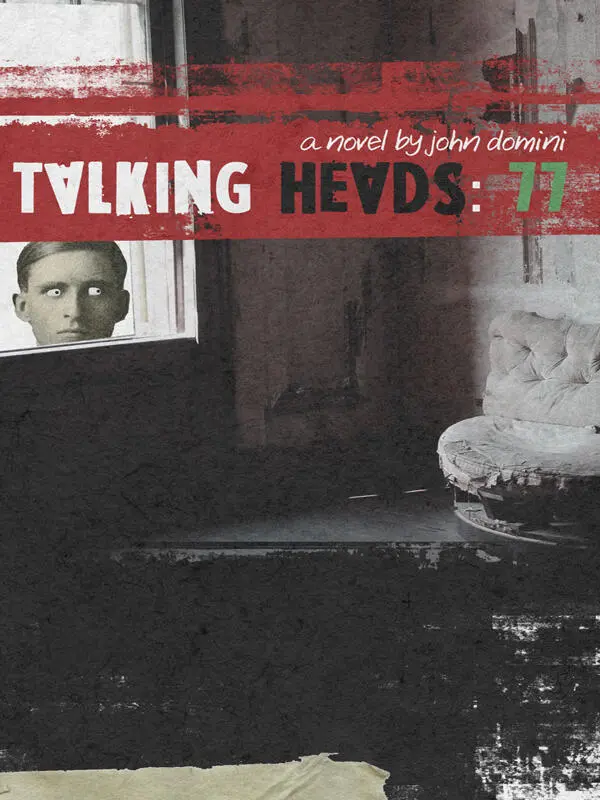
- Название:Talking Heads: 77
- Автор:
- Издательство:Dzanc Books
- Жанр:
- Год:2015
- ISBN:нет данных
- Рейтинг книги:4 / 5. Голосов: 1
-
Избранное:Добавить в избранное
- Отзывы:
-
Ваша оценка:
Talking Heads: 77: краткое содержание, описание и аннотация
Предлагаем к чтению аннотацию, описание, краткое содержание или предисловие (зависит от того, что написал сам автор книги «Talking Heads: 77»). Если вы не нашли необходимую информацию о книге — напишите в комментариях, мы постараемся отыскать её.
Talking Heads: 77 — читать онлайн бесплатно полную книгу (весь текст) целиком
Ниже представлен текст книги, разбитый по страницам. Система сохранения места последней прочитанной страницы, позволяет с удобством читать онлайн бесплатно книгу «Talking Heads: 77», без необходимости каждый раз заново искать на чём Вы остановились. Поставьте закладку, и сможете в любой момент перейти на страницу, на которой закончили чтение.
Интервал:
Закладка:
“I’m sorry,” he repeated. “Betts, out at the Cottage we’ll get this all—”
“Oh, the Cottage. Kit, you know Cousin Cal is there.”
It was duck season on Nantucket. Harding Calvin always spent the week at the estate, with three or four cronies. “Darling,” Kit said, “I told you. These guys are hunters. They’re not going to hang around the house.”
She frowned, behind more cumulonimbus.
“Betts, back in Minnesota we broke camp before dawn and we didn’t get back till supper.”
“Well, and then there’s you. You, Kit. The entire drive down to the Hole you hardly uttered two words. You slept. ”
He wrapped his hands around the railing, blinking, teary. The channel was chaos, dirty whitecaps in one patch and a green hole in another.
“Tell me about Cousin Cal,” Kit said. “Tell me about that time in Milton with him and the gardener.”
“What? The gardener?”
“In Milton, when you were a kid. How did that go?”
“Kit, really. What’s that got to do with—”
“Tell me, Betts. You were, what? Nine, ten? And Cousin Cal, he really hurt you. You and that gardener.”
The wind had pulled blonde strands from under her hat. These played back and forth across her furred earflaps, a brighter element between them.
“The man you’re thinking of,” Bette said slowly, “was more than a gardener.”
“Oh sure,” Kit said. “This was a caretaker. He did the whole Milton place.”
“Jean-Paul Rebec.”
“Jappy, right? You called him Jappy.”
“Oh Kit, you remember perfectly well.”
“Tell me. Please. Didn’t he make toys?”
“Yes. Yes.” Bette lifted her chin, indicating some far-off attic toy box. “Jappy could whittle a toy and tell me a story all at the same time. For the scary stories he’d whistle sound effects. The stories about the loup-garou don’t you know, those came complete with sound effects.”
“He made you a loup-garou, didn’t he?”
“Yes. Yes. A wolfman with fangs and a corduroy tongue, quite a piece of work really. Though I think that may have been a, what shall I say — an act of rebellion? It may have been the raised fist of rebellion, Kit, in the form of folk art. That Jappy should give me a monster like that. After all, I was the boss’s daughter.”
Kit laughed, surprising himself. He would’ve thought he was much too cold for that.
“Taking me back to Jappy, oh Kit.” Bette pulled the hair from her eyes. “Honestly.”
“Betts, I love it. You love it, you love to think.”
“Well. I don’t know whether this is a dirty trick or the nicest thing you’ve ever done.”
“But then the blacks started moving down from Roxbury, right? Your family began to worry about property values?”
Her smile shrank.
“It must have been hard, Betts. Saying goodbye—”
“It was a lot harder for Jappy. I was a girl when we sold, Kit. I was a girl and I lost a playmate. But Jappy, that man lost everything. He didn’t have children. He didn’t have a career, God knows. He had Milton.”
“And Cousin Cal,” Kit said, “he made a scene, right? He ordered the man off the place.”
“He came right into the stables and ordered Jappy out. The poor man kept stopping by for weeks after he’d been let go.”
“Couldn’t stay away.”
“He kept telling me goodbye. He’d drop in at the stables, stooped and murmuring, don’t you know.” She shook her head. “And then one time — there’s Cousin Cal. Loud with booze, naturellement . To hear him talk, Jappy was a trespasser. A criminal. A criminal.”
“But you got your revenge. You tore up the stone walls.”
Bette’s hair twisted around her lowered face.
“Betts? You wrecked the gardens?”
“You’re the only one who knows that, Kit. To this day, my family thinks it was the blacks.”
“You snuck out the bedroom window.”
“I snuck out the window. Jappy never worked on the gardens, you see. The flowers were my mother’s job, my aunt’s job. Women’s work. And on the other side of the gardens, the side along the road, there were the stone walls. Well. Wild horses couldn’t have stopped me.”
But when she lifted her head Kit found her look less proud than he’d expected.
“Once a snake was under a stone, Kit. A snake, honestly. Glittering in the moonlight. It didn’t stop me. No. No. When the thorns on the rosebushes cut me, I pulled off my nightgown and bundled it round my hands.”
“And that’s when you decided to call yourself Bette.”
“Bette like Bette Davis.” With a boot heel, she scuffed the deck’s all-weather roughage. “Oh, I became an actress that night. The next morning I wore dark tights and long sleeves. I concocted some shaggy-dog story about the cuts on my hands.”
She kept kicking at the deck. Chop, chuff, scuff. Kit thought of his phlegm-full conversation with Corinna, that morning. That’s it? the woman had asked. That’s all I can tell these people — you’ve left the city?
“I, I wanted to hear it again,” he told his wife. “Before the Cottage.”
And here it was, the look Kit had fallen for. The hamper in the haystack, the unabashed tatterdemalion. Blue, blonde, white. Whenever Bette showed him this face Kit could once more sense their first hot point of contact — she the know-it-all and him mad to find out — while at the same time he spotted glimmers of a more durable connection. Glimmers of equivalent core elements. Kit couldn’t name these elements. Most words felt too broad (“curiosity”), and whenever he came across something more precise it turned out to be an impossible antique (“pluck”). Kit knew only that words were part of it, part of their shared, staged business: an instinct for words, a fussing over words. He could even see the pleasure they took in the fussing, another glimmer. Enough for a believer to go on.
*
Then after half a day steeling themselves for a depressed and cold Cottage — another Monsod, to hear Bette describe it — Kit and his wife pulled up at a very different place.
Every light was blazing. Kit recalled the downtown record stores, their radium-bright checkerboard. Now what kind of winters had these New England Brahmins expected, building their seaside houses with so many windows? Kit circled round the Duster to the trunk, ticking off windows as he went. Front parlor, back parlor. Dining room, sitting room. The library and Uncle Walt’s study, the large and small guestrooms.
Even up in the widow’s walk, an uncovered bulb was burning. A dab of yellow against the evening glower. Monsod, no way. From where Kit stood, the Cottage looked like a funhouse. Twists, turrets, crazy lighting. And now, naturally, two little heads popped up at the nearest downstairs window. Two little ticket holders.
Did Bette have the wrong weekend? Should they have tried calling a second time?
Two children banged through the Cottage’s front door. Two boys, calling “Unca Kit!” Calling “Aunt Beddy!”
Hans and Rutger, sure. Bette’s sister’s boys.
“My guys! My tough guys!” Kit shouted.
Their huffing and puffing was flavored with hot chocolate. Within their hoods their faces nestled like eggs. And the boys had to show Kit how’d they’d learned to slap five: “Gimme some skin, Unca Kit. Gimme some skin!”
Kit took a couple of hits, murder on his cold hands. “My two ratso fave terrorist tough guys!”
Bette’s sister was eighteen months younger, but she’d had her first child more than five years ago. She met the group at the Cottage doorway, surprised, in slippers. Cecelia, Ceci. Her bones had Bette’s length and strictness, but tomatoes had grown through the fences. Lots of cheek, lots of top and thigh. Ceci framed her features with boxy suburban-Mom glasses. In tee shirt and work shirt, she might still have been breastfeeding.
Читать дальшеИнтервал:
Закладка:
Похожие книги на «Talking Heads: 77»
Представляем Вашему вниманию похожие книги на «Talking Heads: 77» списком для выбора. Мы отобрали схожую по названию и смыслу литературу в надежде предоставить читателям больше вариантов отыскать новые, интересные, ещё непрочитанные произведения.






Обсуждение, отзывы о книге «Talking Heads: 77» и просто собственные мнения читателей. Оставьте ваши комментарии, напишите, что Вы думаете о произведении, его смысле или главных героях. Укажите что конкретно понравилось, а что нет, и почему Вы так считаете.