Aislinn Hunter - The World Before Us
Здесь есть возможность читать онлайн «Aislinn Hunter - The World Before Us» весь текст электронной книги совершенно бесплатно (целиком полную версию без сокращений). В некоторых случаях можно слушать аудио, скачать через торрент в формате fb2 и присутствует краткое содержание. Год выпуска: 2015, Издательство: Hogarth, Жанр: Современная проза, на английском языке. Описание произведения, (предисловие) а так же отзывы посетителей доступны на портале библиотеки ЛибКат.
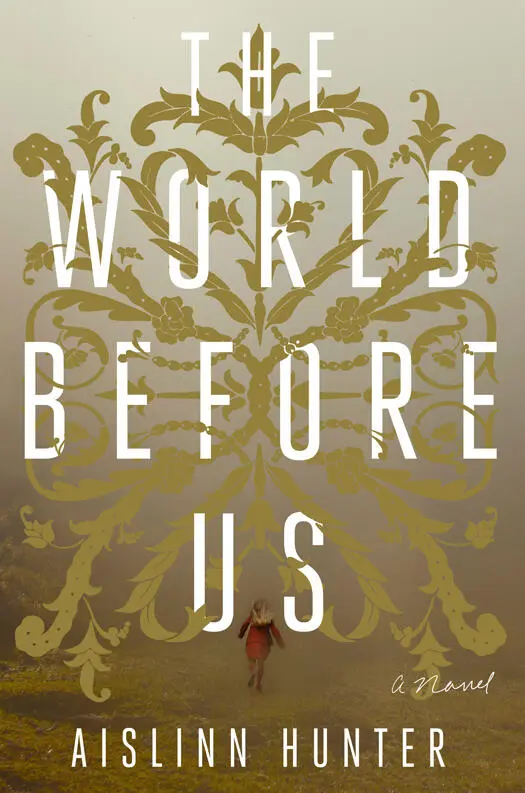
- Название:The World Before Us
- Автор:
- Издательство:Hogarth
- Жанр:
- Год:2015
- ISBN:нет данных
- Рейтинг книги:5 / 5. Голосов: 1
-
Избранное:Добавить в избранное
- Отзывы:
-
Ваша оценка:
The World Before Us: краткое содержание, описание и аннотация
Предлагаем к чтению аннотацию, описание, краткое содержание или предисловие (зависит от того, что написал сам автор книги «The World Before Us»). Если вы не нашли необходимую информацию о книге — напишите в комментариях, мы постараемся отыскать её.
Twenty years later, Jane is an archivist at a small London museum that is about to close for lack of funding. As a final research project-an endeavor inspired in part by her painful past-Jane surveys the archives for information related to another missing person: a woman who disappeared more than one hundred years ago in the same woods where Lily was lost. As Jane pieces moments in history together, a portrait of a fascinating group of people starts to unfurl. Inexplicably tied to the mysterious disappearance of long ago, Jane finds tender details of their lives at the country estate and in the asylum that are linked to her own heartbroken world, and their story from all those years ago may now help Jane find a way to move on.
The World Before Us — читать онлайн бесплатно полную книгу (весь текст) целиком
Ниже представлен текст книги, разбитый по страницам. Система сохранения места последней прочитанной страницы, позволяет с удобством читать онлайн бесплатно книгу «The World Before Us», без необходимости каждый раз заново искать на чём Вы остановились. Поставьте закладку, и сможете в любой момент перейти на страницу, на которой закончили чтение.
Интервал:
Закладка:
The tenor of the cave reminded her of Leeson. Of how she had been cold in the woods that day they left the Whitmore, and how, in one of the clearings, he’d seen that and had suggested she move to a spot of sun. Herschel had come back then, conveying urgency, so their movement had resumed; and Leeson had plucked her hand and tucked it into his when they reached the fallen tree, escorting her over it.
In the cave the memory of Leeson had been there — so vitally present it was as if he had left his body by the lake and remained with her, watching.
“Higher,” Norvill said, a second pencil in his mouth.
Nora lifted the lamp and debated asking him if he felt something similar.
But then he spat the pencil onto his lap. “Come now, Miss Hayling, lift it back up to where it was. Or is your arm getting tired?”
The late-afternoon air carries the first fusty smell of autumn, and even though the trees are still green, the leaves, here and there, are letting go. Overhead a crow on the ridge of the church roof caws, then flaps up and over the bell tower.
“Accck,” replies Herschel, and he lifts his arms up and down.
A group of hikers with walking sticks and stuffed packs walk past Jane as she heads across the road and into the field that sits between the woods and the trail. One of the women lags behind to pet Sam, looking around for his person until she spots Jane standing along the grassy verge. Jane waves as if to say, He’s with me .
It’s here that we briefly lose the girl — though she is a child and prone to do this: run headlong out of our orbit on the promise of some great adventure.
“I’ll go,” Cat sighs, moving off toward the trail.
But then the one who has been circling us for days says, in a gentle voice, “I’ll find her”—because he is good at that, and there are four slats on the gate, and two low branches bolstering the oak, and six hikers coming off the trail, and the world, today, is evens.
A hundred years ago, Jane reasons, Nora Hayling was a flesh-and-blood human being who probably walked across the road she herself has crossed almost daily this week, coming out of the servant tunnel and passing between the church and George’s waterfall as she strode smartly into the village on errands for Prudence or on her half-days off, her body ghosting the same places Jane’s body has been. In one of Jane’s imaginings, the sun is on Nora’s face and she is closing her eyes under it, breathing in deeply through her nose; in another version, it’s that hour before rain when the air feels like dew. Or maybe it’s winter, the first lilt of snowfall, and Nora stops to lift her glove to see if she can catch a crystal of snow, study it before it disappears. And in that wondrous, short span of time, when the perfect sphere of it is there on her palm, maybe Nora sees Herschel, standing in the woods with his hand out to the field the day they took their long walk. Or maybe she sees Leeson sitting in the net of sun on the stump beside her, saying that the countryside was theirs to wander over as they saw fit, his face lit up and his eyes accidentally meeting hers, and Nora thinking, How lovely, how lovely it is to be seen .
We see Jane. See her as she walks Sam along the stone wall, as she stops under the oak, tugs a leaf off its lowest branch and slips it into her pocket. Leaning against the wall by the stables she writes a note to Blake and at the bottom she adds call me and includes her number in London. Then she does what he’d done in his note to her, and underlines please .
• • •
Jane stretches out the kink in her neck and looks back to the woods, to the place where Lily went missing, and some of us feel the shape our hearts once took hang like pendulums in the hourless clocks of our chests.
Sam barks at Jane and wags his tail and she picks up a stick and tosses it, says, “Go on!” And we watch as Sam runs nose-down through the waving grass, and we are as happy as she is to watch him run, to witness his unfettered pleasure.
Some nights when there were only a few of us in her room, and it was still early and we were not yet tired from watching, we would ask each other to name the first thing we could remember.
“Sand,” one of us said, “the good kind, not like the pebbled bits by the sea, but the fine grain you’d find in an hourglass.”
And then we would try to puzzle if this sand was a memory from life or from a story — or something we glimpsed in the in-between we think of as “now.”
“Was it in your hand or under your feet?” we asked. “Was it warm or cold?” “Was there water nearby?” “Did you swim?” “Who were you with — a man or a woman, a boy or a girl?”
“I remember a park,” another said, “with gas lamps and a bench near the water.”
The boy remembered a terrier bouncing up to catch a stick, and a carousel with brightly painted horses. The girl remembered her mother’s face appearing over hers so that they could rub noses.
“Mwah!” said Cat at this, and she went around blowing kisses at everyone.
“What we saw first is less vital than what we saw last,” the theologian droned, though the idiot corrected him, waved his hand at all the talk of Ceasing, said, “It is what things become , sir. The world is congregated by force, and no force is lost, it can only be converted.”
So how do we begin? We begin with Jane — and not because she is here for us, but because we are also here for her, even though she does the work of conjuring us.
Jane opens her notebook and smooths a new page. She sees the trio tromping through the spool of the woods, and Herschel cawing , and Leeson stepping over a thatch of sunlight. Together we watch as Jane imagines a small kindness in a clearing — Leeson taking Nora’s hand — and we laugh because one of us knows that she has it wrong, that his palm was rough and his arm unsteady.
On the first blank page she writes: The Whitmore Hospital for Convalescent Lunatics sat along a carriage track most people travelled only once … and then she pauses under the oak tree to consider the fact of it .
After an hour, Sam trots over and nuzzles her face. Looking up, she can see that it’s getting late, that they ought to get on the road because she is expected at the cottage where Henri is waiting for her and because Lewis is driving up.
“Onward!” we say, because we, too, have been daydreaming. So we try to pick up where we think we last left off — though memory being what it is, we are not always sure what is yet to come and what has already happened.
“Attendance,” sighs the theologian.
“Here!” we say. “Here,” and “Here,” and “Here.”
And across the road the clock tower strikes six o’clock — a strong brass chord — and a chorus of bells follows.
Acknowledgements
On October 20, 1877, a patient (or patients) at a hospital for convalescent lunatics wandered for eleven or so miles through the woods to make their way to a great man’s door. The great man, in real life, was the poet Alfred Lord Tennyson, and his letter to the Governor of Witley Hospital inspired the opening narrative of this novel. I would like to thank David Lord Tennyson for permission to use the contents of Lord Tennyson’s original letter (with the necessary fictional substitutions of name and place) as well as the current keepers of the letter itself: The Lilly Library at Indiana University, Bloomington, Indiana. I would also like to thank Colin Gale at Bethlem Royal Hospital’s Archives and Museum in London. Not only was I allowed generous access to the hospital’s rare and wholly compelling Victorian archives, but that access allowed me to put together Tennyson’s letter (which did not mention his visitors by name) with Robert Cowtan, whose casebook I happened upon during my research. Cowtan was a patient at the real-life Witley Hospital — a man known for a belief in his great powers of walking — and it was he who made the real-life epic trek to Tennyson’s house.
Читать дальшеИнтервал:
Закладка:
Похожие книги на «The World Before Us»
Представляем Вашему вниманию похожие книги на «The World Before Us» списком для выбора. Мы отобрали схожую по названию и смыслу литературу в надежде предоставить читателям больше вариантов отыскать новые, интересные, ещё непрочитанные произведения.



Обсуждение, отзывы о книге «The World Before Us» и просто собственные мнения читателей. Оставьте ваши комментарии, напишите, что Вы думаете о произведении, его смысле или главных героях. Укажите что конкретно понравилось, а что нет, и почему Вы так считаете.