Aislinn Hunter - The World Before Us
Здесь есть возможность читать онлайн «Aislinn Hunter - The World Before Us» весь текст электронной книги совершенно бесплатно (целиком полную версию без сокращений). В некоторых случаях можно слушать аудио, скачать через торрент в формате fb2 и присутствует краткое содержание. Год выпуска: 2015, Издательство: Hogarth, Жанр: Современная проза, на английском языке. Описание произведения, (предисловие) а так же отзывы посетителей доступны на портале библиотеки ЛибКат.
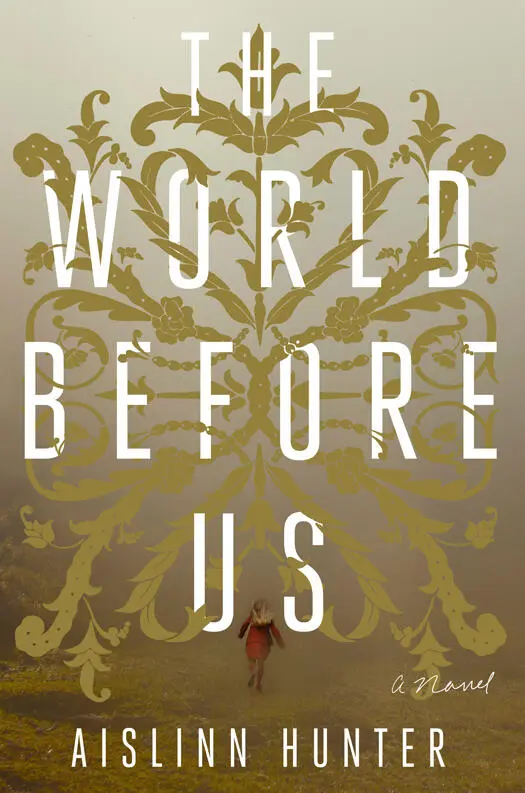
- Название:The World Before Us
- Автор:
- Издательство:Hogarth
- Жанр:
- Год:2015
- ISBN:нет данных
- Рейтинг книги:5 / 5. Голосов: 1
-
Избранное:Добавить в избранное
- Отзывы:
-
Ваша оценка:
The World Before Us: краткое содержание, описание и аннотация
Предлагаем к чтению аннотацию, описание, краткое содержание или предисловие (зависит от того, что написал сам автор книги «The World Before Us»). Если вы не нашли необходимую информацию о книге — напишите в комментариях, мы постараемся отыскать её.
Twenty years later, Jane is an archivist at a small London museum that is about to close for lack of funding. As a final research project-an endeavor inspired in part by her painful past-Jane surveys the archives for information related to another missing person: a woman who disappeared more than one hundred years ago in the same woods where Lily was lost. As Jane pieces moments in history together, a portrait of a fascinating group of people starts to unfurl. Inexplicably tied to the mysterious disappearance of long ago, Jane finds tender details of their lives at the country estate and in the asylum that are linked to her own heartbroken world, and their story from all those years ago may now help Jane find a way to move on.
The World Before Us — читать онлайн бесплатно полную книгу (весь текст) целиком
Ниже представлен текст книги, разбитый по страницам. Система сохранения места последней прочитанной страницы, позволяет с удобством читать онлайн бесплатно книгу «The World Before Us», без необходимости каждый раз заново искать на чём Вы остановились. Поставьте закладку, и сможете в любой момент перейти на страницу, на которой закончили чтение.
Интервал:
Закладка:
Jane glances around the room. She feels like she’s part of a spectacle, but no one other than the spangled girl is watching them.
She looks at him again. “How old are you, Blake?”
He grins. “You remember my name.” He pushes her wineglass closer with the tips of his fingers. “Nineteen. Why? How old are you?”
She debates how to handle this. “The proverbial too-old-to-behaving-this-conversation?”
He shifts forward and his knees touch hers under the table. “I’d like the record to show that you just called this a conversation.”
“My mistake. Clearly.”
“So, Helen,” Blake drums his fingers on the table, a chuffed expression on his face as if the lads he was sitting with bet him that he wouldn’t make it past two minutes. “What do you want to be when you grow up?”
“Hmm, this is a serious question?”
“I have to say that you strike me as a very serious woman. So, yes.”
Jane thinks about this. She wants to come up with an answer that is pithy or maybe even a little bit honest; she wants, almost, to say her name is actually Jane . But what wells up in her instead is something she can’t quite articulate. It has to do with the fifteen-year-old version of herself that she can see across the room in the booth that she shared with William and Lily, a girl in black shoes that are too fancy, a girl whose ankles are crossed under the table, whose knees sometimes glance William’s.
“Have you ever been in love?”
Blake blinks at her. The question is unexpected. “Well, Helen”—he pauses and picks up a coaster, taps it on the table—“assuming you are engaging in a real conversation, I will answer you honestly. I have never been in love.” When Jane doesn’t say anything, he cocks his head. “ Is this a real conversation?”
“Three times for me,” Jane says. “Different kinds of love.”
He nods. “That’s a respectable number.”
For the next half hour we sit in the pub with Jane and some of us pace the room and eavesdrop, and some try to remember if we know this place, try to fathom how long it has been here, wonder if the man at the bar is the son of the son of the son of a man or woman we once knew. Those of us who have been with Jane the longest want to whisper to her, Look how that boy is seeing you . To show her how open he is to the possibility of who she might be, how attenuated to her gaps and omissions. Ben was never like that; he held his ideas of Jane up in the air between thoughts of himself, of the wife he’d left for her, of the woman he wanted her to be. When they made love Jane closed her eyes and Ben looked at his own flexed arms as he propped himself above her. Even when she was in charge he thought, I’m fucking her , and “her” was always the girl he saw at the Portrait Gallery in a Prada dress, the daughter of Henri Braud and granddaughter of the renowned Standens.
“And then what happened?” Blake is leaning forward, laughing the way you do when a story has turned so tragic it’s funny.
“She hung herself.”
“Jesus.”
“From the top step above her desk. A neighbour found her. Mrs. Greeves.”
“Grieves? Like grieving? You’re kidding.”
“No, Greeves with two e ’s; I never thought of that, actually.”
Blake shakes his head. “My mum is one of those boring-but-nice mums. There’s four of us and we’re all little bastards, which is why I wouldn’t be surprised if she did something crazy one day: drowned the cat, set fire to the house.” He shifts his position and his leg falls against hers more deliberately.
“Do you like being a gardener?” Jane asks.
“It’s all right. Do you like estate management, or renovation work or whatever it’s called?”
“I do.” Jane smiles. “You know, it’s late. And I’ve got to let Sam out and I swear your girlfriend over there is going to come over and drive a fork through my throat, so I’m going to say good night.”
Blake stands up and Jane stands too, and she says, “It was really nice chatting with you,” and is surprised by how much she means it.
“Let me walk you out.”
“Um, I think you need to get back to your mates.”
“Helen, look at me.”
She does. He is staring at her intently, one side of his mouth lifted in a nervous smile, a chop of hair hanging over his forehead in a way that probably drives his mother crazy. There is a thumbprint-sized patch of stubble on his jaw that he missed shaving, an acne scar on his chin. She can tell the ridge of his nose has been broken, probably in rugby. She wants to put her finger lightly on the bump of it.
“I’d like to see you again.”
Jane laughs. “That’s very flattering, and I mean it, but probably not a good idea.”
19
As the woman at the local records office in Moorgate enters Jane’s information into the computer, Jane has to fight her anxiety about using her real name — Helen Swindon doesn’t have a reader’s card but Jane does.
“Right, here you are,” the woman says, squinting at what must be Jane’s particulars. “I just need to see two pieces of ID.” She glances down at Jane’s driver’s licence and bank card, says, “That’s fine,” and then slides a temporary pass across the counter. Jane slips it into her pocket and the woman goes back to the Sudoku puzzle she was working on. A few minutes later after Jane has emptied her things into one of the lockers in the cloak room and checked through a window to make sure the car is all right — Sam still sleeping off his morning run through the woods in the back seat — Jane walks past the woman again.
“Don’t forget to sign in,” the woman says, tapping the metal part of a clipboard with her pencil.
Jane writes her name illegibly, a false signature that feels like the physical form of a lie, and then she walks through the nearby door and into a bright but soulless reading room. Of the eight plywood tables lined up under the windows only two are occupied: one by a woman in a fleece jacket sifting through a folder of newspaper clippings, the other by an elderly gentleman reading what appears to be a turn-of-the-century will. The whirling progress of a microfiche on the other side of a short supporting wall and the peck-peck of the archivist’s typing are the only noises in the room. Jane pulls out a banquet chair with tatty upholstery, sets her notepad down on the empty table and then takes her reader’s card up to the archivist, a woman her own age with cropped blonde hair and a small diamond nose-ring.
“How can I help?”
“I’m looking for the index for the Whitmore Hospital for Convalescent Lunatics.”
“Right. Have a seat and I’ll bring it over.”
The Whitmore index is bigger than Jane remembers. The Whitmore was only one of five county asylums whose archives she’d surveyed when she was writing her dissertation. It hadn’t been until she found the hospital logbook and the startling reference to “girl N—, missing” that she’d properly paid attention back then, stopped seeing what she was reading as “types” and “categories” and instead saw a specific place and a particular person. Her eyes had jumped to the next line and the next to see if N had been found, stopping in shock at Letter from G. Farrington received —the name so immediately familiar from William’s tour-guiding on the day Lily went missing that she’d had to get up and leave the room, splash her face with cold water.
By noon Jane has called up a dozen sets of files and boxes, has gone through the Commissioners’ reports, the admission books and the records of transfer for the years 1876–78. She can find no record of a woman patient at the Whitmore whose name started with the letter N , and no further references to the trio’s outing except for a cryptic set of recommendations from the Commissioners for stricter regulations in relation to supervised groundwork and permitted excursions outside the asylum’s gates. She spends the next two hours trying to decipher Medical Superintendent Thorpe’s angular scrawl and his shorthand for injuries ( I ), incidents of restraint ( Res ), or complaints by patients ( Comp ). She finds Herschel and Leeson noted briefly, Herschel complaining of Cons , remedied by Prs , and placed on short-term supervision; Leeson suffering from a bout of Ma —which Jane takes to be “mania”—in late July and placed under stricter observation. Bedford’s name and the electrotherapy treatments she believes he performed do not appear at all.
Читать дальшеИнтервал:
Закладка:
Похожие книги на «The World Before Us»
Представляем Вашему вниманию похожие книги на «The World Before Us» списком для выбора. Мы отобрали схожую по названию и смыслу литературу в надежде предоставить читателям больше вариантов отыскать новые, интересные, ещё непрочитанные произведения.




Обсуждение, отзывы о книге «The World Before Us» и просто собственные мнения читателей. Оставьте ваши комментарии, напишите, что Вы думаете о произведении, его смысле или главных героях. Укажите что конкретно понравилось, а что нет, и почему Вы так считаете.