Aislinn Hunter - The World Before Us
Здесь есть возможность читать онлайн «Aislinn Hunter - The World Before Us» весь текст электронной книги совершенно бесплатно (целиком полную версию без сокращений). В некоторых случаях можно слушать аудио, скачать через торрент в формате fb2 и присутствует краткое содержание. Год выпуска: 2015, Издательство: Hogarth, Жанр: Современная проза, на английском языке. Описание произведения, (предисловие) а так же отзывы посетителей доступны на портале библиотеки ЛибКат.
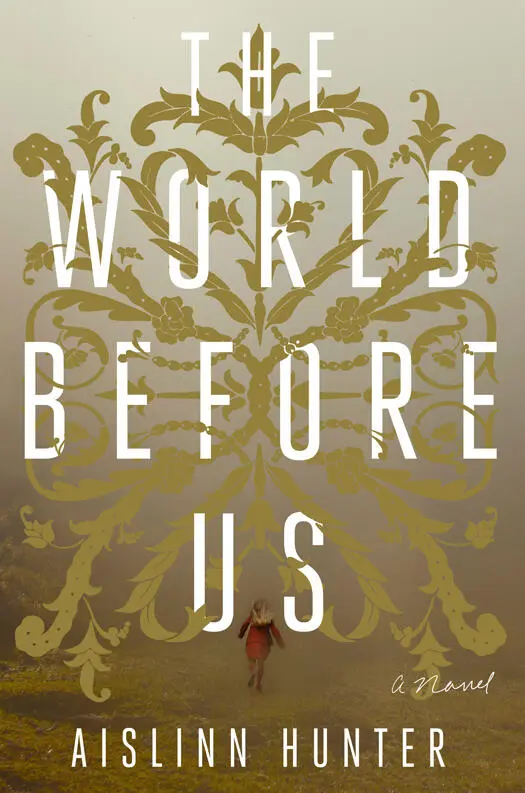
- Название:The World Before Us
- Автор:
- Издательство:Hogarth
- Жанр:
- Год:2015
- ISBN:нет данных
- Рейтинг книги:5 / 5. Голосов: 1
-
Избранное:Добавить в избранное
- Отзывы:
-
Ваша оценка:
The World Before Us: краткое содержание, описание и аннотация
Предлагаем к чтению аннотацию, описание, краткое содержание или предисловие (зависит от того, что написал сам автор книги «The World Before Us»). Если вы не нашли необходимую информацию о книге — напишите в комментариях, мы постараемся отыскать её.
Twenty years later, Jane is an archivist at a small London museum that is about to close for lack of funding. As a final research project-an endeavor inspired in part by her painful past-Jane surveys the archives for information related to another missing person: a woman who disappeared more than one hundred years ago in the same woods where Lily was lost. As Jane pieces moments in history together, a portrait of a fascinating group of people starts to unfurl. Inexplicably tied to the mysterious disappearance of long ago, Jane finds tender details of their lives at the country estate and in the asylum that are linked to her own heartbroken world, and their story from all those years ago may now help Jane find a way to move on.
The World Before Us — читать онлайн бесплатно полную книгу (весь текст) целиком
Ниже представлен текст книги, разбитый по страницам. Система сохранения места последней прочитанной страницы, позволяет с удобством читать онлайн бесплатно книгу «The World Before Us», без необходимости каждый раз заново искать на чём Вы остановились. Поставьте закладку, и сможете в любой момент перейти на страницу, на которой закончили чтение.
Интервал:
Закладка:
In the end it didn’t matter that Herschel hadn’t come with Leeson when Leeson had wagged the keys in front of his face victoriously; Herschel was indifferent to the fact that N was not dead, but missing. Or, if not missing, then a kind of changeling who had walked so long in the woods she’d turned into hairgrass or foxtail, into a tree or fern or fawn, invisible to anyone who didn’t know to look for the part of the meadow that moved against the current of the breeze.
Standing in a bower a stone’s throw from the lake, Leeson remembered what old man Greevy had said about his plan: that if Leeson found N and brought her back he would be made a king, and could set a national holiday, and would be given keys to the kitchen where they could all have as much butter and jam as they desired, jar after jar they could take for themselves or give to anyone. And Leeson had agreed, adding that N could be queen and guest of honour at the next annual ball. “If she isn’t fffffft ,” Greevy added, miming someone hanging from a rope. Herschel had gone along with that, had slung his tongue out of his mouth in an enthusiastic parody. For a second, Leeson had tried to imagine the girl that way, her neck stretched and bruised. The awkward nature of the image convinced him that she couldn’t be dead, and he said so, and Herschel shrugged and returned his attention to the Greek alphabet that Professor Wick had scratched onto the chalkboard. “ Alpha, beta, gamma, delta, epsilon ,” Wick said, instructing his fellow inmates to follow along. But none of the other patients cared, and the words made no sense to them, so Wick went on with his lesson, and the others, one after the other, got up and wandered away.
Above all else, Charles valued tenderness. He knew, as he made his way toward the shore to get his bearings, that his wife wasn’t coming back, that she had excised him from her concern, that she would recoil if he presented himself to her, even cured. He knew, in full account, what he was and what he’d done. He also knew that more than anyone it was the girl who saw him, who had given something of herself by touching his head in the clearing in the woods that August day and saying, “There, there” after she heard about Bedford and his shock therapy.
All of which meant there was nothing to do but look to a new set of possible futures, futures that he could unfold like a sheet of sums, a sheet that said “one plus one equals two,” that said “evens”: go and find the girl.
The first shot from the boat resounded around the lake and Leeson’s head jerked up. The crack was followed directly by a light clattering of pebbles falling high over the rock face to the right of where Leeson had stopped. The noise of children calling out to each other ensued—“Thomas! Celia! This way!”—and then the bushes not too far from Leeson’s station parted and a lanky blond boy leapt through, brandishing a stick and shouting, “Beware! Here come the invaders!” as he whacked at the foliage. Leeson ducked and held his breath and the boy charged on toward the path Leeson had come in on, the white glimpse of his shirt receding from view as he hacked his way through the low branches. Leeson listened for more voices. He had been drawn this way by the convivial sounds of a picnic, but not wanting to be discovered he’d decided to stay a respectable distance from the clearing. After a minute of silence Leeson stood to go. He would circle back to the woods that led to the estate and leave whomever it was on the other side of the bushes to the comfort of their privacy. He was about to turn back to the path that led away from the lake when he saw the little girl: a young thing with a rope of wet hair and pleasing features marching toward him, her complexion as bright as that of a porcelain doll he’d once seen in a shop window. Her eyes were to the ground so that she didn’t slip, hands holding up the hem of her frilly skirt.
“Celia!” a boy’s voice shouted from the nearby verge of the woods, and the girl glanced up and ran directly into Leeson.
17
No one is in the breakfast room when Jane comes downstairs, so she takes a seat at the table set for one by the front window. The lace curtains are pulled aside and offer the same view of the river that she saw from her room, but lower to the ground so that she is now level with the short bridges that arc over it. She’d stopped in the lounge on her way through and had spotted a dog-eared book on the history of Inglewood, written in the 1970s by a local historian. While she waits for Maureen to come out of the kitchen and take her order she thumbs through it.
Inglewood House was built in the 1840s as a shooting lodge for Walter Finley, a pineapple importer who wanted a rural retreat. The original structure was a modest two storeys built in the imported classical style by an Italian architect. When it was finished it represented many of the Italian’s Palladian values — strength, austerity, symmetry, dignity, reverence — and, according to the less-than-charitable local historian, none of Walter Finley’s. Within two weeks of the last paintings being hung, Walter was dead. The local doctor ascribed the suddenness of his departure to a strain of the heart. When Mrs. Finley arrived from the city the next morning she found her husband laid out behind his bed curtains, completely naked. In the kitchens below she found no fewer than twenty pheasants taken in the previous afternoon’s shoot lined up on a long work table for plucking. Within a month, the house was in the hands of the Finleys’ son Lawrence, who was in the process of bankrupting himself overseas; he sold the house almost immediately, never having set foot in it.
Hugh Farrington purchased Inglewood House intending to use it as a summer estate, but on the family’s first foray up from London, his wife, Prudence, fell in love with its remove. They stayed for the better part of eight months, during which time Prudence oversaw various improvements and added feminine touches to make the rooms less austere.
We know that George Farrington’s early years in Inglewood were as delightful for him as they were miserable for his brother, Norvill. William Eliot had alluded to this in his talk at the Chester, citing a short nineteenth-century monograph of the family written by a local headmaster who’d been acquainted with the Farringtons. Norvill was caned regularly by his tutor, had no friends to speak of and was forced to stay home and take extra lessons, while George, three years older, was allowed to travel with his father when he visited the House of Commons. One spring Norvill gathered the nerve to enter his father’s study to complain about the inequity, and Hugh, in a bout of unpredictable anger, struck him in the head with the sheaf of papers he was reading. Thereafter he refused, out of shame, to allow Norvill to bring up either issue again. Norvill that year was made all the more miserable by George’s happiness with village life, by his friendship with the head gardener’s son and his tireless enthusiasm for the outdoors. This misery he exhausted by setting snares in the woods for hares, taunting the blacksmith’s daughter and, once, catching a grass snake by the river and releasing it in the scullery.
Norvill had only been away at university a year when George wrote to tell him about being offered a place on a botanical expedition to the Himalayas. He would be gone eight months and Norvill would need to stay the term in Inglewood to manage the house and property and look after their mother, who had begun to suffer from nerves again. Their father, he wrote, was required too often in the city to make lodging in the country house a reasonable option for him.
We know it was in that year, as George dispatched letters from canvas tents perched on cliffsides — the hands of the porters who delivered them to British ships so dirty the envelopes arrived at Inglewood with a crust of earth — that Norvill began to imagine his brother dead. Their mother read the missives to herself at the breakfast table, the hand holding the paper visibly trembling, the other flat on her neck. As he watched her lips move silently, Norvill invented a catalogue of misfortunes: cholera one day, rockslide the next, a parasite or botched robbery in a village on another. His mother would smooth the spotless white table linen in front of her when she was done, and Norvill would glower at his grizzled bacon, shoving his fork into the pale flesh of the melon brought into the village by cart, fantasizing that George was, at that very minute, expiring on a gravelly hillside. His mother, her face lit up, asking once, “Whatever, darling, are you smiling at?”
Читать дальшеИнтервал:
Закладка:
Похожие книги на «The World Before Us»
Представляем Вашему вниманию похожие книги на «The World Before Us» списком для выбора. Мы отобрали схожую по названию и смыслу литературу в надежде предоставить читателям больше вариантов отыскать новые, интересные, ещё непрочитанные произведения.







Обсуждение, отзывы о книге «The World Before Us» и просто собственные мнения читателей. Оставьте ваши комментарии, напишите, что Вы думаете о произведении, его смысле или главных героях. Укажите что конкретно понравилось, а что нет, и почему Вы так считаете.