Aislinn Hunter - The World Before Us
Здесь есть возможность читать онлайн «Aislinn Hunter - The World Before Us» весь текст электронной книги совершенно бесплатно (целиком полную версию без сокращений). В некоторых случаях можно слушать аудио, скачать через торрент в формате fb2 и присутствует краткое содержание. Год выпуска: 2015, Издательство: Hogarth, Жанр: Современная проза, на английском языке. Описание произведения, (предисловие) а так же отзывы посетителей доступны на портале библиотеки ЛибКат.
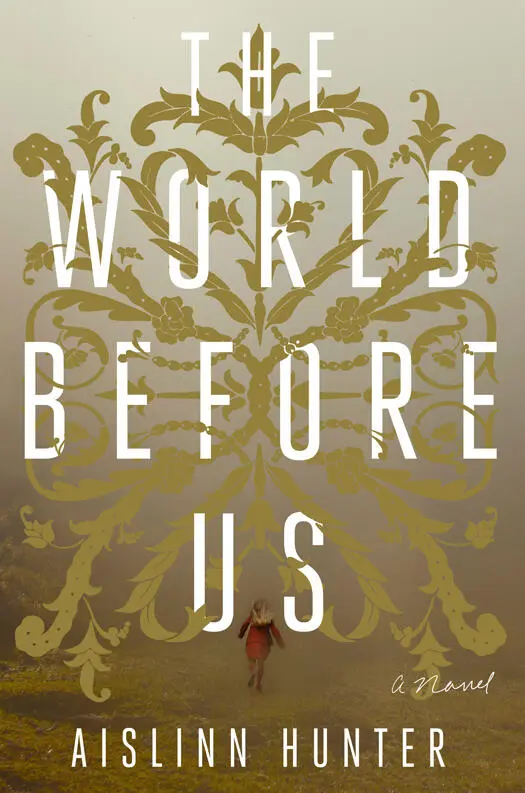
- Название:The World Before Us
- Автор:
- Издательство:Hogarth
- Жанр:
- Год:2015
- ISBN:нет данных
- Рейтинг книги:5 / 5. Голосов: 1
-
Избранное:Добавить в избранное
- Отзывы:
-
Ваша оценка:
The World Before Us: краткое содержание, описание и аннотация
Предлагаем к чтению аннотацию, описание, краткое содержание или предисловие (зависит от того, что написал сам автор книги «The World Before Us»). Если вы не нашли необходимую информацию о книге — напишите в комментариях, мы постараемся отыскать её.
Twenty years later, Jane is an archivist at a small London museum that is about to close for lack of funding. As a final research project-an endeavor inspired in part by her painful past-Jane surveys the archives for information related to another missing person: a woman who disappeared more than one hundred years ago in the same woods where Lily was lost. As Jane pieces moments in history together, a portrait of a fascinating group of people starts to unfurl. Inexplicably tied to the mysterious disappearance of long ago, Jane finds tender details of their lives at the country estate and in the asylum that are linked to her own heartbroken world, and their story from all those years ago may now help Jane find a way to move on.
The World Before Us — читать онлайн бесплатно полную книгу (весь текст) целиком
Ниже представлен текст книги, разбитый по страницам. Система сохранения места последней прочитанной страницы, позволяет с удобством читать онлайн бесплатно книгу «The World Before Us», без необходимости каждый раз заново искать на чём Вы остановились. Поставьте закладку, и сможете в любой момент перейти на страницу, на которой закончили чтение.
Интервал:
Закладка:
By the time Jane gets up to go out for dinner she is almost halfway through her Whitmore file box and has written two pages of notes that don’t connect the pieces of the story in any meaningful way. She has what she had a year ago — names and a web of relationships between the patients convalescing at the Whitmore in 1877, but no mention of any woman’s name that starts with N outside of the “missing” reference in the hospital logbook.
Jane pulls her bag over her shoulder and Sam stands up and wags his tail. She leashes him and then stops to check her bag for her mobile, rooting around in it until she remembers that she left the phone on the kitchen table back in London, deliberately, so that no one would know where she was.
The village fish and chip shop is lit yellow by dingy overhead lights and smells more like grease than the sea. Sam waits outside while Jane sits in a plastic chair listening to the deep fryer gurgle over her haddock and the kid behind the counter laughs at a video on a laptop screen.
Jane takes a sip of her fizzy drink and then plays with the straw, poking it around the hole in the can while she tries to decide if she should call Lewis or Gareth, or both. It’s possible that Lewis still doesn’t know what happened and that Gareth has stopped calling. Maybe William explained how he knew her, or maybe Gareth decided it would be best to wait until Monday for Jane to explain herself — Gareth assuming that the workweek would start as usual and that Jane would simply show up.
From the picnic table outside the inn, Jane can see down the road to the pub, its outside lamp hanging over a knot of Saturday-night drinkers. When a group goes back in and the conversations diminish, the village goes back to its humming: the sound of power lines and the steady drone of a generator out the back, the river shushing underneath it and, somewhere under that, the churning falls.
Sam drops his chin on Jane’s knee and she feeds him one of her chips. “Because you’re on holiday,” she says, and he drops his chin again and blinks up at her. She glances down the road to the pub one more time, craving a glass of wine or an off-sale bottle she can bring back to her room — but it’s late and she decides it won’t kill her to go without, so she wipes her hands on a napkin and gathers her rubbish. Sam barks and, when Jane gives him a stern look, wags at his own audacity.
“We’ll go exploring tomorrow, okay? Provided you can behave.” She rubs his ears, still as soft as when he was a puppy, and puts her head down, touching his cold wet nose to hers.
By eleven Jane is in bed and we are settling into our corners, attending to how her thoughts move between the files she’s been reading and what she could have done differently with William. The best part of the evening, for us, was earlier when we watched her leaf through a file of programmes and invitations to various hospital entertainments. We crowded around the photocopies she’d made of the events that took place the summer N went missing: sheets of carefully inked names and intended performances, formal invitations to recitals and plays. Some of us could call up snatches of songs or forgotten faces as we looked at the handbills: “Mr. Tom Underwood playing street piano!” “Miss Florence Donlan singing ‘Now Ever’ by Mattei!” “A recitation of Tennyson’s ‘Tears, Idle Tears’ by Mr. Samuel Murray!” “An ensemble performance by the Whitmore Players of The Rosebud of Stinging Nettle Farm: A Melodramatic Pastoral in Fifteen Gasps! ” “Dr. Thorpe and Matron Montgomery performing a duet by Mendelssohn!”
“Oh God,” the musician groaned, “that woman couldn’t play pianoforte at all!”
Memory being what it is, we sometimes remember backward, or sideways, or inside out. We will read the name of a song and instead of its melody some of us might experience a tightness around the ribs, a corseting. Or we might recall the notes but instead of seeing the musicians playing will picture the diamond pattern of a floor. Applause spilling out from an audience might equal heartache; a leaflet for the Fancy Fair might put the taste of toffee in our mouths. History is never perfectly framed, although the photographs in the museum may suggest otherwise. In Jane’s file tonight we saw the notice for Dr. Thorpe and Matron Montgomery performing a duet, and one of us felt the heat of a room and another felt a bump on his forehead and still another saw a man in a wooden chair tapping his hand on his leg out of rhythm with the song. We saw the Matron’s thick fingers fall clumsily on the keyboard a beat behind the doctor’s bowing, and it pleased us to believe that someone with keys to rooms we could not open could do something so poorly.
An hour after Jane has switched off the light she sits up in bed and pulls the cord on the lamp. The bulb flickers back on. We rouse ourselves as quickly as children who have only been pretending to sleep. Jane gets out of bed and goes over to the file she left on top of the Whitmore box. She thumbs through it, not exactly sure what she’s looking for. Stops at one of the programmes she’d photocopied a decade ago when she was doing her dissertation, one for the Whitmore’s 1877 asylum ball.
“Lancers,” Cat says, peering at it.
“Punch,” says the musician.
“The Captain is here,” trills the poet.
Jane scans the programme, then leafs back through the file folder to see if she’d made a duplicate of the invitation. Near the bottom of the file she finds it — a grey-scale copy of an ornate and perfectly typeset card, more formal than the usual billets done by patients practising their calligraphy.
THE WHITMORE HOSPITAL FOR CONVALESCENT LUNATICS
RESPECTFULLY INVITES YOU
TO OUR ANNUAL SUMMER FESTIVAL AND BALL
ENTERTAINMENT & LIBATIONS PROVIDED
GLEES BY THE SINGING CLUB BEGIN AT 3
READINGS IN THE RECREATION HALL AT 4
TEA ON THE GROUNDS WILL BE SERVED AT 5
DANCING ON THE LAWNS COMMENCES AFTER
THE FORMAL BALL OPENS AT 7
CARRIAGES AVAILABLE FROM THE STATION
Jane’s dissertation work had been a survey of the types of records and documents kept by rural asylums in the Victorian era. Although she’d written a chapter contextualizing the intended use and consequential applications of these documents, most of the work had been dull — about “kind” and “type” more than content. She’d categorized programmes and entertainment broadsheets as “ephemera” and hadn’t spent much time thinking about them. As she pulls out the invitation for a closer look she finds she can’t say exactly what a ball at an asylum might look like, although she knows it was part of the enterprise of normalizing and reviving patients: to provide them with formal occasions where they could dress in their best suits and gowns and practise behaving the way society expected them to. Such rehearsal was especially important in a convalescent hospital like the Whitmore, where the patients were presumed to be curable and often enjoyed greater freedoms in anticipation of release.
Jane reads the invitation again and tries to picture the hundred or so souls at the Whitmore spinning on the hardwood floors of the recreation hall she’d walked through all those years ago. Closing her eyes she adds papier-mâché streamers to the walls, delicate bouquets on thin-legged tables, candle chandeliers and music from a band made up of patients and staff. The patients who weren’t in refractory care, who weren’t, as she’d read earlier in a casebook, “banned from the ball and all other social engagements for a fortnight,” would have been present, wearing their best clothes and dancing with—. And that’s when it occurs to her: with the public. The invitation was an invitation to the public , not just family or friends, but members of society. Carriages available from the station . Asylums and convalescent hospitals, she knows, regularly invited the public to their institutions so they could see how well the patients were treated, recognize their progress and the value of the hospital’s work. Slowly, she reasons it out: if balls weren’t just for guests of the patients, if they were for members of the community, then George Farrington, who lived a mere ten miles away, would probably have been invited. As one of the wealthiest landowners in the area, he would have known the Superintendent, or at least have been familiar with him.
Читать дальшеИнтервал:
Закладка:
Похожие книги на «The World Before Us»
Представляем Вашему вниманию похожие книги на «The World Before Us» списком для выбора. Мы отобрали схожую по названию и смыслу литературу в надежде предоставить читателям больше вариантов отыскать новые, интересные, ещё непрочитанные произведения.






Обсуждение, отзывы о книге «The World Before Us» и просто собственные мнения читателей. Оставьте ваши комментарии, напишите, что Вы думаете о произведении, его смысле или главных героях. Укажите что конкретно понравилось, а что нет, и почему Вы так считаете.