Aislinn Hunter - The World Before Us
Здесь есть возможность читать онлайн «Aislinn Hunter - The World Before Us» весь текст электронной книги совершенно бесплатно (целиком полную версию без сокращений). В некоторых случаях можно слушать аудио, скачать через торрент в формате fb2 и присутствует краткое содержание. Год выпуска: 2015, Издательство: Hogarth, Жанр: Современная проза, на английском языке. Описание произведения, (предисловие) а так же отзывы посетителей доступны на портале библиотеки ЛибКат.
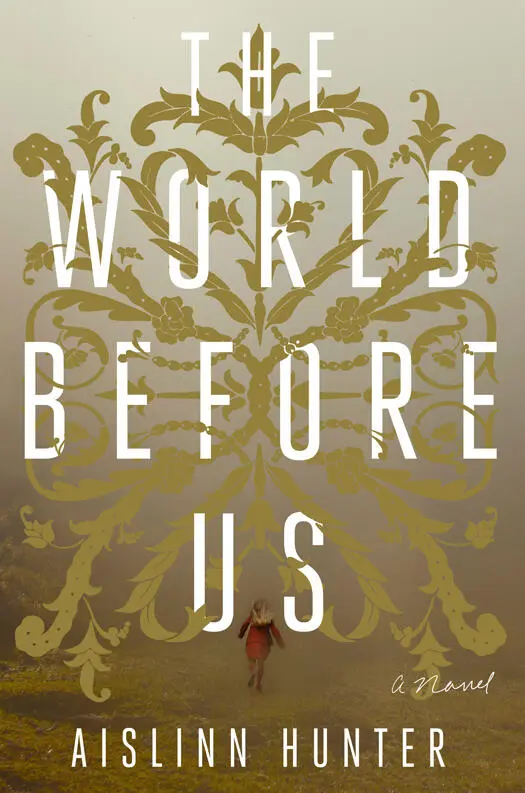
- Название:The World Before Us
- Автор:
- Издательство:Hogarth
- Жанр:
- Год:2015
- ISBN:нет данных
- Рейтинг книги:5 / 5. Голосов: 1
-
Избранное:Добавить в избранное
- Отзывы:
-
Ваша оценка:
The World Before Us: краткое содержание, описание и аннотация
Предлагаем к чтению аннотацию, описание, краткое содержание или предисловие (зависит от того, что написал сам автор книги «The World Before Us»). Если вы не нашли необходимую информацию о книге — напишите в комментариях, мы постараемся отыскать её.
Twenty years later, Jane is an archivist at a small London museum that is about to close for lack of funding. As a final research project-an endeavor inspired in part by her painful past-Jane surveys the archives for information related to another missing person: a woman who disappeared more than one hundred years ago in the same woods where Lily was lost. As Jane pieces moments in history together, a portrait of a fascinating group of people starts to unfurl. Inexplicably tied to the mysterious disappearance of long ago, Jane finds tender details of their lives at the country estate and in the asylum that are linked to her own heartbroken world, and their story from all those years ago may now help Jane find a way to move on.
The World Before Us — читать онлайн бесплатно полную книгу (весь текст) целиком
Ниже представлен текст книги, разбитый по страницам. Система сохранения места последней прочитанной страницы, позволяет с удобством читать онлайн бесплатно книгу «The World Before Us», без необходимости каждый раз заново искать на чём Вы остановились. Поставьте закладку, и сможете в любой момент перейти на страницу, на которой закончили чтение.
Интервал:
Закладка:
A few days after that, Jane began to see William’s name everywhere — in book reviews in the papers, in a short article in the Sunday magazine, on posters in the Chester gift shop, on books propped up in shop windows, the image on the back showing him greying at the temples and soft-jawed but otherwise almost the same. It took her a week to summon the courage to pick the book up in her hands, and another week to buy it, sliding it across the shop counter uncertainly, as if it were a gift for someone who was almost a stranger, someone whose tastes she didn’t know.
There is some debate amongst us as to how best to understand the trajectory of a life — ours, or that of another. We understand that most people fail to recognize patterns, get caught up in new details, in allowing familiar situations to assume new guises. We can be guilty of this too. Those of us who have been with Jane the longest feel a constant swell of hope and a recurring ebb of doubt about what she can do for us and why we’re here. Some of us believe that one day she’ll open a file, or read a document or a book, and some particular scrap of information will fall out and the door of the cage that we imagine we’re in will swing open. Most days we want this, but once in a while we hesitate, worry about what will happen when we know ourselves, whether we will Cease. Besides, we have come to know Jane, so much so that for some of us it is unclear where she begins and we end. William is part of that — because he is important to Jane he has come to matter to us too.
Jane leaves her office with her lunch bag and heads into the thrum and busyness of the natural history hall. Sometimes it’s like stepping onto a fairground — people moving in all directions, small crowds gathered around the various cases and cabinets ooh ing and aah ing, expressions of pleasure or surprise on their faces. On good weather days Jane tends to take her lunch break across the street in the park. There’s a low wood bench that’s angled toward the grey facade of the Chester — its proper columns, plain pediment, notched cornices. Jane likes watching the visitors heading in and out of the main doors, strangers whose body language she can try to read. Sometimes it surprises her — who bands together and who moves off alone, like a planet slipping out of its expected orbit. Once she saw a boy of nine or ten standing on the steps and nervously glancing around, his hands twisting the straps of his backpack. When his mother came out and found him she went to hug him, but he pushed her away, wanting, Jane imagined, to have outgrown her concern, or ashamed of his own.
As Jane heads past the Vlasak cabinet and toward the front doors she’s thinking about that boy, and then she’s thinking — her hand on the brass plate that pushes the door out and into the world — that soon William will be on the other side of this very door, about to come through it toward her.
5
The doors of the Chester Museum first opened in the spring of 1868. The day was so stormy that the windows were lashed with rain and the street outside the museum was clogged with carriages whose horses had lost sight of the cobblestones beneath them. There was knock after knock on Edmund Chester’s door as the foyer of the house on Brompton Road slowly filled with members of the scientific community, men who arrived in sopping top hats, soaked overcoats and trousers with wet hems. Edmund’s first exhibit consisted of a selection of fossils, beetles, shell and bird specimens informally displayed in his home on that blustery Thursday. Stones and mineral shards and passerines covered his dining room table — the most striking of which was a mounted bowerbird that Edmund had positioned strategically next to a lamp, its bright-yellow cap and wings gleaming.
He opened the meeting with a round of sherry and a short explication of the beetle collection. The Society members stood alongside the mahogany table while Edmund passed some of his samples around on cuts of paper. The men brought the specimens close to their faces for inspection, or moved the beetles up and down on their palms as if testing whether an insect’s heft might further reveal its aspect.
“This one is from southeast Africa, from the family Scarabaeidae,” Edmund said, holding up a large beetle with a glossy emerald-coloured shell. “It’s known to feed on flowers.” He handed the specimen to Norvill Farrington who had come to stand beside him. He saw now that Norvill was taller than him by six or seven inches, and dressed more formally than the evening demanded, as if he’d come from somewhere other than his own house.
Norvill took the beetle from Edmund. “That one was brought back by Nicholson last month,” Edmund added. “He has about twenty of them.”
“I’ve seen one of his already,” Norvill replied, turning back to the table. “He brought it to lunch in a snuff box.” Norvill angled the cut of paper toward the lamplight to better gauge the beetle’s luminescence. “This one’s antennae are quite distinct—”
The door at the back of the parlour swung open and Norvill paused as Mrs. Chester strode toward the gathering in a bustled blue dress. She was carrying her hat in a gloved hand as if she’d just returned home, and her dark hair glossed in the candlelight. Edmund kissed his young wife’s cheek, and then responded to Norvill’s comment about the antennae. “They’re allegedly for fighting over the females.”
Charlotte nodded at the assembled men, taking in each of their faces quickly; she knew all but one of them. “Gentlemen,” she said as she curtseyed. She squeezed Edmund’s arm. “I’ve come to say good night.” Norvill stepped back to let her by and she glanced down at the beetle in his hand, said, “It’s a pity it’s so delicate; it would make a very interesting piece of jewellery.”
In the end it was Norvill who remembered Charlotte’s comment about the beetle and who, three years later when the collections were first opened to the public, suggested that Edmund commemorate the event by presenting his wife with a bracelet featuring the glass-encased scarab. Charlotte mentioned this in her diary — her surprise that Norvill would have paid such attention to a trifling comment on the night they first met.
It is just past one o’clock when Jane comes back from lunch. She is thinking about Charlotte’s bracelet as she crosses the marble floor of the natural history hall, and we traipse behind her through the crowds who’ve come for the last day of public exhibition: a woman in a beaded shirt shaking her son’s arm for rapping the shell of the giant tortoise, a young couple peering into a cabinet of sea stars. When Jane reaches the wrought-iron stairwell that curves up to the first-floor gallery she takes the steps two at a time, then follows the narrow spiral up again to the galleries on the second floor, thinking about Gareth’s earlier words. Sitting on the bench outside the Chester, they had come back to her — his comment about the feliform hare, the cat — rabbit hybrid that was part of a collection of early Victorian hoaxes, an anatomical impossibility stitched together by a taxidermist and passed off for almost a year as a new species. She saw Gareth holding it in its spirit jar and saying, “I might keep this chap” as the cat spun slowly around. It hadn’t occurred to Jane when he said it, or in the stress of the weeks before, that certain things might not go to auction, those bits and pieces of a collection with less determinable value. Packing the containers of her lunch bag back up it had come to her with a jolt: the Chester family archives and the dozen or so personal objects associated with Edmund and Charlotte would be exactly the type to fall through the cracks. If Edmund Chester’s museum — his life’s work — was no longer supportable, who would care about his walking stick and ivory letter opener, Charlotte’s pearl hair combs or her scarab bracelet?
Читать дальшеИнтервал:
Закладка:
Похожие книги на «The World Before Us»
Представляем Вашему вниманию похожие книги на «The World Before Us» списком для выбора. Мы отобрали схожую по названию и смыслу литературу в надежде предоставить читателям больше вариантов отыскать новые, интересные, ещё непрочитанные произведения.



Обсуждение, отзывы о книге «The World Before Us» и просто собственные мнения читателей. Оставьте ваши комментарии, напишите, что Вы думаете о произведении, его смысле или главных героях. Укажите что конкретно понравилось, а что нет, и почему Вы так считаете.