Lee Martin - Late One Night
Здесь есть возможность читать онлайн «Lee Martin - Late One Night» весь текст электронной книги совершенно бесплатно (целиком полную версию без сокращений). В некоторых случаях можно слушать аудио, скачать через торрент в формате fb2 и присутствует краткое содержание. Год выпуска: 2016, Издательство: Dzanc Books, Жанр: Современная проза, на английском языке. Описание произведения, (предисловие) а так же отзывы посетителей доступны на портале библиотеки ЛибКат.
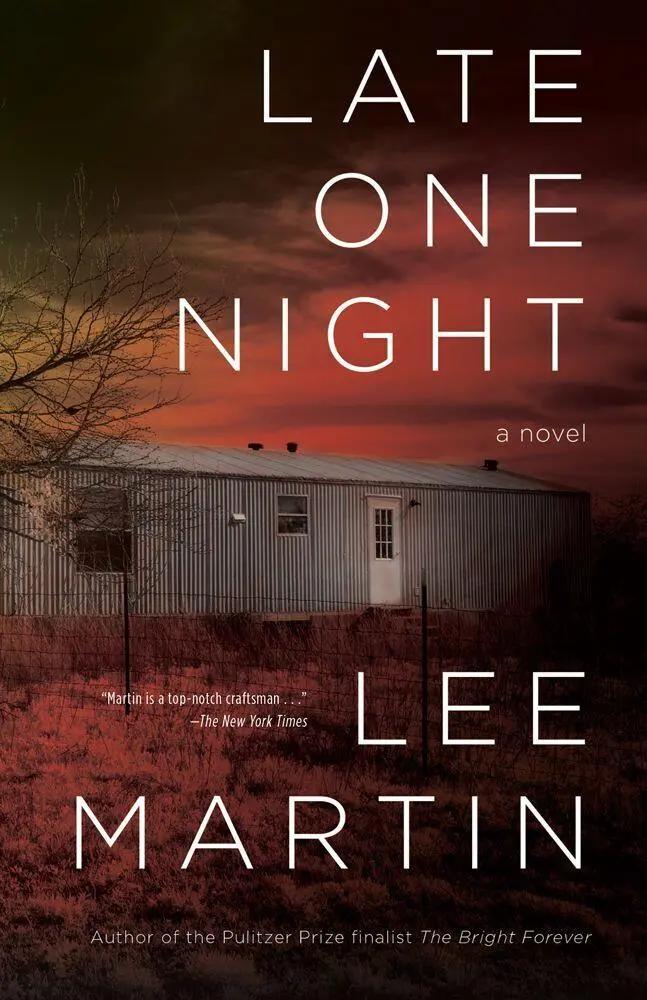
- Название:Late One Night
- Автор:
- Издательство:Dzanc Books
- Жанр:
- Год:2016
- ISBN:нет данных
- Рейтинг книги:3 / 5. Голосов: 1
-
Избранное:Добавить в избранное
- Отзывы:
-
Ваша оценка:
Late One Night: краткое содержание, описание и аннотация
Предлагаем к чтению аннотацию, описание, краткое содержание или предисловие (зависит от того, что написал сам автор книги «Late One Night»). Если вы не нашли необходимую информацию о книге — напишите в комментариях, мы постараемся отыскать её.
Ronnie and his girlfriend, Brandi Tate, maintain his innocence — he’s a loving, caring father who wants to do everything he can to protect his family. But as the gossip continues, Ronnie feels his children (and, eventually, Brandi) pulling away from him. Soon enough, he finds himself at a crossroads — should he allow gossipmongers to seal his fate, or should he fight to prove that he’s not the monster people paint him to be?
In
, Lee Martin examines the devastating effect of rumors and the resilience of one family in the face of the ultimate tragedy.
Late One Night — читать онлайн бесплатно полную книгу (весь текст) целиком
Ниже представлен текст книги, разбитый по страницам. Система сохранения места последней прочитанной страницы, позволяет с удобством читать онлайн бесплатно книгу «Late One Night», без необходимости каждый раз заново искать на чём Вы остановились. Поставьте закладку, и сможете в любой момент перейти на страницу, на которой закончили чтение.
Интервал:
Закладка:
“Is that the way you’ve decided it should be?”
She gave him a stiff nod. “I won’t let those girls want for anything. You can count on that.”
Ronnie heard what wasn’t being said: that she didn’t trust him to do right with that money, and for an instant he was tempted to tear that check up and throw the pieces into her face. But when would he ever have his hands on three hundred dollars again? It was true that he could put it to good use for groceries and the like.
He opened the door wider. “You want to come in?”
Missy shook her head. “I’ve done what I came for.”
“All right then.” He folded that check up in his hand. “Angel’s been crying for a new iPod, but I won’t throw this away on that. It’s hard enough to keep them all fed and in decent clothes. I’d say thank you, but something tells me it’s not thanks you want. I figure you aim to hold me accountable until the day I die.”
Then he stepped back into the house and closed the door.
_________
At first, he was unaware of the talk swirling around the county — the talk of him being at the trailer the night it burned. He thought that was his secret. Even Brandi was in the dark, and, as for the girls, they were busy being kids, busy trying to get on with their lives.
Then Brandi came home from work one evening and told them she’d been hearing gossip.
“About me?” he asked. “About the fire?”
Brandi studied him awhile. “Then you’ve heard it too,” she finally said. “It’s just talk. That’s what it is. Just crazy talk from stupid people.”
“Still, I don’t want the girls to hear it.”
“We can only hope.”
One day at school — this was at the end of January — Tommy Stout, who’d been on Lucy Tutor’s bus the afternoon of the fire when Ronnie went tearing by in his Firebird, said to Angel in the hallway at lunchtime, “Jeez, did your dad try to kill you all?”
At first, Angel couldn’t decide whether she’d heard him right. There was all the noise of the crowded hallway — lockers slamming, people talking, someone shouting, “Oh, baby!”—and she thought she must have misheard. Then it slowly came to her that Tommy had said exactly what she’d first thought, and she said to him, “Where’d you hear that?”
“My dad. He was talking about it at supper last night. It’s all over the county. Folks say your dad was out behind your trailer right before it caught on fire. Shooter Rowe saw him.”
She’d never cared for Mr. Rowe. He was too grumpy, and he’d taken her to task more than once on account of those goats, but he’d been there the night of the fire. He’d been there when they’d needed him.
“If my dad was out there, how come I didn’t see him?”
“Maybe he didn’t want you to see him. Maybe that’s why.”
“That’s just stupid, Tommy.” Angel swatted him on the arm with a notebook. “That’s almost as stupid as you.”
She thought about it all afternoon, the chance that her dad might have been so mad at her mom that he’d gone off the deep end and lit the trailer on fire. He had a temper. No doubt about that. Look what he’d done to her mom’s hair. How could Angel ever forgive him for that? And there were times, even though they were few, when one of them misbehaved and he lost his temper. Angel tried to forget those times when he let his anger get the best of him. In those days leading up to him finally walking out, he’d filled the trailer with his loud voice and his sharp words, but when Angel thought of him now and the way he was back through the years, she preferred to remember him as gentle and kind, which he was sometimes. He had a game he played with her before she got too old for it. Each evening, before her mother tucked her into bed, her father held his closed hands in front of him and told her to tap one. To her surprise, each time she did, he opened that hand and there on his palm was something just for her: an Indian bead fossil found in the gravel, a bird’s feather, a locust’s shell. Always something from an animal or a plant, something that had once been alive. She saved everything in a Buster Brown shoebox. Her treasures. Each time she tapped her father’s hand and he opened it to reveal what he’d been hiding, he opened his eyes wide in surprise and he said in a hushed voice, “You’ve done it again, Miss Angel of my heart. Amazing. You’ve won the prize.”
It took her a while to figure out that he had something in both hands. It didn’t matter which one she tapped. She’d always be the winner. When she knew that, she felt a little squiggle inside, and she knew that squiggle was love. Her father loved her enough to make sure she was never disappointed.
All through her afternoon classes, she thought about how close they’d once been. As she got older, he took her with him when he went into the woods each spring to look for morel mushrooms or in the summer to pick wild blackberries. He taught her how to swim in the pond at Grandpa Wayne’s. He gave her piggyback rides, taught her the names of the shapes the stars made in the night sky, pointed out the calls that bobwhites made and whippoorwills and mourning doves. In the winter, he pulled her on her sled and helped her make snowmen. Together, they’d lie on their backs in the snow and move their arms and legs to make angels. “There you are,” he’d say, pointing at the shape she’d left in the snow. “My angel.”
She wanted all of that back, but she didn’t know how to say as much. She’d lost it, the closeness they’d once shared, when something went wrong between him and her mother, and suddenly nothing was right in their family. Angel couldn’t say what had gone wrong. She only knew that her father, who had always been so tender with her, suddenly had no patience. He snapped at Emma and Emily for being chatterboxes, told Sarah to shut up when she whined that all her friends had this and that and she didn’t, yelled at Gracie to pick up the toys she often left wherever they fell. He even had a sharp word for Hannah from time to time — kind, good Hannah, who did nothing to deserve his anger. The brunt of his disapproval, though, fell upon Angel, who didn’t make Hannah’s good grades in school, and dressed, he told her once, in jeans that were too tight and tops that were too revealing. “I know what’s on boys’ minds,” he said. “Especially if you go around looking like that.”
It embarrassed her and made her mad to hear her father talk to her like that, her father who’d always spoken to her as if she hung the moon, as if she could never do anything to disappoint him. One night, when she came back from a football game, he said her skirt was too short, that she looked like a whore, and that hurt her more than anything, to hear him say that, as if she weren’t his daughter at all but just some girl he’d seen on the street. She didn’t know if she’d ever be able to forgive him for that, and when he finally walked out, she thought, good riddance .
_________
The bus went from the high school in Phillipsport to Goldengate, where they let the students off at the junior high. Then the country kids got on other buses to take them home. Hannah and Angel had been those kids just a few weeks back, but now Hannah waited in front of the junior high for Angel to get off the bus, and then they walked to Brandi’s house, where they were trying to be a family. In the old days, the days Hannah had come to think of as “Before the Fire,” she’d waited for the high school bus from Phillipsport, and then they’d climbed onto Lucy Tutor’s bus and made their way out the blacktop.
On this particular day, though, the high school bus came and let everyone off, and Hannah saw Angel walking toward the bus parked near the front of the line, the bus she and Angel used to ride. Lucy Tutor opened the pneumatic doors, and they hissed and squealed.
Читать дальшеИнтервал:
Закладка:
Похожие книги на «Late One Night»
Представляем Вашему вниманию похожие книги на «Late One Night» списком для выбора. Мы отобрали схожую по названию и смыслу литературу в надежде предоставить читателям больше вариантов отыскать новые, интересные, ещё непрочитанные произведения.












Обсуждение, отзывы о книге «Late One Night» и просто собственные мнения читателей. Оставьте ваши комментарии, напишите, что Вы думаете о произведении, его смысле или главных героях. Укажите что конкретно понравилось, а что нет, и почему Вы так считаете.