Lee Martin - Late One Night
Здесь есть возможность читать онлайн «Lee Martin - Late One Night» весь текст электронной книги совершенно бесплатно (целиком полную версию без сокращений). В некоторых случаях можно слушать аудио, скачать через торрент в формате fb2 и присутствует краткое содержание. Год выпуска: 2016, Издательство: Dzanc Books, Жанр: Современная проза, на английском языке. Описание произведения, (предисловие) а так же отзывы посетителей доступны на портале библиотеки ЛибКат.
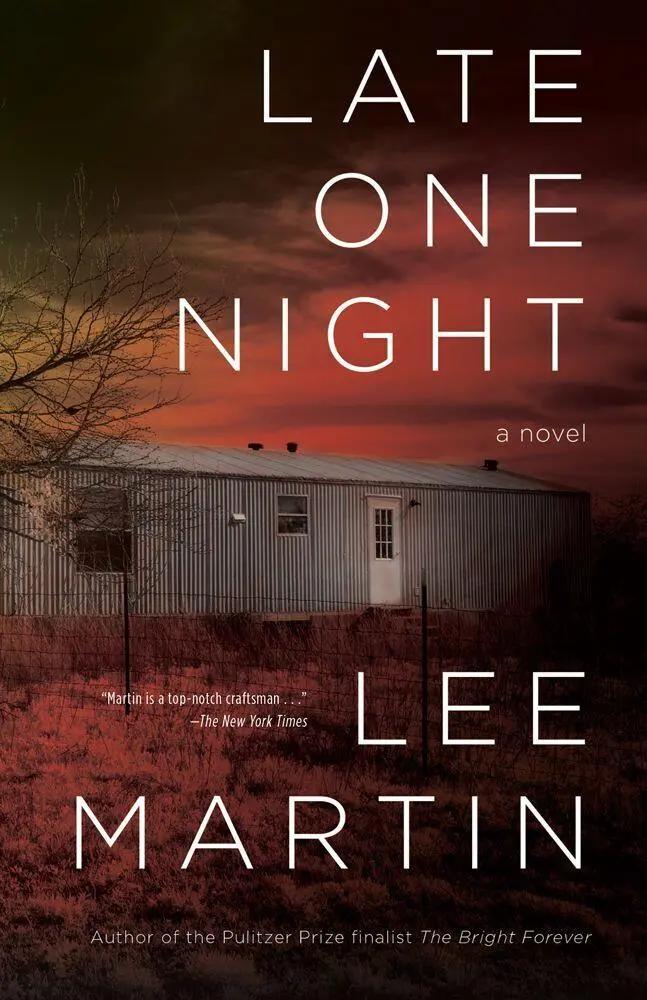
- Название:Late One Night
- Автор:
- Издательство:Dzanc Books
- Жанр:
- Год:2016
- ISBN:нет данных
- Рейтинг книги:3 / 5. Голосов: 1
-
Избранное:Добавить в избранное
- Отзывы:
-
Ваша оценка:
Late One Night: краткое содержание, описание и аннотация
Предлагаем к чтению аннотацию, описание, краткое содержание или предисловие (зависит от того, что написал сам автор книги «Late One Night»). Если вы не нашли необходимую информацию о книге — напишите в комментариях, мы постараемся отыскать её.
Ronnie and his girlfriend, Brandi Tate, maintain his innocence — he’s a loving, caring father who wants to do everything he can to protect his family. But as the gossip continues, Ronnie feels his children (and, eventually, Brandi) pulling away from him. Soon enough, he finds himself at a crossroads — should he allow gossipmongers to seal his fate, or should he fight to prove that he’s not the monster people paint him to be?
In
, Lee Martin examines the devastating effect of rumors and the resilience of one family in the face of the ultimate tragedy.
Late One Night — читать онлайн бесплатно полную книгу (весь текст) целиком
Ниже представлен текст книги, разбитый по страницам. Система сохранения места последней прочитанной страницы, позволяет с удобством читать онлайн бесплатно книгу «Late One Night», без необходимости каждый раз заново искать на чём Вы остановились. Поставьте закладку, и сможете в любой момент перейти на страницу, на которой закончили чтение.
Интервал:
Закладка:
Captain was at the mailbox in front of his house when the bus went by. He didn’t ride that same bus home from school. He got out of school a little earlier in the afternoon and rode a different bus — the short bus, all the kids called it — the one meant for people like him.
Angel called out to him. “Captain.” She waved her arm back and forth over her head. “Captain, wait.”
He saw her, then. Angel. She was back. Angel, so blond and so fair. Angel, who’d always been good to him. Angel with the silky hair. If he got close enough, he could smell her shampoo and it smelled nice the way Christmas trees smelled nice. Angel, the girl he dreamed about sometimes. Just last night, in a dream, she took his hand and they walked together down a grassy lane into the shade of a deep woods. It was summer, but the trees blotted out the sun. Overhead, squirrels chattered and leaped from limb to limb. Ahead, a red-winged blackbird took flight. He saw it all in his dream, and when it was done and he was awake, he thought for a moment that it was true. It was summer and Angel still lived across the road, and they walked down that lane into the woods. Then little by little he realized that it was winter — he could hear the wind outside, could feel the chill of the house — and the trailer across the road had burned, and Angel lived in town now with Ronnie, and the dream he’d just had was nothing he could hold onto.
“I’m here.” He waved his own arm above his head and answered Angel. “I’m right here.”
Then he ran down the blacktop toward her, and he couldn’t help himself. He threw his arms around her, knocking her book bag off her shoulder and into the snow.
Over the past few weeks, Angel had gotten used to people hugging her. It seemed like wherever she went — to church, 4-H, school, Read’s IGA — there was always someone who wanted to wrap her up in their arms and rock her from side to side. Honey, oh honey . So when Captain pressed her to him, she didn’t find it odd at all, nor unwelcome. He lifted her from the ground, and she clung to him, this tall, strong boy who had yet to realize how easily he could hurt someone. She knew his gentle spirit wouldn’t allow it, not even a thought of lashing out at someone like Tommy Stout, who sometimes teased him. Not really in a mean way. All in good fun, Tommy and the others like him would insist. Little jokes about the Captain. Snapping off salutes in front of him. Calling out, aye, aye . And maybe there was nothing wrong with that — after all, Captain enjoyed playing the role, saluting in response. She used to wonder whether, deep down, Captain knew it was all a joke at his expense and a way of pointing out that he was different from the “normal” boys.
Angel pressed her face into Captain’s chest. She breathed in the smells from his wool coat — wood smoke and dried weeds, gasoline and hot cooking grease, snow and gravel — and to her it was the smell of home.
“You’re back,” he said.
Then before she could ask where his father was, Captain set her on the ground, grabbed her hand, and started running back up the blacktop. “C’mon, c’mon,” he said, and she had no choice but to go with him.
He ran across the road, and finally they were turning up the short lane to the trailer’s ruins.
She saw a purple knit glove on the ground, one with a silver star on its back. That glove had belonged to Gracie. Just a little glove for her little hand. It was enough to sting Angel’s eyes. Gracie, who’d always been crazy about stars. And Emily, who for months when she was four insisted that she was a fairy princess. And Junior, who’d been Angel’s to hold so many times when her mother was cooking or washing or cleaning. Junior with his silly grin and his bobbing head that made him look a little drunk. Angel could still remember the weight of him in her arms.
“C’mon,” Captain said again, and he tugged her along to the ruined trailer.
She hadn’t planned on this. She didn’t want to be there and to look at what was left after the fire, but Captain wouldn’t let go of her hand. He wanted to show her what all could be seen in the charred mess.
He pointed out the few items that were distinguishable in the rubble: a frying pan; a toaster oven; a door knob; the warped frame of Junior’s stroller; the silver-plated lid, blackened now, from the heart-shaped jewelry box her mother had kept on her dresser; a metal hoop earring from a pair their father had given Hannah on her last birthday; a Slinky the twins had loved to play with; a buckle from the OshKosh B’Gosh overalls Gracie often wore; a rhinestone hair barrette that had belonged to Sarah; a 4-H pin Angel had stuck into the bulletin board in her room. She remembered the green shamrock on the pin, a white “H” on each leaf— Head, Heart, Hands, Health .
Captain said, “I wanted to save it all for you, but my dad wouldn’t let me.” He got a very serious look on his face, and he nodded his head. “So I’ve been keeping watch.”
There it was — what remained of a life lived in that trailer. It hit Angel hard, how little was left, and she had to turn away and look off across the barren fields, corn stubble poking up through the snow, and tell herself not to cry. They were standing along what had once been the backside of the trailer. Captain had led her around the perimeter, pointing out the items, and now they were stopped at where the living room had been.
Angel took a step, and she felt through the thin soles of her Converse tennis shoes — Brandi had told her to wear her snow boots that morning, but she’d refused — something hard. She looked down and saw a pocketknife. It was pressed into the snow, and Angel knew it might have stayed there until the spring thaw when the meltdown began if she hadn’t stepped on it just right so the butt of the handle dug into the ball of her foot. If she’d been wearing her snow boots, she might not have felt it, this sharp pain that made her hop to the side and then look down at the knife.
She recognized it right away: a Case Hammerhead lockback knife with black and cream handles. She knew that if she were to pick it up and nick out the blade, she’d find a hammerhead shark engraved on it. She knew the knife belonged to her father. He kept the blade honed and the handles polished. When she was a little girl, she’d asked him over and over to show her the fish on the blade, and he’d always obliged, opening the knife, telling her to be careful, holding her finger and tracing it over the etching of the shark. He loved that knife.
She said to Captain, “Is your dad home?”
“We’ve got your goats,” Captain said. “C’mon.”
This time he didn’t grab her hand. He turned and started hurrying toward his house. Before following him, Angel stooped and plucked the knife from the snow. She closed her hand around it and stuck her fists into her jacket pockets.
“C’mon,” Captain said again. He turned around and waved for her to hurry, and she caught up to him in the road.
Shooter was in the barn behind the house. He had the goats penned in the stable that had been empty since he gave up his cattle, sold the last of the Red Angus and the Herefords. He and Captain had cared for the goats since the night of the fire. Shooter showed Captain how to milk the nannies, wrapping his forefinger and thumb around the base of the teat to keep the milk from going back into the udder when he squeezed with middle finger and ring finger and pinky, one after another, in a smooth motion, the milk spurting out into the galvanized bucket.
“Just like that,” Shooter said as he stood behind the stool where Captain sat. “One, two, three.” He laid his hand on Captain’s back and let his fingers tap out the rhythm. “Don’t pull. Just squeeze. One, two, three.”
Читать дальшеИнтервал:
Закладка:
Похожие книги на «Late One Night»
Представляем Вашему вниманию похожие книги на «Late One Night» списком для выбора. Мы отобрали схожую по названию и смыслу литературу в надежде предоставить читателям больше вариантов отыскать новые, интересные, ещё непрочитанные произведения.












Обсуждение, отзывы о книге «Late One Night» и просто собственные мнения читателей. Оставьте ваши комментарии, напишите, что Вы думаете о произведении, его смысле или главных героях. Укажите что конкретно понравилось, а что нет, и почему Вы так считаете.