Lee Martin - Late One Night
Здесь есть возможность читать онлайн «Lee Martin - Late One Night» весь текст электронной книги совершенно бесплатно (целиком полную версию без сокращений). В некоторых случаях можно слушать аудио, скачать через торрент в формате fb2 и присутствует краткое содержание. Год выпуска: 2016, Издательство: Dzanc Books, Жанр: Современная проза, на английском языке. Описание произведения, (предисловие) а так же отзывы посетителей доступны на портале библиотеки ЛибКат.
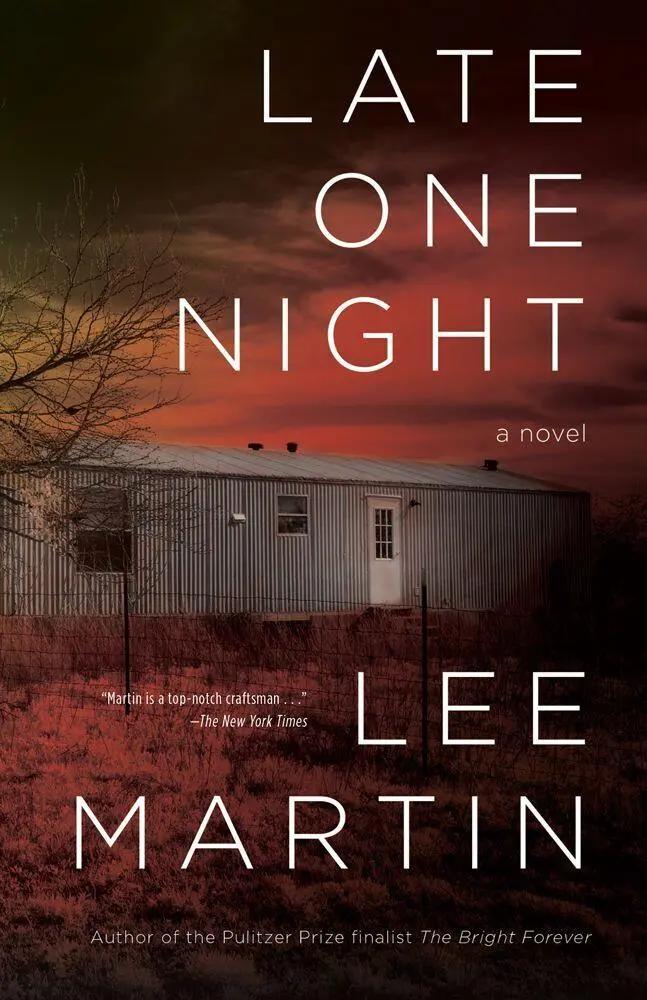
- Название:Late One Night
- Автор:
- Издательство:Dzanc Books
- Жанр:
- Год:2016
- ISBN:нет данных
- Рейтинг книги:3 / 5. Голосов: 1
-
Избранное:Добавить в избранное
- Отзывы:
-
Ваша оценка:
Late One Night: краткое содержание, описание и аннотация
Предлагаем к чтению аннотацию, описание, краткое содержание или предисловие (зависит от того, что написал сам автор книги «Late One Night»). Если вы не нашли необходимую информацию о книге — напишите в комментариях, мы постараемся отыскать её.
Ronnie and his girlfriend, Brandi Tate, maintain his innocence — he’s a loving, caring father who wants to do everything he can to protect his family. But as the gossip continues, Ronnie feels his children (and, eventually, Brandi) pulling away from him. Soon enough, he finds himself at a crossroads — should he allow gossipmongers to seal his fate, or should he fight to prove that he’s not the monster people paint him to be?
In
, Lee Martin examines the devastating effect of rumors and the resilience of one family in the face of the ultimate tragedy.
Late One Night — читать онлайн бесплатно полную книгу (весь текст) целиком
Ниже представлен текст книги, разбитый по страницам. Система сохранения места последней прочитанной страницы, позволяет с удобством читать онлайн бесплатно книгу «Late One Night», без необходимости каждый раз заново искать на чём Вы остановились. Поставьте закладку, и сможете в любой момент перейти на страницу, на которой закончили чтение.
Интервал:
Закладка:
The smell of eucalyptus coming from a candle burning on one of Faye’s filing cabinets was too strong for Missy’s preference. She coughed a little. “Are you saying it’s not right for me to watch over that money?” She’d lain awake long into the night thinking about what Shooter had said about Ronnie. She and Pat talked about it there in the dark of their room, wondering, again, whether they should carry Shooter’s information to Ray Biggs, fearing, finally, that such a move might be risky. If Ronnie was capable of burning that trailer, then what might he do to them if he found out they’d talked to the sheriff? “Shooter will do the right thing,” Pat said, and Missy agreed, but she didn’t feel absolved of the burden of carrying what she knew. Still, it was a bit of a relief to have to do nothing, to wait for Shooter to come forward. She and Pat came to the conclusion that she passed on now to Faye. “There’s no telling what he might do. Ronnie Black. You remember how he chopped up Della’s hair back in the fall?”
“Night of the pancake supper. Oh, I know Ronnie Black.” Faye tipped her head and looked at Missy over the top of her glasses. “Not exactly a model citizen, is he?”
“No, ma’am, not by a long shot.”
Missy and Faye glanced at each other and then looked away, both of them aware that they were talking in less than flattering terms about a man who only a few days before had lost three of his children. Missy could hear the tellers chatting with customers at the counter outside Faye’s office. A telephone was ringing. Someone was counting out money—“That’s twenty, forty, sixty, eighty, a hundred.”
“Well, it’s just a fact,” Faye finally said. “That’s what it is. Don’t worry, Missy. No one can get at that money except you.”
“Thank you, Faye. That puts my mind at ease.”
Missy stood up, and Faye came out from around her desk. “You’re a good soul.” She took Missy by the hand and squeezed. “Sometimes, though, you just have to trust folks to live their own lives.”
“I wouldn’t say that Ronnie’s been any good at that up to now.”
“No, sweetie, I guess not. But maybe he’ll do better. Second chances, you know.”
“We could hope,” Missy said. “I guess.”
When she came out of Faye’s office, she heard a voice — too loud, too angry — and without looking, she knew it belonged to Ronnie.
“How in the world am I supposed to take care of my kids?”
Missy turned and saw him leaning forward across the counter, the teller on the other side, a round-shouldered girl with limp brown hair, trying her best to keep her voice steady.
“You’ll have to talk to Miss Griggs,” the girl said.
“The hell with Miss Griggs.” Ronnie slapped his palm down on the counter. All the tellers had stopped their own business, as had the other customers in the bank. Everyone was looking at Ronnie now. “There’s money here for my girls, and now you’re telling me I can’t have it?”
“You’re not the account holder.”
“Well, if I’m not then who in the hell is?”
The girl’s voice was shaking. “I’m really not at liberty. If you’d like to talk to Miss Griggs.”
“I said the hell with Miss Griggs,” Ronnie said, and he stormed out of the bank.
Missy heard someone call her name. From the far end of the bank, Laverne Ott was waving at her. Laverne’s voice rang out clear and strong the way it had so many times in a classroom. “Missy,” she said. “Missy Wade.”
Faye Griggs came out of her office to see what the commotion was all about. The round-shouldered girl at the counter was crying. Another teller, a middle-aged woman with bright red fingernails, came to see what she could do to help her.
Some of the customers were talking about what had just happened. A number of them were people who were familiar to Missy. They were talking all at once, their voices rising over one another’s.
Then Lucy Tutor’s voice, high-pitched and nasal, fought free from the others, and she said, “It makes a body wonder.” Lucy drove a school bus and she was by nature a suspicious sort.
“What’s that?” asked Roe Carl, a cashier at the Read’s IGA.
“If Ronnie doesn’t have that money, then who does?”
That’s when Faye whispered to Missy, “Don’t worry. I won’t tell. It’s no one’s business.”
Laverne Ott was with them then, and she said to Missy, “I wish people weren’t so hard on Ronnie.”
“You know what I heard?” Faye said. “Milt Timlin thinks there’s something suspicious about the whole thing.”
“The fire?” Laverne said. “Oh, don’t tell me that. Hasn’t there been trouble enough?”
Faye didn’t say a thing. A few moments went by, long enough for each of them to let their minds go where they wished they wouldn’t.
Laverne turned toward Missy, such a scared, lost look on her face. She was recalling the night in September when Della came to the Kiwanis pancake supper with her hair cut ragged, and Laverne’s first thought had been that Ronnie was to blame. “Missy?” she said now, the way she had all those years ago when Missy was just a girl in her class and Laverne expected her to give the correct answer. “Missy, surely there’s no reason to suspect Ronnie of anything?”
Missy could have said, no, of course not, don’t be silly. She could have said it would be ridiculous to think so. She could have put that thought right out of Faye and Laverne’s heads. But she couldn’t forget what Shooter had told her and Pat about Ronnie. It was such an incredible thought that she found herself talking to herself — at least she thought — and then she realized she’d said the words out loud.
“I can’t believe Shooter saw him at the trailer.”
“You mean earlier that day?” Faye asked. “I heard he was out there then.”
Missy gave such a gentle answer, but later she’d know it was the worst thing she could have said. She’d wonder if her words had been born of envy and anger and the desire to have those girls. “I don’t know.”
She said it so softly, Laverne had to ask her to repeat herself. “Did you say you don’t know?”
This time — one last chance to stop gossip before it began — she did the worst thing of all. She didn’t say a word. She turned and walked out of that bank.
18
That night, Pat came home and said to Missy, “Do you think Shooter told the fire marshal what he knows?”
“Maybe, maybe not. You know how people like to talk.”
Pat nodded. “You can bet they’ll run with it now. Maybe it’s only right. The truth has to come out one way or the other.”
It was the dead of winter, and people spent the cold, snowy nights at home, too much time on their hands — enough time to allow for gossip. This neighbor called that one up and down the streets of Goldengate, out the blacktop to Bethlehem, and all through Phillipsport, and before the month was out, while everyone waited for the fire marshal’s report, there was more than one person who believed that Ronnie Black had tried to kill his wife and kids.
What could be the reason?
Speculation was he wanted a clean break and a new life with Brandi Tate that wouldn’t carry with it the burden of supporting his family.
Well, look what he had now: four of those kids to raise.
That is, if he didn’t end up in prison.
The good will that some had built up for Ronnie at the funeral proved to be brittle. Now that the funeral was done and the grave covered over at the Bethlehem Church Cemetery, it was simple for some to believe that the man they’d first held responsible merely due to his absence from the family might turn out to be more villain than they’d first had cause to know.
Читать дальшеИнтервал:
Закладка:
Похожие книги на «Late One Night»
Представляем Вашему вниманию похожие книги на «Late One Night» списком для выбора. Мы отобрали схожую по названию и смыслу литературу в надежде предоставить читателям больше вариантов отыскать новые, интересные, ещё непрочитанные произведения.












Обсуждение, отзывы о книге «Late One Night» и просто собственные мнения читателей. Оставьте ваши комментарии, напишите, что Вы думаете о произведении, его смысле или главных героях. Укажите что конкретно понравилось, а что нет, и почему Вы так считаете.