Stephanie Danler - Sweetbitter
Здесь есть возможность читать онлайн «Stephanie Danler - Sweetbitter» весь текст электронной книги совершенно бесплатно (целиком полную версию без сокращений). В некоторых случаях можно слушать аудио, скачать через торрент в формате fb2 и присутствует краткое содержание. Год выпуска: 2016, Издательство: Knopf, Жанр: Современная проза, на английском языке. Описание произведения, (предисловие) а так же отзывы посетителей доступны на портале библиотеки ЛибКат.
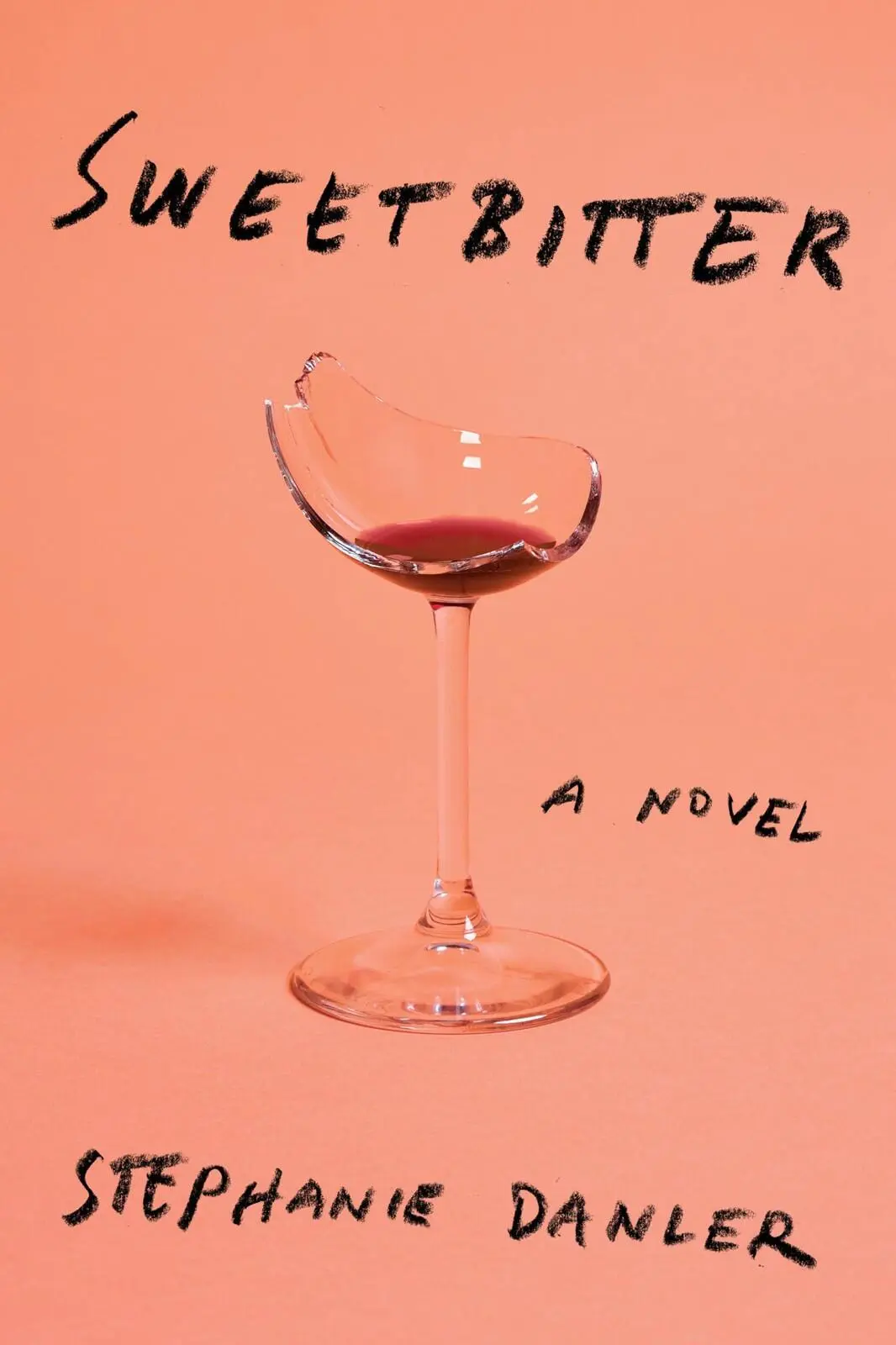
- Название:Sweetbitter
- Автор:
- Издательство:Knopf
- Жанр:
- Год:2016
- ISBN:нет данных
- Рейтинг книги:3 / 5. Голосов: 1
-
Избранное:Добавить в избранное
- Отзывы:
-
Ваша оценка:
Sweetbitter: краткое содержание, описание и аннотация
Предлагаем к чтению аннотацию, описание, краткое содержание или предисловие (зависит от того, что написал сам автор книги «Sweetbitter»). Если вы не нашли необходимую информацию о книге — напишите в комментариях, мы постараемся отыскать её.
off. Her appetites — for food, wine, knowledge, and every kind of experience — are awakened. And she's pulled into the magnetic thrall of two other servers — a handsome bartender she falls hard for, and an older woman she latches onto with an orphan's ardor.
These two and their enigmatic connection to each other will prove to be Tess's hardest lesson of all.
is a story of discovery, enchantment, and the power of what remains after disillusionment.
Sweetbitter — читать онлайн бесплатно полную книгу (весь текст) целиком
Ниже представлен текст книги, разбитый по страницам. Система сохранения места последней прочитанной страницы, позволяет с удобством читать онлайн бесплатно книгу «Sweetbitter», без необходимости каждый раз заново искать на чём Вы остановились. Поставьте закладку, и сможете в любой момент перейти на страницу, на которой закончили чтение.
Интервал:
Закладка:
I followed her upstairs to the locker room, where she was digging through clean aprons with an obsessive tenacity to find the shorter ones she preferred. I was forcing a thaw, I knew it, but I was tired of waiting.
“Okay, so tell me.”
“Tell you what?”
“The uni…”
“Excuse me?”
“I mean, please tell me about the uni.”
“Uni is sea urchin roe, crowning the tower this evening.”
“But why is it special?” I motioned with my hands for her to get on with it.
“You’re getting a bit spoiled aren’t you?”
“No!” I stood up straighter. “I don’t like having to beg for information. Are you upset with me or something?”
“Don’t be dramatic. Shouldn’t you be focusing on your work?”
“I’m trying to.”
She hitched a new apron high onto her waist, making her look momentarily maternal, pastoral. She re-marked her lips with her lipstick. I saw sprays of silver in her coarse hair. I saw inscriptions of her years around her mouth, a solid crease between her brows from a lifetime of cynicism. The posture of a woman who had stood in a casual spotlight in every room she’d ever been in, not for gloss or perfection, for self-possession. Everything she touched she added an apostrophe to.
“It’s quite eerie,” she said, inspecting her face, pulling up her cheeks. “When you begin to see your mother in the mirror.”
“I won’t know,” I said.
“No, you won’t. You will always look like a stranger to yourself.”
She never dealt in pity. I didn’t know what to say.
“Your mother must be pretty,” I said eventually. “You’re pretty.”
“You think so?” She looked at me from the mirror, unimpressed.
“Why don’t you want a boyfriend?” I had made two assumptions before I knew what was happening, first, that she didn’t have a boyfriend, second, that it was because she didn’t want one.
“A boyfriend? That’s a sweet word. I’m afraid I am in retirement from love, little one.”
She barely but definitely softened.
“In Marseille you could walk down to the docks in the mornings. They had urchins, still alive. An offhand exchange, a few francs for this delicacy. The rocks are littered with debris: empty shells opened with a knife, rinsed by salt water, and sucked dry on the spot. Men taking lunch with bottles of their hard house wine, watching the boats move in and out. It’s the ovaries — the coral ovaries. They are supposed to transfer a great power when you consume them. Absolutely voluptuous, the texture, absolutely permanent, the taste. It stays with you for the rest of your life.”
She went toward the door, pulling her hair back. She looked at me thoughtfully. “There are so many things to be blasé about: your youth, your health, your employment. But real food — gifts from the ocean, no less — is not one of them. It’s one of the only things that can immerse you safely in pleasure in this degraded, miserable place.”
—
“IT’S EXHAUSTING,” Howard said as he put on a slate-wool overcoat, a fedora, and leather gloves. He looked like he’d walked in from the 1940s. He gazed toward the exit and smiled at me. “You really have to love it.”
“Yes,” I said. I swirled the milk and splashed it on the espresso. I knew exactly how to make his macchiatos. “It’s like, physically tiring. But there is something else that really flattens me every night. I can’t put my finger on it.”
“Entropy,” he said. Like I was the sixth person to ask him. He raised his eyebrows at me to see if I knew what it meant, and I raised my eyebrows back to say I was skeptical of his usage.
“Rather it’s a case of mismatched desires. The restaurant, an entity separate from us, but composed of us, has a set of desires, which we call service. What is service?”
“It’s exhausting?”
“It’s order. Service is a structure that controls chaos. But the guests, the servers, have desires as well. Unfortunately we want to disrupt that order. We produce chaos, through our randomness, through our unpredictability. Now”—he sipped and I nodded that I was still with him—“we are humans, aren’t we? You are, I am. But we are also the restaurant. So we are in constant correction. We are always straining to retain control.”
“But can you control entropy?”
“No.”
“No?”
“We just try. And yes, it is tiring.”
I saw the restaurant as a ruin. I imagined the Owner closing the place, locking the door many decades from now and the dust and the fruit flies and the grease accumulating, no one working around the clock to clean the dishes and linens, the restaurant returning to its primitive, nonfunctional elements.
“Thank you,” he said and put the cup down.
“You’re a free man now?”
“That I am. I have some manly Christmas decorating to do.”
I nodded. It had surprised me, the holiday erupting in the park, in Flower-Girl’s ridiculous bar arrangement. It was hung with actual cookies from the pastry department. Even Clem’s had strung up lights. I remembered how warm New York had looked in Christmas movies, how benevolent and rich the shop windows were, how everyone’s humanity broke through just in time for redemption, just in time for faith. It didn’t feel like that when I walked to work. It felt cold and forced.
“I guess I should go see that tree or something.”
“Will you be around for the holidays?” he asked.
I thought, Um, you scheduled me the day before and the day after, where the fuck do you think I’m going to go, but I said, “Yeah. I’m here. Just relaxing. I hear it’s very quiet.”
“Well, if you find yourself restless, I host an orphans’ Christmas every year. Don’t worry, Simone does most of the cooking, I wouldn’t subject anyone to mine. But it’s a tradition. You are heartily invited. And it’s not as boring as I’ve made it sound.”
“Are you an orphan?”
“Ah.” He smiled at me. “We are all orphans eventually. That’s if we’re lucky.” He waved to someone at the bar who had spotted him and winked at me before releasing himself from our grip and into the free fall of the evening.
—
“WAIT UNTIL the truffles hit the dining room — absolute sex,” said Scott.
When the truffles arrived the paintings leaned off the walls toward them. They were the grand trumpets of winter, heralding excess against the poverty of the landscape. The black ones came first and the cooks packed them up in plastic quart containers with Arborio rice to keep them dry. They promised to make us risotto with the infused rice once the truffles were gone.
The white ones came later, looking like galactic fungus. They immediately went into the safe in Chef’s office.
“In a safe? Really?”
“The trouble we take is in direct proportion to the trouble they take. They are impossible,” Simone said under her breath while Chef went over the specials.
“They can’t be that impossible if they are on restaurant menus all over town.” I caught her eye. “I’m kidding.”
“You can’t cultivate them. The farmers used to take female pigs out into the countryside, lead them to the oaks, and pray. They don’t use pigs anymore, they use well-behaved dogs. But they still walk and hope.”
“What happened to the female pigs?”
Simone smiled. “The scent smells like testosterone to them. It drives them wild. They destroyed the land and the truffles because they would get so frenzied.”
I waited at the service bar for drinks and Sasha came up beside me with a small wooden box. He opened it and there sat the blanched, malignant-looking tuber and a small razor designed specifically for it. The scent infiltrated every corner of the room, heady as opium smoke, drowsing us. Nicky picked up the truffle in his bare hand and delivered it to bar 11. He shaved it from high above the guest’s plate.
Читать дальшеИнтервал:
Закладка:
Похожие книги на «Sweetbitter»
Представляем Вашему вниманию похожие книги на «Sweetbitter» списком для выбора. Мы отобрали схожую по названию и смыслу литературу в надежде предоставить читателям больше вариантов отыскать новые, интересные, ещё непрочитанные произведения.











Обсуждение, отзывы о книге «Sweetbitter» и просто собственные мнения читателей. Оставьте ваши комментарии, напишите, что Вы думаете о произведении, его смысле или главных героях. Укажите что конкретно понравилось, а что нет, и почему Вы так считаете.