Adam Johnson - Emporium
Здесь есть возможность читать онлайн «Adam Johnson - Emporium» весь текст электронной книги совершенно бесплатно (целиком полную версию без сокращений). В некоторых случаях можно слушать аудио, скачать через торрент в формате fb2 и присутствует краткое содержание. Год выпуска: 2003, Издательство: Penguin Books, Жанр: Современная проза, на английском языке. Описание произведения, (предисловие) а так же отзывы посетителей доступны на портале библиотеки ЛибКат.
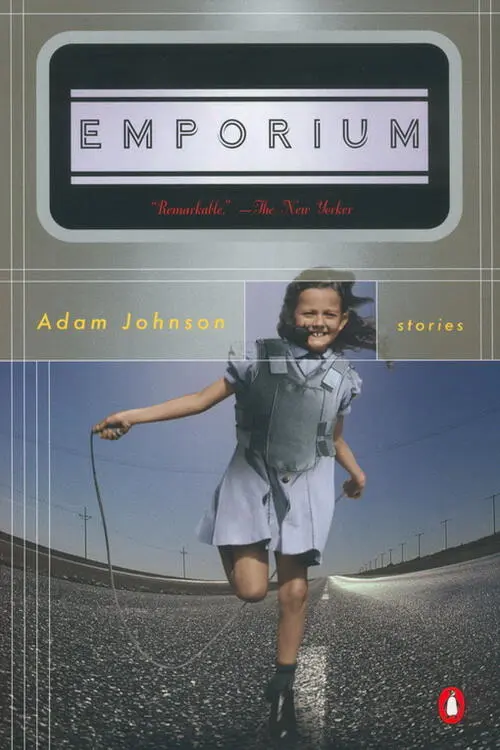
- Название:Emporium
- Автор:
- Издательство:Penguin Books
- Жанр:
- Год:2003
- ISBN:нет данных
- Рейтинг книги:3 / 5. Голосов: 1
-
Избранное:Добавить в избранное
- Отзывы:
-
Ваша оценка:
Emporium: краткое содержание, описание и аннотация
Предлагаем к чтению аннотацию, описание, краткое содержание или предисловие (зависит от того, что написал сам автор книги «Emporium»). Если вы не нашли необходимую информацию о книге — напишите в комментариях, мы постараемся отыскать её.
Emporium — читать онлайн бесплатно полную книгу (весь текст) целиком
Ниже представлен текст книги, разбитый по страницам. Система сохранения места последней прочитанной страницы, позволяет с удобством читать онлайн бесплатно книгу «Emporium», без необходимости каждый раз заново искать на чём Вы остановились. Поставьте закладку, и сможете в любой момент перейти на страницу, на которой закончили чтение.
Интервал:
Закладка:
Let’s say that Pluto’s gone, that the little planet swings wide one day and never comes back. Your varsity swim coach is also your Advanced Placement Astronomy teacher, and in AP Astronomy, the boys never stop because yours are the only breasts that are a mystery to them. It’s a game they play, rapping on your titanium trauma plate when they pass in the hall, though you know the spirit of their fingers goes deeper, and you learn to put your arms up in anticipation. In class, the sun and earth are two white dots, while Pluto’s historical orbit, as Mr. Halverson calls it, races away with his running chalk line across four blackboards. Sometimes he lectures directly to the Kevlar outline of your chest. These boys have never seen Pluto, have never reached for it across a black sky, but they moan and wring their hands, as if they can feel its loss, just out of reach, as Mr. Halverson’s orbit line comes to a halt at the end of the black slate.
There’s nothing out there but starlight and locomotion, Halverson tells you at night swim practice. You think about this for five thousand yards, back-stroking through the blue lanes, the steam rising off your arms to the batter-black sky.
And this is what you come home wet to, the place where you grew up: a hole in the wall behind a Dumpster that opens into the dust-flashing cavern of a closed-down Kmart. Here is where you learn to drive at thirteen, racing rusty carts full tilt through Automotive. Among the smashed racks of Entertainment is where Hector always waits for you. You first kiss in the room above, with mirrors that are really windows, lookouts over a discount wasteland. Through the ductwork, you can hear the nonstop static of your old man’s stupid movies. You hear him joking through the vent, endlessly joking. Always take a bomb with you when you fly on an airplane, he says to a rare customer, it’s safer, because the odds of there being two bombs on board are astronomical.
You’ve slept with seven boys in here, making love, they call it, for your sake, but you know better. Through the hole, into the dark Kmart, they come, and you are waiting for them. But none ever fingers your ribs, strokes your shoulders, handles that hollow under your heart because every time one starts to tug on those Velcro straps you are in terror. That is your event horizon, Mr. Halverson calls it at swim practice, the speed beyond which you can no longer safely swim without changing your form, the point at which you must let yourself be taken by your own current. Safety is your enemy, he likes to say, and you know he’s right. In your own Kmart you’re safe, vested, with thirty-six layers of Kevlar to help you take a boy’s weight on top of you. But in a Speedo, wet, leaning over the starting block, dripping on the springboard, it’s like being naked under floodlights, unshouldered and alone. That’s what made you break the school record in the 400 Individual Medly last month — the arm-throwing terror of being vestless before the shouts of those who want the most from you. You took your little trophy — a golden girl, hands up, chest out — and quit the team.
Karen Coles, whose locker is above yours, is seeing Mr. Halverson. Everybody knows since she crashed his Volvo last week. But only you’ve seen the notes that have floated through the cracks into your locker, only you know that she veered on purpose, that she was testing what was between them when she crossed the centerline, that she was saying I love you even as the airbags blew in their faces.
Your father is different since Mr. Ortiz fired those warning shots in the parking lot that night. He tries to be even more happy-go-lucky, but there is a nervous edge to it, and you know that he is the one on the lookout now. He has bought a gun, a little silver number, your mom calls it, and she stores it under her end of the counter. You remember the excuse he gave, leaning down to you at fourteen: it’s for that one bullet, that one wellintended bullet, and after that the odds say you’re good. This is the line that made you cinch your Velcro straps and wonder if you’d hear the bullet coming. But now you wonder if deep down, your old man isn’t disappointed Mr. Ortiz didn’t shoot for the heart. At home, you turn the oven on before climbing into bed.
It is the last of the warm days, the end of the semester nearing, one more till you graduate, and Mr. Halverson has saved the best for last: black holes. For now, the black and the hole do not seem to concern him. It is a thing called the event horizon he describes, the line beyond which light is forever drawn in, and you know this is going to be his big metaphor for life, his contribution toward bettering your future, a lecture, you can tell, he has made before. He draws a big, easy circle on the board and asks everyone to reflect a moment on the point of no return. But you know it is a mistake to call it that because nothing ever returns, really. Orbits are only historical. You like the swim-team explanation better: call it a line beyond which you can expect only a change in form and high rates of speed, a point of sudden inevitability. You lean back in your desk, your foot looping big, easily drawing his attention, and with a rift in his breathing, he returns his lecture to an institutional mode, comparing the point of no return to drugs and dropouts, to the joys of college learning and beyond. And we all know what happens in the black hole, he concludes, but his heart is no longer in it. You know those airbags were his event horizon.
In bed, at night, you sweat. You dream in shades of pink and green of gin and burning hair. In the morning, you, your mom, your dad, all eat breakfast in boxer shorts and bulletproof vests. Dad has a VCR set up on the table and watches Clambake! while your mom stares at her cereal.
You had been thinking about it this way: there’s a ring around the thing that draws you near — the palms of Hector’s hands, say, or your reflection in Halverson’s glasses — and to cross that line is to be taken, swept, changed. But today you see it different. Today, standing in the empty AP classroom, not wanting to believe the rumors that Halverson’s fired, packed up in his rental car and gone, you wonder where is your event horizon, where is the line beyond which something will forever be drawn to you. His handwriting is still on the blackboard. Binary star homework due Tuesday, is all it says, and he can’t be gone, he can’t be. Stupidly waiting under the Styrofoam — coat hanger model of the solar system you reach up and set it in motion. But the hand-colored planets swing too smoothly it seems to you, too safely Halverson would say, and plucking Pluto from the mix sets the model wildly spinning.
So it’s not just anybody waiting for you in the Kmart after school, not just some boy grabbing you by the vest straps and pulling you to him, but Hector. It’s Hector’s drugstore heart thumping next to yours, Hector’s letterman chest against yours, Hector’s dive team hips gaining on yours and you want to believe, you want.
Hector has his father’s gun, you your mother’s, and you will ask the boy you love to break the plate guarding your heart. Hector has a Monte Carlo and you’ve seen the movie Bullitt enough times in your dad’s shop that there’s a California road map in your head as clear as the grooves around Steve McQueen’s eyes, deep as the veins in Hector’s arms, but it is not enough. The line must be crossed. He’s ten feet from you, a parking space away. You hand him your mother’s silver little number. It will knock you down, you know, there will be that smell, but soon there will be no more vests, no more fears, only Hector’s fingers on the bruise he’s made, on your sternum, and the line will be crossed, the event set in motion, at the highest of speeds.
Читать дальшеИнтервал:
Закладка:
Похожие книги на «Emporium»
Представляем Вашему вниманию похожие книги на «Emporium» списком для выбора. Мы отобрали схожую по названию и смыслу литературу в надежде предоставить читателям больше вариантов отыскать новые, интересные, ещё непрочитанные произведения.






Обсуждение, отзывы о книге «Emporium» и просто собственные мнения читателей. Оставьте ваши комментарии, напишите, что Вы думаете о произведении, его смысле или главных героях. Укажите что конкретно понравилось, а что нет, и почему Вы так считаете.