Breyten Breytenbach - Mouroir
Здесь есть возможность читать онлайн «Breyten Breytenbach - Mouroir» весь текст электронной книги совершенно бесплатно (целиком полную версию без сокращений). В некоторых случаях можно слушать аудио, скачать через торрент в формате fb2 и присутствует краткое содержание. Год выпуска: 2009, Издательство: Archipelago Books, Жанр: Современная проза, на английском языке. Описание произведения, (предисловие) а так же отзывы посетителей доступны на портале библиотеки ЛибКат.
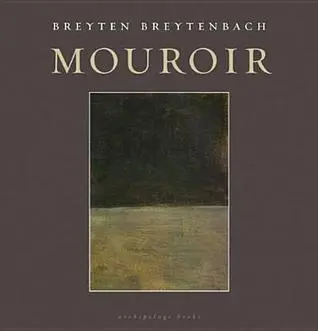
- Название:Mouroir
- Автор:
- Издательство:Archipelago Books
- Жанр:
- Год:2009
- ISBN:нет данных
- Рейтинг книги:3 / 5. Голосов: 1
-
Избранное:Добавить в избранное
- Отзывы:
-
Ваша оценка:
Mouroir: краткое содержание, описание и аннотация
Предлагаем к чтению аннотацию, описание, краткое содержание или предисловие (зависит от того, что написал сам автор книги «Mouroir»). Если вы не нашли необходимую информацию о книге — напишите в комментариях, мы постараемся отыскать её.
An outspoken human rights activist,
is a poet, novelist, memoirist, essayist, and visual artist. His paintings and drawings have been exhibited around the world. Born in South Africa, he immigrated to Paris in the late ’60s and became deeply involved in the anti-Apartheid movement. Breytenbach is the author of
, and
, among many others. He received the Alan Paton Award for
in 1994 and the prestigious Hertzog Prize for Poetry for
in 1999 and for
(
) in 2008.
Mouroir — читать онлайн бесплатно полную книгу (весь текст) целиком
Ниже представлен текст книги, разбитый по страницам. Система сохранения места последней прочитанной страницы, позволяет с удобством читать онлайн бесплатно книгу «Mouroir», без необходимости каждый раз заново искать на чём Вы остановились. Поставьте закладку, и сможете в любой момент перейти на страницу, на которой закончили чтение.
Интервал:
Закладка:
Then and thus you will know that it’s Tuesday. As always.
Birds
There was the house of my old father on the outer edge of the town against the first gentle slope, among clusters of reeds trying to frighten away the birds with a pattering of leaves, and other trees with dark green foliage and equally green the splotches and grooves of shadows. Against the plain yellow walls of the upright house, very high veranda in front all along the length of the house, bench behind plants in tins on the stoep, my old father a bit seedy on the bench in the insipid autumn sun. Birds all over, a flock-a-flap of birds, a chirring and a chirping and a cheep-cheeping and a chattering and a chopping of bills and fluted tones; birds in the branches, in the dust baths of the plot of ground, on the roof ridge and the chimneypot, on stoep and windowsills — a constant up and down and fluttering of wings as if old blue bedcovers are ripped in fist-sized strips. Sometimes my father slowly walks home up the hill with on either side of him an attendant in uniform and then his head explodes with light. Just once a year the house is taken over by a league of veteran war criminals, do they stage their annual gathering there. Peep down the trapdoor into the cellar: there they sit around a table stacked high with quicklime bleached bones, the boniness of their skulls in the murky light, the protuberances above the eye-ridges and the lumpy skins over the necks, the purple hollows under the eyes. Do they sit there purling with light-flames in the sockets, caressing with emaciated bird-skeleton hands the musty thighbones and ribcages.
But when it is summer with clouds in procession like carnival floats shinily showering water and other days absolutely blue we are on C’s farm among the ultimate hummocks here and lagoons edged with coarse grass and bulrushes there hard by the sea. Do we drive in C’s jeep with the flaps against the rain over pasture and fallow land always back to the farmyard. C’s head is greyish and bent with compassion for all life. His wife is called Elefteria. Elefteria wears big black farm shoes and she has wrinkles all around the mouth. She feeds the ducks and the Muscovy ducks, the turkeys and the peacocks and the geese and the bantams. She feeds also the sparrows 4and the robins and the babblers and the shrikes and why not the starlings too. When you are on you best behaviour and ask most sweetly you may, exceptionally, be allowed into the parlour. Come into my parlour, said the flier to the spy. Walk softly-softly, don’t make any unconsidered gestures, first stand as still as death. Paintings are hanging behind glass there on the walls. The one picture depicts birds. Now approach on your toes. Look intently, listen well: that painting is a window through which you may have a view of a room full of doves. And then the dove choir starts singing, so that your chest may be filled to the lump in your throat by the dark, poignant, queer song — an enchanting old French freedom anthem. It’s Elefteria who trained the birds in this way. What unity! What a union! What a unit! Each dove is capable of one phoneme or sibilant only, but the ensemble is orchestrated to a swelling cantata. And blinded by tears you move along to the kitchen. Meisie, the older daughter, enters from outside with a bundle of wood and goes to squat against the wall. She is ash coloured, she is an alcoholic, but when you look more closely at her you will notice how attractive she still is and how nicely smooth her thighs for someone who spends the whole day on the land gathering fire sticks. Minnaar, that’s the son of C and Elefteria, is a heretic somewhere far away, and a second daughter teaches in Robertson, but Meisie has never been further than the farm. She laughs modestly and more than just a little tipsy. Under her skirt she is naked. And now the doves in flight drag a sparking veil over the loft, and away! C stands on the whitewashed steps, his grey head smoking in the sun. In days of old 5there were constantly adopted children in his house. Now only one is left (times have changed) — a leprous boy. He comes out, laughs, claps his dull hands with the rose-coloured weals, claps his hands with joy because now that it no longer rains he will be allowed to go for a short ride on one of the many shiny bicycles parked against the wall.
Re: Certain Papers Left in My Possession
To my Executors
Sirs,
Years ago it was my misfortune to be involved in a rather peculiar situation. A man whom I didn’t know — and despite my best efforts I was unable to establish his identity then or since — died. He, however, had somehow left the impression that he knew me quite intimately. After his death — I don’t now recall whether it was by his own hand or otherwise, but apparently it took place at a time when he no longer knew who he was, and in a weird place I may tell you — the authorities of the period contacted me in an effort to trace his family or inheritors. Despite the fact that I could be of no help, they subsequently forwarded to me some papers left by the deceased. Among these there was the (uncompleted?) document which I enclose herewith.
You will find scrawled over the top of the first page the rather cryptic message: “To Galgenvogel and Tuchverderber; make no bones about it.” I assumed the pages therefore to be addressed to these two gentlemen — or ladies? a couple perhaps? a publishing firm? tailors? — but have never succeeded in reaching them. In later years, of course, the matter slipped my mind entirely. It is only now when I in my turn am about to break through the dark looking-glass — ah, the sweetness of obliteration! — now that I am trying to put some semblance of order in the leftovers of my own life, that I happened once more upon the yellowed fragment.
Could you be so kind as to attempt solving the riddle of its destination? Or else do with it whatever you think fit? Perhaps the best will be to make no bones about it.
Yours etc.,
D.E.
Proposal for a project: The Grave of the Unknown Poet
I propose digging — erecting? — creating — the grave of the Unknown Poet (UP) in Rotterdam. The proposal may also be interpreted as being for a monument or a tomb: personally I prefer a grave, it is still less ostentatious even if it were to be embellished. Naturally the idea is only a basic outline to be built upon or amended by anyone concerned.
The Motivation
Why a grave? The body of the poet is her or his poetry. The corpse of the poet is her or his poetry. The poem is the black skeleton of the poet. It can even be argued that every poem is a grave for the unknowable Poem. . The world over the grave is a symbol of man’s transit on earth, the last deep footprint, a scratch made in a notebook; the grave — sign of our attachment to our “own” dust; the grave — indication of respect for the ancestors, where we mourn all that is mortal, where we meditate, where we bury and preserve a memory. . Often the graveyard becomes a picnic place. The grave is property at last! but stripped of all sense of ownership: who belongs to what, what to whom? Womb, repository for the quintessence, the mouldering bones. On the one hand truly it’s private though chaste — for, as Marvell said: “none I think do there embrace”; but on the other hand it is also a place of integration — the coming together of shadow and flesh. Centre of pilgrimage, of offerings. We go there to rededicate ourselves. We go there to look at the hole in the mirror. We go there for the inspiration which is whole because edged by the sense of time keeping a ticking watch in every cell-rhythm, rhyme, reason!. . and sweet despair. We go there with flowers for him or for her who has fallen on the battlefield of the white page whilst safeguarding a prized territory or extending a frontier. And there we put our ears to feel the wind darkly blowing through us, rejoicing that there’s still something — an I — to lend sound to the wind.
Читать дальшеИнтервал:
Закладка:
Похожие книги на «Mouroir»
Представляем Вашему вниманию похожие книги на «Mouroir» списком для выбора. Мы отобрали схожую по названию и смыслу литературу в надежде предоставить читателям больше вариантов отыскать новые, интересные, ещё непрочитанные произведения.





Обсуждение, отзывы о книге «Mouroir» и просто собственные мнения читателей. Оставьте ваши комментарии, напишите, что Вы думаете о произведении, его смысле или главных героях. Укажите что конкретно понравилось, а что нет, и почему Вы так считаете.