Rumaan Alam - Rich and Pretty
Здесь есть возможность читать онлайн «Rumaan Alam - Rich and Pretty» весь текст электронной книги совершенно бесплатно (целиком полную версию без сокращений). В некоторых случаях можно слушать аудио, скачать через торрент в формате fb2 и присутствует краткое содержание. Год выпуска: 2016, Издательство: Ecco, Жанр: Современная проза, на английском языке. Описание произведения, (предисловие) а так же отзывы посетителей доступны на портале библиотеки ЛибКат.
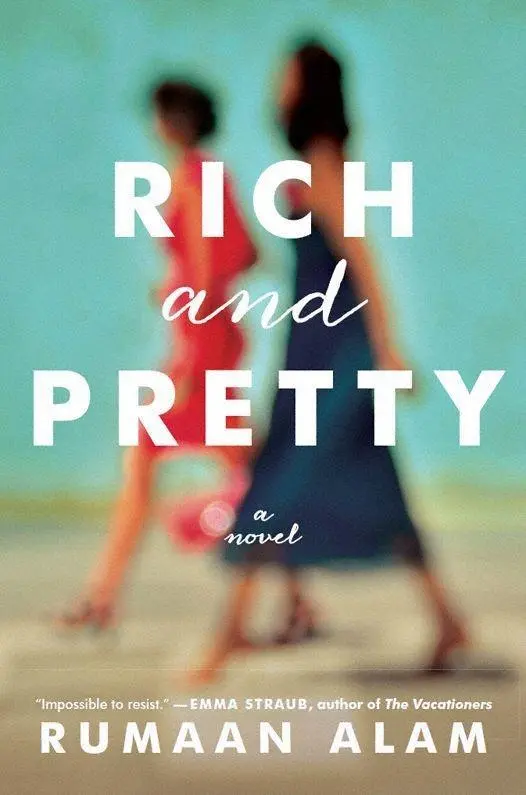
- Название:Rich and Pretty
- Автор:
- Издательство:Ecco
- Жанр:
- Год:2016
- ISBN:нет данных
- Рейтинг книги:3 / 5. Голосов: 1
-
Избранное:Добавить в избранное
- Отзывы:
-
Ваша оценка:
Rich and Pretty: краткое содержание, описание и аннотация
Предлагаем к чтению аннотацию, описание, краткое содержание или предисловие (зависит от того, что написал сам автор книги «Rich and Pretty»). Если вы не нашли необходимую информацию о книге — напишите в комментариях, мы постараемся отыскать её.
As close as sisters for twenty years, Sarah and Lauren have been together through high school and college, first jobs and first loves, the uncertainties of their twenties and the realities of their thirties.
Sarah, the only child of a prominent intellectual and a socialite, works at a charity and is methodically planning her wedding. Lauren — beautiful, independent, and unpredictable — is single and working in publishing, deflecting her parents’ worries and questions about her life and future by trying not to think about it herself. Each woman envies — and is horrified by — particular aspects of the other’s life, topics of conversation they avoid with masterful linguistic pirouettes.
Once, Sarah and Lauren were inseparable; for a long a time now, they’ve been apart. Can two women who rarely see one other, selectively share secrets, and lead different lives still call themselves best friends? Is it their abiding connection — or just force of habit — that keeps them together?
With impeccable style, biting humor, and a keen sense of detail, Rumaan Alam deftly explores how the attachments we form in childhood shift as we adapt to our adult lives — and how the bonds of friendship endure, even when our paths diverge.
Rich and Pretty — читать онлайн бесплатно полную книгу (весь текст) целиком
Ниже представлен текст книги, разбитый по страницам. Система сохранения места последней прочитанной страницы, позволяет с удобством читать онлайн бесплатно книгу «Rich and Pretty», без необходимости каждый раз заново искать на чём Вы остановились. Поставьте закладку, и сможете в любой момент перейти на страницу, на которой закончили чтение.
Интервал:
Закладка:
Sarah goes into the bathroom, brushes her teeth in one of the matching sinks — the left, she’s always preferred the left-hand one. Ines has brought a toothbrush, bright orange, still in its plastic package, and a miniature tube of toothpaste. Sarah hadn’t expected these women to be so thorough, but she’s grateful. She feels bad that she’s going to have to brush her teeth, muss her face, but whatever — Ines works for her, after all.
She finishes, tries and fails to dry her mouth without smudging the lips, stains the towel, even, but she doesn’t care. She cups nose and mouth with her palm, exhales, tries to breathe in her breath, gauge the smell, but of course, she can’t; this never works, though everyone tries it. There’s smoke in her hair, across her shoulders, a whisper of it, a suggestion, she’s sure of it. Does it matter? Downstairs, it’ll be warm — all those tuxedoed bodies, dancing, waiters weaving through the crowd with trays bearing a crisp white wine, which she thought would make it seem more like summer, a dark, heavy red, and waters, still and sparkling, the latter with pretty twists of lemon and lime. The room will smell like sweat and bodies, like flowers, like food — little shots of a creamy tomato soup in tiny glasses, mushrooms stuffed and topped with a sprinkling of bright green chive, a sweet little concoction of beet, salty goat cheese, and a single, candied pecan. No one will notice the touch of smoke lingering about Sarah’s body, certainly not her parents, who seemed never to notice the smoke or beer on her breath those years she and Lauren — and it was always with Lauren that she got up to such things — came back to this house stinking of both.
Of course, there’s Dan. He notices everything. No matter; he’s too logical to care. Even when it’s something that annoys him, he never gets impatient. To those things — not refilling the ice trays, say — he proposes a logical response — buying a new refrigerator, say, one with an icemaker built in. That’s Dan. On television and in movies, people who are getting married talk about wanting to spend the rest of their lives with someone. That doesn’t seem like something a normal person would say in reality. Sarah doesn’t think people are designed to think about the rest of their lives. If we had to grapple with that, we’d never get anything done.
She’s not marrying Dan because he’s the man she wants to spend the rest of her life with, though she will, and that’s great, that’s fine, but in a way, it’s the added bonus. The reason she’s marrying him is because he, exasperated about her not refilling the ice cube trays, suggested that they buy a new fridge. This somehow seems to explain everything. Does she love him? Of course, what a stupid question. What do you do with that love but get married, and maintain it?
Sometimes Sarah thinks: What if this is something only the two of them have discovered, that only the two of them know about, and what if everyone else really is unhappily married? She’s glad they’re getting married. She can’t imagine her life without Dan, because this life they’ve started on is so good, and she believes it will only get better. She and Dan have never discussed this, not in these terms, this question of their love, their reasons for getting married, their expectations for that hopefully long arc of the rest of their lives. She assumes that it’s a condition of their being so well suited to each other that it’s redundant to even discuss it. She knows they share the same expectations, believe the same things. She knows because it’s always been this way.
Chapter 16
Lauren knows this house so well.She may know it better than she knows her own family home, because at home, she was never paying attention, whereas here — there was always a lesson to be learned here. She can scoff at Lulu now, but Lauren was once in her thrall. She’s long since grown out of that. As any child, with any mother, she now regards Lulu as something less complex than what she once seemed: just another person, making another set of mistakes.
Lulu’s crammed the house so full of things that you’re forever noticing details previously unremarked upon. In the powder room on the second floor, Lauren recalls the wallpaper — chinoiserie in blue and white, panoramas of pagodas and flying creatures, but she doesn’t remember the ornamental shelf over the toilet, with its chubby soapstone Buddha, all flopping tits and squinting eyes, a tiny, round box, malachite, swirling, an impossible green. She opens the box. A lone earring, a pearl, missing its back; a half-spent book of matches from a restaurant in midtown; two Italian lire.
She lifts the seat of the toilet, pushes down her pants, sits, confronts a little wrought-iron table, the kind you’d leave in your garden, painted orange, piled high with copies of the New York Review of Books . It would never have occurred to her parents that some guests might like to read while they shit. What happened in her parents’ bathrooms was a matter wholly unrelated to the rest of life; thus, soaps in the shapes of seashells, clustered together in a little porcelain dish, tiny towels with silken flowers on them that were useless for drying your hands, an apple cinnamon — scented candle flickering decorously throughout the evening.
Lauren selects the issue from the top of the pile. It’s from 1997. That year, they were fifteen. She can remember herself at fifteen, there’s a particular feeling around fifteen, the way synesthesists perceive in numbers a color, or a scent. Her friendship with Sarah has always been about nostalgia. At fifteen, it was about them at eleven; in college, it was about the tough-talking girls of fifteen they’d once been; in that shitty apartment in the East Village, it had been about the eager little undergraduate selves they’d sloughed off, the ones who flirted with socialism, or performance art. Now, what is it they see when they see each other? Old selves, old periodicals, a currency no longer in circulation. This house, it’s a museum.
She pees, flushes the toilet. Her body feels lean, empty, hard, and the thought of the fried and salted things that will certainly appear the second the I Dos have been uttered renews her. She wasn’t lying about Sarah’s makeup; it’s good, so having seen that, Lauren’s less scared about having Ines minister to her face. Willa is in Sarah’s room, steaming the dresses. Sarah will wait while guests arrive, kiss hellos, sip their spritzers, take their seats, gossip and anticipate. The more Lauren thinks about it, the less sense it makes, all this pageantry and pretend. Why the implication that Sarah exists on some celestial plane, but will be made flesh at the appointed hour and descend, literally, to the garden, to be wed? She remembers something she’d genuinely forgotten all about — the spring dance, their junior year of high school. Theirs was a progressive and serious institution, uninterested in the rites of limousines and corsages, rented tuxedos and photographs before some backdrop meant to communicate an evening in Paris. Still, the party was planned and they were not so cool they didn’t want to get dressed up and go to a ballroom at a hotel and dance. They didn’t go with dates, much to Lulu’s dismay: Lulu, clutching the camera at the foot of the stairs, as she must have seen some mother on some sitcom do, the pantomime of parenthood. They wore dresses found at a thrift store in Connecticut, a simple column for Sarah, pale pink but not princessy, a black flappery thing for her, though they did go to Bloomingdale’s and buy new shoes. They felt so beautiful, even if they felt embarrassed, or uninterested in feeling beautiful, as they flew down the stairs, hammed for Lulu’s camera, tottered out into the night, awkward as foals but relishing the echo of their heels, the spring air on bared flesh, the appreciative grins of strangers on the street. They were beautiful, in that moment, and there’s a picture, proof of it, tucked into the corner of a larger collage of pictures outside Sarah’s door. She’s got to remind Sarah of that, that night. Taking the subway uptown to the hotel, because it seemed hilarious to take the subway so dressed up, then arriving, evaluating how pretty the girls looked, admiring how cute the boys looked, dancing, first with a knowing smile, later, with real abandon, in some cases fueled by the flasks, surreptitiously sipped, that some boys had snuck in interior jacket pockets, pretending to be James Bond. Cheeks flushed red, ties undone, and she thinks, but isn’t sure, that Sarah made out with Patrick Alden, the same boy she’d once overheard dismiss Sarah, or maybe he was just summarizing her. After, piling into taxis, calling for car services, some of the boys unbuttoning shirts, other boys slipping on jackets and fixing pocket squares. They reconvened at a diner in the East Village, where the boys ate scrambled eggs and hash browns and the girls smoked cigarettes and laughed. Lauren remembers it all, compressed into a few seconds of thinking. She thinks about that girl, quiet, dark eyed, in the old-fashioned dress that didn’t flatter — her breasts too big; she should have opted for postwar abundance rather than Roaring Twenties privation. You’re supposed to remember your previous self and imagine the advice you’d give to you then. If she could go back in time, back to that night, what would she say to that girl? She’d tell her to put the cigarettes out and order some food. At this moment, she’d kill for those hash browns, crispy, oily, salty. The Odessa Diner itself is long gone; it’s now a nail salon.
Читать дальшеИнтервал:
Закладка:
Похожие книги на «Rich and Pretty»
Представляем Вашему вниманию похожие книги на «Rich and Pretty» списком для выбора. Мы отобрали схожую по названию и смыслу литературу в надежде предоставить читателям больше вариантов отыскать новые, интересные, ещё непрочитанные произведения.










Обсуждение, отзывы о книге «Rich and Pretty» и просто собственные мнения читателей. Оставьте ваши комментарии, напишите, что Вы думаете о произведении, его смысле или главных героях. Укажите что конкретно понравилось, а что нет, и почему Вы так считаете.