Emma Cline - The Girls
Здесь есть возможность читать онлайн «Emma Cline - The Girls» весь текст электронной книги совершенно бесплатно (целиком полную версию без сокращений). В некоторых случаях можно слушать аудио, скачать через торрент в формате fb2 и присутствует краткое содержание. Год выпуска: 2016, Издательство: Random House, Жанр: Современная проза, на английском языке. Описание произведения, (предисловие) а так же отзывы посетителей доступны на портале библиотеки ЛибКат.
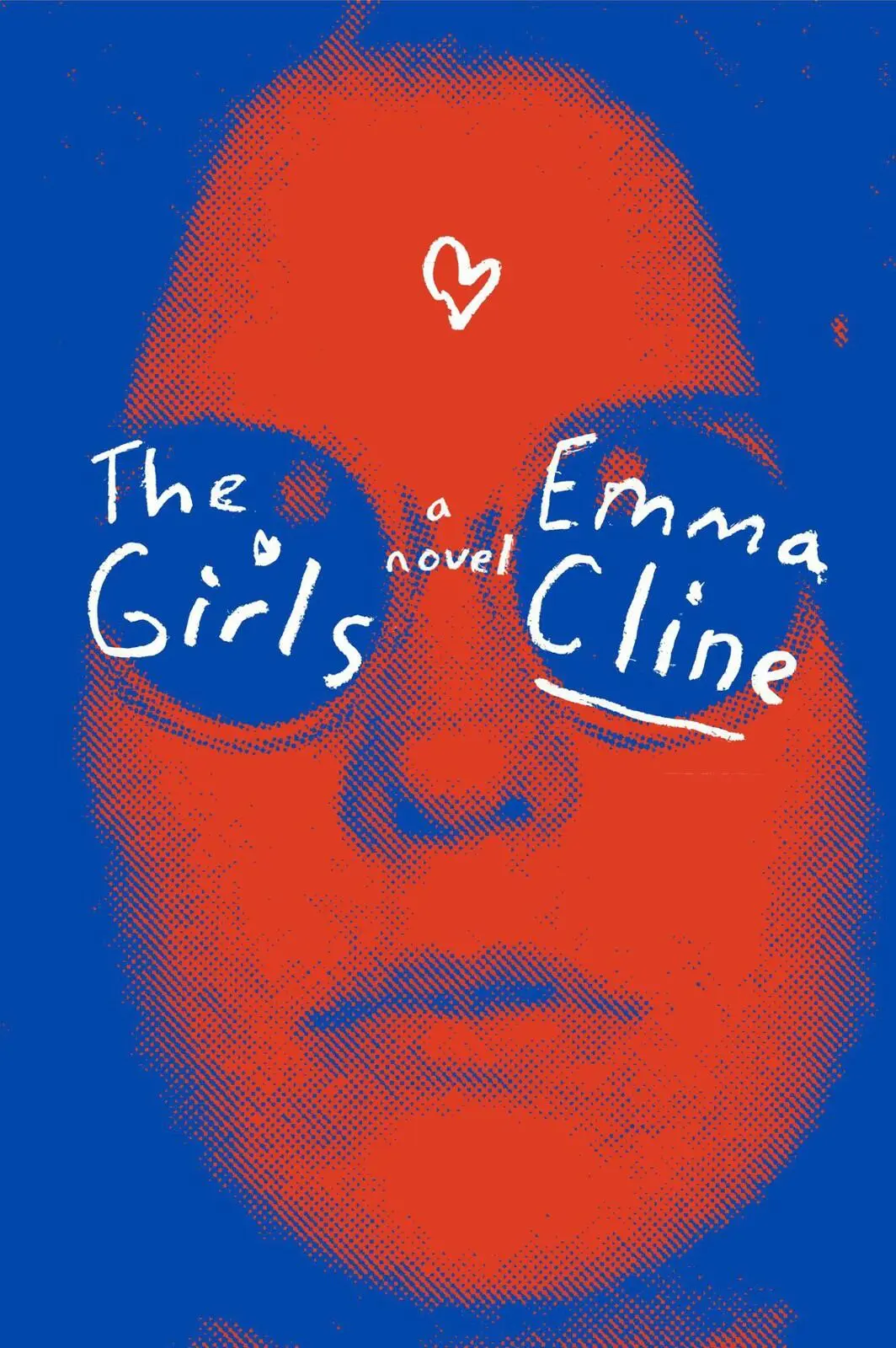
- Название:The Girls
- Автор:
- Издательство:Random House
- Жанр:
- Год:2016
- ISBN:нет данных
- Рейтинг книги:5 / 5. Голосов: 1
-
Избранное:Добавить в избранное
- Отзывы:
-
Ваша оценка:
The Girls: краткое содержание, описание и аннотация
Предлагаем к чтению аннотацию, описание, краткое содержание или предисловие (зависит от того, что написал сам автор книги «The Girls»). Если вы не нашли необходимую информацию о книге — напишите в комментариях, мы постараемся отыскать её.
Northern California, during the violent end of the 1960s. At the start of summer, a lonely and thoughtful teenager, Evie Boyd, sees a group of girls in the park, and is immediately caught by their freedom, their careless dress, their dangerous aura of abandon. Soon, Evie is in thrall to Suzanne, a mesmerizing older girl, and is drawn into the circle of a soon-to-be infamous cult and the man who is its charismatic leader. Hidden in the hills, their sprawling ranch is eerie and run down, but to Evie, it is exotic, thrilling, charged — a place where she feels desperate to be accepted. As she spends more time away from her mother and the rhythms of her daily life, and as her obsession with Suzanne intensifies, Evie does not realize she is coming closer and closer to unthinkable violence, and to that moment in a girl’s life when everything can go horribly wrong.
Emma Cline’s remarkable debut novel is gorgeously written and spellbinding, with razor-sharp precision and startling psychological insight. The Girls is a brilliant work of fiction — and an indelible portrait of girls, and of the women they become.
The Girls — читать онлайн бесплатно полную книгу (весь текст) целиком
Ниже представлен текст книги, разбитый по страницам. Система сохранения места последней прочитанной страницы, позволяет с удобством читать онлайн бесплатно книгу «The Girls», без необходимости каждый раз заново искать на чём Вы остановились. Поставьте закладку, и сможете в любой момент перейти на страницу, на которой закончили чтение.
Интервал:
Закладка:
Her eyes narrowed. “What does that mean?”
“Forget it.” I could smell the raw meat coming to room temperature, a biting tinge of cold metal. My stomach tightened. “I’m not hungry anymore,” I said, and left her standing in the kitchen. The radio still playing songs about first loves, about dancing by the river, the meat thawed enough so my mother would be forced to cook it, though no one would eat it.
—
It was easy after that to tell myself that I deserved the money. Russell said that most people were selfish, unable to love, and that seemed true of my mother, and my father, too, tucked away with Tamar in the Portofino Apartments in Palo Alto. So it was a tidy trade, when I thought about it like that. Like the money I was filching, bill by bill, added up to something that could replace what had gone missing. It was too depressing to think it had maybe never been there in the first place. That none of it had — Connie’s friendship. Peter ever feeling anything for me besides annoyance at the obviousness of my kiddish worship.
My mother left her purse lying around, like always, and that made the money inside seem less valuable, something she didn’t care enough about to take seriously. Still, it was uncomfortable, poking around in her purse, like the rattly inside of my mother’s brain. The litter was too personal — the wrapper from a butterscotch candy, a mantra card, a pocket mirror. A tube of cream, the color of a Band-Aid, that she patted under her eyes. I pinched a ten, folding it into my shorts. Even if she saw me, I’d just say I was getting groceries — why would she suspect me? Her daughter, who had always been good, even if that was more disappointing than being great.
I’m surprised that I felt so little guilt. On the contrary — there was something righteous in the way I hoarded my mother’s money. I was picking up some of the ranch bravado, the certainty that I could take what I wanted. The knowledge of the hidden bills allowed me to smile at my mother the next morning, to act like we hadn’t said the things we’d said the night before. To stand patiently when she brushed at my bangs without warning.
“Don’t hide your eyes,” my mother said, her breath close and hot, her fingers raking at my hair.
I wanted to shake her off, to step back, but I didn’t.
“There,” she said, pleased. “There’s my sweet daughter.”
—
I was thinking of the money while I kicked in the pool, my shoulders above the waterline. There was a purity to the task, amassing the bills in my little zip purse. When I was alone, I liked to count the money, each new five or ten a particular boon. I folded the crisper bills on top, so the bundle looked nicer. Imagining Suzanne’s and Russell’s pleasure when I brought the money to them, lulled into the sweet wayward fog of daydreams.
My eyes were closed as I floated, and I only opened them when I heard thrashing beyond the tree line. A deer, maybe. I tensed, stirring uneasily in the water. I didn’t think that it could be a person: we didn’t worry about those kinds of things. Not until later. And it was a dalmatian anyway, the creature that came trotting out of the trees and right up to the pool’s edge. He regarded me soberly, then started to bark.
The dog was strange looking, speckled and spotted, and it barked with high, human alarm. I knew it belonged to the neighbors on our left, the Dutton family. The father had written some movie theme song, and at parties I had heard the mother hum it, mockingly, to a gathered group. Their son was younger than me — he often shot his BB gun in the yard, the dog yelping in agitated chorus. I couldn’t remember the dog’s name.
“Get,” I said, splashing halfheartedly. I didn’t want to have to haul myself out of the water. “Go on.”
The dog kept barking.
“Go,” I tried again, but the dog just barked louder.
—
My cutoffs were damp from my swimsuit by the time I made it to the Dutton house. I’d put on my cork sandals, grimed with the ghost of my feet, and taken the dog by the collar, the ends of my hair dripping. Teddy Dutton answered the door. He was eleven or twelve, his legs studded with scabs and scrapes. He’d broken his arm last year falling from a tree, and my mother had been the one to drive him to the hospital: she’d muttered darkly that his parents left him alone too much. I had never spent much time with Teddy, beyond the familiarity of being young at neighborhood parties, anyone under age eighteen herded together in a forced march to friendship. Sometimes I’d see him riding his bike along the fire road with a boy in glasses: he’d once let me pet a barn kitten they’d found, holding the tiny thing under his shirt. The kitten’s eyes were leaky with pus, but Teddy had been gentle with it, like a little mother. That was the last time I’d spoken to him.
“Hey,” I said when Teddy opened the door. “Your dog.”
Teddy was gaping at me like we hadn’t been neighbors our whole lives. I rolled my eyes a little at his silence.
“He was in our yard,” I went on. The dog moved against my hold.
It took Teddy a second to speak, but before he did, I saw him cut a helpless look at my swimsuit top, the exaggerated swell of cleavage. Teddy saw that I had noticed and got more flustered. He scowled at the dog, taking his collar. “Bad Tiki,” he said, hustling the animal into the house. “Bad dog.”
The thought that Teddy Dutton might be somehow nervous around me was a surprise. Though I hadn’t even owned a bikini the last time I’d seen him, and my breasts were bigger now, pleasing even to me. I found his attention almost hilarious. A stranger had once shown Connie and me his dick by the movie theater bathrooms — it had taken a moment to understand why the man was gasping like a fish for air, but then I saw his penis, out of his zipper like an arm out of a sleeve. He’d looked at us like we were butterflies he was pinning to a board. Connie had grabbed my arm, and we’d turned and run, laughing, the Raisinets clutched in my hand starting to melt. We recounted our disgust to each other in strident tones, but there was pride, too. Like the satisfied way Patricia Bell had once asked me after class whether I’d seen how Mr. Garrison had been staring at her, and didn’t I think it was weird ?
“His paws are all wet,” I said. “He’s gonna mess up the floors.”
“My parents aren’t home. It doesn’t matter.” Teddy stayed in the doorway, awkward with an air of expectancy; did he think we were going to hang out?
He stood there, like the unhappy boys who sometimes got erections at the chalkboard for no reason at all — he was obviously under the command of some other force. Maybe the proof of sex was visible on me in a new way.
“Well,” I said. I worried I would start laughing — Teddy looked so uncomfortable. “See you.”
Teddy cleared his throat, trying to throttle his voice deeper. “Sorry,” he said. “If Tiki was bothering you.”
How did I know I could mess with Teddy? Why did my mind range immediately to that option? I’d only been to the ranch twice since the solstice party, but I’d already started to absorb certain ways of seeing the world, certain habits of logic. Society was crowded with straight people, Russell told us, people in paralyzed thrall to corporate interests and docile as dosed lab chimps. Those of us at the ranch functioned on a whole other level, fighting against the miserable squall, and so what if you had to mess with the straight people to achieve larger goals, larger worlds? If you checked yourself out of that old contract, Russell told us, refused all the bullshit scare tactics of civics class and prayer books and the principal’s office, you’d see there was no such thing as right and wrong. His permissive equations reduced these concepts to hollow relics, like medals from a regime no longer in power.
Читать дальшеИнтервал:
Закладка:
Похожие книги на «The Girls»
Представляем Вашему вниманию похожие книги на «The Girls» списком для выбора. Мы отобрали схожую по названию и смыслу литературу в надежде предоставить читателям больше вариантов отыскать новые, интересные, ещё непрочитанные произведения.




Обсуждение, отзывы о книге «The Girls» и просто собственные мнения читателей. Оставьте ваши комментарии, напишите, что Вы думаете о произведении, его смысле или главных героях. Укажите что конкретно понравилось, а что нет, и почему Вы так считаете.