Emma Cline - The Girls
Здесь есть возможность читать онлайн «Emma Cline - The Girls» весь текст электронной книги совершенно бесплатно (целиком полную версию без сокращений). В некоторых случаях можно слушать аудио, скачать через торрент в формате fb2 и присутствует краткое содержание. Год выпуска: 2016, Издательство: Random House, Жанр: Современная проза, на английском языке. Описание произведения, (предисловие) а так же отзывы посетителей доступны на портале библиотеки ЛибКат.
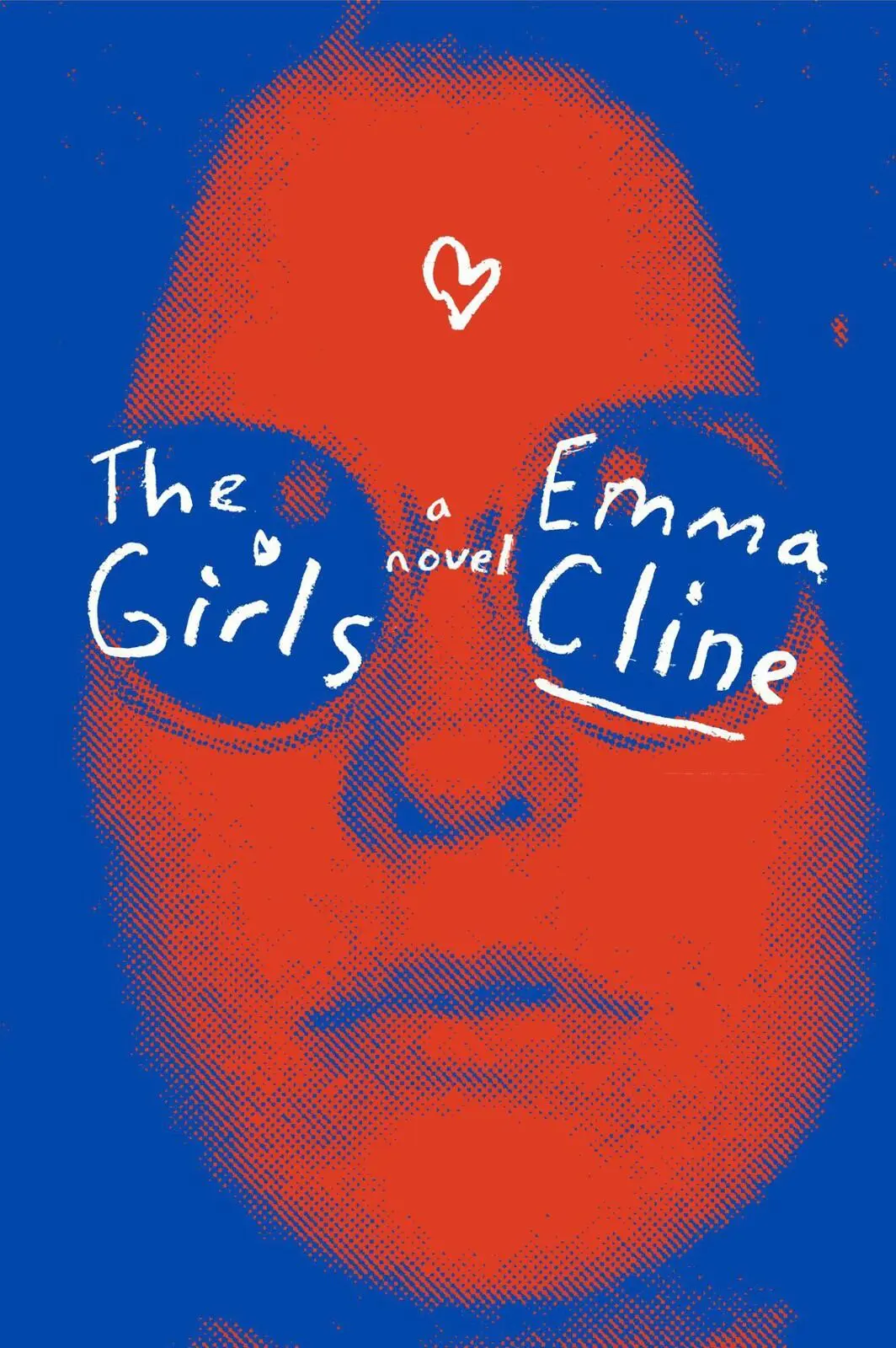
- Название:The Girls
- Автор:
- Издательство:Random House
- Жанр:
- Год:2016
- ISBN:нет данных
- Рейтинг книги:5 / 5. Голосов: 1
-
Избранное:Добавить в избранное
- Отзывы:
-
Ваша оценка:
The Girls: краткое содержание, описание и аннотация
Предлагаем к чтению аннотацию, описание, краткое содержание или предисловие (зависит от того, что написал сам автор книги «The Girls»). Если вы не нашли необходимую информацию о книге — напишите в комментариях, мы постараемся отыскать её.
Northern California, during the violent end of the 1960s. At the start of summer, a lonely and thoughtful teenager, Evie Boyd, sees a group of girls in the park, and is immediately caught by their freedom, their careless dress, their dangerous aura of abandon. Soon, Evie is in thrall to Suzanne, a mesmerizing older girl, and is drawn into the circle of a soon-to-be infamous cult and the man who is its charismatic leader. Hidden in the hills, their sprawling ranch is eerie and run down, but to Evie, it is exotic, thrilling, charged — a place where she feels desperate to be accepted. As she spends more time away from her mother and the rhythms of her daily life, and as her obsession with Suzanne intensifies, Evie does not realize she is coming closer and closer to unthinkable violence, and to that moment in a girl’s life when everything can go horribly wrong.
Emma Cline’s remarkable debut novel is gorgeously written and spellbinding, with razor-sharp precision and startling psychological insight. The Girls is a brilliant work of fiction — and an indelible portrait of girls, and of the women they become.
The Girls — читать онлайн бесплатно полную книгу (весь текст) целиком
Ниже представлен текст книги, разбитый по страницам. Система сохранения места последней прочитанной страницы, позволяет с удобством читать онлайн бесплатно книгу «The Girls», без необходимости каждый раз заново искать на чём Вы остановились. Поставьте закладку, и сможете в любой момент перейти на страницу, на которой закончили чтение.
Интервал:
Закладка:
“Concord,” she said. “It sucks.”
“And you go to college with Julian?”
“Julian’s not in college.”
I wasn’t sure if this was information Dan knew. I tried to remember what I’d last heard. When Dan did mention his son, it was with performative resignation, playing the clueless dad. Any trouble reported with sitcom sighs: boys will be boys. Julian had been diagnosed with some behavioral disorder in high school, though Dan made it sound mild.
“Have you guys been together long?” I asked.
Sasha sipped at the tea. “A few months,” she said. Her face grew animate, like just talking about Julian was a source of sustenance. She must have already forgiven him for leaving her behind. Girls were good at coloring in those disappointing blank spots. I thought of the night before, her exaggerated moans. Poor Sasha.
She probably believed that any sadness, any flicker of worry over Julian, was just a problem of logistics. Sadness at that age had the pleasing texture of imprisonment: you reared and sulked against the bonds of parents and school and age, the things that kept you from the certain happiness that awaited. When I was a sophomore in college, I had a boyfriend who spoke breathlessly of running away to Mexico — it didn’t occur to me that we could no longer run away from home. Nor did I imagine what we would be running to, beyond the vagueness of warm air and more frequent sex. And now I was older, and the wishful props of future selves had lost their comforts. I might always feel some form of this, a depression that did not lift but grew compact and familiar, a space occupied like the sad limbo of hotel rooms.
“Listen,” I said, slotting into a parental role that was laughably unearned. “I hope Julian is being nice to you.”
“Why wouldn’t he be nice?” she said. “He’s my boyfriend. We live together.”
I could imagine so easily what would pass for living. A month-to-month apartment that smelled of freezer meals and Clorox, Julian’s childhood comforter on the mattress. The girlish effort of a scented candle by the bed. Not that I was doing much better.
“We might get a place with a washing machine,” Sasha said, a new defiance in her tone as she invoked their meager domesticity. “Probably in a few months.”
“And your parents are okay with you living with Julian?”
“I can do what I want.” She shuffled her hands into the sleeves of Julian’s sweatshirt. “I’m eighteen.”
That couldn’t be true.
“Besides,” she said, “weren’t you my age when you were in that cult?”
Her tone was blank, but I imagined a slant of accusation.
Before I could say anything, Sasha got up from the table, listing toward the refrigerator. I watched her affected swagger, the easy way she removed one of the beers they’d brought. The cutout silvered mountains gleaming from the label. She met my gaze.
“Want one?” she asked.
This was a test, I understood. Either I could be the kind of adult to be ignored or pitied or I could be someone she could maybe talk to. I nodded and Sasha relaxed.
“Think fast,” she said, tossing the bottle to me.
—
Night came on quick, as it did on the coast, with no mediation of buildings to temper the change. The sun was so low that we could look directly at it, watching it drift from sight. We each had had a few beers. The kitchen grew dark, but neither of us got up to turn on the lights. Everything had a blue shadow, soft and royal, the furniture simplifying into shapes. Sasha asked if we could make a fire in the fireplace.
“It’s gas,” I said. “And it’s broken.”
A lot of things in the house were broken or forgotten: the kitchen clock stopped, a closet doorknob coming off in my hand. The sparkly mess of flies I’d swept from the corners. It took sustained, constant living to ward off decay. Even my presence for the last few weeks hadn’t made much of a dent.
“But we can try making one out in the yard,” I said.
—
The sandy lot behind the garage was sheltered from the wind, wet leaves matted on the seats of plastic chairs. There had once been a fire pit of sorts, the stones scattered among the senseless archaeological relics of family life: add-ons to forgotten toys, a chewed-looking shard of Frisbee. We were both distracted by the hustle of preparation, tasks that allowed for companionable silence. I found a stack of three-year-old newspapers in the garage and a bundle of wood from the general store in town. Sasha toed the stones back into a circle.
“I was always bad at this,” I said. “There’s something you’re supposed to do, right? Some special shape with the logs?”
“Like a house,” Sasha said. “You’re supposed to make it look like a cabin.” She used her foot to neaten the ring. “We used to camp a lot in Yosemite when I was little.”
Sasha was the one who actually got the fire going: squatting in the sand, keeping up a steady stream of breath. Gentling the flames until there was a satisfying burn.
We sat down in the plastic chairs, their surfaces stippled from sand and wind. I pulled mine close to the fire — I wanted to feel hot, to sweat. Sasha was quiet, looking at the jump of flames, but I could sense the whir of her mind, the faraway place she had disappeared to. Maybe she was imagining what Julian was doing up in Garberville. The musky futon he’d sleep on, using a towel for a blanket. All part of the adventure. How nice it must be to be a twenty-year-old boy.
“That stuff Julian was talking about,” Sasha said, clearing her throat like she was embarrassed, though her interest was obvious. “Were you, like, in love with that guy or something?”
“Russell?” I said, poking at the fire with a stick. “I didn’t think about him like that.”
It was true: the other girls had circled around Russell, tracking his movements and moods like weather patterns, but he stayed mostly distant in my mind. Like a beloved teacher whose home life his students never imagined.
“Why’d you hang out with them, then?” she asked.
My first impulse was to avoid the subject. I’d have to pin down all the edges. Act out the whole morality play: the regret, the warnings. I tried to sound businesslike.
“People were falling into that kind of thing all the time, back then,” I said. “Scientology, the Process people. Empty-chair work. Is that still a thing?” I glanced at her — she was waiting for me to go on. “It was partly bad luck, I guess. That it was the group I found.”
“But you stayed.”
I could feel the full force of Sasha’s curiosity for the first time.
“There was a girl. It was more her than Russell.” I hesitated. “Suzanne.” It was odd to say her name, to let it live in the world. “She was older,” I said. “Not by much, really, but it felt like a lot.”
“Suzanne Parker?”
I stared across the fire at Sasha.
“I looked some things up today,” she said. “Online.”
I’d once lost hours to that kind of stuff. The fan sites or whatever you called them. The stranger corners. The website devoted to Suzanne’s artwork from prison. Watercolors of mountain ranges, puffball clouds, the captions filled with misspellings. I’d felt a pang, imagining Suzanne working with great concentration, but closed the website when I saw the photo: Suzanne, in blue jeans and a white T-shirt — her jeans stuffed with middle-aged fat, her face a vacant scrim.
The thought of Sasha gorging on that macabre glut made me uneasy. Packing herself with particulars: the autopsy reports, the testimony the girls gave of that night, like the transcript of a bad dream.
“It’s nothing to be proud of,” I said. Recounting the usual things — it was awful. Not glamorous, not enviable.
Читать дальшеИнтервал:
Закладка:
Похожие книги на «The Girls»
Представляем Вашему вниманию похожие книги на «The Girls» списком для выбора. Мы отобрали схожую по названию и смыслу литературу в надежде предоставить читателям больше вариантов отыскать новые, интересные, ещё непрочитанные произведения.




Обсуждение, отзывы о книге «The Girls» и просто собственные мнения читателей. Оставьте ваши комментарии, напишите, что Вы думаете о произведении, его смысле или главных героях. Укажите что конкретно понравилось, а что нет, и почему Вы так считаете.