Esmé Wang - The Border of Paradise
Здесь есть возможность читать онлайн «Esmé Wang - The Border of Paradise» весь текст электронной книги совершенно бесплатно (целиком полную версию без сокращений). В некоторых случаях можно слушать аудио, скачать через торрент в формате fb2 и присутствует краткое содержание. Год выпуска: 2016, Издательство: The Unnamed Press, Жанр: Современная проза, на английском языке. Описание произведения, (предисловие) а так же отзывы посетителей доступны на портале библиотеки ЛибКат.
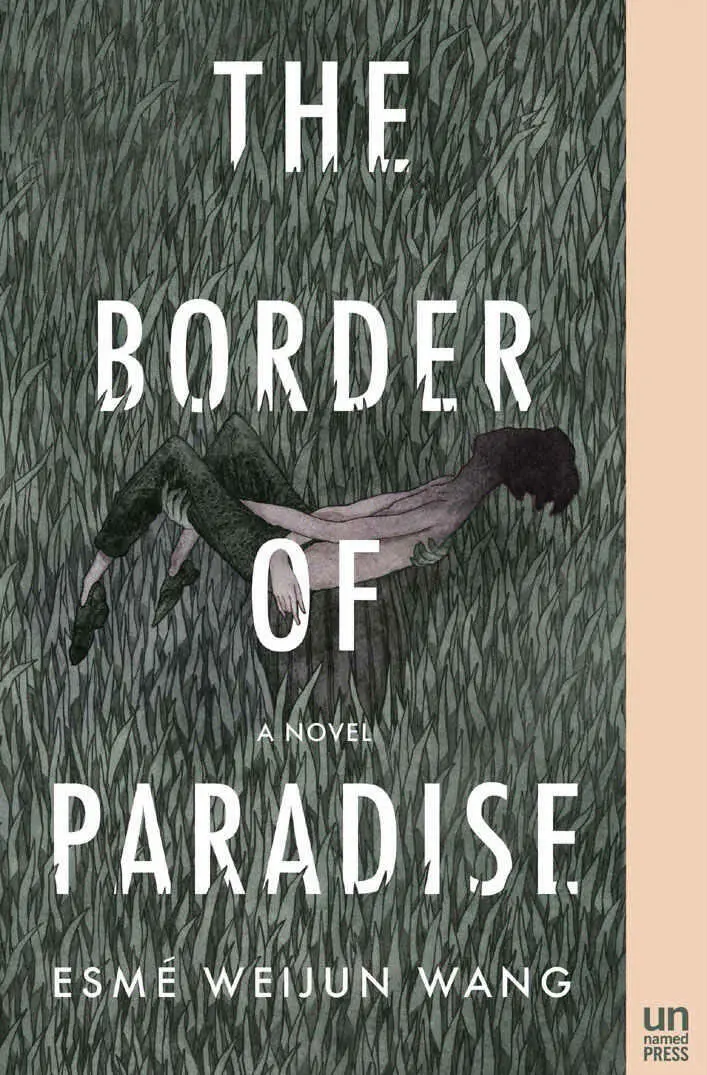
- Название:The Border of Paradise
- Автор:
- Издательство:The Unnamed Press
- Жанр:
- Год:2016
- ISBN:нет данных
- Рейтинг книги:3 / 5. Голосов: 1
-
Избранное:Добавить в избранное
- Отзывы:
-
Ваша оценка:
The Border of Paradise: краткое содержание, описание и аннотация
Предлагаем к чтению аннотацию, описание, краткое содержание или предисловие (зависит от того, что написал сам автор книги «The Border of Paradise»). Если вы не нашли необходимую информацию о книге — напишите в комментариях, мы постараемся отыскать её.
transports readers into the world of an iconoclastic midcentury family.
In booming postwar Brooklyn, the Nowak Piano Company is an American success story. There is just one problem: the Nowak’s only son, David. A handsome kid and shy like his mother, David struggles with neuroses. If not for his only friend, Marianne, David’s life would be intolerable. When David inherits the piano company at just 18 and Marianne breaks things off, David sells the company and travels around the world. In Taiwan, his life changes when he meets the daughter of a local madame — beautiful, sharp-tongued Daisy. Returning to the United States, the couple (and newborn son) buy an isolated country house in Northern California’s Polk Valley.
As David's mental health deteriorates, he has a brief affair with Marianne, producing a daughter. When Marianne appears at their doorstep, the couple's fateful decision to take the child as their own determines a tragic course of events for the entire family. Told from multiple perspectives,
culminates in heartrending fashion, as the young heirs to the Nowak fortune must confront their past and the tragic reality of their future.
The Border of Paradise — читать онлайн бесплатно полную книгу (весь текст) целиком
Ниже представлен текст книги, разбитый по страницам. Система сохранения места последней прочитанной страницы, позволяет с удобством читать онлайн бесплатно книгу «The Border of Paradise», без необходимости каждый раз заново искать на чём Вы остановились. Поставьте закладку, и сможете в любой момент перейти на страницу, на которой закончили чтение.
Интервал:
Закладка:
“Oh?”
“Yes! Our lives are written out in a certain way, and just because we’re alone now doesn’t mean that we’re free to do whatever we like. It’s not a matter of rules or an immature rebellion against rules. This is a commandment you’re violating.”
“But why the commandment? Why was it written out that way?”
“What kind of question is that—”
“A legitimate one—”
“I’ve explained this a million times!”
“It shouldn’t need explaining,” she says, and now she’s moved her body forward such that the force of her physical presence is turned at me. The honesty, the brutality, of her body kills me. “I don’t want to do it anymore.”
“The serpent’s got you,” I say.
“But I was already gotten.” And maybe there’s a bit of sadness to her voice. It’s possible that there is sadness there, or perhaps it’s sadness that I want to hear.
I say, “I can’t stand it.”
“You’ll overcome it,” she says. But when my eyes blur, she comes over to me. She wraps her arms around my body, and the smell of her dusky body, unperfumed and sweaty, makes me choke. “Sorry,” she says. “That was mean.” She kisses me on the temple, on the cheek, on the corner of my mouth. Without thinking, I shift my face slightly such that my lips press against hers.
“Dammit, William,” she says, and turns her face away.
She needs to know that this is wrong. I could also slap her, but did I not just promise that I’d refrain from physical force? She is stronger; still, I could smash the back of her skull with a skillet, though I am sure that both crying and striking are the wrong avenues to walk — too weak, too off-putting, or both. What she needs is to be unbitten, and this I don’t know how to do.

At night, to know that she is two doors down, but not available to me, makes my skin itch. I press my face into the sheets and smell the bleachy, musky scent of us commingled, the sheet starched from the liquid of my insides. I haven’t washed the sheets since our honeymoon. Here is a mark of deep black from when she was bleeding, and though she cramped and gritted her teeth we’d made love anyway. I hug my knees to my chest. Mentally I go through the sheets, crawling over every inch of our atlas. The saliva spots of my mouth pressed and moaning against the pillow. The smell of clean hair, and of greasy hair that’s gone unwashed, which I love because it is completely her stench.
I don’t know how long this goes on. Forever. Hours. I climb out of bed and sneak into Gillian’s unlocked room. In the shadows she is snoring slightly at a low, steady octave. I can’t see her in the darkness, but I know that comforting sound. Her breathing staggers and slows. I lie on the floor beside the bed, hoping that the floorboards won’t creak, and I feel myself on a deerskin. The skin is short-haired, and when I press my body against it I try to derive sensations of life from it, a bed of flesh, but it is cold and smells like dust. I am falling asleep, and as I fall asleep lights flash behind my lids like a punch to the head. I am dazzled.
The next thing is Gillian shaking me. I am immediately awake. The beginnings of her exclamations are at first a haze. Then: “What are you doing here?” She repeats this a few more times, as though I’m incapable of English and she’s making sounds at that dog of hers. But then I hear her words curl themselves around my neurons and I realize that she’s angry, she’s quite angry, one could even say that she’s furious with me for coming into her room. She kicks me. Not hard. She lectures me about violating the borders of her room, where she was sleeping alone. She says “alone” pointedly. She tells me that I appear to have not understood her previous declaration. She says that I’m a jerk, but I hear a thread of fear running through the warp and woof of her voice. I’ve caused that. I apologize. She sighs. She says, “Don’t do it again.”
Dear Gillian,
I am embarrassed and annoyed that I’m having to resort to these envelopes and letters again, and taping them to your door as though I’m some sort of missive-bearing dove with a branch in its beak. I feel, to be honest, much less dignified than that bird. But when you spend the majority of your time away from home, and the rest of the time that you’re not out who knows where in your room, where you have made it interminably clear that you don’t want me, and I get your horrible looks when I do try to come in — so here I am, writing these letters, getting the tape, pressing them to your door. I can call this communication. Well, this is the second letter. It was hurtful for you to slip the unopened envelope under my door. I presume this means that you could do it again. So I could be writing this pointlessly. You may never read this letter, and I have to come to terms with that, as I’ve had to come to terms with everything these days.
I miss you. I don’t think I’ve made that clear enough. When I say that I miss you, I don’t mean to make you feel guilty or otherwise ill about yourself, simply because I’m miserable without you. I’m telling you that I miss you so that you’ll fully understand that I’m not just after you for the sexual reasons. I understand that you might feel as though I’ve forgotten about who we were before the honeymoon, but I never, ever did, Gillian, my sweet-as-sugar dearest heart, my wordplay partner, the doe to my dear, the treble to my bass. And I could go on, about how I am one-half of a duet without my partner piece.
Such as: I could tell you that I remember the time that you first examined my dreams. Do you remember this? You were very, very small. You were three. I’d had a dream that Ma took me dress shopping in Sacramento, and in the dream I was excited to the point of having the faints. I woke up from the faints, which was waking up in the dream, and when I told you that I “woke up” in the dream (this was complicated for a five-year-old to explain to a three-year-old, I understand now) you asked me, “And what color was the dress Ma bought?” Something like that. I said, “It was black, with a bird painted on the skirt.” You said, “The dress was black because you’re afraid Daddy will die and Ma will fly away.” I swear that you said this, and you probably won’t believe me, but you said this. Perhaps you are a prophet.
So you can see that I remember things — I remember that, and I remember the games we played, and I remember how happy we’ve always been. We have always been happy.
W.
This letter is then slipped under my door again, unopened. I rip it into pieces — not small enough pieces, in my humble opinion.
Something in Gillian has changed, but an increase in happiness doesn’t seem to be it. She does seem more solid, as though she were porous before and is now achieving heft. When she eats fruit at the table she is really there and she is really eating fruit. When I say she doesn’t seem happier I mean that she doesn’t smile, or laugh, but she does seem to be more in the here and now. The flippancy that disturbed me earlier has simmered down, and in its place is a girl who still spends hours in her room with the door closed, but is present. I can’t explain it. When Gillian comes out of “her” bedroom, sometimes it’s like we’re strangers in a hotel. I’ve also never been in a hotel, but apparently our parents spent plenty of time in hotels when they were first married, and I’ve heard enough about them. The concept is bizarre to me, the expression something like “A home away from home,” as though you were attempting to escape something, but why escape, and why are you escaping to something that is like home, but can’t be as good? And you pay for it, apparently. Gillian accuses me of not thinking enough, but that is stupidity.
Читать дальшеИнтервал:
Закладка:
Похожие книги на «The Border of Paradise»
Представляем Вашему вниманию похожие книги на «The Border of Paradise» списком для выбора. Мы отобрали схожую по названию и смыслу литературу в надежде предоставить читателям больше вариантов отыскать новые, интересные, ещё непрочитанные произведения.










Обсуждение, отзывы о книге «The Border of Paradise» и просто собственные мнения читателей. Оставьте ваши комментарии, напишите, что Вы думаете о произведении, его смысле или главных героях. Укажите что конкретно понравилось, а что нет, и почему Вы так считаете.