Esmé Wang - The Border of Paradise
Здесь есть возможность читать онлайн «Esmé Wang - The Border of Paradise» весь текст электронной книги совершенно бесплатно (целиком полную версию без сокращений). В некоторых случаях можно слушать аудио, скачать через торрент в формате fb2 и присутствует краткое содержание. Год выпуска: 2016, Издательство: The Unnamed Press, Жанр: Современная проза, на английском языке. Описание произведения, (предисловие) а так же отзывы посетителей доступны на портале библиотеки ЛибКат.
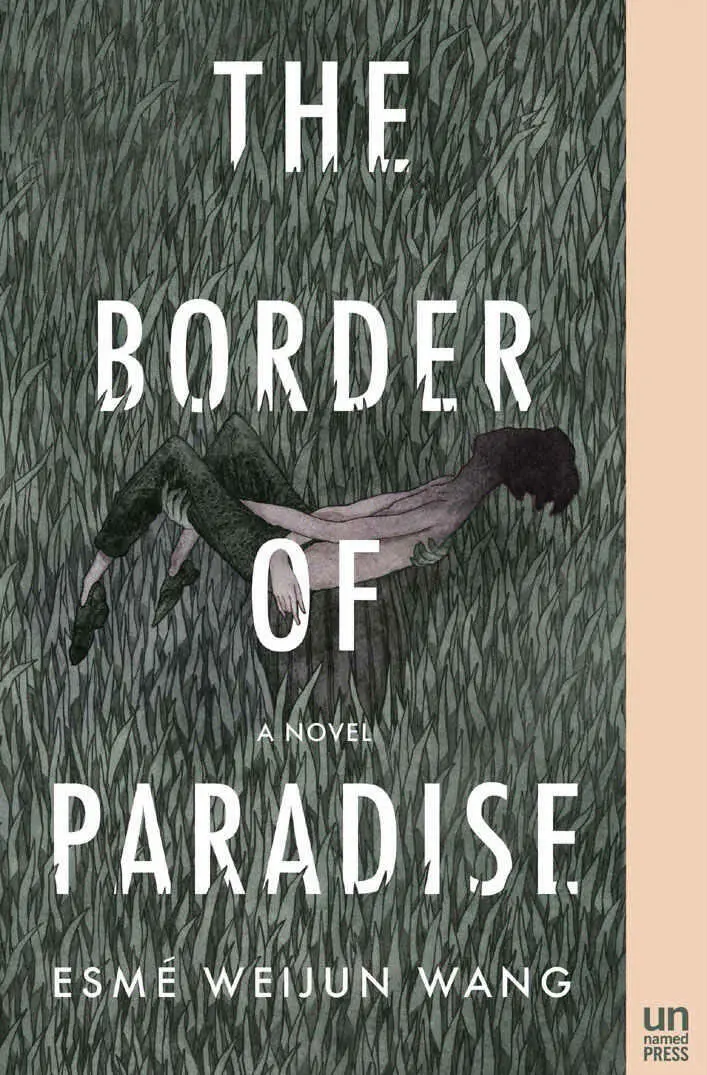
- Название:The Border of Paradise
- Автор:
- Издательство:The Unnamed Press
- Жанр:
- Год:2016
- ISBN:нет данных
- Рейтинг книги:3 / 5. Голосов: 1
-
Избранное:Добавить в избранное
- Отзывы:
-
Ваша оценка:
The Border of Paradise: краткое содержание, описание и аннотация
Предлагаем к чтению аннотацию, описание, краткое содержание или предисловие (зависит от того, что написал сам автор книги «The Border of Paradise»). Если вы не нашли необходимую информацию о книге — напишите в комментариях, мы постараемся отыскать её.
transports readers into the world of an iconoclastic midcentury family.
In booming postwar Brooklyn, the Nowak Piano Company is an American success story. There is just one problem: the Nowak’s only son, David. A handsome kid and shy like his mother, David struggles with neuroses. If not for his only friend, Marianne, David’s life would be intolerable. When David inherits the piano company at just 18 and Marianne breaks things off, David sells the company and travels around the world. In Taiwan, his life changes when he meets the daughter of a local madame — beautiful, sharp-tongued Daisy. Returning to the United States, the couple (and newborn son) buy an isolated country house in Northern California’s Polk Valley.
As David's mental health deteriorates, he has a brief affair with Marianne, producing a daughter. When Marianne appears at their doorstep, the couple's fateful decision to take the child as their own determines a tragic course of events for the entire family. Told from multiple perspectives,
culminates in heartrending fashion, as the young heirs to the Nowak fortune must confront their past and the tragic reality of their future.
The Border of Paradise — читать онлайн бесплатно полную книгу (весь текст) целиком
Ниже представлен текст книги, разбитый по страницам. Система сохранения места последней прочитанной страницы, позволяет с удобством читать онлайн бесплатно книгу «The Border of Paradise», без необходимости каждый раз заново искать на чём Вы остановились. Поставьте закладку, и сможете в любой момент перейти на страницу, на которой закончили чтение.
Интервал:
Закладка:
“You had me worried,” I say. And, embarrassed by the break in my voice, I add: “You and I, we need to set some rules, Gillian — we need to set some rules.”
“You,” she says calmly, “are not any sort of parental figure to me.” And she slips off her shoes, which forces me to look at her long white feet. She has painted her toenails pink with polish gotten, no doubt, from Ma’s bedroom, whereas I don’t dare enter that tomb. I do not recall seeing Gillian’s toenails painted prior to this moment, and how was I to know that she was even interested in this, this minor thing, this feminine superficiality of painting one’s toenails, if not for my pleasure? She begins to walk, slightly waddling, to the kitchen. The house is so empty with only us in it. She is too strong to be really waddling under the weight of the bag, although she must have been walking for hours to get from town to our home, and this bag can’t have been light. I realize that she must be waddling because the soles of her feet are blistered.
“And you got food, I see,” I say, following her into the kitchen.
“Someone had to do it.”
“You could have gotten lost.”
“I knew the route, shockingly enough, because I pay attention to things.”
“Still. Something could have happened to you. Muggers. Rapists. Murderers. You know this.”
“I knew the route,” she says, “better than you do, I’m sure of it. And I brought a knife.” The bag is on the floor now. She sits in her favorite kitchen chair and pulls the knife out of her dress pocket, waving it at me — the sight of it makes my stomach curdle — before placing it on the table. “But by golly, am I exhausted — be a darling and unpack the groceries for me.”
“You’re avoiding the subject.”
“So how was your morning,” she says.
“For example.”
“Please unpack the groceries.”
I hate this frivolity. Gillian has changed. Or perhaps she’s anguished, the sort of anguish that can’t look itself in the face. We’ve both cried since the death. I’d say that Gillian cried more hysterically than I did, and though it was no show, its abbreviated nature strikes me as bizarre; she walked around with swollen eyes for days, and then suddenly her grief was over before it had barely begun. She asked, “How are we going to get to town? How do we drive? Who’s going to gas up the Buick? How are we going to get food?” “Let’s just mourn, all right?” I replied, feeling lost. Again I reference last night’s fight. I’d accused her of horrible things, hurling accusations at her and that mutt. She’d bristled and screamed. We are both a mess. It’s true, though, that she’s gone to some trouble to get these groceries, which we did need. The refrigerator was empty save for an apple and a chunk of hardening cheddar; I think bitterly, momentarily, of all the food she gave to that bitch. I sit on the floor, the way that Ma used to after a day of shopping, and lift things out of the bag. We are in a strange limbo with regards to Ma’s death. Even I, the one who buried her, can’t believe that she’s underground. I know this because Gillian pointed it out last night, during our fight — the fight partially regarding the issue of practicalities, because I seem to have no interest in practicalities. I am sure that we are both in some form of denial, with Gillian’s denial being more severe than mine. She did kill her, after all, though I’d never say this gruesome fact aloud. I danced around it and her immature obsession with that damn mutt last night, even in my anger. I have no idea how this denial came to be; our mother was here, ever present, and then she was not here, and is completely gone. If I imagine David, he seems so far away as to only exist in myth, while Ma’s death is so fresh that it seems she’s only gone to Sacramento, and left us to our own devices for a second honeymoon, a sweet caress. If only I hadn’t tried to close her eyes! Even then, it seems that she is only momentarily absent. I cannot reconcile the face in my memory with the wet wound that tries to shove its way in.
“How are we going to get money?” Gillian had asked. “How are we supposed to live? Are we getting jobs, William? Do you want me to, hmm, work? Oldest profession in the book? Because I know it so well by now…”
“That’s not funny.”
“You have no sense of humor. I’d forgotten,” she’d said, turned cruel.
Where did these hard edges come from? From my soft sister, the one who played jaunty songs for her Daddy.
“We can’t mourn forever,” she’d said. “And we can’t be trapped in this house forever.”
I have no interest in practicalities because Ma will rise out of her shallow grave and come back into the house. She will come out of her tomb and tell us what we are to do, because I have never known what to do, and for whatever morbid reason my sister seems to be more concerned with issues such as driving the Buick and achieving financial security than she is with explosive tragedy. Even the word death seems inadequate and overly soft. I remove a bag of red peppers, which are expensive. There’s a soft, wrapped thing that smells like fish, and when I read the scrawl it is fish, a lukewarm rainbow trout.
I say, “You bought fish.”
“We always eat fish. What’s wrong with fish?” Gillian runs her fingers through her hair, picking at her scalp with her fingernails. She finds some clogged pore or piece of dried skin and examines it at the tip of her finger before flicking it away, her long arm flying.
“You don’t know how to cook fish.”
Brown potatoes — we can always do with potatoes — and eggs. She has selected a few stalks of broccoli that look good and fresh, with cut white ends.
“Rules,” I say again.
“Don’t leave the house?”
“Without me. I’m not trapping you anywhere; I’m simply asking that I accompany you if you want to go into town. I have the right to leave the house as much as you do.”
“And the property?”
“The property is large. I don’t think it’s safe anymore.”
“Not since the man came, you mean.”
“That’s what I mean, and because Ma is gone.”
She lifts one foot into her lap and begins to rub it. Her fingers move carefully around the sore spots. In her loose dress I can barely see the shape of her body beneath, but it doesn’t matter because I know it, and it belongs to us; it is our shared property. I can see the blisters on her soles. Tentatively she presses her finger into one of them, and then releases the bubble. This blister belongs to us as well.
Milk, cans of mandarin oranges (a special treat), a smallish bag of rice.
“No rules,” she says without tone. “I’ll just break them. I’ll live how I want.”
“And how do you want?” I do not append an endearment.
“I’m still figuring that out.”
“Oh, come on.”
“All right. I want you to move out of my room. My great hope is that, before long, it will look like nothing ever changed. I think that the expression on your face is more than enough to let me know how you feel about that, but I want my own space again, and no one is alive to govern where I lay my head.”
“That makes absolutely no sense. Everything,” I say, “is completely arranged in the room as you like it. All of it is yours, your things are everywhere — there is barely anything in there that’s mine—”
“It’s not my room. It’s our room, where I am your tongyangxi. Which has been made completely clear to me over the last three months.”
“And so you’ll sleep in what was my room, and live in yours?” As the words roll out I realize that this is a fatuous question. Of course she will not. What this really means is the end of her body’s relationship with mine, which feels like a violation and a broken promise, both. “What you’re saying is that you’re ending things?” The question is not a question, and then I say, “This is massively wrong. No, you can’t do this.”
Читать дальшеИнтервал:
Закладка:
Похожие книги на «The Border of Paradise»
Представляем Вашему вниманию похожие книги на «The Border of Paradise» списком для выбора. Мы отобрали схожую по названию и смыслу литературу в надежде предоставить читателям больше вариантов отыскать новые, интересные, ещё непрочитанные произведения.






Обсуждение, отзывы о книге «The Border of Paradise» и просто собственные мнения читателей. Оставьте ваши комментарии, напишите, что Вы думаете о произведении, его смысле или главных героях. Укажите что конкретно понравилось, а что нет, и почему Вы так считаете.