Esmé Wang - The Border of Paradise
Здесь есть возможность читать онлайн «Esmé Wang - The Border of Paradise» весь текст электронной книги совершенно бесплатно (целиком полную версию без сокращений). В некоторых случаях можно слушать аудио, скачать через торрент в формате fb2 и присутствует краткое содержание. Год выпуска: 2016, Издательство: The Unnamed Press, Жанр: Современная проза, на английском языке. Описание произведения, (предисловие) а так же отзывы посетителей доступны на портале библиотеки ЛибКат.
- Название:The Border of Paradise
- Автор:
- Издательство:The Unnamed Press
- Жанр:
- Год:2016
- ISBN:нет данных
- Рейтинг книги:3 / 5. Голосов: 1
-
Избранное:Добавить в избранное
- Отзывы:
-
Ваша оценка:
The Border of Paradise: краткое содержание, описание и аннотация
Предлагаем к чтению аннотацию, описание, краткое содержание или предисловие (зависит от того, что написал сам автор книги «The Border of Paradise»). Если вы не нашли необходимую информацию о книге — напишите в комментариях, мы постараемся отыскать её.
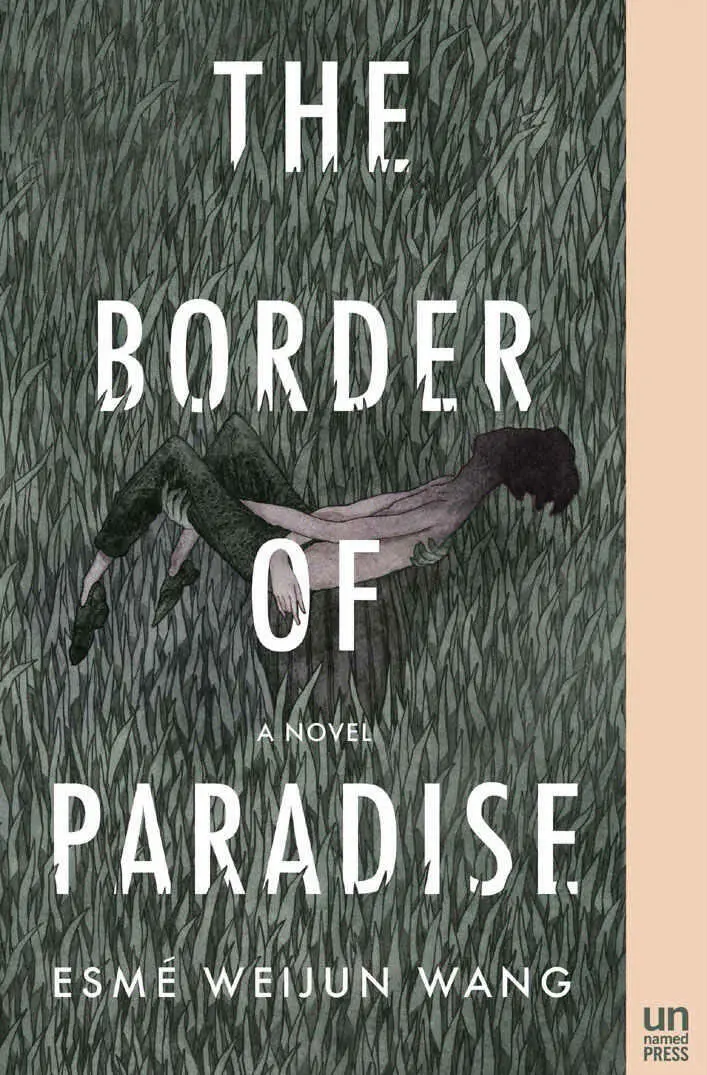
transports readers into the world of an iconoclastic midcentury family.
In booming postwar Brooklyn, the Nowak Piano Company is an American success story. There is just one problem: the Nowak’s only son, David. A handsome kid and shy like his mother, David struggles with neuroses. If not for his only friend, Marianne, David’s life would be intolerable. When David inherits the piano company at just 18 and Marianne breaks things off, David sells the company and travels around the world. In Taiwan, his life changes when he meets the daughter of a local madame — beautiful, sharp-tongued Daisy. Returning to the United States, the couple (and newborn son) buy an isolated country house in Northern California’s Polk Valley.
As David's mental health deteriorates, he has a brief affair with Marianne, producing a daughter. When Marianne appears at their doorstep, the couple's fateful decision to take the child as their own determines a tragic course of events for the entire family. Told from multiple perspectives,
culminates in heartrending fashion, as the young heirs to the Nowak fortune must confront their past and the tragic reality of their future.
The Border of Paradise — читать онлайн бесплатно полную книгу (весь текст) целиком
Ниже представлен текст книги, разбитый по страницам. Система сохранения места последней прочитанной страницы, позволяет с удобством читать онлайн бесплатно книгу «The Border of Paradise», без необходимости каждый раз заново искать на чём Вы остановились. Поставьте закладку, и сможете в любой момент перейти на страницу, на которой закончили чтение.
Интервал:
Закладка:
He would not go to school with other children. Daisy and I agreed on this together. Neither of us wanted him to be shunned or mocked for his otherworldly looks. And she wanted to keep him close; there was nothing more she needed than to be with him at all times, pulling him to her whenever he wandered within arm’s length, and lifting her eyes to observe him every few moments like clockwork. Twice she tentatively brought up the notion of a second child, for William’s sake, but I stood adamantly against this. I, the Catholic, felt guilty about but insisted on contraception, not wanting to feel the same eerie sense of alienation that I suffered with William, and I hated that sense for existing. Of course I did not hate him. I’m not a monster when it comes to my only boy. I know all too well from my own father-son relationship that such relationships are complicated, and I tried — oh, I tried! — not to let William feel unloved, unwanted. I hope I haven’t failed in this.
But about education. I spent a lot of time attempting to distill a concentration of essential books. There was the Bible, of which I preferred the King James for its stride. I wanted him to know Latin, too, and I considered acquiring a textbook, and then moving on to Julius Caesar’s Gallic Wars, and so forth. We would need a dictionary, of course, a good one. We could find a copy of the abridged Oxford English somewhere, or have it mailed to us. We already had Goodnight Moon. He was reading that on his own before he was two, sounding out the words based on a teaching style that I cobbled together, pulling together consonants and vowels, singing the alphabet, and drawing letters onto sheets of paper. Until William was six and Gillian was four, I didn’t begin to teach my children in earnest, but I had a list of books that I wanted to keep in the house for them: Physicians Desk Reference to Pharmaceutical Specialties and Biologicals, a world atlas, a few dictionaries in other languages, a field guide to North American birds. I made a short list, and those books are all in the shelves now, save for the King James that Ojciec inscribed for me, and which I keep here with me in my briefcase but will soon enough find its way back home, I imagine, when the police arrive. I trust that my children will be able to take the reins from here.

After a year of living in Polk Valley, our existence had become tightly circumscribed. We three went into town only to purchase groceries and dry goods, because staying home was easier than trying to appear normal when I was ailing; and Daisy pressured me, too, stating that she felt stared at by what she referred to as “strange people,” and I was too tired to explain to her that we, and not they, were the strange ones. We no longer went to Mass, although this was less a consequence of Daisy’s feelings and more due to my discomfort with attending church. After all, we’d had a civil, and thus secular, wedding ceremony, as Matka had suspected, and I did want to raise William to be a good Catholic, but how would I do it without Daisy’s help? At times I heard her chanting, singsong, to William in her language. I told her to stop, and we fought, and she cried, and I screamed at her that I wasn’t raising a foreign child in my own home; I reeled with how out of control my life had become. For a few weeks I took William to Mass alone, insisting that Daisy remain at home, but he seemed to understand his parents’ religious conflict. He stopped paying attention. He refused to stand and sit when he was supposed to, and he whined loudly for his mother, the embarrassment nearly killing me. I stopped taking him, and then I stopped going, too. It all felt pointless, too pointless.
It was this limited life that brought back the ghost of Marianne Orlich, never quite forgotten, who now possessed in my mind even more of the holy attributes that I’d once put upon her. I sat in the kitchen with William in my lap, sifting through flashcards while he placidly absorbed them, and he repeated things with his dull, thick tongue. I worried about his accent; he did have one. (And I tried to shake it out of him, but I’ll go to the grave with the knowledge that my boy, my own flesh and blood, sounds off-key.) As I absentmindedly turned the cards that my wife had so diligently made, I watched said wife as she stood at the counter and sliced potatoes. She was humming to herself a song that I didn’t recognize. With Marianne in my head I saw only the parts of Daisy that were decidedly not white. She was small, and her black hair was in a thick braid down her back, and with her left foot crossed over her right one I wondered why her feet, which I had once been so enamored by, were so tiny, and could think only of things like barbaric foot-binding rituals; when had such things ended, anyway? Her questions about Mass made me cringe. So did her blunt disbelief with regard to transubstantiation — these were all things that had hurried along our domestic conflicts. I wondered why I’d set such traps for myself. I was living with someone whom I loved, but in so many ways she was a stranger to me, and with our handicapped communication I felt lonelier than ever.
So to the painfully obvious question of why I had married this woman in the first place, I would say that I adored her sharp and almost jagged elbows; I loved how inappropriate it felt to remove her saddle shoes, which she still let me do as part of sex in our shoeless home, and I always unlaced them to reveal her white socks and what I then considered to be her marvelously shaped feet. I loved how she was mouthy when she got drunk and never pretended to be more decorous than she really was, but would occasionally slip into what she called sa jiao, a sappy, sloppy girlishness that made my nerves squirm with delight. She lounged in my bed under the mosquito tent, dressed in her unbuttoned silk blouses and underwear. She would sprawl out on my small bed, stroking her own hipbone with the back of her fingers as one would a cat, staring at the ceiling. At times I thought my heart would take a running leap out of my chest; at times all I wanted was to look at her forever. Why else do people fall in love? What sense does love ever make for itself, especially young love, which is so desperate to be satisfied?
“Nowak, let me tell you,” the lieutenant had said. “You pay , you play, but you never let them stay .”
When I had asked her to marry me, she laughed. She traced her finger in a thin oval on my bare and tanning side. “America?” she said. Her breasts were paler than the rest of her torso. Her upper arms were the darkest part of her. She had delicate hairs that sprouted from her areolae. I loved to bite her brown nipples till she moaned.
“Yes,” I said. “You can have anything you want.”
“Whatever I all want I have here. Why don’t you stay here? Stay in Taiwan, be here, be happy with me.”
“I can’t do that. I don’t speak Chinese. At least you know English.”
“At here everybody know me, I have power.”
“In America,” I said, kissing her forehead, “everyone will know you. I promise. I promise, I promise, I promise. My lamb. I promise you, you will have a good life with me.”
“I have a good life here.”
“I want to be with you. And so you must come with me.”
Nothing. She rolled onto her belly, the curvature of her back smooth as driftwood. “I’ll never leave,” she said. The ring, pure gold, was still in my hand.
We spent our days together in my apartment or at the Golden Lotus, and there was no in-between, which I believe led to a rapid increase in the sexualization of our relationship. After I asked her to marry me and she said no, I searched for her in the ordinary places, but couldn’t find her for days, and I was afraid that I’d scared her off with my proposal. And I feared that the old insanity would come around again as I wandered the filthy streets of Kaohsiung with bicycles swirling around me, my armpits sweating, being followed by dogs with their ribs showing and their shrill barks sounding; I waited for the abyss of fear to open in my belly, pulling everything I’d managed to make of a life into that deep hole, but I thought I could scare it off with distraction. I spent several nights at the Golden Lotus so that I could drink — alone, chastely — with Mei-Ling, the first girl, and I asked her if she knew where Jia-Hui was. She shook her head. I reached into my wallet and pulled out three nights’ worth of yuan, which was nothing to me, but which I knew would be everything to her.
Читать дальшеИнтервал:
Закладка:
Похожие книги на «The Border of Paradise»
Представляем Вашему вниманию похожие книги на «The Border of Paradise» списком для выбора. Мы отобрали схожую по названию и смыслу литературу в надежде предоставить читателям больше вариантов отыскать новые, интересные, ещё непрочитанные произведения.









Обсуждение, отзывы о книге «The Border of Paradise» и просто собственные мнения читателей. Оставьте ваши комментарии, напишите, что Вы думаете о произведении, его смысле или главных героях. Укажите что конкретно понравилось, а что нет, и почему Вы так считаете.