Hannah Pittard - Listen to Me
Здесь есть возможность читать онлайн «Hannah Pittard - Listen to Me» весь текст электронной книги совершенно бесплатно (целиком полную версию без сокращений). В некоторых случаях можно слушать аудио, скачать через торрент в формате fb2 и присутствует краткое содержание. Год выпуска: 2016, Издательство: Houghton Mifflin Harcourt, Жанр: Современная проза, Триллер, на английском языке. Описание произведения, (предисловие) а так же отзывы посетителей доступны на портале библиотеки ЛибКат.
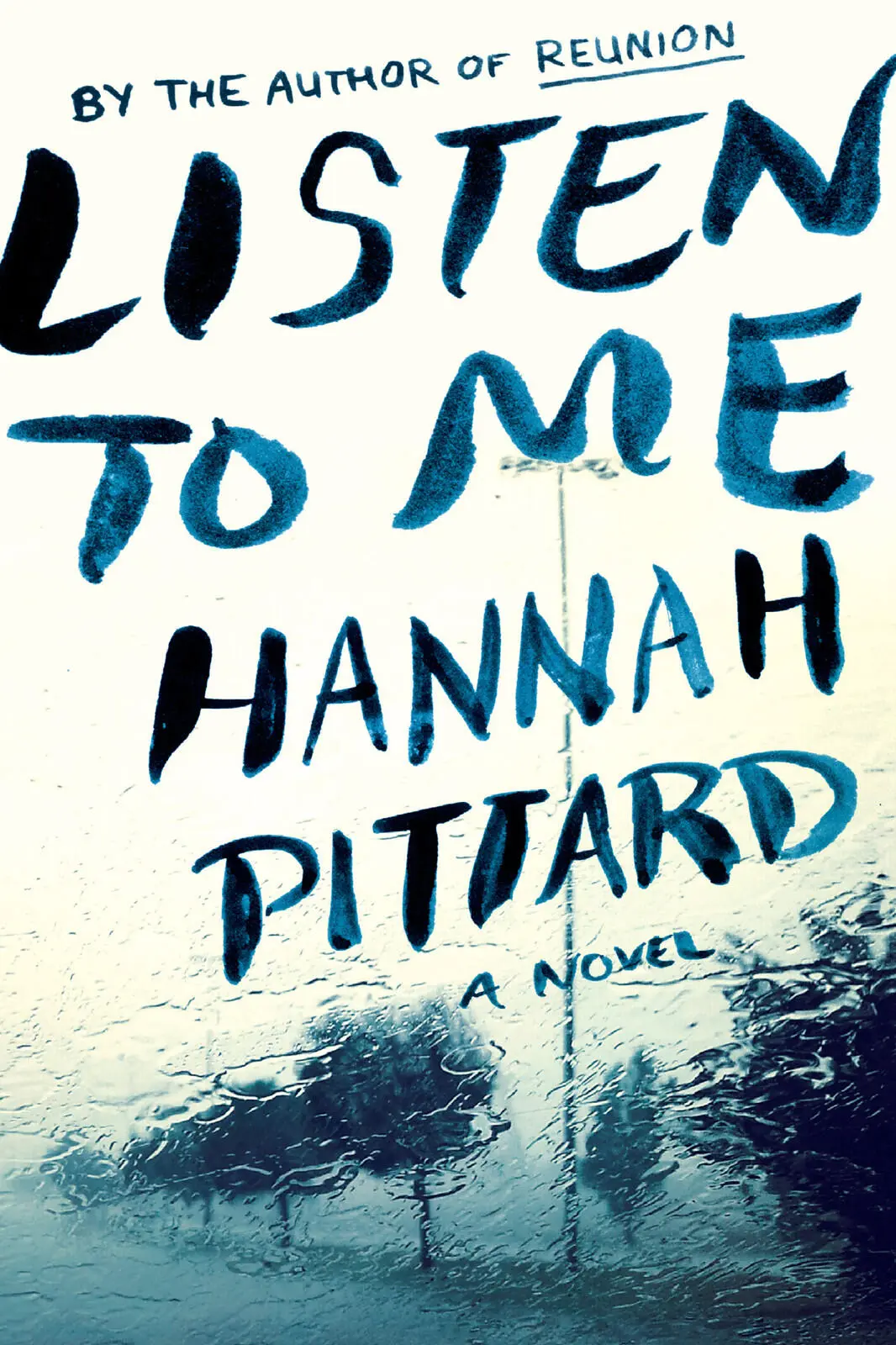
- Название:Listen to Me
- Автор:
- Издательство:Houghton Mifflin Harcourt
- Жанр:
- Год:2016
- ISBN:нет данных
- Рейтинг книги:5 / 5. Голосов: 1
-
Избранное:Добавить в избранное
- Отзывы:
-
Ваша оценка:
Listen to Me: краткое содержание, описание и аннотация
Предлагаем к чтению аннотацию, описание, краткое содержание или предисловие (зависит от того, что написал сам автор книги «Listen to Me»). Если вы не нашли необходимую информацию о книге — напишите в комментариях, мы постараемся отыскать её.
Listen to Me — читать онлайн бесплатно полную книгу (весь текст) целиком
Ниже представлен текст книги, разбитый по страницам. Система сохранения места последней прочитанной страницы, позволяет с удобством читать онлайн бесплатно книгу «Listen to Me», без необходимости каждый раз заново искать на чём Вы остановились. Поставьте закладку, и сможете в любой момент перейти на страницу, на которой закончили чтение.
Интервал:
Закладка:
Mark snorted again, and Maggie felt suddenly sorry for him. This man, this husband of hers, was completely unaware of the complexities of the human brain. She felt sorry for all men, really — for all those penises just getting in the way of real insight. They lacked imagination; they believed only what they already knew.
Mark picked up his speed, though the road was no less narrow or unfamiliar than before. Maggie grabbed the inside handle of the passenger-side door. She did it for effect, but — if Mark even noticed — the gesture had an opposite outcome than the one she desired. He sped up.
“You’re going too fast,” she said. She gripped the door more tightly.
As they rounded the next turn, an inside corner that hugged the mountain’s increasing height, Mark drifted across the yellow line.
“You’re not paying attention,” she said.
“I’m fine.”
“Just slow down.”
“There’s no one else around.” He picked up his speed even more, and a branch overhead, thick with wet green leaves, fell onto the hood of the car, then whipped against the windshield. Their vision was momentarily obscured.
Maggie put a hand on the dashboard as if to steady the entire car.
Mark hit the brakes and the branch flew away.
He pressed the gas again, now clutching at the steering wheel and leaning more forward in his seat.
As they rounded an outside corner, Maggie looked out and down, one hand still on the dashboard, the other holding on to the door. To her right, the edge of the mountain seemed to plunge itself into a steep cosmic darkness. She closed her eyes.
At Foster Beach last winter, a woman — alone, late at night — had driven her sedan off the seawall, plunging ten feet before cracking the ice and sinking into the subzero water. In the car, when the divers, many hours later, were able to salvage what was left, they found the woman’s body of course. But in the trunk they also discovered two Mason jars, each filled with the fetus of a baby and a single plastic rose. Maggie had tried to imagine the life of the person, the woman, who might have placed her own babies in those Mason jars before driving off the seawall. What desperation that woman must have felt. What unmatched and severe loneliness and isolation.
“Please,” Maggie said. She touched Mark’s arm. “It’s not safe. Just slow down.”
“True fact,” he said. There was something diabolic to the way his right cheek was positioned on his face. “Did you know that when the weatherman says there’s a twenty percent chance of rain, he doesn’t mean there’s an eighty percent chance it won’t? He means twenty percent of a specified region will absolutely feel rainfall. Did you know that? There’s no chance to it at all except which area it will be.”
Maggie wanted to slap him. If he hadn’t been driving, it’s possible she might very well have done it. He opened his mouth to say more, but just as he did — just as he licked his lips, took a breath in, and opened his mouth — a bright light appeared suddenly behind them.
“Fuck,” Mark said. He flipped the rearview mirror so the light was out of his eyes. “Where the fuck did that come from?”
Maggie turned in her seat. Behind them — barreling toward them at great speed — was a large truck. There was a row of lights above the windshield, another on each of the side-view mirrors, and two more closer together just above the bumper. It looked like the face of a large black spider rapidly encroaching. Back on the highway, Maggie would have paid money for the camaraderie of another car. But here, where they were, for all intents and purposes essentially lost, the last thing she wanted was company.
“Who does that?” Maggie said. “Why are they so close to us?”
Mark looked into the rearview, then raised his hand to shield his eyes or maybe to get a better view. “Are those hunting lights?”
“Stunning deer,” she said. “It makes me sick.”
“Do they want to go around?” he said. “I can’t tell. I can’t just pull over.” He was still shielding his eyes from the light.
The truck swerved into the other lane, as if to pass, but then swerved back behind them.
“Are they drunk?” Mark asked.
“This doesn’t feel right,” she said. “Did you just speed up?” She turned forward in her seat and again clutched at the door.
They drove on, the truck no fewer than twenty feet behind them.
“I don’t like this,” she said.
“He’s not giving me a choice,” he said. “He’s right on my ass.”
There was no place to turn, no strip of grass to pull onto. There was simply the mountain wall to the left, the mountain edge to the right and, between, the meager two-lane blacktop.
The truck flashed its lights.
“If I slow down,” Mark said, “he’ll ram right into us.”
Maggie bit at her lips. What kind of people would be out on a night like this, at an hour like this, after a storm like the one they’d driven through? What kind of people — other than Mark and Maggie, who were stranded, displaced, without other options — would voluntarily be out on the road rather than home tucked in bed? There was only one answer to that question: people who were up to no good. Perhaps it was one of their bumper stickers — idiotic, liberal bumper stickers: PRO-CHOICE, NEUTER/SPAY, YES WE CAN. In a place like this, their car practically shouted, I am other. I am other. I am other. She could have kicked herself for applying those stickers to begin with. Why did a person need to advertise her views every single place she went?
“Oh god. Oh god,” she said.
From behind, another brighter beam now appeared, not from an additional car but from atop the row of lights above the truck’s windshield — a sort of high-intensity spotlight.
“Mark!” said Maggie. She covered her eyes. The light was blinding. “Can you see?”
“How much farther?” said Mark. “Do you think we’re close?”
Maggie hunched over in her seat in order to block as much of the glare as possible. There were black circles in her vision, as when a child she once ventured a forbidden glance at the sun during an eclipse. She cupped a hand over her phone and looked down. The screen was darker now. It wasn’t just her vision. The battery was dying.
“If we’re where I think we are, then it should be—” The screen darkened more; she could barely see the map. She sat up slightly and looked out the window. Like a gift, like a tiny little present forgotten during a Christmas celebration but remembered as the tree is being dismantled and the ornaments put away, there was a sign on Maggie’s side of the road. She had looked up and out at just the right moment, and the headlights of their car — or, who knows? Maybe it was the truck’s searchlight behind them — had shone brightly and squarely upon it.
“There!” Maggie said. She pointed and her finger hit the window. “I saw it,” she said. “I saw the sign. Holidays Inn. It’s just ahead.” She was dizzy with relief, giddy with excitement. She’d seen the sign. She’d seen it!
The truck behind them revved its engine. Maggie, her heartbeat racing, her eyes strained small and tight, turned in her seat to look, but the headlights veered suddenly to the right. She watched as the lights moved eastward and down, down, down into the woodland until its beams were too small to register or the trees too dense to reveal.
It was quiet and dark, and they were again alone.
Mark massaged his eyes. “Jesus,” he said. “I thought I’d go blind. Which way now?”
“Was there even a road back there?” said Maggie, still staring into the blackness behind them. “I didn’t see a road back there.”
“Who cares?” said Mark. “Just tell me where to go now.”
Читать дальшеИнтервал:
Закладка:
Похожие книги на «Listen to Me»
Представляем Вашему вниманию похожие книги на «Listen to Me» списком для выбора. Мы отобрали схожую по названию и смыслу литературу в надежде предоставить читателям больше вариантов отыскать новые, интересные, ещё непрочитанные произведения.





Обсуждение, отзывы о книге «Listen to Me» и просто собственные мнения читателей. Оставьте ваши комментарии, напишите, что Вы думаете о произведении, его смысле или главных героях. Укажите что конкретно понравилось, а что нет, и почему Вы так считаете.