Hannah Pittard - Listen to Me
Здесь есть возможность читать онлайн «Hannah Pittard - Listen to Me» весь текст электронной книги совершенно бесплатно (целиком полную версию без сокращений). В некоторых случаях можно слушать аудио, скачать через торрент в формате fb2 и присутствует краткое содержание. Год выпуска: 2016, Издательство: Houghton Mifflin Harcourt, Жанр: Современная проза, Триллер, на английском языке. Описание произведения, (предисловие) а так же отзывы посетителей доступны на портале библиотеки ЛибКат.
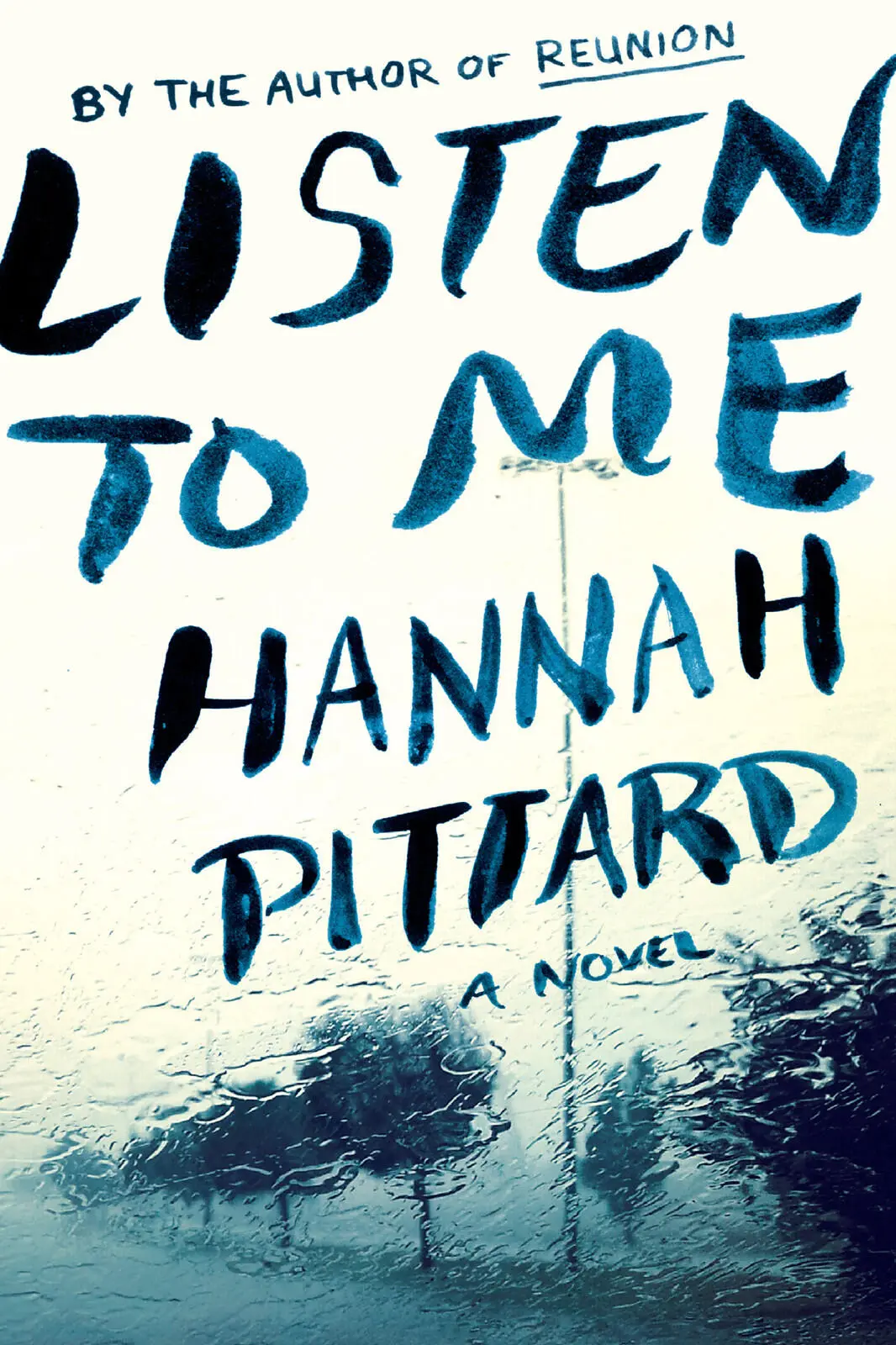
- Название:Listen to Me
- Автор:
- Издательство:Houghton Mifflin Harcourt
- Жанр:
- Год:2016
- ISBN:нет данных
- Рейтинг книги:5 / 5. Голосов: 1
-
Избранное:Добавить в избранное
- Отзывы:
-
Ваша оценка:
Listen to Me: краткое содержание, описание и аннотация
Предлагаем к чтению аннотацию, описание, краткое содержание или предисловие (зависит от того, что написал сам автор книги «Listen to Me»). Если вы не нашли необходимую информацию о книге — напишите в комментариях, мы постараемся отыскать её.
Listen to Me — читать онлайн бесплатно полную книгу (весь текст) целиком
Ниже представлен текст книги, разбитый по страницам. Система сохранения места последней прочитанной страницы, позволяет с удобством читать онлайн бесплатно книгу «Listen to Me», без необходимости каждый раз заново искать на чём Вы остановились. Поставьте закладку, и сможете в любой момент перейти на страницу, на которой закончили чтение.
Интервал:
Закладка:
“Are you paying attention?” she said again. “Do you want me to drive?”
As if Maggie would trade places with him.
As if she’d get out of the car and shuffle her way around to the driver’s side at this time of night.
As if.
“I’m waiting for you to direct me,” he said.
Maggie didn’t say anything. She was looking at her lap now, looking at her tiny glowing screen. He cracked his knuckles. All these people all the time shining a light at their faces, voluntarily giving into the machine, voluntarily zapping their own brain cells. He could practically see his wife getting dumber. Right now. At this exact second, he could picture the brain cells being zapped by the ambient blue light. Jesus, and she hadn’t even been raised on the Internet. She’d been raised on books, on paper and pens just as he had. But she’d succumbed. Somewhere along the line — before the mugging, after the mugging, did it matter? — she’d succumbed to the media, to the devices, to the wires and webs and whole wide world of Internet make-believe.
It wasn’t just his students. It was his wife, too. It was everything and everyone. The world was ruled by technology; disturbed by nature.
What happened to real maps? That’s what Mark wanted to know. What happened to good old-fashioned red and orange and blue and yellow maps that you could hold in your hands, rub between your thumb and index finger — maps that could be folded and jostled and looked at whenever you goddamned pleased and not just when the gods of cell service deemed it appropriate or convenient?
He closed his eyes. The little man punched the air as hard as he could — once, twice, three times — then retreated into the shaded obscurity of his brain.
“Right or left?” Mark said.
“I think,” Maggie said, then stopped short. “I mean, I think right. Take a right. It’s what the map says. Unless there’s another road a little farther.”
“Farther where, Maggie? There’s a forest in front of us.”
“It’s just…” she said. He was making her nervous, which meant it would take her twice as long before she would make sense. “It’s just the map doesn’t indicate a turn — one way or the other.”
“What do you mean?”
“I mean this dead end doesn’t exist.”
“Of course it exists. I’m looking at it.”
“But on the map,” she said. “It doesn’t exist.” She gestured to her phone.
Okay. Okay, so here. This. This right here. This— this was what Mark was talking about. Right here. Right now. Mark and Maggie were in a car on a road that had clearly come to an end. He was looking at it. He could see with his own two eyes that the dead end existed. But Maggie was looking at a phone. She was telling him that what he could see — what they could both technically see because neither of them was blind — didn’t exist because it wasn’t on her phone. What it was, at the end of the day — what it really, possibly was — was that Maggie was killing him.
He took a deep breath.
“From where we are now, is the hotel north, south, east, what?”
“Take a right,” she said.
“How do you know? If this turn doesn’t exist, then how do you know?”
“Because the hotel is to the right of here.”
He held his hand out. “Show me,” he said.
She clutched the phone to her chest.
“Show me.”
“No.”
“Just show me where we are.”
“No.”
“Are you fucking with me, Maggie? Are you goading me? Because it’s working. It really is. Just show me where we are.”
She unclenched the phone but didn’t hand it to him. Instead, she cradled it like a miniature baby in her palm. “We don’t show up on the phone anymore,” she said at last. “So I’m having to wing it.”
“Wing it?”
These were the facts, as Mark saw them: It was past two in the morning. They were on some microscopic back road in West Virginia. Mark could barely see shit. The wipers weren’t working worth a fuck. Mangled leaves were glommed up and down the sides of both blades. The windshield would be scratched to hell by morning. And Maggie, dry and safe and cozy, was over there in the passenger seat with her personal bullshit device winging it?
“This is it,” she said. “This is the turn. Take a right. I’m sure.”
Fine, he thought. Fuck it.
Mark put the car in gear and, the headlights their only guide, took the turn.
What, after all, was the worst that could happen?
18
The rain stopped — Maggie was thankful for that at least — but the front windshield was starting to fog up, and so now Mark rolled down the driver’s-side window. They were going maybe twenty miles an hour.
“What are you doing?” said Maggie.
Gerome lifted his head, sniffed, then went back to sleep. He was too tired to bother with anything anymore. If only Maggie could feel fatigue like that, all her problems would be solved.
“I’m getting some fresh air. It’s too close in here.”
When Mark proposed, some eight years earlier, they’d been lying together on the couch in their first apartment in Georgetown. Mark had just finished his dissertation; Maggie would earn her DVM in the spring. It was winter and dark out. At midnight, when the snow started, they opened all the windows and climbed under a blanket in the living room. It was so cold they could see their breath, but they wanted to watch the snow fall and they wanted to inhale that crisp snowy air and the smells of the wood fires from the row houses down the way. Mark’s manner was twitchy and, after only a few minutes, he said it was too close where they were huddled together under the blanket. He’d gotten off the couch abruptly and disappeared into the bedroom. For a moment Maggie feared he’d lost interest in her. When he reappeared several minutes later, a small velvet box in his hands, she understood. Her fears disappeared completely. She wondered now if he ever thought about that night or if it was a memory she alone kept alive.
“Why does it matter that I’ve got a window down?” said Mark.
Maggie stared out the front windshield.
“Gerome isn’t bothered. So what’s your problem?”
“Never mind,” said Maggie. “I don’t even care.” She knew — really, truly she did — that it was silly to be scared of an open window. If they were vulnerable, they were vulnerable. And if they were safe, they were safe. One window up or down wouldn’t change anything.
“I know what it is,” said Mark. He was cranky, a sign of exhaustion. “Yep. I know what it is.” He knocked on the steering wheel with an open hand as though he’d come to some unforeseen and therefore grand realization. Maggie sighed.
“It’s nothing,” she said. “I’m tired. That’s all. It’s humid with the window down. But I don’t care. Really.”
“You know what your problem is?” Mark said.
To be asleep, to be blissfully lifted away from this moment, this night, that’s all Maggie wanted.
“Your problem is that you think the boogeyman is lurking,” he said.
She rubbed at her neck, at the place where that hideous bruise had been. She closed her eyes, and there was the coed, prostrate, her chin angled to that ill-fated degree, her wet hair pressed against the base of the toilet. Was it wet from the struggle? Or had she been showering when the man found her? At so many times of the day, we expose ourselves to chance.
“And do you know what your problem is?” she asked at last.
“My problem?” Mark snorted. “I’d love to know. Yes. Fire away. Let’s hear it.”
“You pretend it doesn’t exist.”
“That what doesn’t exist?”
“Evil.”
Читать дальшеИнтервал:
Закладка:
Похожие книги на «Listen to Me»
Представляем Вашему вниманию похожие книги на «Listen to Me» списком для выбора. Мы отобрали схожую по названию и смыслу литературу в надежде предоставить читателям больше вариантов отыскать новые, интересные, ещё непрочитанные произведения.









Обсуждение, отзывы о книге «Listen to Me» и просто собственные мнения читателей. Оставьте ваши комментарии, напишите, что Вы думаете о произведении, его смысле или главных героях. Укажите что конкретно понравилось, а что нет, и почему Вы так считаете.