Hannah Pittard - Listen to Me
Здесь есть возможность читать онлайн «Hannah Pittard - Listen to Me» весь текст электронной книги совершенно бесплатно (целиком полную версию без сокращений). В некоторых случаях можно слушать аудио, скачать через торрент в формате fb2 и присутствует краткое содержание. Год выпуска: 2016, Издательство: Houghton Mifflin Harcourt, Жанр: Современная проза, Триллер, на английском языке. Описание произведения, (предисловие) а так же отзывы посетителей доступны на портале библиотеки ЛибКат.
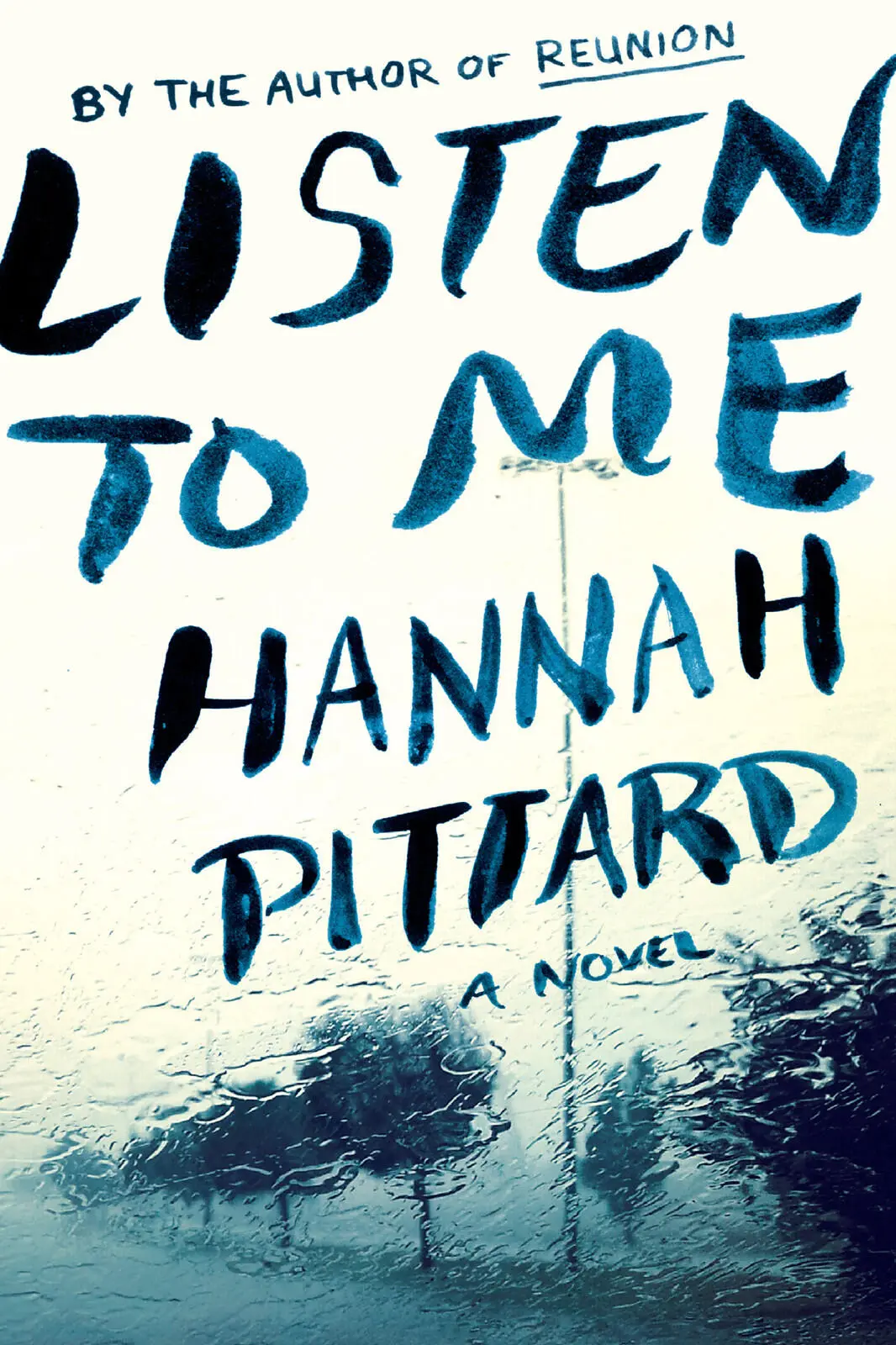
- Название:Listen to Me
- Автор:
- Издательство:Houghton Mifflin Harcourt
- Жанр:
- Год:2016
- ISBN:нет данных
- Рейтинг книги:5 / 5. Голосов: 1
-
Избранное:Добавить в избранное
- Отзывы:
-
Ваша оценка:
Listen to Me: краткое содержание, описание и аннотация
Предлагаем к чтению аннотацию, описание, краткое содержание или предисловие (зависит от того, что написал сам автор книги «Listen to Me»). Если вы не нашли необходимую информацию о книге — напишите в комментариях, мы постараемся отыскать её.
Listen to Me — читать онлайн бесплатно полную книгу (весь текст) целиком
Ниже представлен текст книги, разбитый по страницам. Система сохранения места последней прочитанной страницы, позволяет с удобством читать онлайн бесплатно книгу «Listen to Me», без необходимости каждый раз заново искать на чём Вы остановились. Поставьте закладку, и сможете в любой момент перейти на страницу, на которой закончили чтение.
Интервал:
Закладка:
“In ten more years, towns like this won’t exist,” Mark said. “Did you see all those For Sale signs? Everything is empty. It’s just not cost-effective to live in the middle of nowhere. It’s irresponsible.”
“Your parents live in the middle of nowhere,” she said.
“It’s different. They live off the grid.”
“No,” she said. “They don’t. They aren’t farmers. They’re retirees. They couldn’t live without access to the city.”
“My father still teaches.”
“He’s emeritus. He teaches once a year,” she said. Then, after a beat: “When he feels like it.”
Mark didn’t understand why she was being so aggressive, perhaps because he’d been finicky about the coffee. “You love my parents,” he said.
“I do love your parents,” she said. “I love them more than my own. I don’t know what I’d do without them in my life.”
Other wives made similar avowals to their husbands and they didn’t mean a single word. But something Mark loved about Maggie — something he was genuinely thankful for — was that she did love his parents. And they loved her. They’d taken her in so keenly, so dearly. Maggie had a way of bringing out the best in Robert and Gwen. Around her, their eccentricities fell away. His mother especially seemed to understand, without ever being explicitly told, that Maggie’s childhood had been — to put it kindly — subpar. Maggie was the first girl with whom his mother hadn’t tried to compete. Instead, Gwen — like Mark, like Robert — had fallen quite quickly in love with Maggie.
“I only meant,” he said, “that if they wanted, they could live without access to the city. But they don’t want to.”
Maggie nodded. “I know,” she said. “I’m sorry. I know exactly what you meant. I’m being snippy. My mind is somewhere else.”
Mark had a great affinity for Maggie’s mind. He’d fallen first, yes, for her looks — that goofy gap between her teeth hidden always just behind her plump upper lip. But he’d been seduced ultimately by her brain — its quirks, its ambitions. There were nights still when he would wake with a start, fearing the evening on the riverboat had been a dream, fearing he’d never met her. Lately, though, he was frightened that her mind might be morphing. He wanted desperately to keep it safe and steady.
“Where is it now?” he said. “Your mind? What are you thinking?”
“Are you making fun?”
“Not at all,” he said. “Tell me.”
She massaged the steering wheel with both hands. After a minute, she said, “Do you think you willfully see the worst in people?”
“How do you mean? I don’t understand.”
“Typically speaking, do you think you’ve been pessimistic or optimistic?”
“Optimistic,” he said. “Where’s this coming from?”
“Typically speaking,” she said, “do you think you’ve been even-tempered or are you prone to moodiness?”
“Moodiness?” he said. “Is this part of your test?”
“Strong changes of mood,” she said. “Like with the coffee.”
“I suppose…” he said. He searched for a real answer. He didn’t want her to retreat, but he also didn’t want to be tricked into taking some adulterated version of a test he had no faith in and whose results — accurate or otherwise — proved nothing. “I suppose you were feeling snippy just now and I was feeling moody. I think we can safely blame the weather and the drive for both.”
Maggie was right — what she was suggesting but hadn’t come directly out and said — Mark did find occasional pleasure in predicting life’s disappointments, but she was wrong to suspect him of seeing the worst in people. He saw the best. He did! It was why he taught, why he was a teacher in the first place. He believed in humanity, in the generosity of the human spirit, in the individual: My heart leaps up! It was the Internet that had gotten in the way, eliminating face-to-face interaction, obviating the need, the desire, the occasion to see the whites of another’s eyes. Strip it from them and they’d all go back to normal. It, normalcy, was still attainable. Real childhood could still be salvaged: The Child is father of the Man! Maybe not for the ones who had already been exposed, but they could be treated. Like for a virus. They could be weaned slowly off it. The Internet was a teat, a drug. Take it away — cut those thirty billion watts of electricity — and they’d get used to it. They’d become human again: Bound each to each by natural piety. He was sure of it. Elizabeth had once called him a breathtaking teacher.
To their right, they were now passing a single-story structure with a sign overhead: PINEY CAMP HOTEL. There was grass growing up its sides, but there were a few cars parked in front. He thought again of Elizabeth. She could have made a place like Piney Camp fun; would have called it an adventure, maybe even a breathtaking one. So I’ve been thinking about sex, she’d written. Without too much effort, he could picture the kind of life they might have had together if he’d been younger, single, if she’d really been an option: road trips for the sake of it to towns they’d never heard of. He could practically hear her saying, “It has a bed, doesn’t it? Is there anything more we need?”
Mark squeezed his temples. He needed to snap out of it.
Part of it — You know what? Yes, though he’d never thought of it this way before: part of what made Maggie’s intense new relationship with fear so intolerable was that it felt like a comment about him. That switchblade, those cans of mace, that outrageous application for a concealed carry permit — it all felt like maybe Maggie didn’t think he could protect her if and when she needed protection. Sure, he’d not been with her in the alley, but if he had been, he could have done something. He could have pushed the guy down or stepped in front of her and told her to run. He could have done any number of things. It wasn’t his fault he wasn’t there. Just like it wasn’t his fault that the college girl was dead. It was coincidence they lived near her at all; coincidence that both women at the hands of different men had been hit in the neck with the heel of a gun. But there was something about Maggie’s newfound paranoia, about her determination that she was suddenly more susceptible to another attack than someone else, that made Mark feel like less of a man.
Yes: less of a man. That right there was the problem. It was devastating.
9
The rain picked up. The sky turned dark and slick. If there was a moon, they couldn’t see it. The streetlamps on the left side of the road were working. On the right side — eastbound — they weren’t. Gerome was snoring aggressively in the backseat. After a while, Mark leaned his head against the passenger window.
“I’m just resting my eyes,” he said.
Maggie turned down the radio.
“No, no,” he said, his eyes already closed. “I promise not to fall asleep.”
“Don’t worry about it,” Maggie said. “Rest.”
“Just my eyes,” he said. “I promise not to sleep.”
He was out in five minutes. Maggie turned the radio off altogether. She liked the sound of the rain, the steady thunk of the wipers. She didn’t necessarily like driving in weather like this, but at the end of the day, she didn’t mind it. That’s just how she was. And if Mark was tired, she was happy to let him sleep. He’d been working nonstop all semester. This was his break. It was time for him to rest up, to get his energy back so he could write.
The thing about Maggie: she would have made a good mom. People were always saying so. Her patients’ owners especially couldn’t believe she didn’t have children. “But the way you are with animals…” It was a constant refrain.
Читать дальшеИнтервал:
Закладка:
Похожие книги на «Listen to Me»
Представляем Вашему вниманию похожие книги на «Listen to Me» списком для выбора. Мы отобрали схожую по названию и смыслу литературу в надежде предоставить читателям больше вариантов отыскать новые, интересные, ещё непрочитанные произведения.











Обсуждение, отзывы о книге «Listen to Me» и просто собственные мнения читателей. Оставьте ваши комментарии, напишите, что Вы думаете о произведении, его смысле или главных героях. Укажите что конкретно понравилось, а что нет, и почему Вы так считаете.