Hannah Pittard - Listen to Me
Здесь есть возможность читать онлайн «Hannah Pittard - Listen to Me» весь текст электронной книги совершенно бесплатно (целиком полную версию без сокращений). В некоторых случаях можно слушать аудио, скачать через торрент в формате fb2 и присутствует краткое содержание. Год выпуска: 2016, Издательство: Houghton Mifflin Harcourt, Жанр: Современная проза, Триллер, на английском языке. Описание произведения, (предисловие) а так же отзывы посетителей доступны на портале библиотеки ЛибКат.
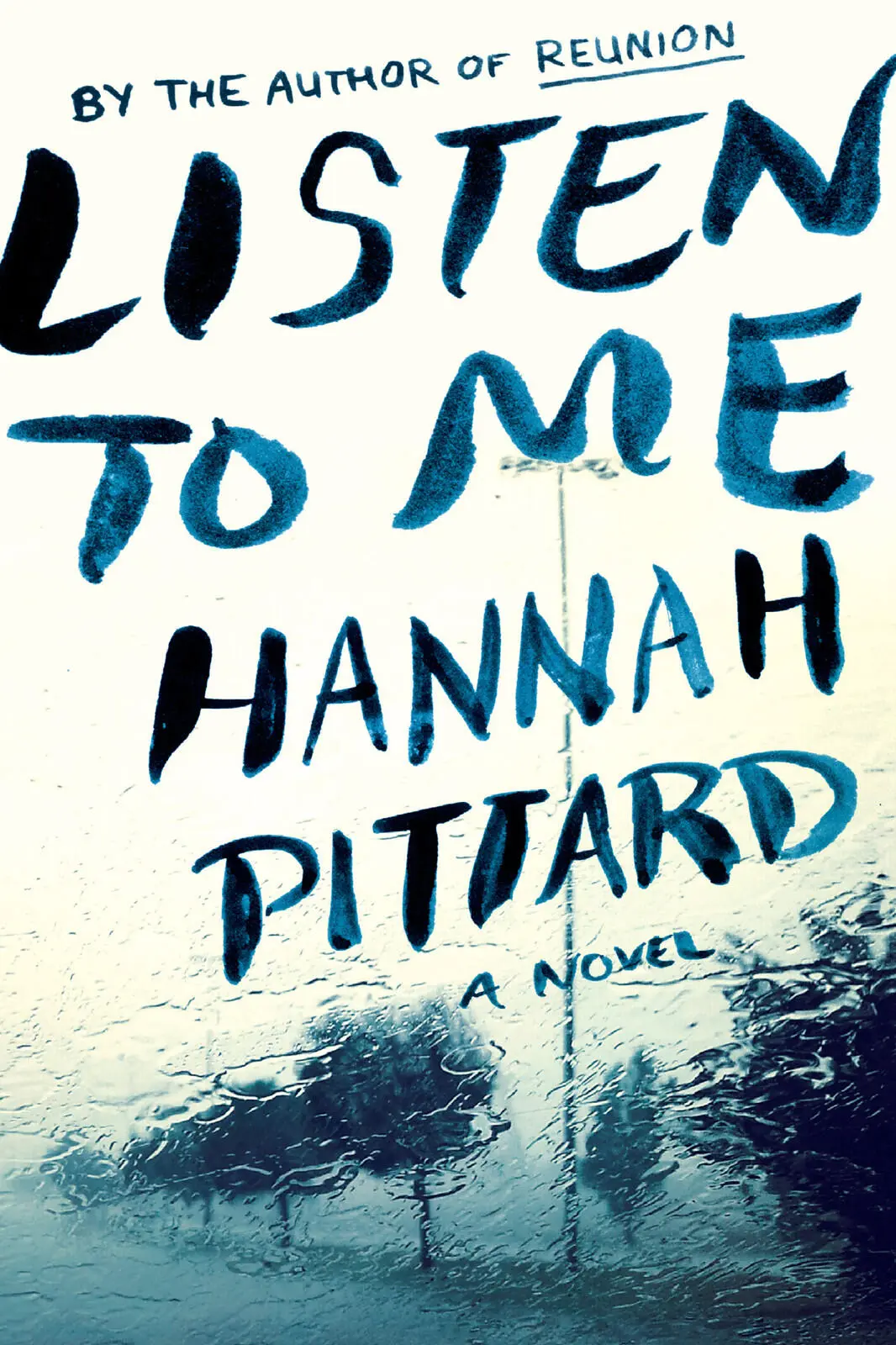
- Название:Listen to Me
- Автор:
- Издательство:Houghton Mifflin Harcourt
- Жанр:
- Год:2016
- ISBN:нет данных
- Рейтинг книги:5 / 5. Голосов: 1
-
Избранное:Добавить в избранное
- Отзывы:
-
Ваша оценка:
Listen to Me: краткое содержание, описание и аннотация
Предлагаем к чтению аннотацию, описание, краткое содержание или предисловие (зависит от того, что написал сам автор книги «Listen to Me»). Если вы не нашли необходимую информацию о книге — напишите в комментариях, мы постараемся отыскать её.
Listen to Me — читать онлайн бесплатно полную книгу (весь текст) целиком
Ниже представлен текст книги, разбитый по страницам. Система сохранения места последней прочитанной страницы, позволяет с удобством читать онлайн бесплатно книгу «Listen to Me», без необходимости каждый раз заново искать на чём Вы остановились. Поставьте закладку, и сможете в любой момент перейти на страницу, на которой закончили чтение.
Интервал:
Закладка:
Mark coughed. “You have me confused with someone who’s interested.” He stepped in front of the man and picked up the coffees.
The man stepped with him, resting an elbow on the counter so that Mark’s immediate path to the exit was blocked.
“A wife,” the man said, nodding his hat in the direction of the window, “looks like she needs one.”
“You just said what to me?” Mark thought maybe the barista would intervene, but he was at the cash register at the other end of the counter, taking someone else’s order.
“I’m fucking with you, Bucko.” The man laughed. “Just two guys joshing around. I like your wife. It’s a compliment.”
This was the problem with gas stations, with rest stops in general. They were teeming with chance encounters between human beings who, under any other circumstance, would have no reason or opportunity to engage.
The question now was how to respond. Was there an action Mark could take that would be nobler than another? He wasn’t sure, in this case, if Maggie needed defending. She wasn’t present and hadn’t heard and therefore couldn’t be personally wounded. And yet to say nothing seemed potentially cowardly. He felt unsure of his role, his duty. Perhaps it was best in these instances — always best — simply to move on and away as quickly as possible, which was what he did, shoving past the man, a cup in either hand.
“Screw off,” Mark said.
Behind him, over the sound of the bell above the exit, which jingled now as he pushed his way out the door, he thought he heard the man laughing. He didn’t turn around to check.
When Mark got back to the car, Gerome was in the backseat panting and Maggie was already in the driver’s seat. She’d recapped the gas tank and returned the hose to the filling station. Now she was monkeying with the center vents, adjusting the air stream so that it was aimed squarely at the dog’s face.
Mark put the coffees on the hood of the car and opened the door.
“What’s wrong?” Maggie said.
He handed in the first coffee, and she put it in the cup holder.
“You look like you’ve seen a ghost,” she said.
Mark was sometimes startled by the way Maggie could read his face so quickly and effectively. It gave him the feeling that she was always aware of him, always aware of exactly where he was and what he was doing — whether she could see him or not.
He handed her the second coffee. “Nothing,” he said, “just ready to get where we’re going.”
“Pit stops,” she said. “No one’s favorite part of a road trip.” She secured the second cup firmly in its place. “Would-be cowboys are the worst.”
Mark followed Maggie’s gaze. In the distance, next to a large pickup truck with an after-market pair of plastic testicles hanging from the bumper, a man was looking their way.
Together they watched as he placed a large-brimmed hat on his head and tipped it in their direction.
“What made you say that?” Mark asked.
“Say what?”
“About cowboys.”
Maggie chewed at her lower lip. She was deciding whether or not to say something. Abruptly, she shrugged. “No reason,” she said. She buckled her seat belt, then glanced up at the rearview mirror and adjusted it slightly. “Just that people don’t seem to mind their business like they used to. You know?”
Out the window, just to the right of Maggie’s profile, a minivan trying to exit the station honked at a sedan taking too long to turn. There was a second honk, then a third, then an extended uninterrupted fourth that received stares from all around.
Mark scanned the parking lot. The truck and its driver were gone. “I know,” he said. He reached over and knocked on the steering wheel. “Let’s blow this joint.”
They pulled out into traffic. It was four-thirty. The sun was a magnificent orange.
Mark felt bad for not telling Maggie the truth about the stranger in the gas station and the crude joke that had been made at her expense. But, he reasoned, in many ways he was protecting her. He was sheltering her from the quiet horror that actually did exist in their world. This wasn’t the stuff of her news articles or crime procedurals. This was worse because it was real, because it potentially affected them.
Be more patient, he told himself. Be more patient.
7
They crossed into Ohio just after five. It was light out still, but the nature of the sky had changed. The ceilings were lower than when they’d passed the turbines in Indiana. The trees along the highway pushed back against an unseen current, and the leaves showed green, then silver, then green again. The car’s windows whistled like teakettles — high, plaintive, stiff. A few times Maggie drifted into the rumble strip because the wind was so strong. Gerome had whined each time, but Mark didn’t say a thing. He’d been silent since their pit stop.
Out of nowhere, the GPS system — which they used primarily to count down the miles, since they knew the drive inside and out, backwards and forwards — started beeping. Maggie had just taken exit 1 off I-70 in the direction of Eaton. Gerome shifted behind them but didn’t get up.
“It’s mad at me,” Maggie said, tapping the monitor. She said this more to hear a voice — any voice — than to be heard by her husband.
Mark punched a few buttons. “It wants us to stay on 70 until 75,” he said. “Then go through Dayton.”
“We never go through Dayton.” She watched the screen images change while Mark continued to push buttons. “What did that mean? That last message?”
Mark didn’t answer, just turned the system off altogether. “We can keep track of the miles on the odometer,” he said.
“But what did that mean?” said Maggie.
“What?”
“ Restricted usage road —what did that mean?”
“It didn’t say that.”
“It did,” said Maggie. “Turn it back on.”
Her neck went hot. Mark was staring. She could feel his attention, though she refused to look his way. He’d caught the tenor of her voice, its unsteadiness. But if he thought she was imagining something awful, he was wrong. This time he was wrong. She simply didn’t see why they couldn’t consult the GPS every now and then. Wasn’t that why they had it? For instance, what if there was a required detour or a road that was freshly out of service? All she hoped to do was save them time, avoid preventable trouble.
On the Enneagram, there was a pair of statements that perfectly summed up the current situation, as well as their opposing takes: I’ve been careful and have tried to prepare for unforeseen problems (Maggie). I’ve been spontaneous and have preferred to improvise as problems come up (Mark). Or so Maggie imagined; Mark had never taken the test.
Fine, then. Forget the GPS. Hope, after all, was the confusion of desire with probability, or however the saying went. But if they ended up having to “improvise” by taking a detour or turning around, getting back on 70 and going through Dayton — well, if they ended up having to do that, she’d have a hard time not gloating. That’s for sure.
“Restricted road usage,” said Mark, “is a ploy to keep away through traffic from smaller towns. It’s just a way to funnel us to a toll.”
He was probably right, but she’d never seen such a notice before when they’d made the drive, and she knew he hadn’t either. No matter. Just then, she didn’t feel compelled to engage. She’d learned that winning was often about who could be quiet longest. This wasn’t a theory she had discussed with her therapist — in part because she suspected it might have been deemed morbid, perhaps even destructive — but in silence was power. In Maggie’s ability to ignore her husband was the added bonus of occasionally making him feel as though he’d been dismissed or, better, as though he’d been the one to overreact, not her. And so she focused on the road — on its double yellow lines, its faint bend to the east — and said nothing.
Читать дальшеИнтервал:
Закладка:
Похожие книги на «Listen to Me»
Представляем Вашему вниманию похожие книги на «Listen to Me» списком для выбора. Мы отобрали схожую по названию и смыслу литературу в надежде предоставить читателям больше вариантов отыскать новые, интересные, ещё непрочитанные произведения.








Обсуждение, отзывы о книге «Listen to Me» и просто собственные мнения читателей. Оставьте ваши комментарии, напишите, что Вы думаете о произведении, его смысле или главных героях. Укажите что конкретно понравилось, а что нет, и почему Вы так считаете.