Thanassis Valtinos - Orthokostá
Здесь есть возможность читать онлайн «Thanassis Valtinos - Orthokostá» весь текст электронной книги совершенно бесплатно (целиком полную версию без сокращений). В некоторых случаях можно слушать аудио, скачать через торрент в формате fb2 и присутствует краткое содержание. Год выпуска: 2016, Издательство: Yale University Press, Жанр: Современная проза, на английском языке. Описание произведения, (предисловие) а так же отзывы посетителей доступны на портале библиотеки ЛибКат.
- Название:Orthokostá
- Автор:
- Издательство:Yale University Press
- Жанр:
- Год:2016
- ISBN:нет данных
- Рейтинг книги:5 / 5. Голосов: 1
-
Избранное:Добавить в избранное
- Отзывы:
-
Ваша оценка:
Orthokostá: краткое содержание, описание и аннотация
Предлагаем к чтению аннотацию, описание, краткое содержание или предисловие (зависит от того, что написал сам автор книги «Orthokostá»). Если вы не нашли необходимую информацию о книге — напишите в комментариях, мы постараемся отыскать её.
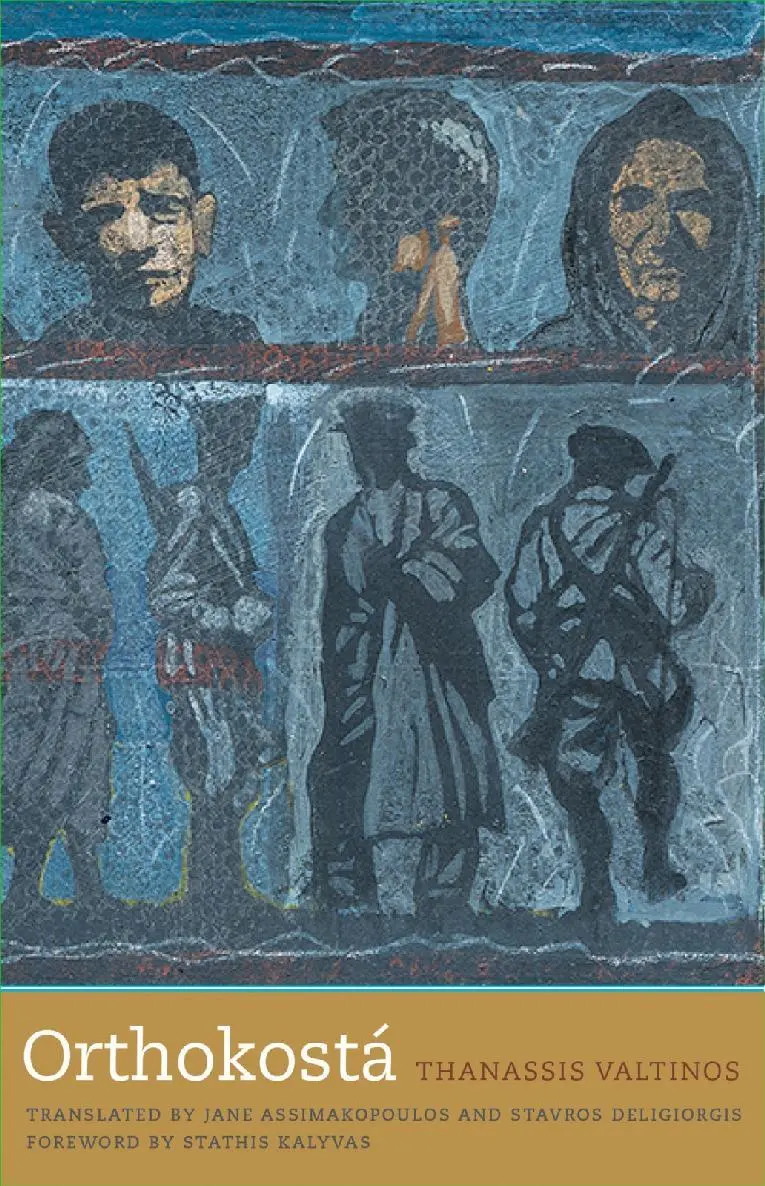
defied standard interpretations of the Greek Civil War. Through the documentary-style testimonies of multiple narrators, among them the previously unheard voices of right-wing collaborationists, Valtinos provides a powerful, nuanced interpretation of events during the later years of Nazi occupation and the early stages of the nation’s Civil War. His fictionalized chronicle gives participants, victims, and innocent bystanders equal opportunity to bear witness to such events as the burning of Valtinos’s home village, the detention and execution of combatants and civilians in the monastery of Orthokostá, and the revenge killings that ensued.
As a transforming work of literature, this book redefined established methods of fiction; as a work of revisionist history, it changed the way Greece understands its own past. Now, through this masterful translation of
, English-language readers have full access to the tremendous vitality of Valtinos’s work and to the divisive Civil War experiences that continue to echo in Greek politics and events today.
Orthokostá — читать онлайн бесплатно полную книгу (весь текст) целиком
Ниже представлен текст книги, разбитый по страницам. Система сохранения места последней прочитанной страницы, позволяет с удобством читать онлайн бесплатно книгу «Orthokostá», без необходимости каждый раз заново искать на чём Вы остановились. Поставьте закладку, и сможете в любой момент перейти на страницу, на которой закончили чтение.
Интервал:
Закладка:
— Where did the old lady learn the trade?
— From her father. And she made new shoes, all kinds. She was the best cobbler in town.
— Did you learn to cobble from her?
— Yes, from her. And so. They brought her down here. They kept sending us letters to go back.
— Had you gone over to the Battalions?
— We hadn’t gone anywhere at the time they arrested her. That’s the funny part.
— Where were you?
— We were in Athens, that’s all. Trying to protect ourselves, like so many others.
— Yes.
— We were staying there in Athens. The Battalions were formed around March. That is, after things got tough here in the villages. People couldn’t take it. Wherever they went, they were killing people, arresting them, and so on. And those actions led to reaction.
— When did they arrest her?
— Around February.
— They must have arrested her earlier.
— Maybe January. And meanwhile they kept sending us letters up in the village. Be back home by midnight and you have nothing to fear — we won’t do anything to you.
— Who signed them?
— They just sent them like that. Someone would stop you, for example. The Organization gave me this letter, he’d say. In the meantime the so-called Resistance was formed. The Security Battalions were formed, and people went over to them. And that’s when it all happened. The first ten days of June. After the springtime arrests. When the Germans went out on various operations. The big blockade, as we call it. I know that’s when they killed her. During the first ten days of June.
— Were you in the Battalions?
— It was at that time the Battalions were formed.
— Yes.
— But when they arrested her there were no Battalions.
— Who told you, do you remember?
— That they arrested her?
— That they killed her.
— Yes. Word got out. Because at the detention camp there were people from Kastrí. Along with the old lady. And when the Germans closed in on them, they had to break up the camp. And execute the people there. Like Polítis, and old Mrs. Braílas, my mother, and I don’t know how many others. Someone called Maraskés from Roúvali. Themistoklís Anagnostákos. A man from Trípolis, and a girl. Well, anyway. They killed them. And when they killed that lot the rest of them were scared, they tried to hide. They formed small groups, two here, two there. You know. And those rebels came back up, there was a ravine down below. They say, Just now we executed the traitors. The others all scared out of their wits. They deserved it, they told them. And they were spared.
— You say they arrested her in February.
— Yes.
— Could it have been later?
— No, it was in February.
— But on February 2 the first detention camp was dismantled. They left Orthokostá and went to Mávri Trýpa. 1On the second of February.
— Ah, the first detention camp.
— And they left. The Germans freed them.
— Yes, right. With the second detention camp.
— Then they arrested her later, not in February.
— Yes, maybe. Maybe around March. Something like that.
— Were you still in Athens?
— Yes, we were in Athens.
— Who else did they capture with her, do you remember?
— From here, Panayótis Polítis. Iraklís’s brother.
— Yes.
— There were five, six, seven of them. Five of them were executed.
— Did you ever see Kalabákas, or talk to him?
— Which Kalabákas?
— Yiánnis. The one who escaped.
— Oh, yes.
— He says he dropped down. Just in time.
— And that he covered himself with my mother’s skirts. How do you know all that?
— I just do. I heard about it.
— He pretended to be dead, he smeared himself with blood.
— And later when they burned down the village, what do you remember?
— I think they burned down the village in July. In the month of July. That was the big group fire. But before that they burned some down to set an example. The first fire was seven houses.
— Which houses were the first?
— Ours. Braílas’s and Galaxýdis’s. Who they considered reactionaries. And one or two more in the marketplace. They burned down seven houses in all. To terrorize us, that was.
— And how much later did they burn down the others?
— Much later. Two months, three months. They received an order, the governing committee did. To hold them back you have to set fire to their homes. You have to frighten them. And they went and set fire to the village. A hundred and eighteen houses.
— Don’t you remember when exactly that was?
— I do remember. I remember very well. Because on that day we came to see if we could save them. They’d taken them somewhere else, all those people.
— Somewhere else? Where?
— To Ayios Panteleímonas. From Mesorráhi, they had taken the whole of Mesorráhi. Hostages.
— You came from Trípolis.
— We did.
— You heard they were burning down Kastrí, and you came.
— Yes, that they were burning it down. And we tried to get there in time.
— Before they killed the old lady or afterward?
— The old lady was dead. She was dead. They set those fires, that’s when.
— So who finally burned down the village?
— They say it was Kontalónis. He got an order from the seven-member committee here. Who knows. He was one of the kapetanaíoi.
— What was the seven-member committee?
— I don’t know anything about it. But Kontalónis himself said to Yiánnis Makrís. Who’s now my brother-in-law. I don’t want you talking politics at the factory. He had opened a lumber factory later, and Yiánnis was a worker there. With those English pounds. He tells him, Find out who was responsible. It wasn’t me. I couldn’t do anything else. Because if I hadn’t burned it down they would have killed me. He told him, Right there, seven of them in your own village. It’s true. Kontalónis said that. But it doesn’t much matter now. We’re not children. That’s how things were then. I mean you can see how it all works. If the tornado drags you in one direction, they call you a traitor. And you are one. You have to be taken out. To be killed. The Battalions were formed in 1944, end of March. It was the month of March when Papadóngonas came down to Trípolis. Who couldn’t tell that the Germans were losing? Who couldn’t see it? But they insisted. You had to be neutralized. To be taken out. To be killed or be labeled a traitor. That’s what it was all about.
— Did they burn down Ayiasofiá before or after Kastrí?
— Before. Long before. And I know one thing for sure about Ayiasofiá. They burned a woman, a mule, and a pig in there. A pig. Right in the house. They wouldn’t let the woman out.
— I’ve been told that it was Tsoúkas from Oriá who threw the woman into the fire. She tried to get out, and he threw her back in.
— I don’t know anything about that. I don’t know about that.
— Was it you who found your mother? Did anyone bring her down?
— No one did. We couldn’t. Later on we went there. But they had buried her. They buried her in the bed of a stream, and the stream carried her off in the winter, there was nothing left of her. Some shepherds showed us the place.
— Whereabouts did they execute her?
— Somewhere below Prastós.
— That’s so vague.
— I only know what the shepherds told us. They wanted money. At a place where two streams met. Right there.
— All because you’d left for Athens.
— Because we’d left. And because of my brother Kóstas.
— Is Kóstas alive?
— He died last year. In Corinth.
— Alone?
— With Semní.
— What did they have against Kóstas?
Читать дальшеИнтервал:
Закладка:
Похожие книги на «Orthokostá»
Представляем Вашему вниманию похожие книги на «Orthokostá» списком для выбора. Мы отобрали схожую по названию и смыслу литературу в надежде предоставить читателям больше вариантов отыскать новые, интересные, ещё непрочитанные произведения.


Обсуждение, отзывы о книге «Orthokostá» и просто собственные мнения читателей. Оставьте ваши комментарии, напишите, что Вы думаете о произведении, его смысле или главных героях. Укажите что конкретно понравилось, а что нет, и почему Вы так считаете.