Emili Teixidor - Black Bread
Здесь есть возможность читать онлайн «Emili Teixidor - Black Bread» весь текст электронной книги совершенно бесплатно (целиком полную версию без сокращений). В некоторых случаях можно слушать аудио, скачать через торрент в формате fb2 и присутствует краткое содержание. Год выпуска: 2016, Издательство: Biblioasis, Жанр: Современная проза, на английском языке. Описание произведения, (предисловие) а так же отзывы посетителей доступны на портале библиотеки ЛибКат.
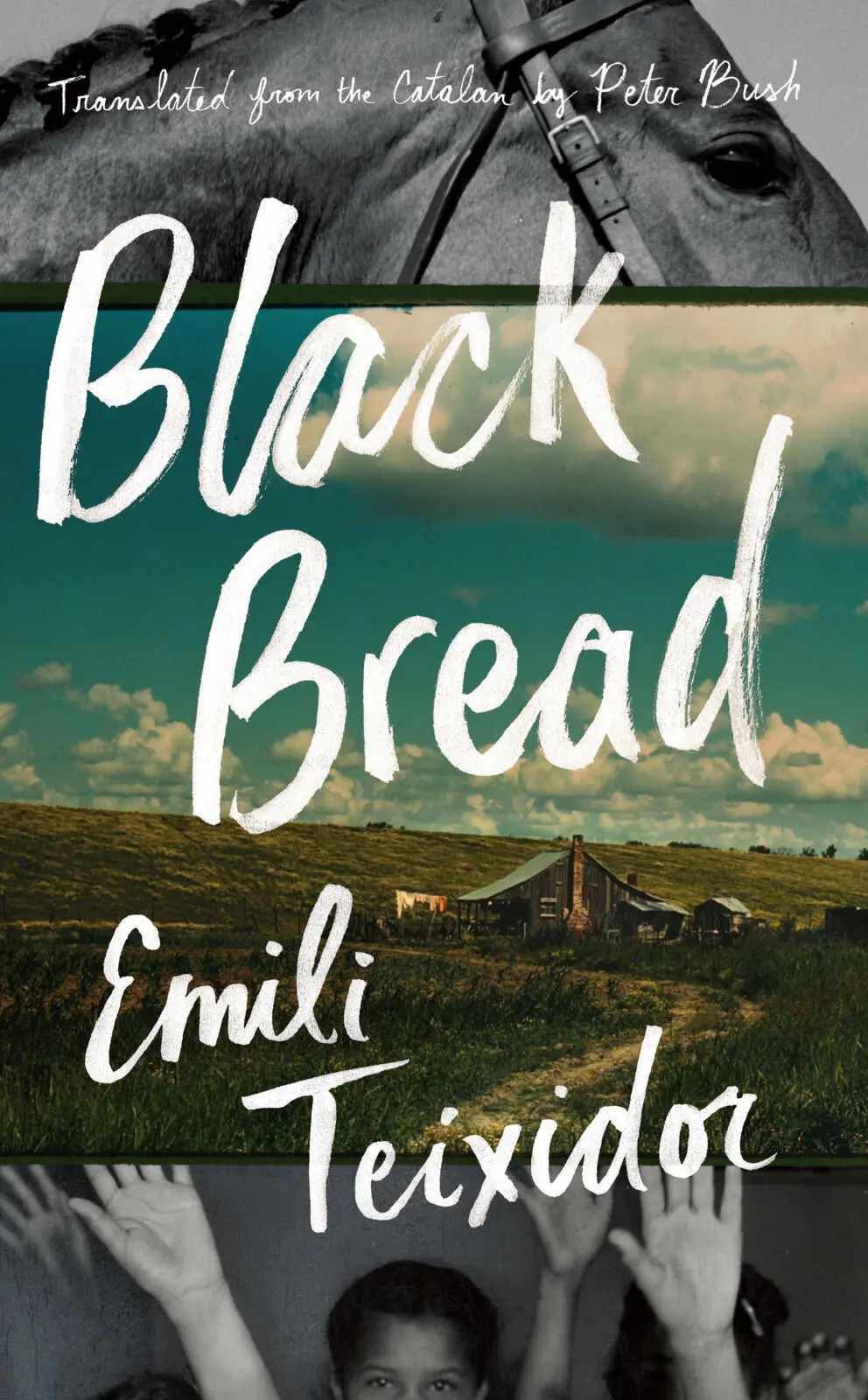
- Название:Black Bread
- Автор:
- Издательство:Biblioasis
- Жанр:
- Год:2016
- ISBN:нет данных
- Рейтинг книги:3 / 5. Голосов: 1
-
Избранное:Добавить в избранное
- Отзывы:
-
Ваша оценка:
Black Bread: краткое содержание, описание и аннотация
Предлагаем к чтению аннотацию, описание, краткое содержание или предисловие (зависит от того, что написал сам автор книги «Black Bread»). Если вы не нашли необходимую информацию о книге — напишите в комментариях, мы постараемся отыскать её.
Born in 1933,
's first novel,
, was published to tremendous acclaim in 1988, followed by several more which established him as one of Spain's greatest contemporary authors.
Black Bread — читать онлайн бесплатно полную книгу (весь текст) целиком
Ниже представлен текст книги, разбитый по страницам. Система сохранения места последней прочитанной страницы, позволяет с удобством читать онлайн бесплатно книгу «Black Bread», без необходимости каждый раз заново искать на чём Вы остановились. Поставьте закладку, и сможете в любой момент перейти на страницу, на которой закончили чтение.
Интервал:
Закладка:
On early mornings from spring to autumn, when the cold forced us to curl up at the bottom of our beds and tuck our noses in, when our feet felt for the hot stone Mother put in the stove for a while before we went to sleep and then wrapped tightly in an old pillowcase or a piece of jersey, before the cold invaded the house like an invisible flow of ice that seeped everywhere…when the weather started to be friendlier, sometimes, before daybreak, after the girls from the surrounding farmhouses had called on Mother and she’d gone to the factory, Father wasn’t there, Father was rarely there — it was always a party when Father was at home, his body in the adjacent bedroom gave off a wave of warm, scented air, that dissipated the cold and loneliness, but in my memories Father was never there, he was always in prison, in the prison infirmary, working away — and in those hours when the air was as soft as silk, I’d take out of my night-table the toy theatre I myself had made from sheets of card and figures I’d cut and painted copying from the comics we swapped with our mates at the parish school, and invent the most amazing plays that inflamed my imagination, scenarios with dream-like palaces, castles and landscapes. A real ball.
They didn’t regulate my free time at home. Parents let us village children go wherever we were allowed, whether it was to a dance — the few that were held because after the war they were a sin — to the cinema, the smoke-filled café, like flies buzzing around the men playing cards or billiards who didn’t notice we were there, or to the parish theatre. The priest who ran the school had organized a moral, recreational theatre group — at least that was what he called it — that performed work by Pitarra, Benavente or Galdós, Las joyas del Roser, La malquerida, Marianela …, many of us knew whole scenes by heart, and they’d let us in for free because we’d joined the music and movement group of Maestro Llongueres. I was fascinated by the theatre and it sent my head into a spin. The cinema was something else. They showed two films, the first being the bad one and the second the good one. Those I liked, I liked so much I’d see them again from end to end at night, trailers included, in my dreams. I’d sometimes leave the cinema as if I was sleep walking, not really knowing what I was doing, heading in the direction of home, my eyes still glued to the white canvas of the screen. Hollywood was a magical word, a new Latin liturgy to transform our lives. I drooled over the trailers posted on the walls of the cinema entrance with all those unpronounceable English names — Norma Shearer, Leslie Howard, Ronald Colman, Myrna Loy, Ginger Rogers, Mickey Rooney, Spencer Tracy… They must be the favourites of the gods, if they possessed such names, fabulous names from another planet, with scenes and photo strips — we called them the picture trailers — advertising the works for the following week that were more suggestive than the films themselves. Almost all the boys collected football cards; only two or three of us kept the publicity leaflets they gave out at the cinema. New ones came out every week. Back in the farmhouse Grandmother had La Vanguardia delivered every day from the factory town and the moment it arrived, if the weather was fine, she’d take her rickety chair to a far corner of the meadow so nobody disturbed her and spend half the morning or half the afternoon reading the news. When she returned to the house and put down the paper, I’d pick it up and open it at the film pages with the adverts for the films being premiered in Barcelona, a city that seemed like the navel of the world because there were always new films to see.
However the first time I visited the city, when I got off the train in the Plaça de Catalunya terminus, I was hit in the face by a repulsive gust of stinking air. Police and civil guards were standing on platforms in all the local stations in Barcelona as far as Plaça de Catalunya, to catch the black-marketeers and I saw with my own eyes what I’d heard people say about men and women throwing bags of meat or fresh bread out of the train windows to someone to pick up who was waiting between the tracks or on the sides. Then, when I went into the street, the racket and tumult of people and cars made me feel dizzy. I thought I could never live in that grey, smelly, never-ending city. I missed the sight of the woods, the backcloth of greenery and mountains; my eyes longed for a different place where I could lose myself. The city had no depths or green and the buildings dissected the sky, erased the horizon, blocked the view. The trees were spindly; I felt they were sickly and had TB.
Aunt Mariona was Mother’s little sister and worked as a maid in the city; she couldn’t go back to the small town, where she’d worked in the factory, because one day she’d run off with a married man, they eloped together, so people said. It led to an outcry, but the married man returned home a few days later and the local hard men forced him to run the streets tinkling cowbells; on the other hand, Aunt Mariona didn’t dare come back and she stayed and worked as a servant in a well-off household. The first time we went to Barcelona with Mother, the three of us had lunch in a small, dingy bar and the two sisters shed a few tears, though I didn’t really understand why, and Mother asked my aunt if she was all right and my aunt asked Mother about Father’s problems, and that was about it. After we visited the gentleman who had to intervene to help Father, Aunt Mariona accompanied us to the station to catch the train back up to town, as they put it, back up to town.
Mother’s family was much less easygoing than Father’s. There were a dozen brothers and sisters, Mother was the oldest girl, born after the first-born and heir, and they all came to our house from time to time to ask Mother for help or advice; they thought of her as their mother because my maternal grandmother was very old, in poor health and into the bargain didn’t get on well with her children, starting with my mother, who now and then let slip some comment about her defects, especially her fondness for booze.
“Sometimes she loses it,” she’d say. “She doesn’t know what she’s doing. If only all families were like your father’s!”
17
I do wonder why some things remain etched on my memory while I have forgotten others completely. And how can I know I have forgotten what I can’t remember? Perhaps it’s the gaps between memories, blank spaces between one scenario and the next, question marks floating aimlessly in the air, lulls between different emotions. Like the empty hollow left in a bed by a body that no longer sleeps there.
And why are there moments in life when we stop to look back and summon these half-lost images buried by time? What sort of nostalgia makes us recall horrendous years, hateful scenes, horrible people…? Given those sad vicissitudes why doesn’t memory erase them for good, rather than bringing them ever more forcefully to the surface, tainted by an aura of regret? Does a law of memory selection exist that acts as a sedative, that lets what is best forgotten drop by the wayside and preserves what is significant, central to our life, its backbone? Does a kind of core marrow exist that acts as a storehouse, allowing a secret, lymphatic circulation of memories to impregnate our lives and compel us to be the individuals we are and nobody else, as we might be if we forgot things we can’t relive, even in our memory?
And why does everything we remember, however chaotic and messy, finally assume a shape only we can recognize? Or does memory want to us relive past deeds like spectators reviewing our own prominence, and thus relieve us of the hurt they inflicted at the time, and seen like that, in the haze of memory, we try to understand them better, to extract some kind of light, and rid them of the grief, anguish and turmoil, like the sand deposit that remains at the bottom of a pond after a storm? Is that how the past might strive to give meaning to the absurdity of the present?
Читать дальшеИнтервал:
Закладка:
Похожие книги на «Black Bread»
Представляем Вашему вниманию похожие книги на «Black Bread» списком для выбора. Мы отобрали схожую по названию и смыслу литературу в надежде предоставить читателям больше вариантов отыскать новые, интересные, ещё непрочитанные произведения.











Обсуждение, отзывы о книге «Black Bread» и просто собственные мнения читателей. Оставьте ваши комментарии, напишите, что Вы думаете о произведении, его смысле или главных героях. Укажите что конкретно понравилось, а что нет, и почему Вы так считаете.