Emili Teixidor - Black Bread
Здесь есть возможность читать онлайн «Emili Teixidor - Black Bread» весь текст электронной книги совершенно бесплатно (целиком полную версию без сокращений). В некоторых случаях можно слушать аудио, скачать через торрент в формате fb2 и присутствует краткое содержание. Год выпуска: 2016, Издательство: Biblioasis, Жанр: Современная проза, на английском языке. Описание произведения, (предисловие) а так же отзывы посетителей доступны на портале библиотеки ЛибКат.
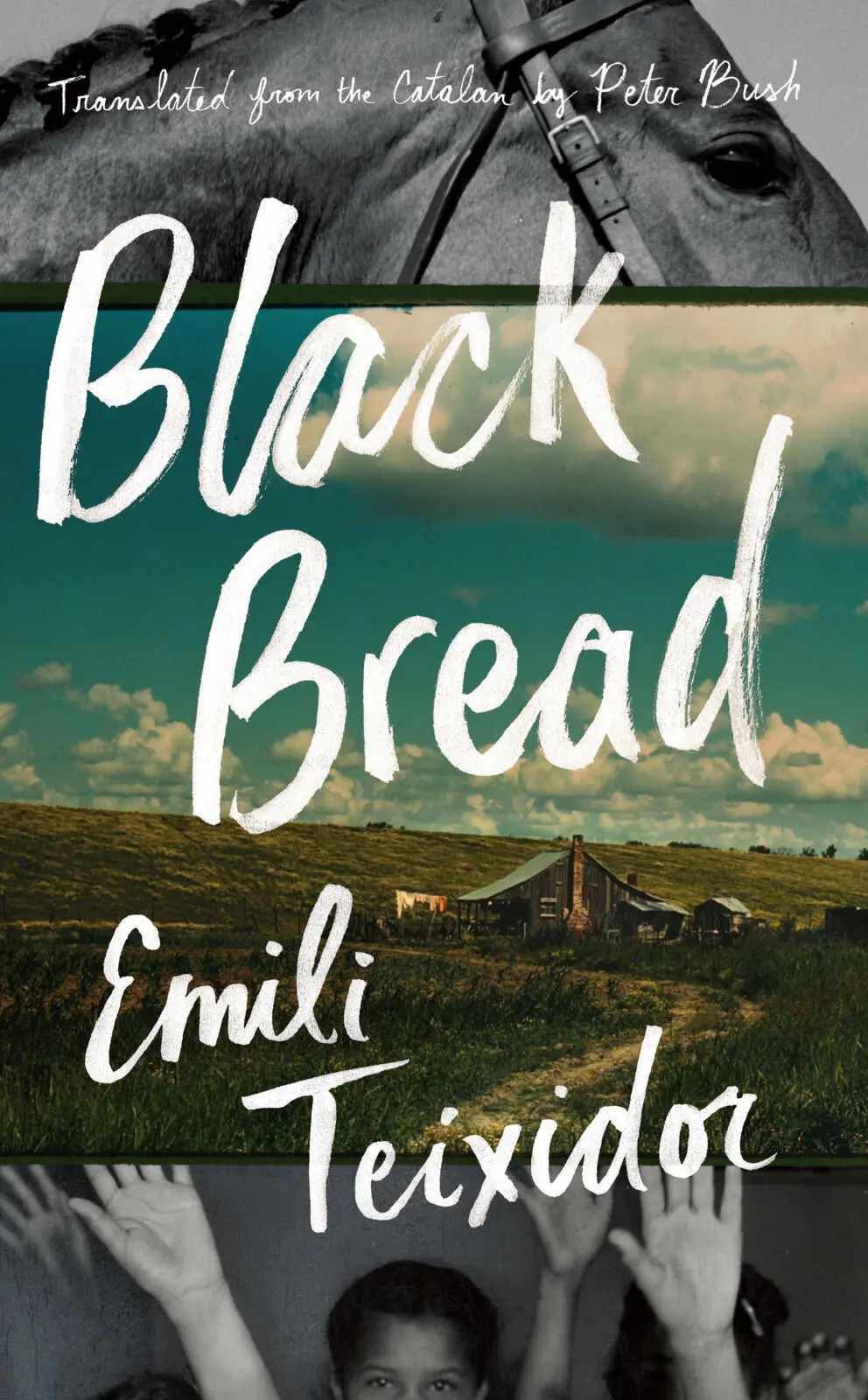
- Название:Black Bread
- Автор:
- Издательство:Biblioasis
- Жанр:
- Год:2016
- ISBN:нет данных
- Рейтинг книги:3 / 5. Голосов: 1
-
Избранное:Добавить в избранное
- Отзывы:
-
Ваша оценка:
Black Bread: краткое содержание, описание и аннотация
Предлагаем к чтению аннотацию, описание, краткое содержание или предисловие (зависит от того, что написал сам автор книги «Black Bread»). Если вы не нашли необходимую информацию о книге — напишите в комментариях, мы постараемся отыскать её.
Born in 1933,
's first novel,
, was published to tremendous acclaim in 1988, followed by several more which established him as one of Spain's greatest contemporary authors.
Black Bread — читать онлайн бесплатно полную книгу (весь текст) целиком
Ниже представлен текст книги, разбитый по страницам. Система сохранения места последней прочитанной страницы, позволяет с удобством читать онлайн бесплатно книгу «Black Bread», без необходимости каждый раз заново искать на чём Вы остановились. Поставьте закладку, и сможете в любой момент перейти на страницу, на которой закончили чтение.
Интервал:
Закладка:
15
What did Ció and Mother talk about in the course of those long goodbyes on a Sunday evening?
Obviously, they talked about Father. About him in prison and the consequences of the pressure they were exerting and the influence they could bring to bear, this man who knows that man who is a friend of the other fellow we met that day, and so on with a string of names vital to reach the key individual, the one who, in their opinion, could resolve everything.
I sat in the meadow and waited for the moment to give my mother a farewell kiss and go back to my cousins who were expecting me up the plum tree or by the pond. I couldn’t understand how they could be so chatty. Now and then they let a phrase or new expression slip that to my ears didn’t square with whatever they were pursuing so single-mindedly. I took no notice; they weren’t talking for my benefit; I decided I didn’t really understand what they were saying or that it was gossiping about more trivial matters, but gradually I gathered that they were referring to another problem they found upsetting, a delicate, secret subject, judging by how they cloaked it in veiled, oblique terms, as adults do, especially when discussing the mysteries of sex.
“Oh, no, no, no!” shrieked Ció, putting her hand to her forehead as if to chase off a fly or a thought. “If Dad Quirze finds out, you bet he’ll kill them!”
“But haven’t you talked to her?” Mother insisted. “What does she think? Has she stopped thinking about Pere Màrtir, now she’s infatuated him again?”
“The truth is I’d say that Pere Màrtir and she…” Ció kept clasping the middle fingers of both hands together and separating them out as if they sent sparks flying at the first touch. “You know what I mean…”
Mother swayed her head pensively: “It’s an illness like any other…even worse, if you think about it. What can I say? We two are like two idiots who’ve never seen beyond the walls of our house, I wouldn’t know what we could do to stop them going off the rails again. I really thought he was back on track.”
They were silent and then talked about Father again. The name of Pere Màrtir stuck in the junk box of my mind alongside a clutter of half-forgotten memories, strange names, peculiar phrases and scenes I couldn’t make head or tail of.
Mother kissed me on both cheeks and urged me: “Be good!” Or else: “Behave yourself. Don’t give them any reason to complain.”
Then she did likewise with Ció and started to walk quickly off without once looking back. Ció and I stood in the middle of the path, watching Mother move away, and then returned to the farm the second she disappeared round the first bend. Ció always had something to say to encourage me, as she did now: “Don’t you worry, you’ll soon be able to go home.” Or else: “It will all turn out right in the end, you just see. No good or evil lasts forever. And some day all this will come to an end, it can’t go on for eternity.”
I understood I shouldn’t take her literally, that hers was wishful thinking, that the truth always hid beneath a hundred layers of darkness and could only be reached via strained, elaborate conversations, full of strange names like Pere Màrtir’s and so many others. The long goodbye conversations between Ció and my mother seemed simply that: an onerous chore grownups took on to lay bare truths that were even concealed from them as adults. And if grownups found it hard to grasp how the world went round, we littl’uns, I told myself, had to be content to salvage the odd crumb of truth that fell from their after-dinner chat.
Quirze and Cry-Baby would sometimes still be waiting for me at the top of the plum tree, especially on the long, hot days at the end of spring and throughout the summer. When the weather was fine, they let us play there until dusk and on these occasions, when I climbed into the tree after accompanying my mother, my cousins said nothing until I was firmly in place on my branch.
As the first shadows fell, we gazed at the lights coming on in farmhouses, and played at guessing to which farm the lights belonged we could see scattered over the plain.
“That’s the Can Tona window!”
“Now they’re lighting up the cells the whole length of Saint Camillus!”
“That’s the light in La Bruguera’s gallery!”
Electricity had only come to the farms quite recently, and when men had to go to the sheds or pen, they still carried an oil or carbide lamp that gave off a smell that made everything stink.
“Who is Pere Màrtir?” I asked, in a neutral tone of voice, as if I didn’t expect an answer, looking right up to the top of the tree.
I thought they’d not heard me, that my voice must have disappeared into space, because neither Cry-Baby nor Quirze answered. Until after a long silence, Quirze spat down: “A piece of shit!”
“What do you mean?” I responded.
“That he’s a piece of shit,” he spat again. “You see that gob of spit? That’s what Pere Màrtir is.”
“All right, but who is he? What did he do to turn himself into a turd?”
Quirze didn’t elaborate. He jumped down from the tree and headed off home scowling. Cry-Baby followed him and then I dropped down too. I walked next to my cousin, a few steps behind Quirze, and whispered to her: “Do you know who he is and why everyone’s so against him?”
“I don’t know,” she shrugged her shoulders. “I’ve only seen him a couple of times.”
“Where?”
“Here and in the village. He came here one day and everybody started arguing and when he left all the women were in tears. I also saw him playing cards in a bar in town.”
“Is he from there?”
“No, from the land. From La Coromina.”
“What’s he like?”
“Fair. Tall and fair.”
“And you’ve only seen him once in these parts? What was he after?”
Cry-Baby shook her head. She said: “By the time I was living here, he’d stopped coming. I saw him the last time he paid a visit, but then they fell out so badly, he stopped coming.”
I didn’t really understand.
“You mean he was a frequent visitor?”
She shrugged her shoulders. Quirze was waiting by the doorway, buckets of bran by his feet and holding carbide or oil lamps to light our way to the shed to fill the pigs’ troughs. I shut up. While Quirze scattered bran, Cry-Baby and I ran around the sty and played at making shadows with the lamps, shadows that lengthened or shortened depending on what we did with the lights, changing shape and looking like a horse, a skull or a goblin. Núria saw goblins everywhere.
“I saw the goblin again last night…” Cry-Baby whispered, so Quirze couldn’t hear, as she pointed at the shadow she was moving on the wall.
“Oh, really?” I was amused by Cry-Baby’s fears and the apparitions she saw, as much as they angered Quirze, who refused to listen to her talk about them unless it could be turned into an excuse to run and play. “Where did you see it? Did Grandmother see it too, or just you?”
“Just me. I was by myself…”
Cry-Baby and I were closer and she sometimes let me in on her secrets. Perhaps it was because we were both refugees in the grandparents’ house, both had missing fathers, lost in a world of prisons or beyond frontiers. Fathers who had been sentenced and silenced, who were far away and absent.
“Last night I saw it run upstairs, through the sitting room, on its way to the attic…”
“What was it like?”
“Like a black dog. It ran like the blackest dog you’ve…”
“Did Grandmother see it as well?”
“Grandmother was in the upstairs dining room. We were lying in bed and all of a sudden, when we were about to fall sleep, after she’d told me a very frightening story, just when we’d shut our eyes, she said she’d left her headscarf in the dining room and got up to go and get it because she was feeling cold.
Читать дальшеИнтервал:
Закладка:
Похожие книги на «Black Bread»
Представляем Вашему вниманию похожие книги на «Black Bread» списком для выбора. Мы отобрали схожую по названию и смыслу литературу в надежде предоставить читателям больше вариантов отыскать новые, интересные, ещё непрочитанные произведения.











Обсуждение, отзывы о книге «Black Bread» и просто собственные мнения читателей. Оставьте ваши комментарии, напишите, что Вы думаете о произведении, его смысле или главных героях. Укажите что конкретно понравилось, а что нет, и почему Вы так считаете.