Emili Teixidor - Black Bread
Здесь есть возможность читать онлайн «Emili Teixidor - Black Bread» весь текст электронной книги совершенно бесплатно (целиком полную версию без сокращений). В некоторых случаях можно слушать аудио, скачать через торрент в формате fb2 и присутствует краткое содержание. Год выпуска: 2016, Издательство: Biblioasis, Жанр: Современная проза, на английском языке. Описание произведения, (предисловие) а так же отзывы посетителей доступны на портале библиотеки ЛибКат.
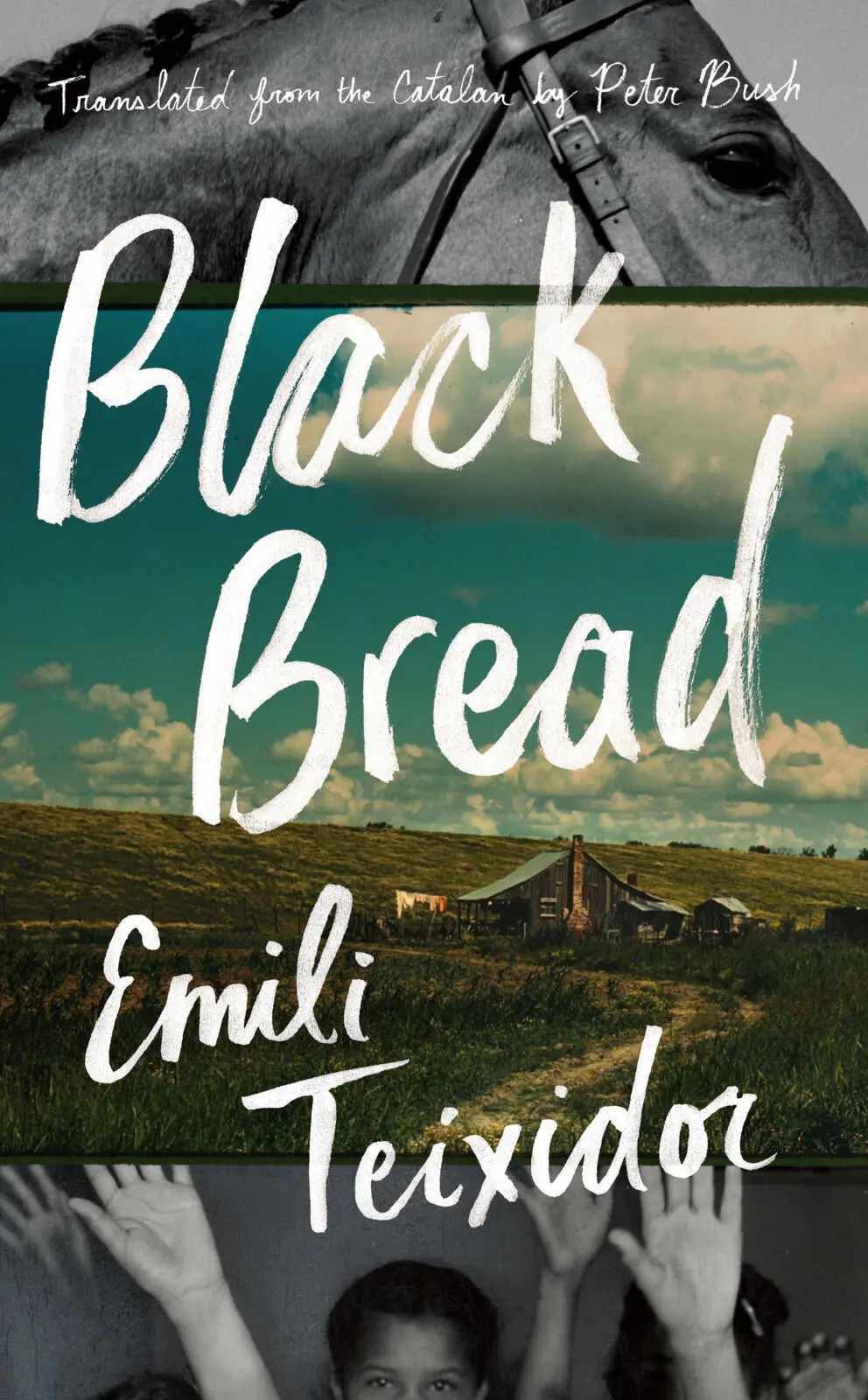
- Название:Black Bread
- Автор:
- Издательство:Biblioasis
- Жанр:
- Год:2016
- ISBN:нет данных
- Рейтинг книги:3 / 5. Голосов: 1
-
Избранное:Добавить в избранное
- Отзывы:
-
Ваша оценка:
Black Bread: краткое содержание, описание и аннотация
Предлагаем к чтению аннотацию, описание, краткое содержание или предисловие (зависит от того, что написал сам автор книги «Black Bread»). Если вы не нашли необходимую информацию о книге — напишите в комментариях, мы постараемся отыскать её.
Born in 1933,
's first novel,
, was published to tremendous acclaim in 1988, followed by several more which established him as one of Spain's greatest contemporary authors.
Black Bread — читать онлайн бесплатно полную книгу (весь текст) целиком
Ниже представлен текст книги, разбитый по страницам. Система сохранения места последней прочитанной страницы, позволяет с удобством читать онлайн бесплатно книгу «Black Bread», без необходимости каждый раз заново искать на чём Вы остановились. Поставьте закладку, и сможете в любой момент перейти на страницу, на которой закончили чтение.
Интервал:
Закладка:
“That’s how I met Lluís,” she said, as if that daily walk was justified by the encounter with her young man.
They’d meet twice a week by the spring that had the salamanders. And her two girlfriends went on ahead, as if they were walking separately or had fallen out. After a few weeks of courting Father began to accompany her to the farm. My mothers’ parents were pleased such a handsome lad came with her to their door, or at least to the spot where the dogs started barking threateningly at night. On the other hand, they weren’t so pleased he wasn’t the heir to a farm, but merely the son of tenant farmers. However, as they had so many children to bring up and feed, or so my mother said, they had no time to be too choosy.
They were married and looked like children, so much so that when they boarded the train in Vic to go to Barcelona and Montserrat for a weekend honeymoon, a civil guard arrested them because people thought they must be underage kids who’d run away from home.
And they soon fell out with my grandfather and left the farm to try their luck in the factory town. The grocery store was beginning to make money when my father got involved in politics. “Right up to his neck,” according to Mother. Even though he was married and ran the store, he went to night classes in the national school where his teacher was far more revolutionary than any turner in a foundry. That was when other shop-owners began to see him in a bad light, spread slander and incite the conservative population to boycott his shop.
“He’s another bright spark who wants to organize a consumer co-op among the workers and plunge the lot of us into poverty,” they railed, because they’d heard him make the occasional speech calling for fairer ways of trading and distributing foodstuff.
Their shop started to go downhill at a vicious turning point in the war when the FAI had just murdered the parish priest on the side of the road to Vic, and the three brothers from Can Teco — one being a priest who’d said mass not long before — were found early one morning by an out-of-the-way track, shot in the back of the neck at a time when many property owners and church-going folk were going into hiding or fleeing across the mountains into France. Father spent all his time at rallies, meetings and on his political commitments. They were forced to shut their shop and Mother had to go back to working in the Boixets’ factory so she could bring home a daily wage.
My memories of that time in the war are very hazy. I was too young and didn’t really know what was going on. I have a clear recollection of the ample, welcoming skirts of Beneta, and the backyard of her house, a cool, luminous garden with a large cistern under a fig tree that acted as a roof. Mother left me with Beneta, who was very old, while she went to the factory. She was on the afternoon shift at the time and left me at midday and picked me up, asleep and in nappies, just before midnight.
When the war finished, Mother moved heaven and earth to get into the good books of the victors. In private, at home, she called them “the fascists” and “that handful of bigwigs.” They were shopkeepers, falangistes , rich Catholics, priests, factory owners, except for Napkin Lolita, who had a foot in both camps. Initially, they enrolled me at the parish school the new priest had opened in the ground floor of the rectory, rather than taking me to the public school — called a national school — where Father had once become acquainted (my mother’s word) with that revolutionary red teacher executed in the first days of the new regime.
I don’t how long it was from the end of the war to the jailing of my father. All I recall is that one afternoon when I got back from class, I found the stairs full of civil guards blocking my way. I took refuge in the house of neighbours who took me in.
“Don’t worry,” they said. “It’s only a raid. They won’t find anything.”
By the time I was allowed back into the house, my tearful Mother was trying to put order into the mess from the wardrobes they’d emptied, the open drawers and clothes strewn everywhere and the wool scattered over the floor like curdled streams of white blood.
“We couldn’t do anything to stop them…” Mother said. “We won’t be able to get him out. He was too prominent. Blasted politics! Why did he have to get involved? So now you know, politics always ends badly. Don’t you ever get involved!”
I gathered she was talking about Father. He wasn’t there. He’d escaped into the woods, perhaps to Can Tupí or the maternal grandparents’ farmhouse. But he’d not escaped to France like his brother, Fonso, Cry-Baby’s father, because he said he had never killed anyone, he hadn’t even fought at the front, all he’d done was work for the people, and that was exactly why they had let him stay behind, because nobody else wanted to take responsibility for anything.
“Don’t say that,” Mother gestured, trying to cover his mouth when he made this kind of excuse. “Say that they pulled the wool over your eyes, that the teacher who seemed so courteous and well-behaved filled your head with ideas that were never yours, that you only went there to learn and he hijacked you…”
But Father was stubborn. He was convinced he was innocent and had a right to think as he pleased as long as he didn’t hurt anyone. They’d sabotaged his grocery store, what else could they do to him?”
“They left a summons for him to go urgently to the civil guards’ barracks,” said Mother, downcast. “They were looking for him. They’d come to get him. They turned everything upside down because they were angry when they didn’t find him here. They know only too well we have nothing compromising here.”
She now spoke to me as if I had suddenly grown up. She spoke to me as you speak to adults. And that, rather than the brutal police raid, made me realize how serious the situation was. Suddenly, that despondent woman had no warmth of feeling left to see me as the child I still was; overnight she stopped holding my hand, that she put elsewhere, and no longer carried me around her neck so I had to walk by myself; now there was no time for singing and hugging because all her attention was required for someone in a much more fragile state than I was, and at a stroke I felt exposed and unprotected. I understood in a vague, confused way that she was simply feeling a new, acute pain, that the wife now predominated over the mother, and a wife’s harshness and tension overrode a mother’s loving inclinations.
That was when the frantic days of wandering and self-vilification started. That very night when Mother left me alone with supper ready on the stove I simply had to warm up and ran to Can Tupí to tell the family about the tragedy on the horizon. I didn’t go to sleep until she returned in the early hours. I stood by the windowpanes and glued my eyes to the stretch of road bordered by plane trees, lit only on the way out of town, scrutinizing every movement I could discern, inspecting every black shape that approached, recognizing a familiar form in every pattern the branches and leaves made, feeling a new kind of oppressive sadness, as if Mother had abandoned me and my happiness could only resume when she returned, with her presence.
After that first anxious wait, similar scenes of lonely afternoons and cold evenings were often repeated, when I pressed my face hard against the windowpanes and scrutinized that winding track, waiting for her dark, slender, slightly stooping figure to reappear with her burden of baskets and bundles. She came from the prison, from the farmhouse where she had gone for food, from Vic or Barcelona where she’d been asking for all kinds of certificates… I’d see her approaching exhausted, edgy, bags under her eyes, always half a smile on her lips and mentally inexhaustible. She would slump on the chair and say nothing. I sat next to her or in a corner of the dining room, asked no questions, listened to her panting breath and tried to decipher the signals she gave out, indications from the world of prisons or places she had visited, influential people, old friends, distant relatives, lawyers and doctors she’d been recommended, her hair messed up by the hand my father stuck through the bars, her glass beads and the bits of chaff stuck to her woollen shawl that Cío and Grandmothers’ embraces had left, the folded documents in her pocket alongside the funds powerful friends had given her. Mother’s return to that cold, silent house brought with it invisible images of dark, dank prisons, farmhouses yellowing with corn and ripened fruit, fine houses with carpets and heating and running water in the kitchen and bathroom, and as a backdrop the huge factory that awaited her early every morning with its vast, frosted windows that only sucked light from their workspace and shut out the rays of the sun and good cheer from the world outside.
Читать дальшеИнтервал:
Закладка:
Похожие книги на «Black Bread»
Представляем Вашему вниманию похожие книги на «Black Bread» списком для выбора. Мы отобрали схожую по названию и смыслу литературу в надежде предоставить читателям больше вариантов отыскать новые, интересные, ещё непрочитанные произведения.











Обсуждение, отзывы о книге «Black Bread» и просто собственные мнения читателей. Оставьте ваши комментарии, напишите, что Вы думаете о произведении, его смысле или главных героях. Укажите что конкретно понравилось, а что нет, и почему Вы так считаете.