Carlos Castán - Bad Light
Здесь есть возможность читать онлайн «Carlos Castán - Bad Light» весь текст электронной книги совершенно бесплатно (целиком полную версию без сокращений). В некоторых случаях можно слушать аудио, скачать через торрент в формате fb2 и присутствует краткое содержание. Год выпуска: 2016, Издательство: Hispabooks, Жанр: Современная проза, на английском языке. Описание произведения, (предисловие) а так же отзывы посетителей доступны на портале библиотеки ЛибКат.
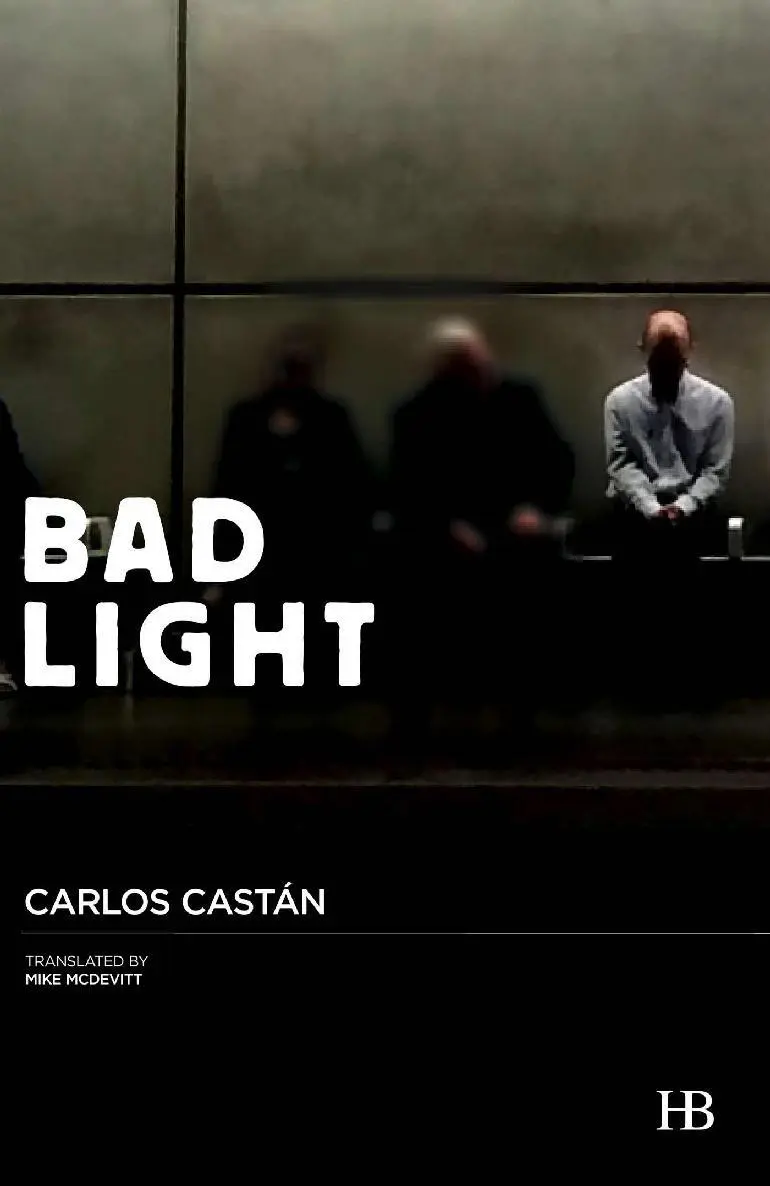
- Название:Bad Light
- Автор:
- Издательство:Hispabooks
- Жанр:
- Год:2016
- ISBN:нет данных
- Рейтинг книги:5 / 5. Голосов: 1
-
Избранное:Добавить в избранное
- Отзывы:
-
Ваша оценка:
Bad Light: краткое содержание, описание и аннотация
Предлагаем к чтению аннотацию, описание, краткое содержание или предисловие (зависит от того, что написал сам автор книги «Bad Light»). Если вы не нашли необходимую информацию о книге — напишите в комментариях, мы постараемся отыскать её.
Carlos Castán
Bad Light
Bad Light — читать онлайн бесплатно полную книгу (весь текст) целиком
Ниже представлен текст книги, разбитый по страницам. Система сохранения места последней прочитанной страницы, позволяет с удобством читать онлайн бесплатно книгу «Bad Light», без необходимости каждый раз заново искать на чём Вы остановились. Поставьте закладку, и сможете в любой момент перейти на страницу, на которой закончили чтение.
Интервал:
Закладка:
Jacobo would sometimes try his hand at watercolor, usually vases of flowers, or fruit bowls, or candelabras, but also landscapes with outlandish skies, fearsome storms, or Vettriano knockoffs, those women who emerge when night, sin, and silk entwine, who gaze off into the distance, a cigarette in their hand, fancying themselves the magnets of all desire. For me, one of life’s great pleasures has always been to look on as someone paints or sketches at my side, acting as if I weren’t there. It must, however, be someone who takes the matter seriously, not some half-hearted exercise that matters little one way or the other, for here the other person’s passion is even more key to the performance than the outcome itself; and Jacobo, even though he ended up tearing almost every canvas to shreds, threw himself headlong into the task as if his life depended on it, head tilted to one side, tongue poking out like a schoolboy endeavoring to write out his first letters by hand, holding his sketch pad out in search of the right distance from which to gauge the play of texture, light, and line. If everything falls into place, I can be sent into a trance of sorts by the smell of pencils, ink, and oil paint and the sound of lead pencils and erasers on the paper. I can sometimes feel a shudder of delight up around the ears that takes me back to those dingy, old shoe repair shops, tiny and cramped, that were a regular feature in the neighborhoods of my childhood. Outside, the heavens have opened and the air in the street carries the scent of waves and sardines; there’s a small glass-fronted den where a half-broken, staticky radio dripping with grease can be heard, along with the hammer blows of an old man struggling with a midsole, daubing it with glue, rummaging around for the exact size of nail through cluttered drawers in which finding anything seems an impossible task. Everything is awash with the penetrating aroma of those super-strength glues that, in turn, smell of a bygone industry, of Hernani and other northern factory towns in the seventies, and also, as if in passing, of a kid getting high, hunched over a plastic bag, seated on the edge of a sidewalk that lies on the other side of an Atlantic Ocean also perhaps battered into submission by the very same rain; and the perfume of leather and polish, of the yellowish light of the cozy hideout from which I hoped I would never be dragged away, praying to the heavens that the cobbler would take his time in seeing to the clients ahead of me, for some last-minute repair to be made on the spot, for some shoe that had slipped his mind and had to be returned without delay to the woman standing before me in line, or for some barefoot girl to enter, clutching a heel, pleading for assistance there and then, hopping on one leg, her tights soaked through, the nylon flecked with mud.
Our conversations often turned to literature; his entire living room was strewn with books, most arranged on dusty shelves, many other piled up in various heaps: those he had just read, those he planned to read, and those that flitted between the two piles for one reason or other. Many of them were bookmarked, with yellow notes signaling the paragraphs that in recent days Jacobo had thought he might read out loud to me, sometimes whole passages and sometimes, more often than not, brief snippets of something pithy or that had, for whatever reason, taken his fancy, underlined in pencil, by way of aphorisms that we might discuss as he whipped up something to eat — in his underwear, as usual, wearing his battered slippers. After painstaking rereadings of nineteenth and early twentieth century novels, as if to take a break from the thousands of pages of Proust, Baroja, and Thomas Mann’s unbridled prose, he had recently decided to throw himself back into the poetry of Jabès and Celan, old acquaintances, and had even learned certain poems from Poppy and Memory and No One’s Rose by heart, seeking out different translations that he later liked for the two of us to compare, though neither of us spoke a word of German. He tended to turn to poetry only when he was at his lowest ebb and could barely concentrate or even sit down to read without having to get up from his chair every other minute to pace up and down the hallway or fix himself something from the fridge or the drinks cabinet. He brought me up to speed on Celan’s life story and his addictive verse. Indeed, thanks to him, I ended up drenched in the work of Celan, whom I began to picture always in the midst of a snowy landscape, a lump in his throat, the proprietor of an inhuman sadness and a feeling of guilt that never, not a single day in his life, allowed him to banish from his thoughts the image of his dead parents lying on the cold ground, in the Mikhailovka camp, on the banks of the Bug. The bullet hole in the back of his mother’s head, the knowledge that he could have saved them, everything half-shrouded in a blanket of white. Jacobo managed to inject me with the poison of that delicacy. There are works that take you over like a virus. We carry them with us for a while, much like someone who has come down with an illness, then they slowly disappear, albeit leaving in their wake traces of what was once their way of gazing upon the world and things, and a handful of verses with all the flavor of what has seemingly been forgotten.
Aside from all the talk of books and reading, I hoped he might also tell me how things were on the female front, in part because that sort of conversation had always, in the past at least, ended up lifting his spirits, and also partly so that I myself might enjoy the women in his telling, beautiful as only they were, and who, in Jacobo’s words, took dainty little steps, word by word, as if down the carpeted, hushed corridor of a ghostly hotel, toward glorious sin. He led me to believe that there was little to report in that regard, although certain aspects of his appearance — the frequency with which he shaved and the new wardrobe he had recently acquired — inclined me to think he was lying.
At the usual hour of my arrival at his apartment, the city outside was for Jacobo little more than an indeterminate threat that slowly waned as people at last holed themselves up in their lairs, a sort of fleeting false alarm or slumbering monster before which it would on no account do to lower one’s guard, above all once you have learned that the night lays down cables that connect directly to dangerous gaps in the memory, cables along which fear travels like electricity. But the battles and the turmoil often lay below the surface, and a casual onlooker might have observed calm above all on those nights of standing guard against panic. Almost, you might say, peace of mind. A teapot on the stove, two men chatting in their slippers against a backdrop of gentle music, Satie’s piano on Après la Pluie , say, or one of Brahms’s violin or violoncello concertos, the books on the table, a glass holding paintbrushes and murky water, yawns after a certain hour, the record coming to an end, the smoke getting everywhere, the ice melting inside the tumbler to mark the passing of time and all its clinging drowsiness, the brimming ashtrays strategically placed within reach of our four hands, the cushions, the checkered blankets that clash with the upholstery on the couch, and finally, as if by magic, almost when you least expect it, the cleansing miracle of daybreak, the light dissolving the cobwebs of sleep in the nick of time, at the last gasp, not long before they were to begin their perilous transformation into something yet darker and denser.
Which is how things had almost always gone. However, the last time I heeded Jacobo’s summons, his nerves were shot to pieces. His fear had a more solid feel than on previous evenings. This time he was afraid that someone — a man, a real human being — would attack him at any moment. He took great pains to make sure every door was locked and showed me, hidden behind the door, next to the entrance to his apartment, a baseball bat and a couple of axes he had gotten ahold of from somewhere or other and kept hidden so as to be able to defend himself properly when the time came. When I questioned him, he said that this was just in case, that there were plenty of scumbags out there, and that he felt safer this way. For a moment, I thought he was about to offer a more concrete explanation for that fear and that makeshift arsenal. I watched him hesitate over whether or not he ought to fill me in on a story of hatred and persecution that must have struck even him as beyond belief. No doubt he was afraid that I might have taken real fright on learning further details and would have had no wish to keep him company that night, and so he preferred to keep his lips sealed in the hope that I’d put such changes down to a worsening of his state of mind. Which is precisely what happened. I didn’t wish to make any further comment, but at that moment it seemed to me that Jacobo was truly beginning to hit rock bottom. He couldn’t concentrate on any reading that night and had no desire to put on any music, so as not to muffle the sound of footsteps on the staircase or landing. He doubled his usual dose of tranquilizers and spent most of the time peering out the window, all of the lights in the living room switched off, alert to every movement in the street, struggling like a guard on sentry duty to keep sleep at bay.
Читать дальшеИнтервал:
Закладка:
Похожие книги на «Bad Light»
Представляем Вашему вниманию похожие книги на «Bad Light» списком для выбора. Мы отобрали схожую по названию и смыслу литературу в надежде предоставить читателям больше вариантов отыскать новые, интересные, ещё непрочитанные произведения.




Обсуждение, отзывы о книге «Bad Light» и просто собственные мнения читателей. Оставьте ваши комментарии, напишите, что Вы думаете о произведении, его смысле или главных героях. Укажите что конкретно понравилось, а что нет, и почему Вы так считаете.