Carlos Castán - Bad Light
Здесь есть возможность читать онлайн «Carlos Castán - Bad Light» весь текст электронной книги совершенно бесплатно (целиком полную версию без сокращений). В некоторых случаях можно слушать аудио, скачать через торрент в формате fb2 и присутствует краткое содержание. Год выпуска: 2016, Издательство: Hispabooks, Жанр: Современная проза, на английском языке. Описание произведения, (предисловие) а так же отзывы посетителей доступны на портале библиотеки ЛибКат.
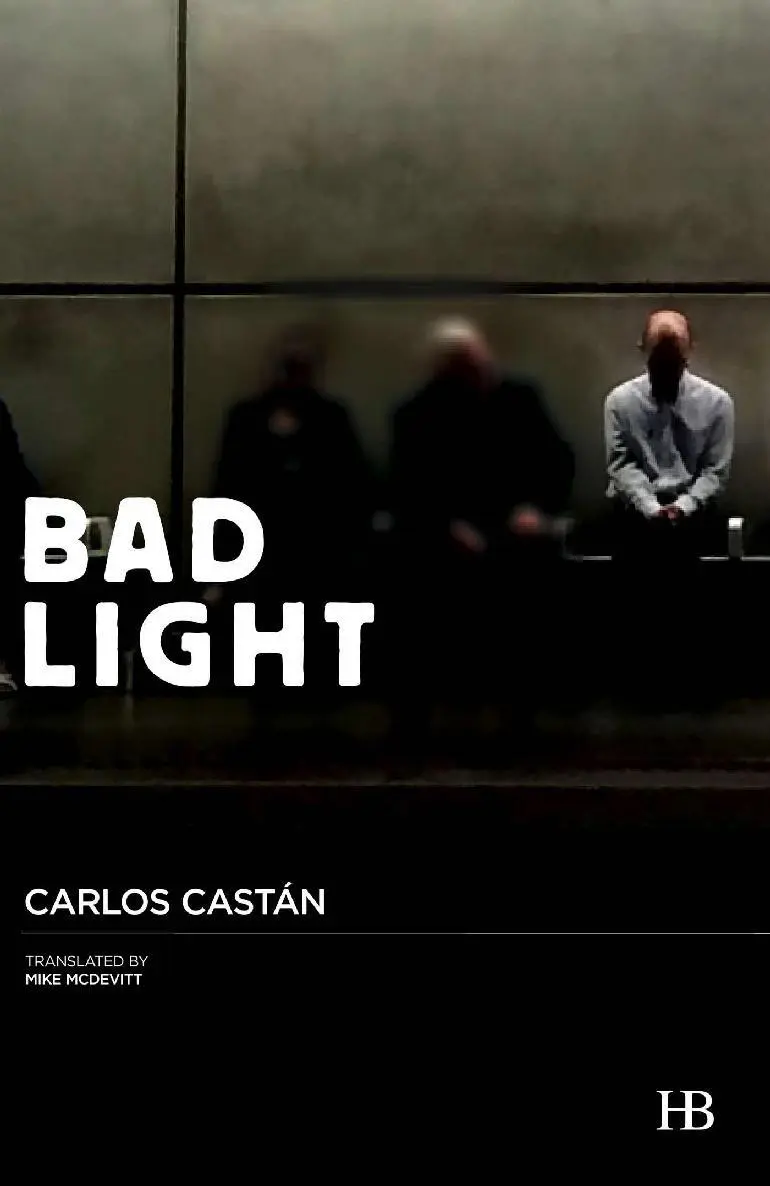
- Название:Bad Light
- Автор:
- Издательство:Hispabooks
- Жанр:
- Год:2016
- ISBN:нет данных
- Рейтинг книги:5 / 5. Голосов: 1
-
Избранное:Добавить в избранное
- Отзывы:
-
Ваша оценка:
Bad Light: краткое содержание, описание и аннотация
Предлагаем к чтению аннотацию, описание, краткое содержание или предисловие (зависит от того, что написал сам автор книги «Bad Light»). Если вы не нашли необходимую информацию о книге — напишите в комментариях, мы постараемся отыскать её.
Carlos Castán
Bad Light
Bad Light — читать онлайн бесплатно полную книгу (весь текст) целиком
Ниже представлен текст книги, разбитый по страницам. Система сохранения места последней прочитанной страницы, позволяет с удобством читать онлайн бесплатно книгу «Bad Light», без необходимости каждый раз заново искать на чём Вы остановились. Поставьте закладку, и сможете в любой момент перейти на страницу, на которой закончили чтение.
Интервал:
Закладка:
5 (other people’s fear)
Around about the date of my return from that trip came the period when Jacobo began to feel afraid at night. Very afraid, I mean, like a sort of extra helping on top of what he had felt, as a matter of course, his entire life. He could not bring himself to be alone. Sometimes he feared he would once again dream of the ghosts of Gestapo officers, hustling him from office to office before forcing him on board a train that crossed snow-covered forests, but for the most part he was afraid of more voracious, vaguer horrors. He would call me as the afternoon neared its end and summon me to his side. And so, without much of a fuss, I would toss my pajamas, a transistor radio with headphones, a toiletry bag, and a couple of books I had into a small backpack, and before long, I’d turn up at his door. It was easy, I barely had to lift a finger, and that’s the sort of job that’s always been right up my alley. Truth be told, he didn’t need looking after, and his mental state was seemingly normal most of the time. Indeed, on some nights you could say he was in particularly good spirits, and it was not therefore a matter for urgency or alarm. All that was asked of me was that I remain there, in his apartment, chatting idly about this, that, and the other, or each to his own, reading opposite one another, each man seated in his armchair, until we succumbed to sleep. It was by no means an unattractive proposition. Sometimes I’d sit there observing him, engrossed in his book and unaware that I was staring at him so openly — his close-cropped, graying hair, his air of a Reserve Marine, well into his sixties, equal parts affectionate and gruff, forever torn between those bottomless wells into which he would sink with increasing frequency and a certain joie de vivre that had to do above all with a love of art and fine wine, and a worship of women that might be described as not of this world; he even took pleasure in watching as they passed him by.
It’s strange to stand guard over something you cannot see. My enemy there, on that house-bound mission, was supposedly the legion of ghosts that were filing through his head, something intangible, dark, slippery to the touch, creatures that roamed unchecked on a plane to which I had no direct access (nor did he, that was the problem) and that would all of a sudden make him suspect the presence, on the other side of the window, of snout-like things all set to explode in a snarling fury or gleaming blades that made him think of an artery sliced in half, although for the time being they were content simply to bide their time out there, behind the poplars gently rocking in the nighttime breeze or submerged in the pools of asphalt lit up in amber by the traffic lights flashing throughout the early hours of morning. A force without name or measure. I would have been of little use in the event of an attack. I felt in a way as if I formed part of the sentry of a medieval king, facing the possible arrival of an alien invasion that would descend from the skies at supersonic speed, unleashing laser beams left, right, and center from a flying saucer. Eyes watchful, bow string and muscles pulled taut, a fierce gesture, and nothing more. That’s about it, little more than a token gesture of pointless loyalty, like the chanting of a crew as their ship goes inexorably under. I guess my presence was about as much use as a few drops of a placebo slipped slyly into his after-dinner glass of milk. But I realize that Jacobo did not call me so that I might air my opinion as to whether or not my dropping by was necessary or useful, but rather in order that I might heed his call, pure and simple; that’s how it goes when anxiety begins to squirm in the guts or the trembling of a memory, which all of a sudden, deep down, takes on a monstrous form, setting off alarms for good reason or otherwise. “You have to come, my thoughts are aquiver again,” he’d say, or, “I feel like I’m dying tonight.” This was his way of putting a name to the fear that everything would fade to black with no one on hand to whom he might say goodbye, or of spending another night sitting on the edge of the mattress, clawing at his scalp, as had happened before. When push came to shove, matters rarely came to a head when I was around. At times the anxiety was a little shriller and brandished shadowy claws that were never actually put to use, while at others it was simply the gentle perception of a heart slowing down, a sadness like a faded afternoon, when tedium cloaks objects and memories, without distinction, in the same invisible fog in which desire cannot breathe.
This was not the first time someone had made such a request of me. I have had relatives who were afraid of dying alone, in the middle of the night, and I have turned up on their doorsteps carrying a similar backpack, with the same satisfaction at being of use without having to lift barely a finger, for in reality they are content just to hear your breathing, to sense the mild heat a human body gives off, the occasional household noise close by, anything will do — the coffee pot on the stove, the click of a lighter — and to know that you’re on hand and will call the on-duty doctor, the ambulance, or whoever, should it come to that, or will at least squeeze their hand when the time comes to drift inevitably off to what they have occasionally glimpsed as a clinging darkness with no hope of return, when a sticky silence begins to pull them by the feet, dragging them with irresistible force from the other side of a sudden vertigo or the very sound of their galloping pulse. There ought to be some sort of protection for the mind, somehow, like a kind of sheepdog that, whenever one such venomous thought is about to venture into the swampy regions of the memory or project new forms of shadow or cobwebs, would herd it back together with the rest of the flock into some quiet enclosure bathed in light; it would tear the circle of obsession apart with its teeth, round up the stampeding ghosts, hunt them down through the labyrinths, sink its fangs into them until their veins of black juice burst once and for all or they were imprisoned in silence inside the pen.
In times gone by, many years ago now, I’ve also found myself on the other side. In other words, I was the one in dire need of a nearby presence so as not to succumb to panic. This was back in the toxic, hectic Madrid of the eighties, when my brain was a giant, raw wound inside my head. I remember my little mat laid out on the floor, at the foot of my friend Andrés’s bed, when we shared an apartment in the Estrecho district, and how his steady breathing somehow helped me keep time with my own in an attempt to sleep. Truth is, there is little more that can be done. It is at such times that I have caught the clearest glimpse of the fundamental loneliness of a human being, any human being, and the impossibility of any real communication. There is no transplant of nerves or blood, no way of releasing that fear from its cage. Two people can even hold each other tight, clutching hands, yet one will never truly be able to penetrate the other’s hell, or even remotely understand it. It’s impossible. Beyond a rudimentary sense of empathy that all but ends with the certainty that the other is suffering — but this is just abstract — there is nothing that can be done to penetrate the other’s thoughts, the other’s fear, and to fight tooth and nail, as one might so often wish, against the ghosts and the storms that are gathering in there. There is a profound, painful truth to that vision of Goethe’s whereby one’s inner life is akin to a sort of fortified citadel that no one can ever truly breach or, for that matter, leave, though linguistic sleight of hand may conjure an illusion to the contrary. In the middle of the night, two friends embrace in their pajamas, they ruffle each other’s hair, exchanging words of loyalty and encouragement, but only one is torn asunder, trembling inside, only one breaks out in an icy sweat.
Читать дальшеИнтервал:
Закладка:
Похожие книги на «Bad Light»
Представляем Вашему вниманию похожие книги на «Bad Light» списком для выбора. Мы отобрали схожую по названию и смыслу литературу в надежде предоставить читателям больше вариантов отыскать новые, интересные, ещё непрочитанные произведения.










Обсуждение, отзывы о книге «Bad Light» и просто собственные мнения читателей. Оставьте ваши комментарии, напишите, что Вы думаете о произведении, его смысле или главных героях. Укажите что конкретно понравилось, а что нет, и почему Вы так считаете.