Rafik Schami - Damascus Nights
Здесь есть возможность читать онлайн «Rafik Schami - Damascus Nights» весь текст электронной книги совершенно бесплатно (целиком полную версию без сокращений). В некоторых случаях можно слушать аудио, скачать через торрент в формате fb2 и присутствует краткое содержание. Год выпуска: 2011, Издательство: Interlink Books, Жанр: Современная проза, на английском языке. Описание произведения, (предисловие) а так же отзывы посетителей доступны на портале библиотеки ЛибКат.
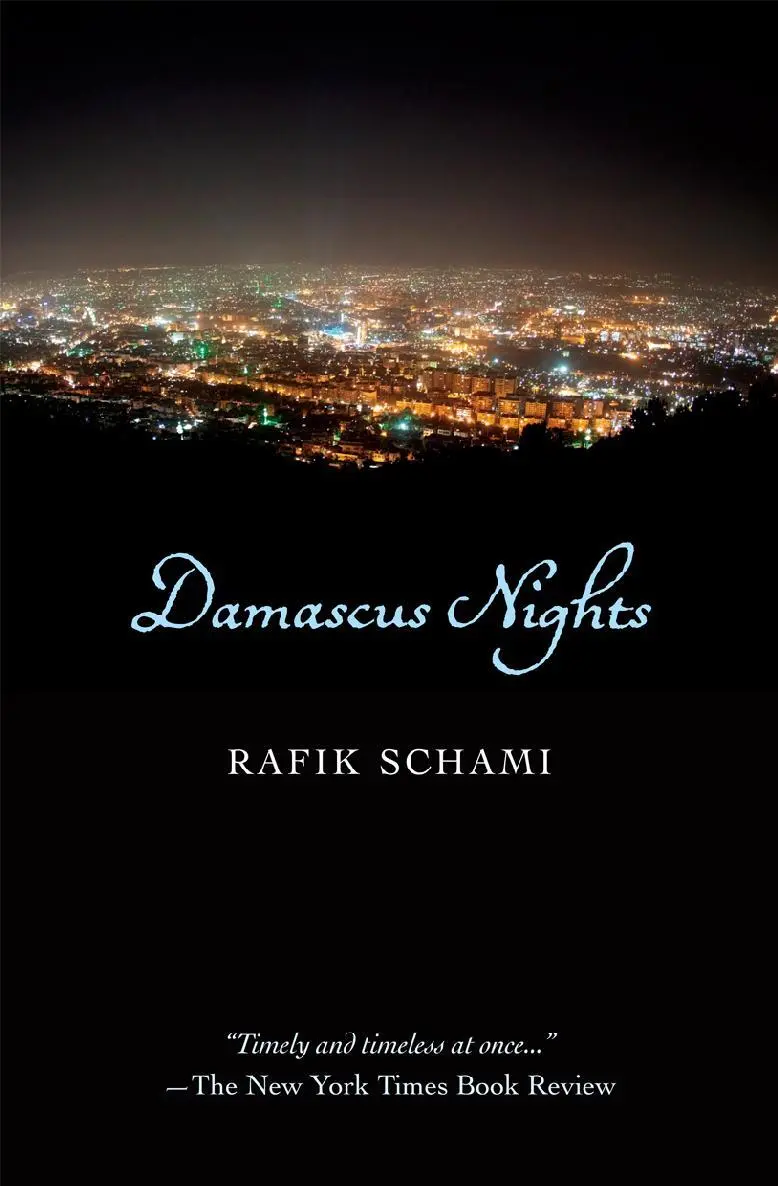
- Название:Damascus Nights
- Автор:
- Издательство:Interlink Books
- Жанр:
- Год:2011
- ISBN:нет данных
- Рейтинг книги:4 / 5. Голосов: 1
-
Избранное:Добавить в избранное
- Отзывы:
-
Ваша оценка:
Damascus Nights: краткое содержание, описание и аннотация
Предлагаем к чтению аннотацию, описание, краткое содержание или предисловие (зависит от того, что написал сам автор книги «Damascus Nights»). Если вы не нашли необходимую информацию о книге — напишите в комментариях, мы постараемся отыскать её.
Damascus Nights — читать онлайн бесплатно полную книгу (весь текст) целиком
Ниже представлен текст книги, разбитый по страницам. Система сохранения места последней прочитанной страницы, позволяет с удобством читать онлайн бесплатно книгу «Damascus Nights», без необходимости каждый раз заново искать на чём Вы остановились. Поставьте закладку, и сможете в любой момент перейти на страницу, на которой закончили чтение.
Интервал:
Закладка:
On this particular morning the younger brother appeared on the balcony and shouted down to the potato peddler: "Are those potatoes firm?" The vendor only turned around quickly and called back up with a bitter smile: "I'm not selling. I'm just out for a walk."
"Outrageous. These people whine about not having any business and then it turns out they're just out for a walk!" The millionaire waxed indignant.
"Once burned, twice shy," thought Salim, and he, too, smiled bitterly. Indeed, the peddler knew the brothers all too well. Only a newcomer would have been taken in by that polite question. The minute he pushed his cart up to their door, both brothers would throw themselves on his wares, and an hour later the peddler would be exhausted and all his vegetables nibbled and gnawed. The brothers' surefire methods guaranteed that both would come away from the transaction with full stomachs. First they would munch on something, then say in a horrified tone: "Now see here, do you think we're that dumb? You can't charge a whole lira for this half-eaten head of lettuce!" Nor were they above devouring unwashed cauliflower, lettuce leaves, or carrots.
The miserly brothers lived like recluses, as if they didn't belong to the neighborhood. An old man with crooked legs sifted the anise for them through huge wire sieves from morning to night and packed it into large burlap sacks. Salim had known the man for over fifty years. He never spoke, but he showed up every morning and disappeared into the anise dust. Over time Salim noted that the man was shrinking. His legs became more crooked with every passing year, and his face took on the gray-green color of aniseed.
The Street Called Straight, which leads into Abara Street, has a different smell entirely. The musty odor of the pub hits you the moment you reach the crossing. The street itself reeks of horses and sweat, and were it not for Karim the fruit vendor the stench would be unbearable.
Karim sold what may have been the best fruit in the world. It always cost a little more than elsewhere, but it looked magnificent and gave off a wonderful bouquet. Fruit, you see, is first eaten with the eyes, then with the nose, and only lastly with the mouth. Karim did tend to exaggerate in praising his produce: "Whatever you can't smell from five yards away is yours for free!" But there was no question that the aromas wafted further than just around the corner. Karim lined the entrance to his shop with two rows of fruit crates; they looked like two rows of colorful teeth belonging to some gigantic mouth.
In fact, the whole street looked like a giant mouth lined with festive teeth made of packaged candies and nuts that glistened plump and tempting. No wonder people were so eager to stick their heads inside the great gorge of the Street Called Straight. Just as rich old Damascenes decorate their mouths with gold teeth, so the venerable Damascus streets have adorned themselves since Roman times with carpets, nuts, copper kettles, and elaborately inlaid woodwork.
Salim shut his eyes and proceeded, very slowly, testing the street with his ears and his nose. Beyond the crossing he could make out the sweet voice of the drink vendor. "Come in, come in" — he encouraged every passerby to step inside. Salim wondered whether he could have ever guessed, judging by the high voice alone, that the man was as fat as he was. One step farther things came to a complete hush, and Salim took in an unusual smell. Yes, that was the apothecary. Salim smiled, and just then he heard Hassan the shoeshine man: "Shoeshine? Happy Dew, here I am! Shoe-shiiiine!"
Suddenly, with his eyes still closed, Salim saw Hassan the one-eyed farmer, who at the crack of dawn, every day for decades, had led his ten Damascus goats — this was an especially docile breed of goat, with soft, red hair and large, well-rounded udders — through the streets of the city selling the fresh, warm milk. A year before, the government had ordered him to stop, claiming that the milk was unhygienic and that the goats were an eyesore that marred the image of the city. The farmer, however, stubbornly persisted in coming to town despite the police warnings — until his goats were finally confiscated.
So now, whenever there were funeral processions, Hassan would carry the floral wreaths in front of the coffins, or else he would help the flower seller Nuri with weddings, presenting magnificent bouquets to the celebrants. But when nobody was dying or getting married, Hassan would kill time by shining shoes. He was convinced that one day his goats would break out of their captivity and find him here, where he used to take a little rest each day, after covering three streets, to feed his beloved animals.
Whether Hassan was carrying bridal bouquets or polishing shoes, he always called out loudly to his goats. Only at funerals did he lower his voice and simply murmur their names quietly. People made fun of him, but Hassan was absolutely certain his ten goats would soon appear. He might occasionally forget to eat his lunch, but never, ever, had he confused one goat with another. "No, Happy Dew has a round white spot between her eyes but no black dot on her left ear like her twin sister, Cool Breeze," he would answer testily when people teased him by mixing up the names of his goats. "Shoe-shiiine, Salim, my friend? Greetings! Silver Moon, here I am! Shoe-shiiine!" he called out again loudly.
Salim touched the shoeshine man on the shoulder and steered around his pungent shoeshine box. One step more and he could hear the noises of the woodworking shop, famous for its fine inlay. The old coachman, afraid he might at any moment trip over one of the wooden boxes drying in the winter sun, proceeded cautiously along his way. So he was all the more surprised when he stepped right into a deep, muddy pothole and lost his balance. Flinging his arms out wide, he hit a woodworker rushing over to help him smack on the nose. Tears welled up in the man's eyes, and all Salim could do was smile at him in embarrassment.
Instead of being ashamed at his own childish sport, Salim inwardly cursed the president, whom he held personally responsible for every pothole in the ancient city. Then he continued on his walk, with open eyes and a muddy right foot.
Inside the coppersmith shops the small chisels sounded as if they were chattering with the blank copper plates. While they left their marks on the copper cans and pots, the chisels themselves stayed blank, as if unimpressed by the tinny copper prattle. Salim stopped at one of the smallest booths, whose owner he knew well. The somewhat squat, fifty-year-old man recognized the old coachman right away. He left the tray he was working on, and hurried over to Salim. "Uncle Salim, what's this I hear? Junis told me the whole story. By my children's health, I've been worried sick about you. Come inside. Do me the honor and come inside for some coffee."
Salim went in with the man, who immediately sent an apprentice to a nearby cafe to bring the old coachman a mocha.
The small shop smelled of tar and burnt cloth. The coppersmith noticed the anxiety on the old coachman's face. "God has been merciful to me. My apprentice wanted to heat up the tar a little to keep the copper plate from nicks and dents, and in the process the curtain caught fire. I was sitting with my back to the shop and didn't smell a thing. I've had a cold for days. But God protected me and the bread of my children — probably because I took this orphan in as my apprentice." The craftsman grabbed Salim by the sleeve and looked around. "What kind of times are these?" he asked quietly. "Have you heard about the cholera up north? You I can tell this to. I heard about it from my cousin. He just came from there. Uncle, what kind of government is this that doesn't even tell its own people about a cholera epidemic? And why? So the tourists won't be scared away. God knows I'm not some frightened little rabbit; besides, it's all the same to me. I've lived long enough. But my six children! The poor children. For weeks now they haven't been allowed to buy any treats on the street, and we wash everything we eat with hot water and potassium permanganate. Maybe I'm overdoing it. Do you think there's an epidemic?"
Читать дальшеИнтервал:
Закладка:
Похожие книги на «Damascus Nights»
Представляем Вашему вниманию похожие книги на «Damascus Nights» списком для выбора. Мы отобрали схожую по названию и смыслу литературу в надежде предоставить читателям больше вариантов отыскать новые, интересные, ещё непрочитанные произведения.












Обсуждение, отзывы о книге «Damascus Nights» и просто собственные мнения читателей. Оставьте ваши комментарии, напишите, что Вы думаете о произведении, его смысле или главных героях. Укажите что конкретно понравилось, а что нет, и почему Вы так считаете.