Edward Jones - All Aunt Hagar's Children
Здесь есть возможность читать онлайн «Edward Jones - All Aunt Hagar's Children» весь текст электронной книги совершенно бесплатно (целиком полную версию без сокращений). В некоторых случаях можно слушать аудио, скачать через торрент в формате fb2 и присутствует краткое содержание. Год выпуска: 2006, Издательство: Amistad, Жанр: Современная проза, на английском языке. Описание произведения, (предисловие) а так же отзывы посетителей доступны на портале библиотеки ЛибКат.
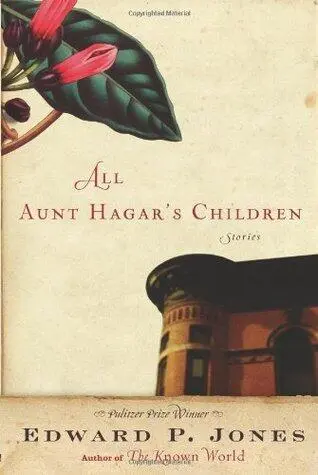
- Название:All Aunt Hagar's Children
- Автор:
- Издательство:Amistad
- Жанр:
- Год:2006
- ISBN:нет данных
- Рейтинг книги:4 / 5. Голосов: 1
-
Избранное:Добавить в избранное
- Отзывы:
-
Ваша оценка:
All Aunt Hagar's Children: краткое содержание, описание и аннотация
Предлагаем к чтению аннотацию, описание, краткое содержание или предисловие (зависит от того, что написал сам автор книги «All Aunt Hagar's Children»). Если вы не нашли необходимую информацию о книге — напишите в комментариях, мы постараемся отыскать её.
, the bestselling and Pulitzer Prize-winning author of
shows that his grasp of the human condition is firmer than ever.
Returning to the city that inspired his first prizewinning book,
, Jones has filled this new collection with people who call Washington, D.C., home. Yet it is not the city's power brokers that most concern him but rather its ordinary citizens.
turns an unflinching eye to the men, women, and children caught between the old ways of the South and the temptations that await them further north, people who in Jones's masterful hands, emerge as fully human and morally complex, whether they are country folk used to getting up with the chickens or people with centuries of education behind them.
In the title story, in which Jones employs the first-person rhythms of a classic detective story, a Korean War veteran investigates the death of a family friend whose sorry destiny seems inextricable from his mother's own violent Southern childhood. In "In the Blink of God's Eye" and "Tapestry" newly married couples leave behind the familiarity of rural life to pursue lives of urban promise only to be challenged and disappointed.
With the legacy of slavery just a stone's throw away and the future uncertain, Jones's cornucopia of characters will haunt readers for years to come.
All Aunt Hagar's Children — читать онлайн бесплатно полную книгу (весь текст) целиком
Ниже представлен текст книги, разбитый по страницам. Система сохранения места последней прочитанной страницы, позволяет с удобством читать онлайн бесплатно книгу «All Aunt Hagar's Children», без необходимости каждый раз заново искать на чём Вы остановились. Поставьте закладку, и сможете в любой момент перейти на страницу, на которой закончили чтение.
Интервал:
Закладка:
“Listen,” he said as she talked about her father, “everything’s gonna work out right for you.” He knew that, at such times in a seduction, the more positive a man was the better things went. It would not have done to tell her to forget her daddy, that she had done the right thing by running out on that fat so-and-so; it was best to focus on tomorrow and tell her that the world would be brighter in the morning. He came over to the couch, and before he sat down on the edge of the coffee table he hiked up his pants just a bit with his fingertips, and seeing him do that reminded her vaguely of something wonderful. The boys in the club sure didn’t do it that way. He took her hand and kissed her palm. “Everything’s gonna work out to the good,” he said.
Elaine Cunningham woke in the morning with Horace sleeping quietly beside her. She did not rebuke herself and did not look over at him with horror at what she had done. She sighed and laid her head back on the pillow and thought how much she still loved the man from the club, but there was nothing more she could do: not even the five-hundred-dollar leather jacket she had purchased for the man had brought him around. Two years after running away, she had gone back to where she had lived with her parents, but they had moved and no one in the building knew where they had gone. But everyone remembered her. “You sure done growed up, Elaine,” one old woman said. “I wouldna knowed if you hadn’t told me who you was.” “Fuck em,” Elaine said to the friends who had given her a ride there. “Fuck em all to hell.” Then, in the car, heading out to Capitol Heights, where she was staying, “Well, maybe not fuck my mother. She was good.” “Just fuck your daddy then?” the girl in the backseat said. Elaine thought about it as they went down Rhode Island Avenue, and just before they turned onto New Jersey Avenue she said, “Yes, just fuck my daddy. The fat fuck.”
She got out of Horace’s bed and tried to wet the desert in her mouth as she looked in his closet for a bathrobe. She rejected the blue and the paisley ones for a dark green one that reminded her of something wonderful, just as Horace’s hiking up his pants had. She smelled the sleeves once she had it on, but there was only the strong scent of detergent.
In the half room that passed for a kitchen, she stood and drank most of the orange juice in the gallon carton. “Now, that was stupid, girl,” she said. “You know you shoulda drunk water. Better for the thirst.” She returned the carton to the refrigerator and marveled at all the food. “Damn!” she said. With the refrigerator door still open, she stepped out into the living room and took note of all that Horace had, thinking, A girl could live large here if she did things right. She had been crashing at a friend’s place in Northeast, and the friend’s mother had begun to hint that it was time for her to move on. Even when she had a job, she rarely had a place of her own. “Hmm,” she said, looking through the refrigerator for what she wanted to eat. “Boody for home and food. Food, home. Boody. You shoulda stayed in school, girl. They give courses on this. Food and Home the first semester. Boody Givin the second semester.”
But, as she ate her eggs and bacon and Hungry Man biscuits, she knew that she did not want to sleep with Horace too many more times, even if he did have his little castle. He was too tall, and she had never been attracted to tall men, old or otherwise. “Damn! Why couldn’t he be what I wanted and have a nice place, too?” Then, as she sopped up the last of the yolk with the last half of the last biscuit, she thought of her best friend, Catrina, the woman she was crashing with. Catrina Stockton was twenty-eight, and though she had once been a heroin addict, she was one year clean and had a face and a body that testified not to a woman who had lived a bad life on the streets but to a nice-looking Virginia woman who had married at seventeen, had had three children by a truck-driving husband, and had met a man in a Fredericksburg McDonald’s who had said that women like her could be queens in D.C.
Yes, Elaine thought as she leaned over the couch and stared at the photograph of Horace and Loneese and the secretary of defense, Catrina was always saying how much she wanted love, how it didn’t matter what a man looked like, as long as he was good to her and loved her morning, noon, and night. The secretary of defense was in the middle of the couple. She did not know who he was, just that she had seen him somewhere, maybe on the television. Horace was holding the plaque just to the left, away from the secretary. Elaine reached over and removed a spot of dust from the picture with her fingertip, and before she could flick it away, a woman said her name and she looked around, chilled.
She went into the bedroom to make sure that the voice had not been death telling her to check on Horace. She found him sitting up in the bed, yawning and stretching. “You sleep good, honey bunch?” he said. “I sure did, sweetie pie,” she said and bounded across the room to hug him. A breakfast like the one she’d had would cost at least four dollars anywhere in D.C. or Maryland. “Oh, but Papa likes that,” Horace said. And even the cheapest motels out on New York Avenue, the ones catering to the junkies and prostitutes, charged at least twenty-five dollars a night. What’s a hug compared with that? And, besides, she liked him more than she had thought, and the issue of Catrina and her moving in had to be done delicately. “Well, just let me give you a little bit mo, then.”
Young stuff is young stuff, Horace thought the first time Elaine brought Catrina by and Catrina gave him a peck on the cheek and said, “I feel like I know you from all that Elaine told me.” That was in early March.
In early April, Elaine met another man at a new club on F Street, N.W., and fell in love, and so did Horace with Catrina, though Catrina, after several years on the street, knew what she was feeling might be in the neighborhood of love but it was nowhere near the right house. She and Elaine told Horace the saddest of stories about the man Elaine had met in the club, and before the end of April he was sleeping on Horace’s living-room floor. It helped that the man, Darnell Mudd, knew the way to anyone’s heart, man or woman, and that he claimed to have a father who had been a hero in the Korean War. He even knew the name of the secretary of defense in the photograph and how long he had served in the Cabinet.
By the middle of May, there were as many as five other people, friends of the three young people, hanging out at any one time in Horace’s place. He was giddy with Catrina, with the blunts, with the other women who snuck out with him to a room at the motel on 13th Street. By early June, more than a hundred of his old records had been stolen and pawned. “Leave his stuff alone,” Elaine said to Darnell and his friends as they were going out the door with ten records apiece. “Don’t take his stuff. He loves that stuff.” It was eleven in the morning, and everyone else in the apartment, including Horace, was asleep. “Shhh,” Darnell said. “He got so many he won’t notice.” And that was true. Horace hadn’t played records in many months. He had two swords that were originally on the wall opposite the heating-and-air-conditioning unit. Both had belonged to German officers killed in the Second World War. Horace, high on the blunts, liked to see the young men sword-fight with them. But the next day, sober, he would hide them in the bottom of the closet, only to pull them out again when the partying started, at about four in the afternoon.
His neighbors, especially the neighbors who considered that Loneese had been the long-suffering one in the marriage, complained to the management about the noise, but the city government people read in his rental record that he had lost his wife not long ago and told the neighbors that he was probably doing some kind of grieving. The city government people never went above the first floor in Claridge. “He’s a veteran who just lost his wife,” they would say to those who came to the glass office on the first floor. “Why don’t you cut him some slack?” But Horace tried to get a grip on things after a maintenance man told him to be careful. That was about the time one of the swords was broken and he could not for the life of him remember how it had happened. He just found it one afternoon in two pieces in the refrigerator’s vegetable bin.
Читать дальшеИнтервал:
Закладка:
Похожие книги на «All Aunt Hagar's Children»
Представляем Вашему вниманию похожие книги на «All Aunt Hagar's Children» списком для выбора. Мы отобрали схожую по названию и смыслу литературу в надежде предоставить читателям больше вариантов отыскать новые, интересные, ещё непрочитанные произведения.











Обсуждение, отзывы о книге «All Aunt Hagar's Children» и просто собственные мнения читателей. Оставьте ваши комментарии, напишите, что Вы думаете о произведении, его смысле или главных героях. Укажите что конкретно понравилось, а что нет, и почему Вы так считаете.