Jonis Agee - The Bones of Paradise
Здесь есть возможность читать онлайн «Jonis Agee - The Bones of Paradise» весь текст электронной книги совершенно бесплатно (целиком полную версию без сокращений). В некоторых случаях можно слушать аудио, скачать через торрент в формате fb2 и присутствует краткое содержание. Год выпуска: 2016, Издательство: William Morrow, Жанр: Современная проза, на английском языке. Описание произведения, (предисловие) а так же отзывы посетителей доступны на портале библиотеки ЛибКат.
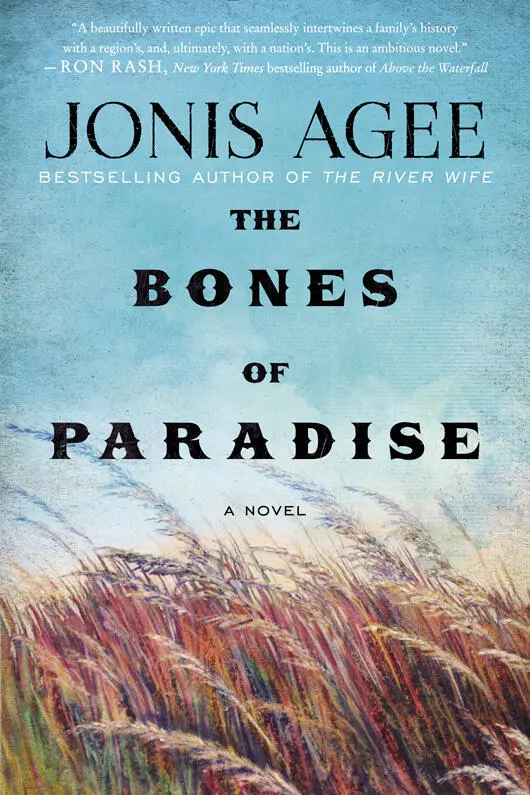
- Название:The Bones of Paradise
- Автор:
- Издательство:William Morrow
- Жанр:
- Год:2016
- ISBN:нет данных
- Рейтинг книги:3 / 5. Голосов: 1
-
Избранное:Добавить в избранное
- Отзывы:
-
Ваша оценка:
The Bones of Paradise: краткое содержание, описание и аннотация
Предлагаем к чтению аннотацию, описание, краткое содержание или предисловие (зависит от того, что написал сам автор книги «The Bones of Paradise»). Если вы не нашли необходимую информацию о книге — напишите в комментариях, мы постараемся отыскать её.
returns with a multi-generational family saga, set in the unforgiving Nebraska Sandhills in the years following the massacre at Wounded Knee—an ambitious tale of history, vengeance, race, guilt, betrayal, family, and belonging, filled with a vivid cast of characters shaped by violence, love, and a desperate loyalty to the land. Ten years after the 7th Calvary massacred more than 200 Lakota men, women, and children at Wounded Knee, J. B. Bennett, a white rancher, and Star, a young Native American woman, are murdered in a remote meadow on J. B.’s land. The deaths bring together the scattered members of the Bennett family: his cunning and hard father, Drum; his estranged wife, Dulcinea; and his young sons, Cullen and Hayward. As the mystery of these twin deaths unfolds, the history of the dysfunctional Bennett’s and their damning secrets are revealed exposing the conflicted heart of a nation caught between past and future.
At the center of
are two remarkable women. Dulcinea, returned after bitter years of self-exile, yearns for redemption and the courage to mend her broken family and reclaim the land that is rightfully hers. Rose, scarred by the terrible slaughters that have decimated and dislocated her people, struggles to accept the death of her sister, Star, and refuses to rest until she is avenged.
A kaleidoscopic portrait of misfits, schemers, chancers, and dreamers, Jonis Agee’s bold new novel is a panorama of America at the dawn of a new century. A beautiful evocation of this magnificent, blood-soaked land—its sweeping prairies, seas of golden grass and sandy hills, all at the mercy of two unpredictable and terrifying forces, weather and lawlessness—and the durable men and women who dared to tame it. Intimate and epic,
is a remarkable achievement: a mystery, a tragedy, a romance, and an unflagging exploration of the beauty and brutality, tenderness and cruelty that defined the settling of the American west.
The Bones of Paradise — читать онлайн бесплатно полную книгу (весь текст) целиком
Ниже представлен текст книги, разбитый по страницам. Система сохранения места последней прочитанной страницы, позволяет с удобством читать онлайн бесплатно книгу «The Bones of Paradise», без необходимости каждый раз заново искать на чём Вы остановились. Поставьте закладку, и сможете в любой момент перейти на страницу, на которой закончили чтение.
Интервал:
Закладка:
When she entered, the store assaulted her senses in a multitude of ways—first it was the riot of stink, the high crafty stench of a half circle of pale cheese the size of a wagon wheel, the myriad smells of harsh black bars of store soap and braids of garlic so old the dust hung in long strands as if the gray-white bulbs wept, barrels of apples and squash and potatoes with the rich scent of ripeness turning to rot, the dry stale odors from bins of flour and rice and beans and sugar, the acrid aroma of coffee beans, the half-rancid layer of lard and butter and milk left too long in the warm room, the damp ashes in the stove, the deep-smoked grease of bacon and ham strung on rope that had begun to carry the green hue of the molding skin rind, the thinner, sharper tang of sausage loops that spanned the corner of the meat counter like Christmas tree strands, the rich shine of the brown-red casings decorative against the drab browned plaster walls.
In the women’s goods, a thin layer of cheap perfume hung in the air, a too-sweet idea of flowers that clung to the nose and mouth, competing with the odor of bran mash, straw, and hot downy bodies from the feed area, where the baby chicks, goslings, and ducks were corralled in separate pens, crowding and cheeping in the corner under the heat of kerosene light. She leaned over and inhaled the manure-and-mash smell, reached down and cupped a downy black chick and brought it squirming to her face. It flapped and protested, its tiny eye blinking furiously as it paddled the air, and stabbed its beak at her fingers. She cooed and stroked its head until its eyes drooped sleepily, then held its body against her cheek, closed her eyes, and she was there, that first spring when J.B. brought the chicks home from town in a wooden box he had wrapped in burlap against the cold—fifteen chicks, and she insisted they keep them in the corner of the kitchen where it was warm. She never minded their stink, because she never tired of watching them chase each other until they collapsed in a heap in the corner of the pen, eyes squeezed tight against the light, tiny chests pumping slowly in and out. She wanted to make them her pets, to press that plump downy ball into the hollow of her neck and feel the soft search of its tongue against the underside of her chin—but the coyotes and snakes took every one as soon as they put them outside. For the next batch they built a coop and a large pen to contain them until they were grown and smart enough to be turned loose. They only lost five of those. Were the chickens now at the ranch descendants of those survivors?
Near the implements she noted the source of the oily smell that put a sheen over the whole store—the leather, guns, shovels and rakes and hoes, the spools of chain and rope and wire all wore it: saddles, harness, strap goods, boots and shoes, even the long waxed coats shared it—the odor of preservation, of what it took to keep their lives out here, if not smoothly, then at least withstanding. It had been so long since any of this mattered to her that she wanted to pause, run her fingers over the goods, and let the rich scent soak into her skin.
Suddenly, the indefinable spice of her husband after a day of hard work, the heavy sweet sweat that smelled so intimate it could be coming from her own body. She turned abruptly, and Graver was watching her, his arms spread across the aisle, hands resting on the plank shelves. She blushed and dropped her eyes, opened her mouth to speak and found the words had disappeared. In the dimness, he looked ever so slightly like J.B. Nonsense, she chided herself and blinked away the tears.
CHAPTER FIFTEEN
At the post office window tucked in the back corner of the store, Dulcinea loaded Graver’s arms with packages and directed him to the runabout, but as he stepped off the plank walk, the stack began to slide. He felt like an inept clown juggling parcels while a couple on the walk watched the spectacle.
A tall, narrow dog sauntered over, sniffed a box lying in the muck, licked his chops, daintily picked up an edge in his teeth, and turned to run.
“That’s my chocolates! Here, give that back!” Dulcinea shouted at the dog, a black-and-white long-haired creature with a whiplike tail and jutting hips. It turned to stare at the commanding figure on the walk, and with eyes down, ambled over, hesitated in front of Dulcinea, and then carefully placed the box at her feet. Only then did the dog look up, its red-rimmed, watery eyes hopeful. Dulcinea stared back for a full minute before bending to retrieve the package with one hand while she stretched out the other to let the dog sniff her fingers.
It leapt onto the boardwalk with an awkward, shambling grace, more akin to grasshopper than deer, and immediately sat with its head at her waist, tongue lolling as it opened its jaws in a happy, panting grin, eyes bright, tail thumping a steady rhythm like a person knocking on the door to a house.
“Why, he’s somebody’s dog! He’s such a good boy, aren’t you, aren’t you a good boy?” Dulcinea cooed and rubbed his head, cupping each ear in her hand and massaging with slow, circular motions that brought groans of appreciation from deep within the animal.
“I’m afraid he was someone’s dog,” a tall stranger paused to remark. “A family of homesteaders who returned to Missouri last month. Dog couldn’t keep up with the wagon. Sore leg. They weren’t of a mind to pack him in with the kids and furniture, so they tied him up outside of town and left him. He’s been living high on the hog, as you can see.” The stranger gestured toward the ribs that sprang out when the animal sat.
Graver deposited the packages in the empty back of the runabout, stepped up to the walk, and brushed at the dirt on his trousers.
A Mormon ranch family edged by the group, turning their heads to stare even when they were well past. The woman and her daughter wore old-fashioned sunbonnets and the group dressed entirely in black and white. Behind them came a Negro couple, the man in a carefully fitted dark blue suit, the woman a sky-blue gown. Dulcinea stared openly at the passersby.
“Every color and faith out here. Live and let live, I say.” The stranger lifted his hat and resettled it.
She studied him for a moment, then returned her attention to the dog. She was going to keep him, Graver realized, and the stranger seemed reluctant to move along.
“Percival Chance, ma’am, attorney-at-law.” He bowed slightly and touched the brim of his gray cowboy hat. The pants and coat sleeves of his black western-cut suit were shiny, threadbare at the edges, and the once-white shirt a dingy gray. The leather of his black-polished boots was so worn, there was a brown undercast to the shine, and the soles were thin as cardboard. Must not be much money in lawyering, Graver decided.
Dulcinea nodded. “Mrs. J. B. Bennett.”
The lawyer glanced at the riding costume she wore instead of a black mourning dress. “My apologies, Mrs. Bennett. May I extend my condolences?”
She tipped her head. “You may do anything you’d like, Mr. Chance, but I thought Mr. Rivers was the only lawyer in town.”
Chance’s fair, handsome features tightened, his skin stretched over the sharp cheekbones and fine straight nose. “It’s a mistake I am correcting.”
Graver studied his face, the sardonic mouth, almost smug with secret amusement at the world’s expense. Maybe he was being too hard on the man, but he could not shake the sense they’d met before, and that it hadn’t been an altogether pleasant encounter.
Dulcinea patted the dog a little too hard on the head. To his credit, the animal merely squinted and flattened his ears. “If you’ll fashion a collar and leash for him, Mr. Graver, and tie him in the runabout. Wait, here, use this.” She unclasped the buckle and slid the belt from her waist in a single motion, while the men stared, and wrapped it twice around the dog’s neck and fastened it. “And now a leash. Maybe a piece of harness? I’m taking him home. Can you go ask the storekeeper for some meat scraps and a bone?”
Читать дальшеИнтервал:
Закладка:
Похожие книги на «The Bones of Paradise»
Представляем Вашему вниманию похожие книги на «The Bones of Paradise» списком для выбора. Мы отобрали схожую по названию и смыслу литературу в надежде предоставить читателям больше вариантов отыскать новые, интересные, ещё непрочитанные произведения.








Обсуждение, отзывы о книге «The Bones of Paradise» и просто собственные мнения читателей. Оставьте ваши комментарии, напишите, что Вы думаете о произведении, его смысле или главных героях. Укажите что конкретно понравилось, а что нет, и почему Вы так считаете.