Tim Murphy - Christodora
Здесь есть возможность читать онлайн «Tim Murphy - Christodora» весь текст электронной книги совершенно бесплатно (целиком полную версию без сокращений). В некоторых случаях можно слушать аудио, скачать через торрент в формате fb2 и присутствует краткое содержание. Год выпуска: 2016, Издательство: Grove Press, Жанр: Современная проза, на английском языке. Описание произведения, (предисловие) а так же отзывы посетителей доступны на портале библиотеки ЛибКат.
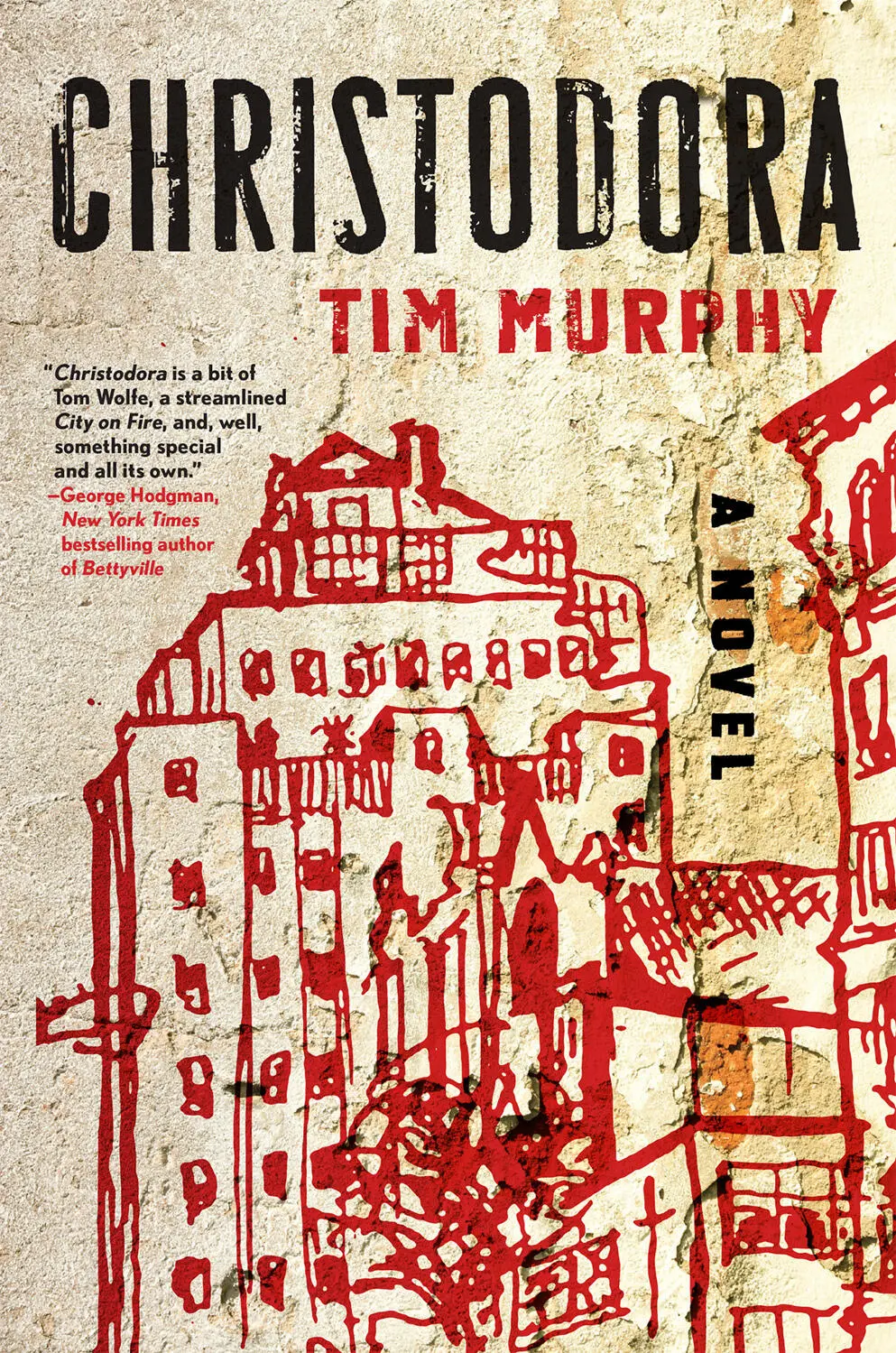
- Название:Christodora
- Автор:
- Издательство:Grove Press
- Жанр:
- Год:2016
- ISBN:нет данных
- Рейтинг книги:4 / 5. Голосов: 1
-
Избранное:Добавить в избранное
- Отзывы:
-
Ваша оценка:
Christodora: краткое содержание, описание и аннотация
Предлагаем к чтению аннотацию, описание, краткое содержание или предисловие (зависит от того, что написал сам автор книги «Christodora»). Если вы не нашли необходимую информацию о книге — напишите в комментариях, мы постараемся отыскать её.
recounts the heartbreak wrought by AIDS, illustrates the allure and destructive power of hard drugs, and brings to life the ever-changing city itself.
Christodora — читать онлайн бесплатно полную книгу (весь текст) целиком
Ниже представлен текст книги, разбитый по страницам. Система сохранения места последней прочитанной страницы, позволяет с удобством читать онлайн бесплатно книгу «Christodora», без необходимости каждый раз заново искать на чём Вы остановились. Поставьте закладку, и сможете в любой момент перейти на страницу, на которой закончили чтение.
Интервал:
Закладка:
Now Mateo is scrambled. “Say what?”
“You heard me,” Hector says. “You know now about the woman who had you. Now you go to the woman who raised you.”
Mateo looks down, kicks one sneaker with the other. “I told you, we haven’t talked in, like, ten years.”
“Okay, fine,” says Hector. “So now you’re in New York, so you can go pay her a visit.”
Mateo says nothing.
Hector laughs. “There,” he says. “Now you know why you came to see me today.”
“You know why I came to see you,” Mateo protests. “To ask you about my real mother.”
Hector giggles now, like he’s feeling the full ripeness of his buzz. “Well, negrito , I guess I had more to tell you,” he says. “Because you may forget, but I watched you and that lady — your other mother. Every day, up Avenue A, holding your hand, you with the fucking backpack that was too big for negrito . Fucking nice lady showing everybody in the building somebody’s drawings. Her husband, not so much. But the lady. Ava’s daughter.”
Hector shoots Mateo a look now. “That was one fucking nice lady,” he continues. “She put a note under my door begging me to go to rehab to keep from getting kicked out of the building. She said she’d help me find one.”
Mateo looks at him. “Are you serious?”
“Yep. I still have the note upstairs somewhere.”
Mateo nearly squirms in discomfort. “She had a fucking guilt trip, that’s all,” he says. “She pitied me. That’s the only reason she adopted me.”
“No, mijo , I watched her. That wasn’t pity. She needed you.”
Mateo stuffs his hands in his pockets, tucks his head down. He stares down at the pattern the raindrops make in the puddles on the sidewalk. Then he feels Hector’s hand on his back, right below his neck. Mateo glances sidelong, sees the effort Hector has expended to hold himself up on one crutch to put the other hand on Mateo’s back. Something about the gesture unlocks a compartment deep in Mateo’s chest.
“I can’t,” Mateo mutters, feeling tears rise behind his eyes. “I can’t deal with it. It’ll crush me.”
Hector emits a short, sharp guffaw. “ Negrito , take it from me. Just go see her,” Hector says.
Neither of them speaks for a long time. Mateo starts to realize he feels a comfort he hasn’t felt since those times he and Hector would nod out together. Except this time it’s different. He’s actually lucid enough to realize it, that he feels safe with him. I miss this guy, he thinks. Awkwardly, he puts an arm around Hector, careful not to hang on him too heavily.
Hector turns and looks at him a good long time. “I actually needed this joint to ask you something, negrito. ”
Mateo laughs. “Really? What?”
“If I give you my e-mail, will you write to me? I get lonely here.”
“Of course I’ll write to you.” Mateo pulls out his tablet as Hector recites his e-mail, with the prefix SonyaBrisa. “I’ll come see you again before I leave.”
“There might be more I wanna tell you eventually.”
“Yeah, definitely,” says Mateo. “When you remember things about my mother, will you tell me? Anything you can remember?”
Hector regards him keenly, emits a short laugh. “I remember a lot , negrito. I’ll tell you little by little. Okay?”
Mateo gingerly puts an arm around him, draws closer until their heads are lightly touching. “Okay, brother.”
Hector looks down at the ground. “Okay,” he says again.
“I gotta go,” Mateo finally says. “Let me help you back in the house.”
“No, you go,” Hector says. “I wanna stand here and watch you go.”
“For real?”
“Jesus, I just wanna little more fresh air, okay?”
“Okay! Fine!”
Gently, still awkwardly, Mateo hugs him good-bye one more time.
“I can’t hug you back with these crutches, mijo ,” Hector says.
“That’s okay.”
“If you promised to help Karl, you better do it,” Hector says warningly. “He’ll come find you otherwise.”
“I will,” Mateo says. “So I’ll see you again.”
Mateo starts off down the street, his hands thrust in his pockets and his head down against the rain. But after a few paces, he turns and walks backward, watching Hector recede on the cinder block stoop, smaller with every step away Mateo takes. Near the corner, Mateo raises his hand farewell before he turns.
Moments after he turns, Hector pivots carefully on his crutches and rings the doorbell. Melvin, the chunky black queen, answers the door.
“You gotta prop the door, ya damn pothead, so I don’t have to keep coming to do this for you,” Melvin whines.
“Just help me the fuck back inside,” Hector says, handing off his crutches to Melvin.
“What a damn pain in the behind you are.”
Hector looks up at Melvin with a stoned, elated grin. “I did something right, Melvin.”
“What?”
Hector slowly brings up a right leg into the house, then the left, held up under one arm by Melvin. “I said I did something right in my life.”
Melvin sighs. “That’s right, girl, you did something right. You and Karl and you all else saved the day back about a hundred years ago and that’s why we’re all here in this mansion living the high life.”
Hector lets out a high, ragged laugh. “Fuck you, Melvin.”
“Come on now, get back on your crutches, Superwoman, and come get your dinner.”
Twenty. Millicent Heyman (2021)
Her life had basically become all about her father. Good old Sam. That’s what Milly said on the rare occasions now when she talked to people and they asked her what was going on. He’d become her organizing principle, in addition to the fact that she loved him deeply.
She’d wake up. She never got as much sleep as she wanted; she was perpetually tired. She’d sleep in the “small” (Mateo’s old) room, not the “big” (her and Jared’s) room. That started after he, meaning ex-husband he , moved out. She couldn’t bring herself to use either of their names. As for that “other” room, she’d taken down the posters and all the other stuff a long time ago and put it all in a box in the closet, so she didn’t think of it as sleeping in his room per se. It was just the “small room” now, and nobody had slept in the big room since the night she had to take her father to the ER at Beth Israel downtown because he had bronchitis, and by the time they got out of there, it just made more sense for Milly to bring him to the Christodora and put him to bed there. Often, Milly considered bringing her father there permanently for his final days, because she didn’t know how much more of the constant back and forth to the Upper East Side she could take.
So, the small room. It was filled up with her books and magazines; she supposed she was one of the only people left on earth who still read that way, surrounded by paper clutter. And she stayed up far too late reading, but it didn’t matter, she still seemed to pop awake around six A.M. and was impervious to all efforts to fall back asleep. Those were those ragged gray hours when she kept reminding herself that she should get a cat or a small dog, because those hours were the hardest for her: pulling on her robe, putting on the kettle, sitting at the table by the window that looks down on the slumbering park, tapping on her tablet and looking at the news, which made her sick. The New Reform Era. The whole thing was privatized! Health care was privatized, schools were becoming privatized, hurricane response was privatized. This is what I’ve lived to see in my country, she’d tell herself. Even her own father, who worked in business his whole life and certainly was no Trotskyite like some of his uncles, couldn’t believe what had happened. She guessed it had worked out okay for New York and California and other states run by well-educated technocrats who actually knew how to get people housed and educated and fed. Not so good for the middle of the country and the South, though. It was more of an embarrassment than ever down there. But there you have it. That was the direction the country had gone in while she was creeping through her fifties. Not that she was surprised.
Читать дальшеИнтервал:
Закладка:
Похожие книги на «Christodora»
Представляем Вашему вниманию похожие книги на «Christodora» списком для выбора. Мы отобрали схожую по названию и смыслу литературу в надежде предоставить читателям больше вариантов отыскать новые, интересные, ещё непрочитанные произведения.









Обсуждение, отзывы о книге «Christodora» и просто собственные мнения читателей. Оставьте ваши комментарии, напишите, что Вы думаете о произведении, его смысле или главных героях. Укажите что конкретно понравилось, а что нет, и почему Вы так считаете.