Tim Murphy - Christodora
Здесь есть возможность читать онлайн «Tim Murphy - Christodora» весь текст электронной книги совершенно бесплатно (целиком полную версию без сокращений). В некоторых случаях можно слушать аудио, скачать через торрент в формате fb2 и присутствует краткое содержание. Год выпуска: 2016, Издательство: Grove Press, Жанр: Современная проза, на английском языке. Описание произведения, (предисловие) а так же отзывы посетителей доступны на портале библиотеки ЛибКат.
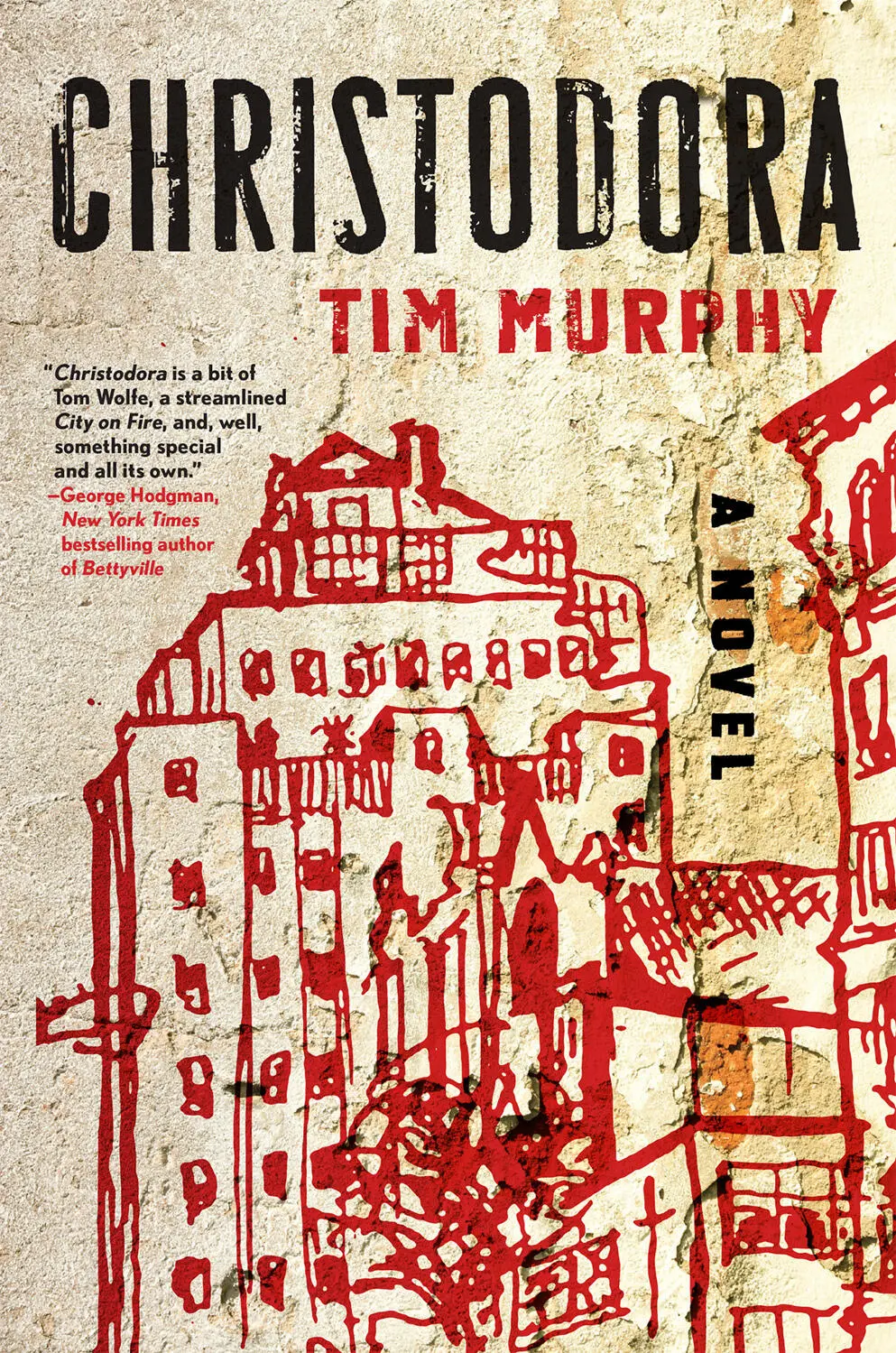
- Название:Christodora
- Автор:
- Издательство:Grove Press
- Жанр:
- Год:2016
- ISBN:нет данных
- Рейтинг книги:4 / 5. Голосов: 1
-
Избранное:Добавить в избранное
- Отзывы:
-
Ваша оценка:
Christodora: краткое содержание, описание и аннотация
Предлагаем к чтению аннотацию, описание, краткое содержание или предисловие (зависит от того, что написал сам автор книги «Christodora»). Если вы не нашли необходимую информацию о книге — напишите в комментариях, мы постараемся отыскать её.
recounts the heartbreak wrought by AIDS, illustrates the allure and destructive power of hard drugs, and brings to life the ever-changing city itself.
Christodora — читать онлайн бесплатно полную книгу (весь текст) целиком
Ниже представлен текст книги, разбитый по страницам. Система сохранения места последней прочитанной страницы, позволяет с удобством читать онлайн бесплатно книгу «Christodora», без необходимости каждый раз заново искать на чём Вы остановились. Поставьте закладку, и сможете в любой момент перейти на страницу, на которой закончили чтение.
Интервал:
Закладка:
“That was my bubbe ,” Mateo says. “I used to visit that place, Judith House.”
Esther frowns in confusion. Then, “Oh my God,” she says slowly. “Oh my God, that’s right. I remember now Ava telling me that. .” She draws a blank.
“That her daughter?” Mateo supplies.
“Right! That her daughter adopted Issy’s kid.” Then her voice drops, slows. “Oh my goodness, dark-eyed Milly Heyman.” Then she stops. “Well, hmm, whatever. That’s for another day. But, Mateo!” She tears up again. “I’m having some kind of time-travel cosmic moment!” She laughs, which makes Karl and Hector — and even Mateo — laugh, too. “How old are you now, Mateo? What do you do?”
“I’m twenty-eight,” he says. “I’m an artist. I live in L.A. but I’m in New York right now to do some of the art for the UnderPark.”
Esther just looks at him, shakes her head. “Mateo,” she says. “If only Issy could see you. Mateo, I want you to know something very seriously. There’s not a lot of documentation and I know everyone’s forgotten about it, but your mother really was a hero.”
Mateo feels as though the woman has just put a healing hand on a place inside him that’s ached his entire life, at least since he’d learned about his mother. “Thank you,” he says, wiping tears away. “All my life, I wondered. I never knew anything about her, where I came from. We didn’t really talk about it in my family growing up.”
“Well, honey, you come from strong stuff,” Esther says.
“Thank you. Can I watch the tape again?”
“Of course you can. And I’ll send you a digital package with the tape and all the photos and clippings I have of your mother. Actually, you come see me and I’ll put them together for you here.”
“Thank you so much,” Mateo says, half embarrassed that he’s crying, half not really caring. And she runs the video again. Oh God, there she is. Could he hold her? Could he only hold her? But she at least held him, he thinks. Years before he was old enough to remember. She’d held him.
The tape runs out and Esther says good-bye, signs off, leaving Mateo, Karl, and Hector sitting there, the rain still pounding against the windows. “I can’t believe I finally saw her,” Mateo says.
“You know,” says Karl, leaning forward. “The work isn’t done. AIDS isn’t over. There are millions of people around the world who can’t access cure therapy.”
“I know,” Mateo says, nodding respectfully. “I read that.”
Then Hector says, “Let him go, Karl. He came here to find out about his mother, not to get recruited. And you don’t wanna say it, but you know it. It’s over. AIDS is over. You won. There’s plenty else to do. But”—and here Hector goes into a sarcastic singsong—“fucking AIDS is over. We’re the last fucking ghosts from the AIDS days. We won the war, Karl.”
Karl’s been half aloft in his seat the whole time during Hector’s rant, but now, to Mateo’s surprise, he just gives Hector a dirty look and sits back and folds his arms over his chest. He looks down, runs his finger sulkily over the glass of his tablet. “Why doesn’t it feel like we won, then?” he asks quietly.
“Because you’re tired, Karl,” says Hector. “You’re fucking pooped like the rest of us. But we still fucking won. So relax, you still got a bunch of old broke-down ghosts to take care of. We still need you, honey.”
With difficulty, Hector makes to rise. Mateo stands, puts a hand behind his elbow, reaches for his crutches and hands them to him one by one, until he’s upright.
Mateo turns to Karl, who’s standing now, too, and offers him his hand. “Thank you so much,” Mateo says.
Karl takes his hand. “Don’t forget us,” he says to Mateo. Karl’s face brightens, then he looks sly. “How about an art fund-raiser? A ShelterHelps art fund-raiser? We had an art auction in the movement once that raised nearly half a million dollars. Nineteen-eighty-nine. Remember, Hector?”
“I do, babe,” Hector says, making his way slowly out of the office in front of Mateo.
“We could do that again,” Karl continues.
Mateo fixes his eyes on Karl. “Let me get through this project I’m on now,” he says, “and then I’ll get in touch with you.”
“You promise? These folks may be cured, but they haven’t got two nickels to rub together — the survivors, I mean. They need this home, they need services.”
“I promise,” Mateo says, before shuffling slowly out the office door and down the dim hallway with Hector.
Near the foyer, Hector mutters from ahead, “I’ll walk you out. I want some air.”
“It’s still raining out, I think.”
“I don’t fucking care.”
Mateo opens the front door and helps Hector down the step so that they’re both out under the ledge in the rain, somewhat lighter now, the empty street silent before them with shuttered warehouses. They stand side by side, getting spattered. Mateo watches Hector fumble on his crutches for something in his pocket. Then Hector pulls out a half-smoked joint that he struggles to light with a book of matches.
“Here,” says Mateo, taking the matches and lighting it for him. Mateo watches Hector close his eyes as he takes in the first hit, its cinders crackling on the end. Mateo is overcome with a flash of memory, all the times the two of them communed like this: the silences, one holding the flame for the other, the long indrawn breaths, the blissful exhalations, the crumpling together into one barely sentient being. His heart starts pounding and he balls up his fists in his pockets, fighting his instinct to flee.
Finally Hector releases his hit and hands it to Mateo.
“No thanks,” Mateo says.
Hector looks at him, cackles. “You don’t even smoke pot anymore?”
Mateo shakes his head sheepishly. “I’ve been reprogrammed,” he jokes lamely.
Hector stares out into the rain, savoring his new high. “I never got that, why some people had to take it to extremes,” he says. “I mean, fine, put down the needle, put down the pipe. But leave me something. You know, negro ?”
Hector looks so comical suddenly, Mateo laughs, and Hector’s eyes pop big and he laughs along. A truck roars down the street and nails a deep puddle in the road so hard that the backsplash nearly reaches the two of them over the sidewalk.
“Whoa,” Mateo mutters — awkwardly, because he doesn’t know what to say now.
“What day is it?” Hector finally asks.
“Thursday,” Mateo says. “It’s Thursday.”
Hector gives him a sort of for real? look, and Mateo nods. Then the silence engulfs them again. Hector stares placidly forward, looking like he’s content with his buzz despite the rain.
“I wanna say I’m sorry,” Mateo finally hears himself saying.
“Sorry for what?”
Huh? Mateo hadn’t expected he would say that. “For—” Well, for what? Using him for drugs and shelter? Mateo is not about to say that. That last time in L.A.? The truth was Mateo hadn’t needed Hector that time for drugs or shelter. Why had he called Hector from that apartment, the very thought of which never failed to make Mateo shudder? Mateo figures it’ll probably be like that for the rest of his life.
“If I hadn’t called you that last time in L.A. — ” Mateo begins.
But Hector puts a finger to Mateo’s lips. “Shh,” he goes. He shakes his head, slowly but firmly. “No, no,” he says.
“But—”
“No, no,” Hector says. “Not going back there.”
Mateo is stumped. “Okay,” he says. “Sorry.”
“Stop saying sorry.”
Mateo laughs bitterly, surprising himself. “You never stop saying sorry,” he says.
“Now listen,” Hector says decisively. He’s still staring ahead, not meeting Mateo’s eyes, but something authoritative in his tone disarms Mateo. “You go say you’re sorry to the woman who raised you,” he says. “That’s what you should do.”
Читать дальшеИнтервал:
Закладка:
Похожие книги на «Christodora»
Представляем Вашему вниманию похожие книги на «Christodora» списком для выбора. Мы отобрали схожую по названию и смыслу литературу в надежде предоставить читателям больше вариантов отыскать новые, интересные, ещё непрочитанные произведения.








Обсуждение, отзывы о книге «Christodora» и просто собственные мнения читателей. Оставьте ваши комментарии, напишите, что Вы думаете о произведении, его смысле или главных героях. Укажите что конкретно понравилось, а что нет, и почему Вы так считаете.