Tim Murphy - Christodora
Здесь есть возможность читать онлайн «Tim Murphy - Christodora» весь текст электронной книги совершенно бесплатно (целиком полную версию без сокращений). В некоторых случаях можно слушать аудио, скачать через торрент в формате fb2 и присутствует краткое содержание. Год выпуска: 2016, Издательство: Grove Press, Жанр: Современная проза, на английском языке. Описание произведения, (предисловие) а так же отзывы посетителей доступны на портале библиотеки ЛибКат.
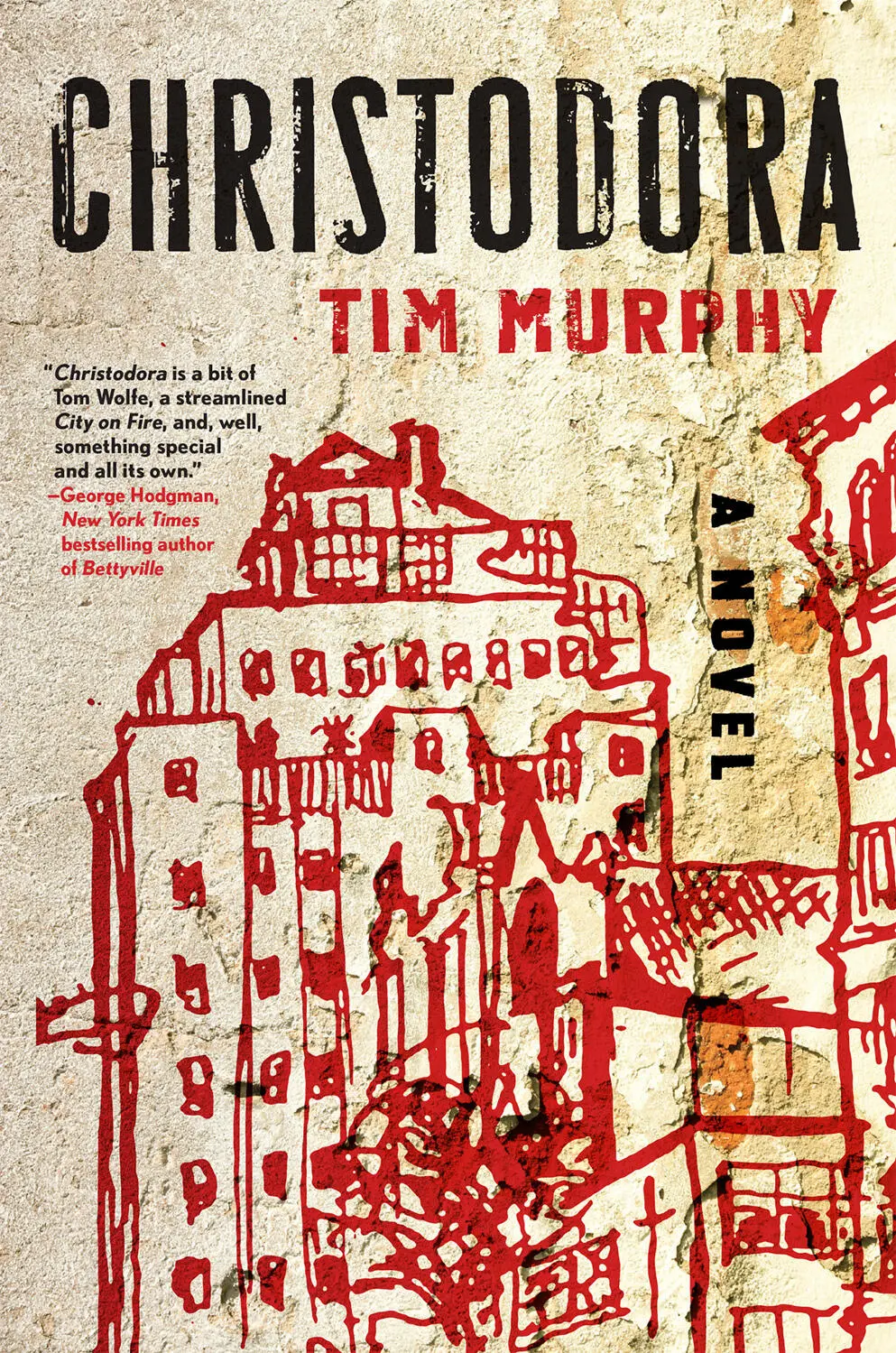
- Название:Christodora
- Автор:
- Издательство:Grove Press
- Жанр:
- Год:2016
- ISBN:нет данных
- Рейтинг книги:4 / 5. Голосов: 1
-
Избранное:Добавить в избранное
- Отзывы:
-
Ваша оценка:
Christodora: краткое содержание, описание и аннотация
Предлагаем к чтению аннотацию, описание, краткое содержание или предисловие (зависит от того, что написал сам автор книги «Christodora»). Если вы не нашли необходимую информацию о книге — напишите в комментариях, мы постараемся отыскать её.
recounts the heartbreak wrought by AIDS, illustrates the allure and destructive power of hard drugs, and brings to life the ever-changing city itself.
Christodora — читать онлайн бесплатно полную книгу (весь текст) целиком
Ниже представлен текст книги, разбитый по страницам. Система сохранения места последней прочитанной страницы, позволяет с удобством читать онлайн бесплатно книгу «Christodora», без необходимости каждый раз заново искать на чём Вы остановились. Поставьте закладку, и сможете в любой момент перейти на страницу, на которой закончили чтение.
Интервал:
Закладка:
“Mateo,” he says. “Mateo Mendes.”
“You have her name!” Esther says delightedly.
“I took her last name later in life,” he says. Shortly after he started working with Char, when he needed a professional name, he took it. “Mateo Heyman-Traum” no longer sat right with him.
“My God,” she says, brushing tears from her cheeks. “I can see her now in your face. Guys, it’s so strange, isn’t it? It was thirty years ago!”
“We were just babies,” Karl says.
“We were babies!” Esther echoes. “We’d never get away today with what we did then. We live in a fucking police state now. Three people can barely ding each other before the fucking NYPD-slash-FBI is shutting you down.”
“Ping, Esther. Ping,” Karl says. “Get with the program.”
“Right, ping, ping!” She looks back at Mateo. “You don’t know what it was like back then,” she says.
“I don’t,” Mateo says.
“You must have no memories of your mother,” she says.
“I don’t.”
“Well, let me tell you. Wow. She was a scared little girl from Queens, where nobody knew she had HIV, when she first came tiptoeing into the meetings. But she kept coming. And within about a year or two — wow, Mateo. She blossomed. That was the thing about the movement, wasn’t it? People came thinking they were dying but they ended up finding out how powerful they really were.”
Karl nods soberly. “It’s true.”
“So your mother—” Esther continues, then: “Oh, wait! Oh my God, you guys, I have the tape!”
Karl and Hector start laughing. “That’s why we voiced you, Esther,” Karl says.
“Hold on, Mateo, I wanna show you something,” Esther says. The tablet screen goes green but she keeps talking through it. “The winter of 1990, Mateo, there was a very, very important demonstration at the Centers for Disease Control in Atlanta to get the government to expand the definition of AIDS so that women would be included in it, because they weren’t. Because at the time the symptoms and illnesses the CDC used were mostly seen in men, so women weren’t being counted and they weren’t getting the money and attention and care they needed. And the people who led this particular demonstration were the women in the group, and especially the women with HIV. So watch this, okay?”
Mateo stares at the green screen, his heart beating fast. “This is when, again?” he asks.
“Nineteen-ninety,” Esther says. “Thirty-one years ago. When were you born?”
“Nineteen-ninety-two.”
“Well,” she says, “this is your mom before she was pregnant with you and also before she got really sick.”
Suddenly Mateo’s watching old pre-digital video footage of a bumpy camera panning around some huge demonstration taking place, in pouring rain, outside the bland suburban offices of the Centers for Disease Control. Hundreds of men and women, some of them with their faces painted a ghostly white, most of them wrapped in black garbage bags to ward off the rain, are massed in front of the CDC’s main entrance, blowing whistles and shouting, “Women don’t get AIDS, they just die from it!” The camera pans upward to the office windows, where workers in shirts and ties are frowning at the demonstrators, then back down to a round-faced black woman with short bursts of dreadlocks on either side of her head, holding aloft a megaphone.
“My name is Katrina Haslip,” the woman says. “I’m from New York City and I’m a woman living with AIDS.” The crowd roars. The woman goes on to talk about the health problems she and other women have had that the government doesn’t include as markers of AIDS that could help her get treatment or disability benefits. Then the woman says, “Now I want to introduce you to someone to tell you that it’s not just white women or African American women who get AIDS, it’s Latinas, too. And you do not mess with an angry Latina!”
The crowd laughs. As Katrina hands off the megaphone, the camera pans left to a woman — a short woman, also wearing a wet black garbage bag, her rain-bedraggled black hair pulled back under a black baseball cap with a pink triangle on its upturned rim.
“That’s her, Mateo,” Esther says. “That’s your mom.”
“That’s her, for sure?” Mateo asks. He’s craning forward, studying every detail of her face, trying to make matches with his own.
“That’s her,” Esther says again.
“Thank you, Katrina, my sister,” the woman on the tape says with the same accent Mateo always used to hear around the Lower East Side growing up. “My name is Ysabel Mendes and I am a thirty-one-year-old Latina from Corona, Queens, living with HIV/AIDS!”
The crowd erupts, some people shouting, “We love you, Issy!”
A broad smile breaks out on her face. “Woooo!” she cries, holding the megaphone aloft.
“I’m here today,” she continues, “because the CDC doesn’t want to count me, even though I was diagnosed with this disease two years ago and my T cells are around one hundred when the average T cells are around one thousand. Even though I’ve had more small infections the past few years than you can count, including — and I’m sorry to maybe gross out the boys here — more vaginal yeast infections in a year than most women get in a lifetime. There!” She laughs. “I said it!”
The crowd laughs with her.
“The CDC doesn’t want to count me, doesn’t want to say that I have AIDS,” she goes on, “and that goes for me and all my HIV-positive sisters here today. And if you don’t count us, we can’t get disability benefits, we can’t get research, we can’t get treatment — we can’t get a chance to save our own lives!”
The crowd goes wild again. She looks so strong up there, Mateo thinks, soaked in rain but triumph and anger flashing in her eyes. Those eyes he keeps staring into, that voice he keeps parsing, trying to see and hear echoes of himself. But even as he listens to her, he’s forced to admit — he talks mainly in the cadences of Milly and Jared, the people who raised him, not this woman’s. She’s from another world.
“So I want to say to you, Dr. Curran and Dr. Roper and all your staff,” she continues. “I want to say to you, we’ve been trying since 1988 to get you to change the national AIDS definition to include us women. We’ve invited you to come meet with us. But you’ve ignored us. So that’s why today, even in this downpour of a rain, we’ve come to you! And we’re not going away until you hear us!”
She’s drowned out by the crowd chanting, “ACT UP! Fight back! Fight AIDS!” but she’s got her megaphone up in the air again, elated, that huge smile on her face, all her teeth showing.
“Woo-hoo!” she cries again, as though she’s at the top of a roller coaster.
Esther stops the tape there, on that image of her. “So that’s your mother, Mateo,” Esther says, coming back on the screen. “A very courageous woman, you see. And you know something else?”
“What?” Mateo asks.
“She lived to see them expand the AIDS definition. It took until 1992, but they finally did it — they finally caved to all our research and all our protests and admitted we were right. They did it right before Katrina died in 1992, but your mother lived a whole ’nother year, and benefited from the change with her disability benefits, before she died.”
“Which was when?” he asks.
“Late 1993.”
Late 1993, he thinks. He was eleven months old; he doesn’t have a single memory of being held in her arms. “You were really good friends with my mom?” he asks this woman, Esther.
She pauses, smiles. “We were, Mateo. We were. After she got pregnant with you, she stopped coming to the meetings. I wanted her to keep coming, but she didn’t want anyone to know she was pregnant, she said. She was afraid they were going to judge her for having a baby when she had HIV. I told her that was ridiculous, that everyone knew she was protecting the baby by taking AZT. Still, she wouldn’t come. I couldn’t force her. So I would visit her because she was living in a group house for women, near me in the East Village, started by a lady named Ava Heyman — an amazing lady who died a few years ago.”
Читать дальшеИнтервал:
Закладка:
Похожие книги на «Christodora»
Представляем Вашему вниманию похожие книги на «Christodora» списком для выбора. Мы отобрали схожую по названию и смыслу литературу в надежде предоставить читателям больше вариантов отыскать новые, интересные, ещё непрочитанные произведения.









Обсуждение, отзывы о книге «Christodora» и просто собственные мнения читателей. Оставьте ваши комментарии, напишите, что Вы думаете о произведении, его смысле или главных героях. Укажите что конкретно понравилось, а что нет, и почему Вы так считаете.