Giuseppe Catozzella - Don't Tell Me You're Afraid
Здесь есть возможность читать онлайн «Giuseppe Catozzella - Don't Tell Me You're Afraid» весь текст электронной книги совершенно бесплатно (целиком полную версию без сокращений). В некоторых случаях можно слушать аудио, скачать через торрент в формате fb2 и присутствует краткое содержание. Год выпуска: 2016, Издательство: Penguin Press, Жанр: Современная проза, на английском языке. Описание произведения, (предисловие) а так же отзывы посетителей доступны на портале библиотеки ЛибКат.
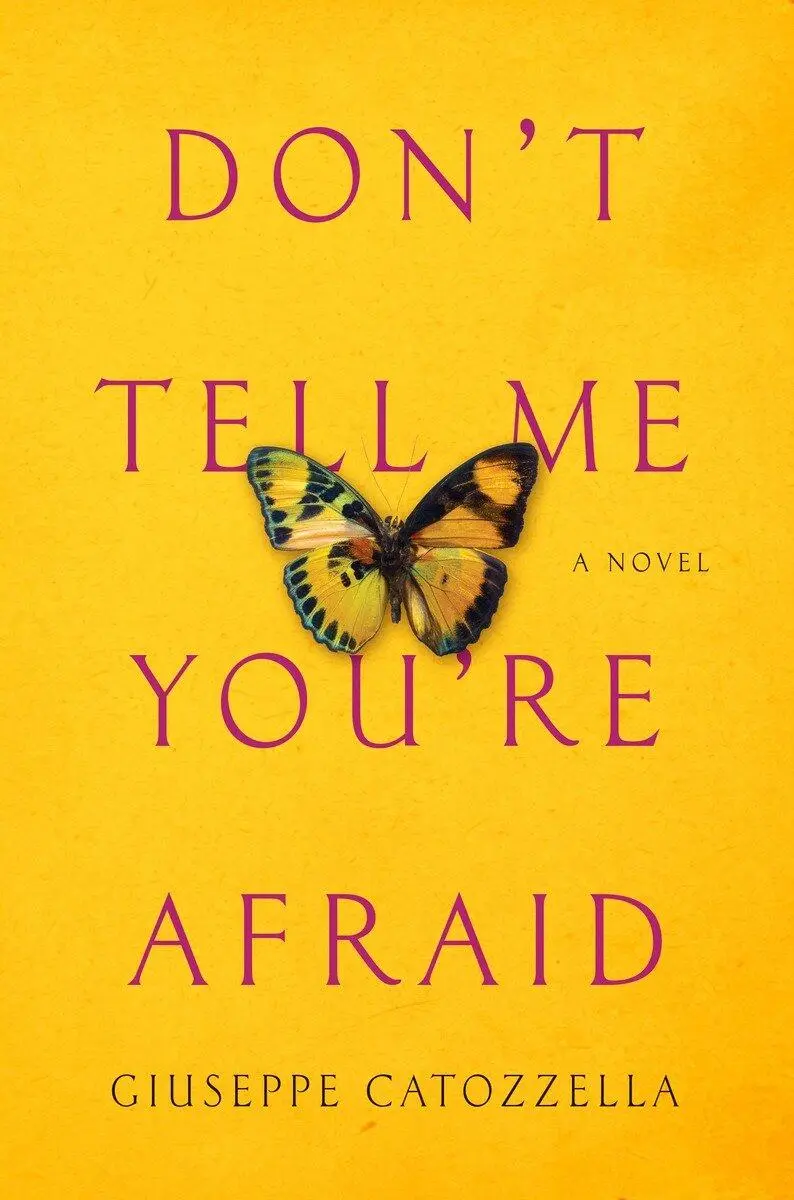
- Название:Don't Tell Me You're Afraid
- Автор:
- Издательство:Penguin Press
- Жанр:
- Год:2016
- ISBN:нет данных
- Рейтинг книги:4 / 5. Голосов: 1
-
Избранное:Добавить в избранное
- Отзывы:
-
Ваша оценка:
Don't Tell Me You're Afraid: краткое содержание, описание и аннотация
Предлагаем к чтению аннотацию, описание, краткое содержание или предисловие (зависит от того, что написал сам автор книги «Don't Tell Me You're Afraid»). Если вы не нашли необходимую информацию о книге — напишите в комментариях, мы постараемся отыскать её.
For the next several years, Samia and Ali train at night in a deserted stadium as war rages and political tensions continue to escalate. Despite the lack of resources, despite the war, and despite all of the restrictions imposed on Somali women, Samia becomes a world-class runner. As a teenager, she is selected to represent her country at the 2008 Beijing Olympics. She finishes last in her heat at the Games, but the sight of the small, skinny woman in modest clothes running in the dust of athletes like Veronica Campbell-Brown brings the Olympic stadium to its feet.
Samia sets her sights on the 2012 Games in London. Conditions in Somalia have worsened, and she must make the arduous migrant journey across Africa and the Mediterranean alone. Just like millions of refugees, Samia risks her life for the hope of a better future.
Don’t Tell Me You’re Afraid
Don't Tell Me You're Afraid — читать онлайн бесплатно полную книгу (весь текст) целиком
Ниже представлен текст книги, разбитый по страницам. Система сохранения места последней прочитанной страницы, позволяет с удобством читать онлайн бесплатно книгу «Don't Tell Me You're Afraid», без необходимости каждый раз заново искать на чём Вы остановились. Поставьте закладку, и сможете в любой момент перейти на страницу, на которой закончили чтение.
Интервал:
Закладка:
Number one: You can’t take anything with you but the plastic bag.
Number two: If at any time you rebel against the conditions of the Journey and force the vehicle to stop, you will be left where you are.
Number three: If you fall out of the jeep, the driver will not stop.
This last rule is meant to prevent hang-ups. It’s not like they would lose too much time. All they’d have to do is stop, pick up the person who fell off, shove him back into the jeep bed, and be on their way again. Yet that’s not what happens. If you fall, you won’t be rescued. If you knew that you could let go, many people would do it. Within a few hours the others would get discouraged. After a few days in the intense heat, the insignificant ants that we are would rise up. Better to stir everyone up against one another and avoid the risk of having the tires get stuck in the sand.
And besides, you’re just a hawaian, an animal, who pays to be transported from one place to another, nothing more. In fact, for the traffickers you’re evidence of the crime if they should be stopped by the police. Every complication means a loss of time.
On the last morning Zena and her grandmother ended up at the back of the jeep bed. We had slept a distance away from the vehicle to steer clear of little Said, who wouldn’t stop crying. When they called us at dawn, we knew we had to get a move on; otherwise we would be left for last. The grandmother could hardly walk: She’d sprained her ankle; maybe her foot had been in the wrong position for too many long hours. I ran ahead to save a place for them. But someone started yelling, saying I couldn’t hold places for anyone else, everyone had to fend for himself. I said something about an elderly lady, and an Ethiopian woman started shrieking, threatening to slap me if I didn’t stop it. She sat down next to me. I tried to move back but there was no way; the mass of humanity was too dense. I had to stay where I was. I called out loudly to Zena, and from the back she told me not to worry: They had found seats.
All of a sudden, after a few hours, someone shouted something in a language that wasn’t mine. Perhaps Arabic, perhaps Ethiopian, maybe Sudanese or English. Then someone up front started pounding his fist on the roof of the driver’s cab.
“Stop! Stop!”
I thought someone felt sick; it happened occasionally. The driver went straight on as if he hadn’t heard. The man kept on banging and banging. After a while the trafficker lowered the window and stuck out his arm, his open hand facing the jeep bed in the Arabic gesture that means “Go to hell.” Shove it!
Then word passed from ear to ear.
Someone had fallen out. Zena’s grandmother had fallen out.
CHAPTER 27

THEY DROPPED US OFF AT the Libyan border. It was October 12, 2011.
The Land Rover stopped and we waited there.
I don’t know how they knew that Sudan ended at that particular spot, since we were surrounded by nothing but sand. In any case, Sudan ended there. We waited for hours.
Then they came to pick us up.
Libyan traffickers.
Much worse than the Sudanese, so everyone said. Because in Libya the law is more severe.
They showed up, loaded us onto a small bus, and took us to the prison in Kufra.
Our worst nightmare had materialized.
We all knew what Kufra was. A place where you were likely to stay forever, if you didn’t have the money they demanded — and it was a lot of money. Or else when you started stinking like a corpse, they took you back to the border with Sudan, just before you died. They left you in the middle of the Sahara to drop dead there.
That’s what everyone said.
Our arrival, however, was not traumatic. The place was better than the prison in Sharif al Amin: bigger, more spacious. A light-colored building of rough concrete blocks, it stood right in the middle of the desert.
All around, the usual endless expanse of golden sand dunes. We breathed the smell of dust, stirred by a slight breeze that drifted in through the gate, which the guards left open during the day. When we first arrived, we were treated well. They separated the women from the men and they brought us as much food and water as we wanted. They washed me. Dressed me in new clothes. They said, “Welcome to Libya.” They put me on a mattress, and after weeks with my back on the sand it was a blessing.
All this, however, lasted two days.
At the end of the second day they came back and demanded money.
A thousand dollars to take me to Tripoli.
As usual, if I didn’t have it I could make a call. One minute maximum.
They came five times a day to remind me to pay. Five times with sticks and their “ Hafta, hawaian, ” “Pay, animal.” Until I paid. It can go on for weeks, months. They don’t care; they don’t give up. But only if you’re clever enough to make them believe that sooner or later you will pay.
When they realize that you’re one of those who won’t pay, there are only two possibilities.
If you’re a man, they’ll take you back to the border.
If you’re a woman, they’ll rape you in exchange for a one-way ticket. This is what I was told by Taliya, a Somali girl, the third day after I arrived. I could tell she was from my country, and I needed to talk to someone, to feel the consolation of a voice, to talk freely with another human being. We slept next to each other, and that day I ran into her in the communal yard and spoke to her. “What’s your name? Are you Somali?” I asked, sitting down next to her on a bench against the clay wall. She kept her eyes lowered. Who knows at what point in the Journey she’d lost the nerve to look people in the eye?
I repeated the question: “What’s your name?”
She wouldn’t speak. But I persisted.
After a while she said, “Taliya,” then continued staring at the ground. I started asking her the dumbest questions; I just felt like talking. Taliya didn’t answer anymore. I kept it up like a raving lunatic for half an hour, maybe an hour. I wanted her to answer. Finally all she said was: “I let them fuck me like a dog to get out of here. I’ve been in this place for four months.”
It took Hodan twenty-eight days to wire the money to me at a small wooden shack for the transfer of cash that coincidentally stood at the entrance to the prison. Twenty-eight endless days in which I lived on water and peanuts. After the first forty-eight hours, in fact, they didn’t give us anything else, just water and peanuts. Like monkeys. If you had money you could buy something directly from the guards. But if you had money they came and took it from you as an advance on the thousand dollars.
The prison was divided into two sections, male and female. There was a shared yard where we could walk around and breathe in the dusty desert wind. Nothing ever happened. We were depleted, reduced to shadows of ourselves. No one spoke; some ranted and raved due to the heat or the solitude, longing for home. I tried to keep calm and stay out of trouble.
One day four Ethiopian men who’d been in Kufra for five months decided to get together and teach the guards a lesson, after having been beaten by them numerous times. They knew they’d end up getting the worst of it, but by now they were out of their heads; they wanted to lash out, get a taste of hammering someone. Word of what was about to happen had spread; this was the only kind of thing we told one another about. It was our entertainment; our lives played out on the edge of survival. At two in the afternoon we gathered in the yard to witness the settling of scores. Two guards were the cruelest: When they beat you, they did it to inflict pain, to leave marks. Two of the Ethiopians called them over with some excuse. Grumbling, the guards sauntered over in their short-sleeved green uniforms, clubs and guns in their belts. The other two Ethiopians immediately came up and surrounded them, kicking and punching wildly, until the guards fell to the ground. The Ethiopians let it all out, unleashing on the two guards all the hatred they’d nurtured for months. Before long, however, six other guards ran up. One of the two on the ground was barely moving, completely covered in blood, while the other one appeared to be dead, lying motionless, his eyes wide open. I watched, anesthetized, inured to it by now. The blazing sun had shriveled my brain. Nothing shocked me. One of the six bent down and felt his fellow officer’s pulse. He must have been dead. They asked who’d killed him. No one breathed a word. They asked again. Nothing. The one in command, the smallest of all, pulled out his gun and fired into the air. He asked again. One of the Ethiopians, the heaviest one, stepped forward. “I was the one who killed,” he said in Arabic. The little man in uniform ordered him to kneel down, right there in front of everyone. Then he asked him to confirm it. “I was the one who killed,” the Ethiopian repeated. We all knew what was coming. No one closed his eyes or looked away. The Ethiopian knew it too; he didn’t turn a hair. The commander leveled his gun. A single shot, point-blank. The Ethiopian joined the other man on the ground.
Читать дальшеИнтервал:
Закладка:
Похожие книги на «Don't Tell Me You're Afraid»
Представляем Вашему вниманию похожие книги на «Don't Tell Me You're Afraid» списком для выбора. Мы отобрали схожую по названию и смыслу литературу в надежде предоставить читателям больше вариантов отыскать новые, интересные, ещё непрочитанные произведения.



![Ally Carter - [Gallagher Girls 01] I'd Tell You I Love You But Then I'd Have to Kill You](/books/262179/ally-carter-gallagher-girls-01-i-d-tell-you-i-lo-thumb.webp)






Обсуждение, отзывы о книге «Don't Tell Me You're Afraid» и просто собственные мнения читателей. Оставьте ваши комментарии, напишите, что Вы думаете о произведении, его смысле или главных героях. Укажите что конкретно понравилось, а что нет, и почему Вы так считаете.