Javier Montes - The Hotel Life
Здесь есть возможность читать онлайн «Javier Montes - The Hotel Life» весь текст электронной книги совершенно бесплатно (целиком полную версию без сокращений). В некоторых случаях можно слушать аудио, скачать через торрент в формате fb2 и присутствует краткое содержание. Год выпуска: 2013, Издательство: Hispabooks, Жанр: Современная проза, на английском языке. Описание произведения, (предисловие) а так же отзывы посетителей доступны на портале библиотеки ЛибКат.
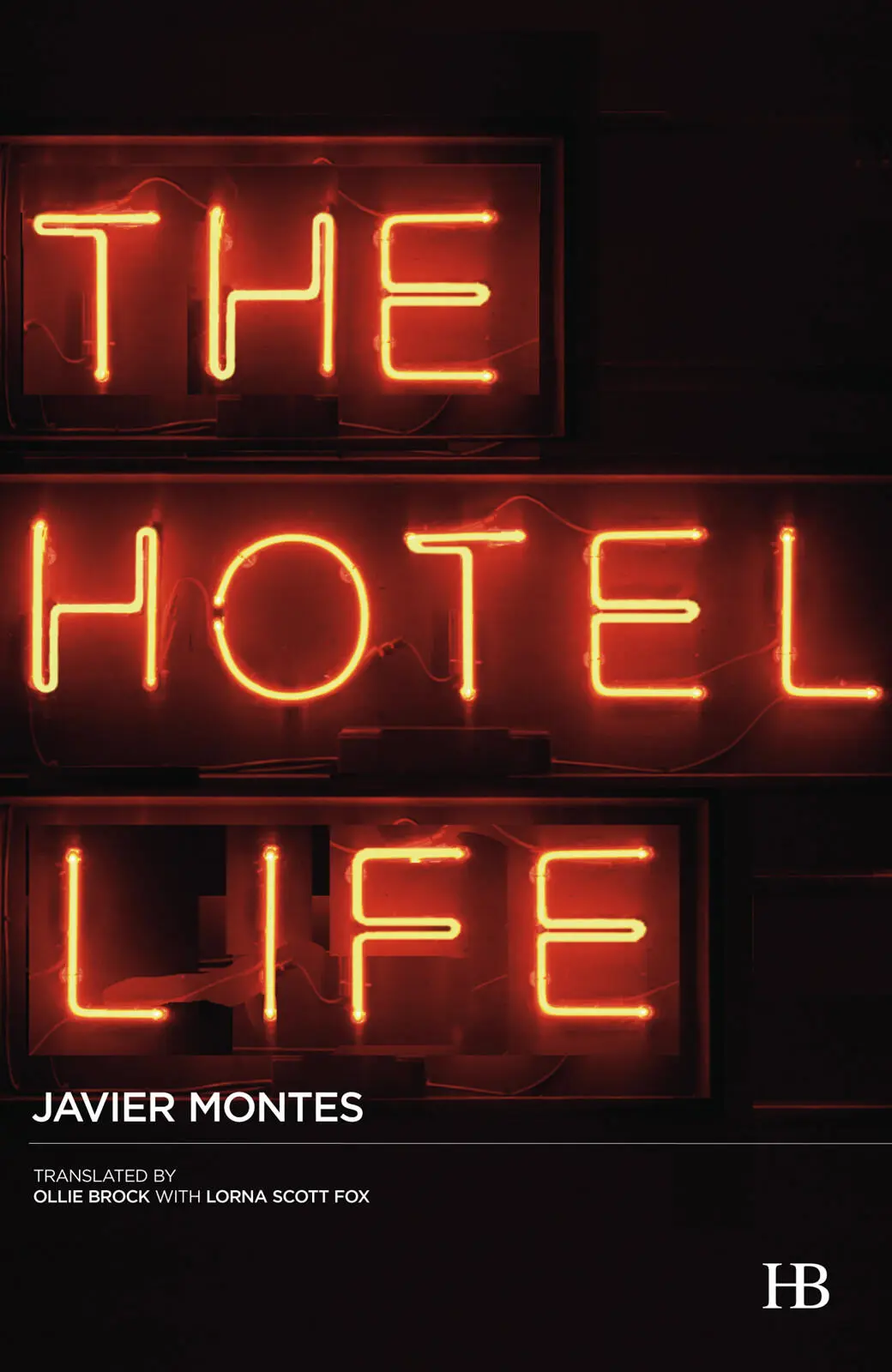
- Название:The Hotel Life
- Автор:
- Издательство:Hispabooks
- Жанр:
- Год:2013
- ISBN:нет данных
- Рейтинг книги:3 / 5. Голосов: 1
-
Избранное:Добавить в избранное
- Отзывы:
-
Ваша оценка:
The Hotel Life: краткое содержание, описание и аннотация
Предлагаем к чтению аннотацию, описание, краткое содержание или предисловие (зависит от того, что написал сам автор книги «The Hotel Life»). Если вы не нашли необходимую информацию о книге — напишите в комментариях, мы постараемся отыскать её.
The Hotel Life — читать онлайн бесплатно полную книгу (весь текст) целиком
Ниже представлен текст книги, разбитый по страницам. Система сохранения места последней прочитанной страницы, позволяет с удобством читать онлайн бесплатно книгу «The Hotel Life», без необходимости каждый раз заново искать на чём Вы остановились. Поставьте закладку, и сможете в любой момент перейти на страницу, на которой закончили чтение.
Интервал:
Закладка:
I told her she was right, that I’d been very tired when I wrote it. She was prodding a little cube of ice down into her whisky. It was very small by now, almost entirely melted. She would submerge it gently, let it surface, and push it down again.
“We’re all tired, aren’t we?”
Then she got up, smiling. It was the same smile as I’d seen at the beginning of the evening — as though we had scarcely talked at all, or as if nothing had been said that deserved any other sort of smile.
“And we’re right to be. It must be after three o’clock. And I don’t know about you, but I have to get up early tomorrow. Or today, rather.”
At the time, I assumed her indifference was feigned. Now I’m not so sure. She was right, it was very late. And actually, she was right about everything else. You could see how confident she was in that. She was irritatingly self-assured, which of course only made her more attractive.
We looked at each other without speaking. In fact, it was that second of silence that made me doubtful, and that still makes me doubtful now. A hotel expert like herself couldn’t have failed to imagine what I was imagining — and, finally, very definitely desiring — at that moment. I felt an anxiety that I only became aware of when I realized I had pictured being relieved of it: whatever happened, sooner or later she would close the door behind her and I would be left alone and would sit here and write it all down in this notebook.
It was a cowardly sort of relief. Writing is for cowards, in my opinion. I stood up too.
“Well, we’ll read each other soon.”
She quickly finished her drink as she said this and set the glass down on the bedside table. I couldn’t tell if her farewell was genuine. I held her gaze, and couldn’t help thinking to myself (in these exact words, absurd as that was): “This isn’t going to last.” And it didn’t last. It stopped lasting when I had the thought, or because I had it. I hesitated another second longer, and it proved to be the fateful second — it may have been the exact one that decided it for her.
“Pedro must have finished tidying up by now. I’d better leave you. It’s very late.”
I said nothing, paralyzed as though in a bad dream. Eventually she held out her hand, and I managed to offer her mine.
It wasn’t a cold handshake, or a warm one, or full of double meanings. It meant nothing more than it was supposed to mean: that we had met, that we had talked, that we were now shaking hands to say goodbye.
“Goodbye.”
“Goodbye.”
She left the room, closing the door carefully. It now no longer seemed an acceptable revenge to sit and write this down and make more sense of it all.
~ ~ ~
There’s no internet in the rooms at the Reina Amalia — another sign of its being resigned to its own future. Or of its lack of faith in the future, period — this hotel lives on bottling the past. When I asked about it, checking in at reception, they presented the drawback as a gift, even as a response to the demands of their clientele.
“People come here to get away from all those screens.”
To journey into the past, they added, waxing lyrical. I don’t know whether they were referring to the supposedly glorious past of the hotel itself or to the more recent but almost more remote period — ten years ago, or twelve now — before “all those screens” arrived.
Cellphones are forbidden, or at least not welcome, in the common areas. And it’s true that the guests don’t seem the type who would miss them. It’s mostly elderly, cultured, badly-dressed English couples that sit on the floral-print sofas in the lounge and on the peeling iron benches in the garden, bestowing their dispirited smiles on everything and everyone around them. They have breakfast early, give a quick nod to the sights surrounding the hotel, and then put their critical gazes out to pasture for hours among the closely shorn privet hedges in the park. They strew shelves and bedside tables with books with unknown authors on their covers, and loud spines. But you know how it is with books like that, especially if they’re foreign. Just as with the books’ owners, with their incongruous sneakers, they shouldn’t be judged by their covers. Sometimes they conceal more than is apparent at first glance.
But we shouldn’t overestimate them, either — what both books and owners really bring to mind are wholesome weekly book clubs and pages fastidiously annotated in preparation for the coming debate.
Many of these volumes have been stranded forever on the shelves of the hotel’s reading room, unbeatably melancholic. A small library of assorted little tomes is gathering dust there, with all the requisite names in attendance: Maurois; Malraux; Lajos Zilahy; Daphne du Maurier; some mismatched Lawrence Durrells; a few later Hemingways; and of course, level with the floor, scraping the bottom of the barrel down on the lowest shelf, Pearl S. Buck and a Papini that’s coming loose from its binding.
And, naturally, there are translations into various languages of the letters and the travelogue of the region that were written by the Scottish poet and illustrious guest from whose stay the hotel squeezes so much value, or at least tries to.
They have his books in a little display case at reception, where they sell them to those guests who haven’t brought them from home. I think this must be the poet’s busiest sales point in all of Europe; we’ve all heard of him, but none of us has read him. And with good reason, perhaps: I thought I’d give his little travel journal a go while I was here, and I just couldn’t stand it. What little talent he had for badmouthing and insulting the locals. What a misguided series of rhapsodies and clumsy romps with the region’s gallants and damsels, almost all of them born of mistakes or deceptions. He was the first tourist to fall into the region’s tourist traps, which were set with remarkable speed and intuition as he passed through it. In essentials, they’re no better now than they were, to tell the truth.
Why deny it: the hotel itself is a trap. And this is something I think the other guests do realize, sufficiently well-traveled or sufficiently British as they are to be able to quickly sniff out any discrepancies between its pretensions to good taste, what it really offers, and the prices it charges. “No, not very good value,” my neighbors clucked at their breakfast table this morning. Their murmured conversation was peppered with this phrase — and different variations of it — which was repeated every five minutes like a mantra filled with endless caveats and nuances and scruples, and which served as a spell to lighten the mood. It always cheers us up when we can prove that the thing we so wished to see, what motivated our journey in the first place, was a rip-off.
Meanwhile, the clientele can’t be clamoring for the low-to-no-screen diet the hotel keeps us on quite as much as had been claimed at reception. From the very beginning of the day, there’s a line to use the single, prehistoric computer that sits in the small, windowless room they are calling a “business center”. Only on my third attempt did I manage to actually get a turn at it. It was in use during the siesta that this particular brand of foreign visitors is either unaware of or else feels itself to be above; and it was in use at teatime, when the whitewashed lounges are abuzz — if that’s not overstating it — with pre-prandial activity. It was nearly eleven o’clock at night before I could use it, and even then it was only after a lot of throat-clearing — not that my coughs made much of an impression on the deeply concentrated man in shorts, who looked like a retired Bengali cavalryman that had wandered out of an Agatha Christie novel, as he sat in endless contemplation of photos of the sights that awaited him in vain beyond the confines of the hotel.
Читать дальшеИнтервал:
Закладка:
Похожие книги на «The Hotel Life»
Представляем Вашему вниманию похожие книги на «The Hotel Life» списком для выбора. Мы отобрали схожую по названию и смыслу литературу в надежде предоставить читателям больше вариантов отыскать новые, интересные, ещё непрочитанные произведения.










Обсуждение, отзывы о книге «The Hotel Life» и просто собственные мнения читателей. Оставьте ваши комментарии, напишите, что Вы думаете о произведении, его смысле или главных героях. Укажите что конкретно понравилось, а что нет, и почему Вы так считаете.